Wireless in-ear monitoring can simplify stage setups, reduce cable clutter, and give performers more consistent control over what they hear. The right system balances sound quality, latency, range, battery life, and the number of receivers included.
This roundup compares 10 wireless in-ear monitor systems with rechargeable receivers, including UHF and 2.4GHz models, stereo systems, multi-receiver kits, and higher-resolution options for musicians and live performers.
Best 10 Wireless in Ear Monitor Systems with Rechargeable Receivers Picks for 2026
Team-Ready Value

- Two rechargeable receivers included
- Over 90-foot range with six channels
- Less than 5ms latency and up to 5-hour battery
Best For: Small bands and shared stage monitoring
Feature-Rich UHF Pick

- Stereo or mono monitoring modes
- 10 selectable UHF frequencies
- Rechargeable receiver with TFT display
Best For: Musicians and presenters needing flexible frequency control
RF-Stable Stage Choice

- 5.8GHz True Diversity wireless
- 24-bit/48kHz audio with under 5ms latency
- Channel scan, six channels, and 5+ hours battery
Best For: Stage performers prioritizing stable, high-resolution monitoring
Ultra-Low-Latency Pick

- Under 2ms latency for real-time monitoring
- 96kHz/24-bit lossless stereo audio
- Unlimited receivers supported from one transmitter
Best For: Studios, DJs, and teams needing fast group monitoring
Best Long-Battery Pick
LEKATO MS-20 Dual-Receiver IEM System

- Includes two rechargeable receivers and a charging case
- Up to 30 hours of use with the 2000mAh case
- OTG input, auto-pairing, and up to 150-foot open-area range
Best For: Bands needing multiple receivers and extended battery capacity
Best Stage-Ready UHF Pick
POGOLAB 7-Channel Rechargeable IEM

- Seven selectable UHF channels and up to 164-foot range
- XLR plus AUX/LINE input with claimed 1ms latency
- Rechargeable transmitter and receiver run up to five hours
Best For: Live performers using mixers, interfaces, or XLR stage connections
Best Budget Stereo Pick
LEKATO MS-1 Clip-On Wireless IEM
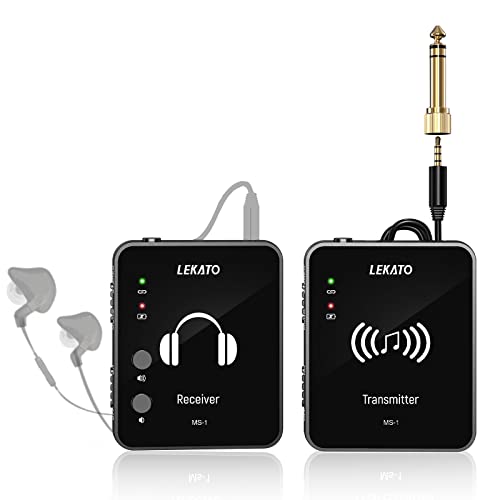
- Supports stereo transmission and mono/stereo switching
- One transmitter can support up to six device sets
- Rechargeable battery lasts more than five hours
Best For: Small groups, rehearsals, churches, and modest stage setups
Best Overall Value

- Less than 5ms latency and 24-bit/48kHz audio
- Rechargeable battery offers about five hours
- Works with XLR or 1/4-inch TS mono inputs
Best For: Straightforward mono monitoring for rehearsals, studios, and live shows
Best Battery Life
Voxfull M6S Stereo Wireless IEM

- Up to 10 hours of rechargeable battery life
- Automatic transmitter-receiver pairing
- Supports mono/stereo and up to six simultaneous units
Best For: Long rehearsals, church services, and stage performances
Best for Multi-Performer Setups

- One transmitter supports up to four receiver pairs
- Less than 4.5ms mono latency with 24-bit/48kHz audio
- Six-to-eight-hour battery and useful receiver controls
Best For: Small and medium bands, classrooms, and multi-performer rehearsals
Team-Ready Value – Xvive U4R2 Two-Receiver IEM
The Xvive U4R2 is a practical choice for anyone comparing wireless in ear monitor systems with rechargeable receivers for small venues, rehearsals, or shared stage monitoring. Its 2.4GHz connection offers over 90 feet of range, six selectable channels, and less than 5ms of latency.
Best For: Small bands, duos, and performers who need two rechargeable receivers from one compact system.
Pros:
- Includes two receivers and one transmitter.
- Up to 5 hours of rechargeable battery life for the transmitter and receivers.
- Six channels and less than 5ms latency support flexible, responsive monitoring.
- Works with mixers and audio devices using 1/4-inch or XLR outputs.
Cons:
- Its stated range is best suited to small clubs and venues.
- 2.4GHz operation may be less specialized than UHF or 5.8GHz systems in some setups.
Choose the U4R2 when two performers need a straightforward monitoring setup without adding a second transmitter. The included adapter and carry bag also make it convenient to take between shows.
Feature-Rich UHF Pick – Pro Stereo IEM System
This UHF system is a versatile option among wireless in ear monitor systems with rechargeable receivers, combining stereo or mono monitoring with 10 selectable frequencies. Its metal construction, TFT display, and 164-foot stated range suit studio sessions, rehearsals, lectures, and live events.
Best For: Musicians and presenters who want stereo flexibility, channel selection, and visible system status information.
Pros:
- Selectable stereo and mono modes support different monitoring preferences.
- Ten tunable UHF frequencies help accommodate multi-set operation.
- Rechargeable bodypack receiver provides up to 4 hours of operation and shows battery level.
- Metal transmitter and receiver include XLR and 6.3mm hybrid inputs.
Cons:
- The receiver’s stated operating time is shorter than some competing systems.
- The package includes only one bodypack receiver.
- The supplied earbuds may not suit every performer’s preferred fit.
The ER100 stands out for its combination of control and display features, including channel lock, gain, input level, and attenuation controls. It is a strong fit when frequency flexibility matters more than supporting multiple performers out of the box.
RF-Stable Stage Choice – Xvive U45 True Diversity IEM
The Xvive U45 is designed for performers who want a more robust wireless link from their wireless in ear monitor systems with rechargeable receivers. Its 5.8GHz True Diversity design, dual-antenna receiver, channel scan, and less than 5ms latency target stable, responsive stage monitoring.
Best For: Bands and stage performers who need high-resolution monitoring and a system that can expand across multiple channels.
Pros:
- 5.8GHz True Diversity reception and dual antennas help maintain the RF connection.
- 24-bit/48kHz audio, 20Hz–20kHz response, and 110dB signal-to-noise ratio support detailed monitoring.
- Smart channel scan helps identify a suitable local RF channel.
- Supports up to six channels and offers over 5 hours of battery life.
Cons:
- It is not water resistant.
- The package is listed as a single transmitter and bodypack receiver.
- It requires compatible mixer or audio-interface connections rather than general Bluetooth pairing.
The U45 is a compelling upgrade for performers prioritizing RF stability and audio specifications. Selectable line and aux modes also make it easier to connect with different mixer outputs.
Ultra-Low-Latency Pick – iCON Airmon Pro
The iCON Airmon Pro is aimed at creators and performers who need extremely quick response from wireless in ear monitor systems with rechargeable receivers. It combines under 2ms latency, 96kHz/24-bit lossless stereo audio, USB-C charging, and support for unlimited receivers from one 2.4GHz transmitter.
Best For: Studios, DJs, recording setups, and teams that may need multiple listeners on the same wireless feed.
Pros:
- Under 2ms latency is suited to real-time recording, mixing, and performance.
- 96kHz/24-bit lossless stereo transmission targets detailed monitoring.
- One transmitter can support unlimited receivers according to the product notes.
- Rechargeable, compact design works with included or existing wired headphones and IEMs.
Cons:
- The supplied set includes one transmitter and one receiver.
- The notes do not specify a wireless operating range or battery runtime.
- It uses passive rather than active noise cancellation.
Airmon Pro is the most compelling option here for latency-sensitive work and group monitoring expansion. Its broad headphone compatibility makes it flexible, while the included iCON in-ear monitors allow immediate use.
Best Long-Battery Pick – LEKATO MS-20 Dual-Receiver IEM System
If you need wireless in ear monitor systems with rechargeable receivers for band practice, live work, or studio monitoring, the LEKATO MS-20 stands out for its included two-receiver setup and charging case. It offers up to 30 hours of use with the case, automatic pairing, and a claimed 150-foot open-area range.
Best For: Bands or teams that need two receivers, extended battery capacity, and flexible phone or mixer connectivity.
Pros:
- Includes one transmitter and two wireless receivers.
- Up to 30 hours of usage with the 2000mAh charging case.
- Supports OTG audio input, mono/stereo switching, and up to 10 receiver pairs.
- Provides 24-bit/48kHz audio, low latency, and a claimed 150-foot open-area range.
Cons:
- Earphones are not included.
- It is not water resistant.
- The 2.4GHz connection may be less suited to especially crowded wireless environments than a selectable-channel UHF system.
The MS-20 is a practical choice when receiver count and battery convenience matter most. Its charging case and OTG support make it especially adaptable, while the lack of included earphones means you must supply compatible in-ear monitors separately.
Best Stage-Ready UHF Pick – POGOLAB 7-Channel Rechargeable IEM
For performers comparing wireless in ear monitor systems with rechargeable receivers, the POGOLAB MWB-1 is built around stage connectivity and low delay. Its UHF design offers seven selectable channels, while the transmitter accepts XLR or AUX/LINE sources and the receiver provides a belt clip and 3.5mm output.
Best For: Singers, bands, worship teams, and live performers who need XLR input, selectable UHF channels, and a belt-mounted receiver.
Pros:
- Uses seven selectable UHF channels for flexible stage setup.
- Supports XLR and AUX/LINE inputs with 1ms claimed latency.
- Rechargeable transmitter and receiver provide up to five hours of operation.
- Includes a belt clip, volume controls, and a claimed 164-foot line-of-sight range.
Cons:
- Battery life is shorter than the LEKATO MS-20’s stated case-supported runtime.
- The package includes one receiver, so additional performers require compatible expansion planning.
- The receiver has no built-in noise control.
The MWB-1 is the more stage-oriented option in this group, particularly if your mixer or interface uses XLR. Seven channels and UHF transmission add setup flexibility, although its five-hour battery rating makes charging between longer events important.
Best Budget Stereo Pick – LEKATO MS-1 Clip-On Wireless IEM
The LEKATO MS-1 is a straightforward option among wireless in ear monitor systems with rechargeable receivers for rehearsals, churches, studios, and smaller gigs. Its 2.4GHz connection supports stereo transmission, automatic pairing, and one transmitter can work with multiple receivers.
Best For: Small or medium-sized groups seeking an affordable rechargeable system with stereo monitoring and simple pairing.
Pros:
- Supports up to six device sets with one transmitter.
- Offers true stereo transmission and one-key mono/stereo switching.
- Rechargeable batteries provide more than five hours of use after charging.
- Includes automatic pairing, low latency, and a claimed 100-foot open-area range.
Cons:
- Its stated range and battery life are lower than the MS-20’s figures.
- Stereo operation requires a stereo audio source and stereo cable.
- The product details list an active-noise-control feature, but the supplied notes do not explain its performance.
The MS-1 keeps the essentials simple: rechargeable operation, stereo support, and multi-receiver capability. It makes the most sense for smaller setups where a 100-foot range and approximately five-hour runtime are sufficient.
Best Overall Value – Xvive U4 Wireless IEM System
The Xvive U4 is a practical choice for shoppers comparing wireless in ear monitor systems with rechargeable receivers. Its 2.4GHz RF link uses uncompressed transmission, offers less than 5ms latency, and supports up to six simultaneous channels for rehearsals, studio work, and live performance.
Best For: Bands, performers, and studio users who want a straightforward mono monitoring system with a metal receiver and rechargeable battery.
Pros:
- Less than 5ms latency with 24-bit/48kHz audio processing and a stated 107dB signal-to-noise ratio.
- Rechargeable lithium battery provides about five hours of operation.
- Supports mono balanced XLR or mono unbalanced 1/4-inch TS input.
- Built-in limiter circuitry helps reduce distortion from excessive input levels.
Cons:
- Battery life is shorter than some competing systems listed here.
- Designed for mono input rather than stereo monitoring.
- Earphones are not listed among the included accessories.
The U4 emphasizes dependable setup and low-latency performance, with push-button pairing and a durable metal housing. It is a strong fit when simplicity and broad mixer compatibility matter more than stereo operation or extended battery life.
Best Battery Life – Voxfull M6S Stereo Wireless IEM
The Voxfull M6S stands out among wireless in ear monitor systems with rechargeable receivers for its claimed 10-hour battery life. It combines a 2.4GHz connection with 24-bit/48kHz processing, automatic pairing, and a switchable mono/stereo input for church, stage, and band use.
Best For: Performers and worship teams seeking longer operating time, included in-ear headphones, and simple automatic setup.
Pros:
- Transmitter and receiver batteries are rated for up to 10 hours after a full charge.
- Automatic pairing avoids manual channel matching after startup.
- One transmitter can pair with multiple receivers, with up to six units working simultaneously.
- Supports mono/stereo input switching and includes in-ear headphones.
Cons:
- The supplied notes do not specify a wireless range or latency figure.
- Charging time is listed at about three hours.
- The included receiver uses a 6.35mm headphone jack, which may require an adapter for some earphones.
With its long claimed runtime and automatic pairing, the M6S is convenient for events where frequent charging or complicated setup would be disruptive. Its included headphones also make it a more ready-to-use package than systems sold without earbuds.
Best for Multi-Performer Setups – LEKATO MS-02 Wireless IEM
The LEKATO MS-02 is aimed at shoppers who need wireless in ear monitor systems with rechargeable receivers for multiple performers. Its 2.4GHz system supports one transmitter with up to four receiver pairs, includes mono/stereo modes, and claims less than 4.5ms latency in mono mode.
Best For: Small and medium stage bands, singers, educators, and rehearsal groups that need several independent receivers.
Pros:
- One transmitter can send to up to four receiver pairs simultaneously.
- Mono-mode latency is rated below 4.5ms, with 24-bit/48kHz sampling.
- Rechargeable operation is rated at about six to eight hours.
- Offers five-level volume adjustment, battery/volume LEDs, one-key mute, and a claimed 100-foot open-area range.
Cons:
- Earbuds are not included and must be purchased separately.
- Pairing multiple receivers requires repeating the button-based pairing process.
- The listed wireless range applies to open areas and may vary in use.
The MS-02 is particularly flexible for groups sharing one mix, thanks to its one-to-many design and receiver controls. Account for the separate earbud purchase, but its battery indicators, mute function, and compact clip-on format make it well suited to active stage and teaching environments.
How We Picked the Best Wireless in Ear Monitor Systems with Rechargeable Receivers
We focused on systems designed for practical musician and performer use, prioritizing rechargeable receivers, dependable wireless connectivity, stereo monitoring where available, and low-latency operation. We also considered transmitter and receiver capacity, claimed operating range, battery life, frequency flexibility, connection options, and setup features such as automatic pairing.
The selection includes both UHF and 2.4GHz systems, along with 5.8GHz and higher-resolution options. Specifications can vary by seller and configuration, so confirm the included accessories, receiver count, regional frequency compatibility, and charging method before ordering.
Quick Comparison
- Best for two performers: Choose a kit that includes two receivers, such as the Xvive U4R2 or a comparable multi-receiver package.
- Best for expandable setups: Look for one-to-many pairing or support for multiple receivers from a single transmitter.
- Best for low latency: Models advertising latency around 1–2 milliseconds are suitable for timing-sensitive monitoring.
- Best for interference flexibility: UHF systems with selectable channels can offer more frequency-management options in busy environments.
- Best for convenience: Automatic pairing, charging cases, and long claimed battery life reduce setup and maintenance.
Key Buying Factors for Wireless In-Ear Monitor Systems with Rechargeable Receivers
Wireless Band and Reliability
UHF systems may provide useful channel selection and range, while 2.4GHz models are often compact and easy to deploy. In crowded wireless environments, check channel availability and avoid assuming that a larger range claim guarantees better real-world performance.
Latency and Sound Quality
Low latency helps vocals and instruments feel synchronized with the live performance. Stereo transmission, sampling rate, and bit depth can also affect detail, but the quality of the transmitter, receiver, earphones, and source mix matters just as much.
Battery Life and Charging
Compare the receiver’s operating time with the length of rehearsals or shows. A charging case can be valuable for mobile use, while USB charging makes it easier to replenish batteries between sets. Verify whether the transmitter and all receivers can charge simultaneously.
Inputs, Range, and Fit
Check whether the transmitter accepts XLR, ¼-inch, AUX, or line-level connections required by your mixer. Confirm the receiver’s clip design, included cables, volume controls, and compatibility with your preferred in-ear monitors.
Who Should Buy Which Wireless in Ear Monitor Systems with Rechargeable Receivers?
Solo performers and home users should favor simple auto-pairing systems with one transmitter and one rechargeable receiver. Small bands may benefit from two-receiver kits or expandable one-to-many designs. Touring and professional users should prioritize selectable channels, robust construction, reliable range, and clearly documented charging and replacement options. Studio and detail-focused users may prefer higher-resolution stereo systems with very low latency, provided their source equipment supports the claimed performance.