The best compact drum machines make it easier to build beats anywhere, whether you need hands-on sequencing for a studio, reliable rhythms onstage, or a tiny practice companion.
This roundup compares 10 compact options across analog and digital sound engines, sampling, portability, connectivity, and workflow so you can choose the right beatmaking tool for your setup.
Best 10 Compact Drum Machines Picks for 2026
Best Compact All-Rounder
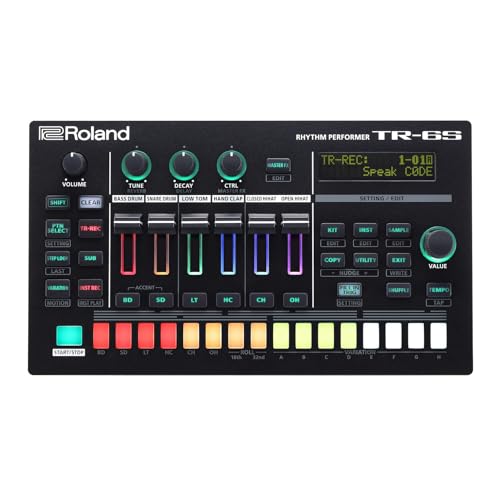
- Classic TR-808, TR-909, TR-606, and TR-707 sounds
- Six-track sequencer with motion recording and sub-steps
- Battery-powered with samples, FM synthesis, and USB I/O
Best For: Versatile portable production
Best Analog Performance Focus

- Analog drum machine for hands-on beat programming
- Separate accent control for every drum
- Song mode and optional Color sound-shaping
Best For: Expressive live pattern performance
Best for Practice and Portability

- 126 patterns across multiple musical styles
- 16 velocity-sensitive pads and built-in metronome
- Battery-powered design with speaker and headphone output
Best For: Portable practice and casual finger drumming
Best Sound Library Value

- 500 onboard sounds with digital effects
- Pattern Play, Drum Roll, and tap-tempo controls
- MIDI support plus wall or battery operation
Best For: Songwriting and live accompaniment
Roland Portable Powerhouse

- TR-808, TR-909, and TR-606 drums with TB-303 bass
- 16-step sequencing with advanced rhythm controls
- USB-C audio/MIDI plus built-in performance effects
Best For: Portable Roland-style beats, bass lines, and live jamming
Korg Pattern Playground
Volca Drum Digital Percussion Synthesizer

- Six-part DSP engine for distinctive drum sounds
- Waveguide resonator and randomize tools expand sound design
- Active Step, Slice, Accent, and choke functions add variation
Best For: Experimental percussion and portable pattern creation
Stylus Simplicity
Stylophone BEAT Compact Drum Machine

- Four drum kits and four bass sounds
- Records multiple patterns and layered parts
- Battery-powered with speaker and wired headphone support
Best For: Beginner-friendly portable beat making and quick rhythm sketches
Best for Sampling
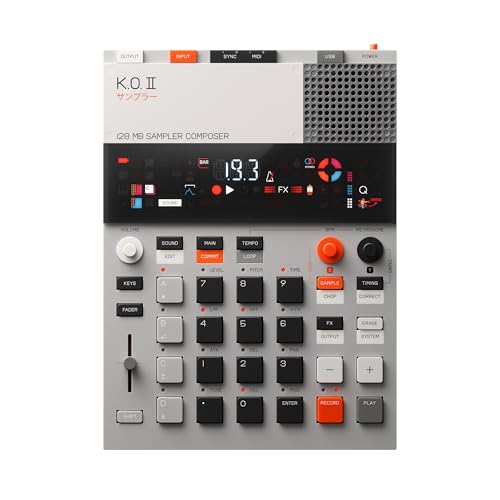
- 128MB sampler with built-in microphone
- Four-group sequencer with song mode
- Portable effects and MIDI/sync connectivity
Best For: Portable beat-making, sampling, and live performance
Best for Hands-Free Practice

- 16 touch-sensitive finger pads
- 48 kits and 100 preset patterns
- Includes a foot pedal and dual power options
Best For: Accessible practice and hands-free rhythm playing
Best Ultra-Portable Option

- Pocket-sized synthesized and sampled drum sounds
- 16 punch-in effects and pattern chains
- Battery-powered with speaker and 3.5mm output
Best For: Travel-friendly beat sketches and compact sequencing
Best Compact All-Rounder – Roland TR-6S Rhythm Performer
The Roland TR-6S is one of the most versatile compact drum machines for producers who want classic rhythm sounds, modern synthesis, and hands-on sequencing in a battery-powered format. Its six tracks, user-sample support, and USB connectivity make it suitable for both portable beatmaking and computer-based production.
Best For: Producers who want authentic Roland drum-machine sounds with deeper sequencing and sound-design options.
Pros:
- Includes detailed circuit models of the TR-808, TR-909, TR-606, TR-707, and more.
- Offers a large preset sample library, custom user-sample support, and an FM sound engine.
- Advanced sequencer includes sub-steps, flam, step-loop, and motion recording.
- Also works as a USB audio/MIDI interface and supports the TR-EDITOR software.
Cons:
- Its broad feature set may take more time to learn than a basic rhythm box.
- The compact design provides six tracks rather than the larger TR-8S format.
The TR-6S is a strong pick when portability matters but you do not want to sacrifice sound variety or sequencing depth. It is especially appealing for creators who want one compact unit that can cover classic, contemporary, and experimental drum parts.
Best Analog Performance Focus – Arturia DrumBrute Impact
The Arturia DrumBrute Impact is a compact analog drum machine aimed at hands-on beat programming and live performance. Its separate accent controls and optional Color sound-shaping give each instrument more room for expressive pattern development.
Best For: Beatmakers and performers who prefer direct control over analog drum sounds and pattern dynamics.
Pros:
- Uses an analog drum-machine design for a dedicated hardware workflow.
- Provides a separate accent control for each drum.
- Song mode allows patterns to be chained into longer arrangements.
- Optional Color sound-shaping is available on all instruments except the cowbell.
Cons:
- Color sound-shaping does not apply to the cowbell.
- The supplied notes describe fewer built-in features than the more sample-oriented options in this roundup.
The DrumBrute Impact makes the most sense for users who value tactile control and accent-driven grooves. Its song mode adds useful structure, while the analog format keeps the instrument focused on immediate beat creation.
Best for Practice and Portability – Korg KR-11 Compact Rhythm Box
The Korg KR-11 is a simple, highly portable rhythm box for practice, finger drumming, and casual play. With 126 patterns, 16 velocity-sensitive pads, a built-in speaker, and battery operation, it is designed to provide quick access to grooves without a complicated setup.
Best For: Musicians who want an easy-to-carry rhythm companion for practice and informal beatmaking.
Pros:
- Includes 126 patterns across styles such as Blues/R&B, Country, and Island.
- Offers 16 velocity-sensitive pads for nuanced finger drumming.
- Built-in speaker, battery operation, headphone/line output, and optional AC adapter support flexible use.
- Includes a metronome and optional pedal-switch support for start/stop, pattern changes, and fills.
Cons:
- Its simple rhythm-box design is less suited to advanced sound design than dedicated production machines.
- It provides 14 user preset slots, which may limit larger pattern libraries.
The KR-11 stands out among compact drum machines for straightforward practice and portability. It is a practical choice when built-in playback, quick controls, and a small footprint matter more than extensive synthesis or studio sequencing.
Best Sound Library Value – Alesis SR-18 Drum Machine
The Alesis SR-18 is a compact standalone drum machine built around a substantial onboard sound library and performance-focused controls. With 500 professional sounds, built-in effects, MIDI support, and both wall and battery power, it is suited to songwriting, live use, and quick pattern development.
Best For: Songwriters, live performers, and producers who want a broad preset library with practical performance features.
Pros:
- Includes 500 professional sounds and built-in digital effects.
- Dynamic Articulation is designed to add realism to the drum parts.
- Pattern Play Mode, programmable Drum Roll, and tap tempo support hands-on performance.
- Provides MIDI connectivity for keyboards, computers, DAWs, and electronic drum kits.
Cons:
- Battery operation requires six AA batteries, which are not included.
- Its feature set centers on onboard sounds and patterns rather than the TR-6S’s user-sample and FM workflow.
The SR-18 remains a practical option for compact drum-machine users who need many ready-to-use sounds and reliable MIDI integration. Its performance modes also make it a useful songwriting and live accompaniment tool.
Roland Portable Powerhouse – AIRA Compact T-8 Beat Machine
The Roland AIRA Compact T-8 is a strong choice for musicians seeking compact drum machines with authentic classic sounds and hands-on sequencing. It combines TR-808, TR-909, and TR-606 drum tones with TB-303 bass, making it useful for sketching beats, acid lines, and live patterns in a portable format.
Best For: Beginners and electronic musicians who want portable Roland drum and bass sounds, performance controls, and USB-C connectivity.
Pros:
- Includes authentic TR drum sounds and TB-303 bass through Roland ACB technology.
- Offers a flexible 16-step sequencer with probability, sub step, last step, and velocity controls.
- Built-in delay, reverb, overdrive, and sidechain compression support live sound shaping.
- Provides audio, MIDI, sync, and class-compliant USB-C connectivity.
Cons:
- The compact control layout may be less comfortable for users who prefer larger hardware.
- Its focus on Roland-style drum and bass sounds may not suit every genre.
The T-8 stands out when authentic Roland character and performance-oriented sequencing matter more than extensive sound-design depth. Its portable design and USB-C interface also make it practical for mobile ideas and computer-based setups.
Korg Pattern Playground – Volca Drum Digital Percussion Synthesizer
Korg Volca Drum Digital Percussion Synthesizer w/ 16-step Sequencer and Active Step
Check Price On AmazonThe Korg Volca Drum is one of the more sound-design-focused compact drum machines, pairing a six-part DSP synth engine with a 16-step sequencer. Its waveguide resonator, randomize functions, and pattern variations make it a practical option for creating unusual percussion in the studio or on the go.
Best For: Beat makers who want distinctive electronic percussion, flexible pattern variation, and a portable machine with a built-in speaker.
Pros:
- Six-part DSP synthesis engine supports a rich range of drum sounds.
- Waveguide resonator adds resonant character to percussion tones.
- Active Step, Slice, Accent, choke, and randomize functions encourage rhythmic variation.
- Compact body and built-in speaker support portable music creation.
Cons:
- Its 16-step sequencer may feel limiting for arrangements requiring longer patterns.
- The supplied notes list auxiliary connectivity rather than broad audio and MIDI I/O.
The Volca Drum is a compelling pick for producers who value experimentation over traditional drum-kit emulation. Its sequencing tools make it easy to turn short patterns into more varied, evolving rhythms.
Stylus Simplicity – Stylophone BEAT Compact Drum Machine
The Stylophone BEAT is a straightforward choice for shoppers comparing compact drum machines for casual beat making and layered rhythm ideas. It includes four drum kits, four bass sounds, multiple pattern recording, a click track, tempo lock, and a built-in speaker in a battery-powered design.
Best For: Beginners and mobile creators who want an approachable rhythm machine with stylus control, basic bass sounds, and headphone support.
Pros:
- Combines four drum kits with four bass sounds in a compact unit.
- Supports multiple pattern recording and layered performances.
- Click track and tempo lock help keep patterns in time.
- Built-in speaker, volume control, and wired headphone compatibility support flexible use.
Cons:
- Requires three AA batteries, which are not included.
- Its four kits and four bass sounds provide less variety than more synthesis-focused machines.
- The plastic construction may feel less substantial than larger hardware.
The BEAT favors accessibility and portability over deep sequencing or extensive sound shaping. It is a sensible entry point for quick ideas, simple layered patterns, and battery-powered music making.
Best for Sampling – EP-133 K.O. II
The teenage engineering EP-133 K.O. II is a versatile choice for shoppers seeking compact drum machines with sampling, sequencing, and live-performance features. Its built-in microphone, 128MB memory, effects, and portable battery operation make it suitable for creating beats away from a full studio.
Best For: Producers who want a compact sampler and drum machine for beat-making, resampling, and portable live use.
Pros:
- Built-in microphone and line input support sampling and resampling.
- Four groups of 99 patterns, song mode, and a commit function support fast arrangement.
- Includes six master effects and 12 punch-in effects controlled by a multifunctional fader.
- Offers MIDI and sync connections, a built-in speaker, and USB-C or AAA battery power.
Cons:
- Its broad sampler and sequencing feature set may take longer to learn than a basic drum machine.
- The plastic body may be less reassuring for users seeking a metal-built instrument.
Choose the K.O. II if sampling and hands-on performance matter as much as drum programming. It is a particularly capable compact option for turning quick ideas into arranged tracks.
Best for Hands-Free Practice – Medeli MR101S
The Medeli MR101S is a straightforward option among compact drum machines, combining 16 touch-sensitive pads with preset kits and patterns. Its included foot pedal, USB-C or battery power, and portable size make it practical for casual practice and hands-free playing.
Best For: Beginners and players who want an accessible portable drum machine with foot-pedal control.
Pros:
- Sixteen touch-sensitive finger pads provide a direct playing surface.
- Includes 48 drum kits and 100 preset drum patterns for getting started quickly.
- Included foot pedal adds hands-free flexibility.
- Runs from USB-C or batteries.
Cons:
- The supplied notes do not indicate sampling, effects, or MIDI connectivity.
- Its focus on presets may be limiting for users seeking deep sound design.
The MR101S is best viewed as a compact, approachable rhythm instrument rather than a full production workstation. It makes sense when immediate pad playing and foot control are higher priorities than advanced sequencing.
Best Ultra-Portable Option – PO-12 Rhythm
The teenage engineering PO-12 Rhythm is one of the most pocketable compact drum machines for buyers who want synthesized and sampled drum sounds in a tiny sequencer. It adds parameter-style sound control through 16 punch-in effects, pattern chaining, and battery operation.
Best For: Travelers and beginners who want an ultra-portable drum sequencer for sketching beats and experimenting with effects.
Pros:
- Combines synthesized and sampled drum sounds in a pocket-sized device.
- Provides 16 punch-in effects and 16 pattern chains for creative sequencing.
- Includes a built-in speaker and 3.5mm line output for headphones or external speakers.
- Runs on two AAA batteries with stated long battery life and includes a folding stand.
Cons:
- Its tiny format offers less memory and functionality than the larger EP-133 K.O. II.
- The supplied notes do not mention a built-in microphone or audio sampling input.
The PO-12 is a strong fit when portability and immediate pattern creation outweigh expanded sampling features. Its small footprint makes it easy to carry, while the effects and pattern chains add room for experimentation.
How We Picked the Best Compact Drum Machines
We evaluated these Compact Drum Machines by focusing on the features that matter most in real-world use: sound quality, sequencing flexibility, controls, portability, connectivity, and ease of performance. The selection includes dedicated rhythm boxes, analog and digital instruments, sampler-based workstations, and ultra-portable pocket devices.
We also considered how each model fits a different workflow. Some prioritize authentic drum-machine sounds and live pattern manipulation, while others offer broader sound libraries, sampling, effects, or a simple way to add rhythm to a portable setup.
Quick Comparison
| Best For | Recommended Type | What to Prioritize |
|---|---|---|
| Classic drum sounds | Dedicated drum machine | Sound engine, pattern controls, trigger outputs |
| Live performance | Hands-on performance box | Mute controls, effects, pattern switching, durable controls |
| Sampling and arrangement | Sampler-sequencer | Memory, sampling input, effects, sequencing depth |
| Portable practice | Pocket-sized rhythm device | Battery life, speaker or headphone output, size |
| Electronic sound design | Digital or analog percussion synthesizer | Parameter controls, motion sequencing, synthesis options |
Key Buying Factors for Compact Drum Machines
Sound Engine and Library
Choose an analog unit if you want hands-on control and immediate, characterful percussion. Digital machines can provide more variety, modeled classics, synthesized textures, and greater preset flexibility. A sampler is the better choice when you want to work with your own recordings.
Sequencing and Performance Controls
Look for step sequencing, pattern chaining, parameter locks, probability, swing, or live recording if you want more than simple loops. Dedicated mute, fill, effect, and pattern controls are especially useful for live sets.
Size, Power, and Connectivity
Small hardware is convenient, but check what you give up in return. Confirm whether the unit runs on batteries or USB power, and verify its audio outputs, MIDI, USB, sync, and trigger connections. Built-in speakers are useful for sketching ideas but are rarely a substitute for proper monitoring.
Workflow and Expandability
A compact drum machine should match the way you make music. A straightforward rhythm box may be ideal for quick results, while a more advanced sampler or sequencer offers greater depth at the cost of a steeper learning curve. If you plan to expand, MIDI and synchronization support can matter as much as the onboard sounds.
Who Should Buy Which Compact Drum Machines?
Choose the Roland TR-6S if authentic Roland-style rhythms, portability, and flexible sequencing are your priorities. The Arturia DrumBrute Impact suits players who want hands-on analog performance controls and a more immediate hardware workflow.
The Korg KR-11 is a practical choice for simple, portable rhythm creation, while the Alesis SR-18 is better suited to musicians who need a broad sound library, performance-oriented outputs, and onboard processing. For an especially small all-in-one setup, the Roland AIRA Compact T-8 combines bass and drum sequencing in a highly portable format.
Choose the Korg Volca Drum for experimental digital percussion and compact sound design. The Stylophone BEAT favors approachable, playful beatmaking. The teenage engineering EP–133 K.O. II is the strongest fit for sampling and arranging, while the Medeli MR101S makes sense for straightforward portable rhythm playback. Finally, the teenage engineering PO-12 is ideal when minimum size, low cost, and parameter-based experimentation matter most.