Choosing a rackmount streaming encoder for professional studio use is about more than just resolution. You need reliable uptime, clean signal handling, flexible protocol support, and an installation that fits neatly into an AV rack.
Our picks focus on encoders that make sense for studios, control rooms, and pro AV workflows where stability, network compatibility, and easy integration matter most.
Best 10 Rackmount Streaming Encoder for Professional Studio Picks for 2026
Broadcast-Ready 4K Control
Blackmagic Streaming Encoder 4K
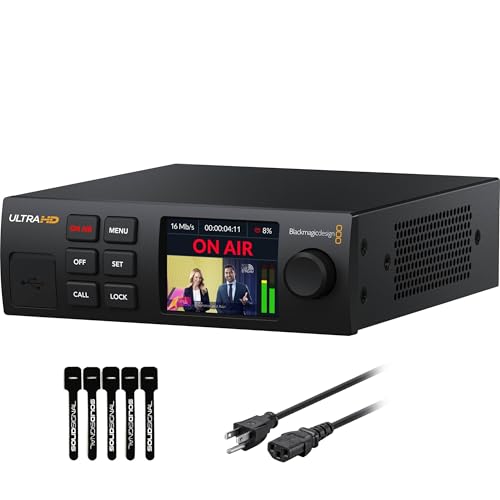
- 4K H.264/H.265 encoding up to 2160p60
- 12G-SDI input with standards conversion
- Ethernet plus mobile failover support
Best For: Studios needing SDI-based 4K streaming with broadcast controls
Simple HDMI-to-Stream Box
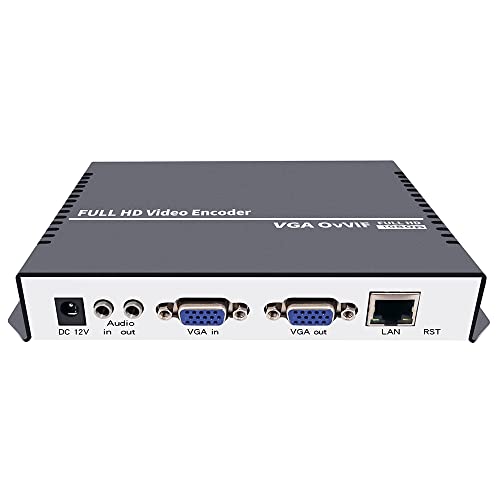
- Up to 1080p60 H.264 streaming
- Supports SRT, RTMP, RTMPS, RTSP, UDP, HTTP
- Low 5W power draw
Best For: Small studios wanting a basic 1080p hardware encoder
Multi-Protocol 4K Workhorse
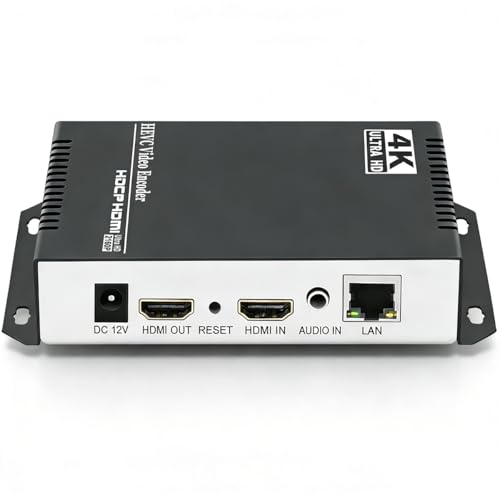
- 4K HDMI input with H.265/H.264 encoding
- Up to 4 simultaneous streams on different protocols
- Broad support for RTMP, SRT, HLS, WebRTC, and more
Best For: Studios needing multi-platform streaming from a single HDMI source
Flexible 1080p Stream Tools
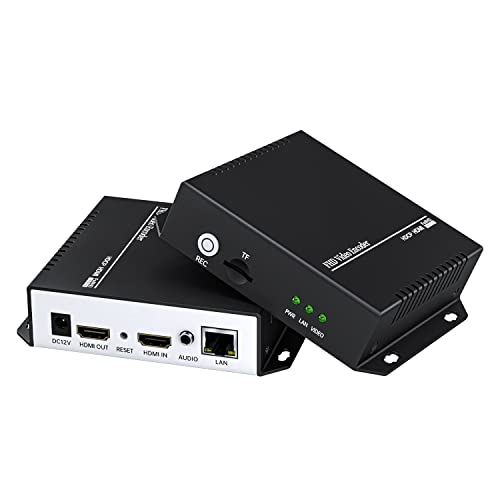
- 1080p60 H.264/H.265 live encoding
- Image tools like rotate, flip, mirror, and clip
- Multiple protocols and simultaneous stream outputs
Best For: 1080p studios wanting flexible image controls and multi-protocol streaming
Studio-Grade Network Flexibility
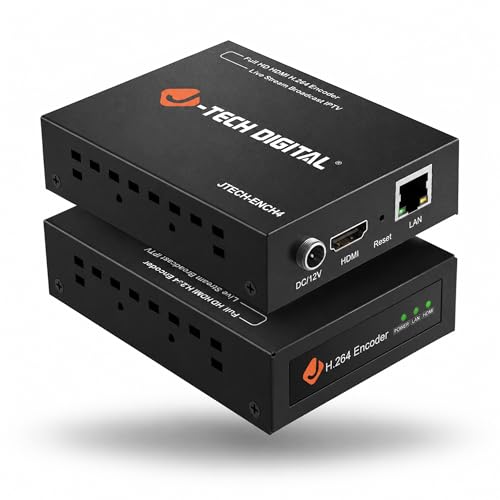
- 4K@60Hz HDMI input with H.264/H.265 encoding
- Supports RTMP, RTSP, SRT, HLS, UDP, and more
- Web GUI adds OSD, crop, rotate, and bitrate control
Best For: Compact studio encoding with broad protocol support
Multi-Stream DisplayPort Choice
UNISHEEN 4K30 DisplayPort Encoder

- 4K30 input/output with up to 4 simultaneous streams
- Supports SRT, RTSP, RTMPS, UDP, and NVR use
- Adds OSD, crop, rotation, and image enhancement tools
Best For: Multi-destination streaming from a DisplayPort source
Compact 1080P Studio Encoder

- Hardware H.265/H.264 encoding at 1080P60
- Supports SRT, RTMP, RTSP, HLS, WebRTC, and more
- Compact chassis with browser-based setup and OSD
Best For: Compact studio IP streaming at 1080P60
Studio-ready 4K multi-stream encoder

- 4K HDMI input with H.265/H.264 dual encoding
- Up to 4 simultaneous streams across major protocols
- Branding and video controls like text, logos, crop, and rotate
Best For: Studios needing flexible multi-platform HDMI streaming
Broadcast-focused multi-stream encoder
4-Stream HDMI Broadcast Encoder

- Streams to up to 4 destinations simultaneously
- Supports RTMP, RTSP, HLS, UDP, RTP, and more
- OSD overlays plus SDK/API/CGI support
Best For: Broadcasters needing simple multi-output HDMI encoding
Flexible 4K network encoder
4K HDMI to Network Studio Encoder

- 4K HDMI input with H.265/H.264 encoding
- Supports RTSP, RTMP(S), SRT, HLS, WebRTC, and ONVIF
- Up to 4 simultaneous streams with overlays and audio control
Best For: Studios needing broad protocol support and 4K HDMI input
Broadcast-Ready 4K Control – Blackmagic Streaming Encoder 4K
If you want a rackmount streaming encoder for professional studio use, this Blackmagic unit stands out for its self-contained 4K/HD encoding, SDI workflow, and broadcast-style controls. It can stream directly over SRT or RTMP without a separate encoding PC, while still giving you standards conversion, dual monitor outputs, and mobile failover for more reliable live production.
Best For: Studios, live production rooms, and broadcast workflows that need 4K encoding, SDI integration, and failover connectivity.
Pros:
- Encodes in H.264 or H.265 up to 2160p60 with no encoding PC required
- 12G-SDI input plus loop output and Teranex-powered standards conversion
- Gigabit Ethernet with 5G/4G mobile support and automatic failover
- Front-panel LCD, buttons, knob, and USB-C webcam output for flexible control
Cons:
- Only one SDI input, so it is not a multi-input switcher
- Best suited to SDI-based workflows rather than HDMI-only setups
- Form factor is 1/3 RU, so it may not fill a full rack space on its own
This is the most professional-oriented option in the group if your priority is reliable studio streaming with broadcast features. It is especially appealing when you need captions, timecode, REST API control, and camera-control integration in one hardware encoder.
Simple HDMI-to-Stream Box – iseevy H.264 VGA Encoder
This rackmount streaming encoder for professional studio use is more of a compact, budget-friendly streaming box than a feature-heavy broadcast appliance. It supports up to 1080p60 and streams over common protocols like SRT and RTMP, making it a straightforward option when you need basic hardware encoding from an HDMI source without a complex setup.
Best For: Small studios and simple live streaming setups that need an affordable 1080p hardware encoder.
Pros:
- Supports up to 1080p60 H.264 encoding
- Works with SRT, RTMP, RTMPS, RTSP, UDP, and HTTP
- Low power draw at 5 watts
- Compact enclosure with simple one-port connectivity
Cons:
- VGA connector is less convenient for modern HDMI-centric studios
- Top resolution is 1080p, not 4K
- Feature set is much more basic than higher-end studio encoders
For straightforward streaming tasks, this encoder keeps things simple and inexpensive. It is best viewed as an entry-level hardware solution rather than a full studio production centerpiece.
Multi-Protocol 4K Workhorse – URayCoder HDMI Encoder
If you need a rackmount streaming encoder for professional studio use with broad protocol support, this URayCoder model is built for flexibility. It handles 4K HDMI input at up to 30fps, supports dual H.265/H.264 encoding, and can push multiple streams to different services, which makes it useful for studios that distribute content across several platforms at once.
Best For: Teams that want multi-platform streaming, 4K HDMI input, and extensive protocol compatibility.
Pros:
- Supports 4K UHD input with H.265/H.264 dual encoding
- Compatible with many protocols including RTMP(S), SRT, HLS, WebRTC, and more
- Can output up to 4 video streams with different protocols simultaneously
- Includes overlays, cropping, rotation, flipping, and timestamp support
Cons:
- 4K input is limited to 30fps
- Uses HDMI rather than SDI, which may not suit every broadcast rack
- More of a feature-dense encoder than a simple plug-and-play device
This is a strong choice when your workflow values protocol flexibility and multi-stream delivery over SDI-native integration. It fits best in studios that need one box to feed several destinations with customizable output settings.
Flexible 1080p Stream Tools – UNISHEEN HDMI Video Encoder
This rackmount streaming encoder for professional studio use focuses on practical control over 1080p live workflows. It supports H.264/H.265 compression, up to 1080p60 output, and a wide set of stream protocols, while also adding image tools like rotation, flip, mirror, clipping, and enhancement for more polished results.
Best For: Studios and teams that want flexible 1080p encoding with editing-style image controls and multiple output protocols.
Pros:
- Supports 1080p60 with H.264/H.265 compression
- Offers rotation, flip, mirror, clipping, sharpening, and noise reduction
- Works with SRT, RTSP, RTMPS, UDP, and NVR
- Can output multiple video streams simultaneously
Cons:
- Maximum resolution is 1080p, so it is not a 4K encoder
- Primarily HDMI-based, which may not match SDI-heavy studios
- Some users may not need the extra image-processing tools
For a studio that values versatility at 1080p, this encoder offers a lot of adjustment options in a small package. It is a good fit when you want live stream control features without moving up to a full 4K broadcast chain.
Studio-Grade Network Flexibility – J-Tech Digital HDMI Encoder
If you need a rackmount streaming encoder for professional studio workflows, this J-Tech Digital unit is built around flexible IP delivery and strong HDMI compatibility. It handles up to 4K@60Hz input, converts to H.264 or H.265, and supports a wide range of streaming and transport protocols for broadcast-style distribution.
Best For: Studio teams that want a compact HDMI encoder with broad protocol support and remote web-based control.
Pros:
- Supports up to 4K@60Hz HDMI input with 1080P@60Hz output.
- Offers H.264/H.265 encoding with 1 main stream and 3 substreams.
- Works with RTMP, RTMPS, HLS, RTSP, UDP, SRT, FLV, and more.
- Includes web GUI controls for bitrate, FPS, OSD, flip, rotate, crop, and image adjustments.
Cons:
- Substreams are lower resolution than the main stream.
- Single HDMI input limits it to one source at a time.
This is a practical choice if your studio needs an encoder that can send one HDMI source to multiple destinations with useful stream tuning tools. It is especially appealing when protocol flexibility and remote management matter more than built-in hardware extras.
Multi-Stream DisplayPort Choice – UNISHEEN 4K30 DisplayPort Encoder
For a rackmount streaming encoder for professional studio setups that rely on DisplayPort sources, this UNISHEEN model focuses on 4K30 broadcast delivery and multi-destination output. It supports several streaming protocols at once, making it a strong fit for sending one production feed to different servers or platforms.
Best For: Studios that need a DisplayPort encoder with multi-stream output and broad live streaming protocol support.
Pros:
- Supports 4K video input and output at 30fps.
- Can output 4 video streams simultaneously with different protocols.
- Supports SRT, RTSP, RTMPS, UDP, and NVR workflows.
- Includes de-interlacing, noise reduction, sharpening, rotation, flip, mirror, crop, and OSD overlay.
Cons:
- Limited to 4K30 rather than 4K60.
- Uses a DisplayPort input, so it is less universal than HDMI-only sources.
This encoder is best when your studio wants protocol variety and simultaneous streaming without adding extra boxes. The built-in image tools and overlay options also make it useful for polished broadcast output.
Compact 1080P Studio Encoder – UNISHEEN 1080P60 HDMI Encoder
If you want a rackmount streaming encoder for professional studio use without the bulk of larger gear, this compact UNISHEEN model is aimed at reliable 1080P60 IP distribution. It combines hardware H.264/H.265 encoding with broad protocol support and a browser-based setup process that is easy to manage in day-to-day workflows.
Best For: Smaller studios and production racks that need a compact 1080P60 HDMI encoder with flexible IP output.
Pros:
- Delivers broadcast-quality 1080P60 hardware encoding in H.265/H.264.
- Supports SRT, RTMP, RTSP, RTMPS, UDP, HTTP, HLS, WebRTC, TRTC, Icecast, and SHOUTcast.
- Browser-based configuration with DHCP enabled by default.
- Compact design with HDMI embedded audio, external 3.5mm input, and OSD overlays.
Cons:
- Limited to 1080P60 rather than 4K input.
- Only one HDMI port is provided.
For studios that value dependable stream delivery and easy setup, this encoder offers a lot in a very small package. Its wide protocol list and compact footprint make it a sensible fit for live broadcast, monitoring, or digital signage pipelines.
Studio-ready 4K multi-stream encoder – 4K HDMI to IP/RTMP Encoder
If you need a rackmount streaming encoder for professional studio workflows, this URayCoder unit is built around 4K HDMI input, dual H.265/H.264 encoding, and broad protocol support. It’s a practical fit when you want to push one source to multiple destinations without extra gear, while still keeping control over bitrate, resolution, audio, and on-screen branding.
Best For: Studios that want a compact HDMI-to-network encoder with multi-platform streaming and customizable output.
Pros:
- Supports 4K UHD input up to 30fps, with higher frame rates at lower resolutions.
- Can output up to 4 streams at once across formats like RTMP, RTSP, HLS, SRT, UDP, and WebRTC.
- Includes text, scrolling captions, logos, timestamps, and video adjustment tools like crop, rotate, flip, and mirror.
- Offers line-in and embedded HDMI audio options with adjustable sound quality.
Cons:
- Requires HDMI sources, so it is not a universal encoder for non-HDMI studio feeds.
- Best value depends on whether you will actually use the multi-stream and customization features.
- Setup is described as easy, but still involves network streaming configuration.
Overall, this is a strong pick if your studio needs a feature-rich encoder with broad delivery options and branding controls. It stands out most when you want a flexible network streaming box rather than a simple single-output device.
Broadcast-focused multi-stream encoder – 4-Stream HDMI Broadcast Encoder
For a rackmount streaming encoder for professional studio use, this ESZYM model focuses on broadcast-friendly output and simple multi-platform delivery. It supports up to four simultaneous streams, adds OSD branding, and works with common live streaming protocols, making it a solid option when you want a straightforward encoder for recurring productions.
Best For: Studios and broadcasters that want a simple HDMI encoder with multi-stream output and OSD branding.
Pros:
- Supports up to 4 video streams at the same time for multi-platform streaming.
- Works with RTMP, RTMPS, RTSP, UDP, RTP, HLS, HTTP, and related protocols.
- Includes OSD tools for static text, scrolling text, and logo overlays.
- Offers free lifetime support plus SDK, API, and CGI control protocol access.
Cons:
- Listed capture resolution is 720p, which may be limiting for higher-end studio needs.
- Device interface and hardware details are less specific than some competing encoders.
- Geared more toward broadcast output than advanced video processing.
This encoder makes sense if your priority is reliable live distribution and basic on-screen branding rather than maximum resolution or deep image controls. It is especially appealing for teams that value API access and customization support.
Flexible 4K network encoder – 4K HDMI to Network Studio Encoder
This URayCoder model is a strong candidate for a rackmount streaming encoder for professional studio setups that need 4K HDMI ingestion and broad network compatibility. It combines H.265/H.264 encoding with support for RTSP, RTMP(S), SRT, HLS, WebRTC, and ONVIF, so it works well when your workflow spans live streaming, IPTV, or IP video distribution.
Best For: Studios that need 4K HDMI encoding with wide protocol support and flexible network delivery.
Pros:
- Supports 4K UHD input at up to 30fps, with higher frame rates at lower resolutions.
- Compatible with a wide range of protocols, including RTSP, RTMP(S), SRT, HLS, WebRTC, and ONVIF.
- Can output up to 4 simultaneous streams for multi-platform delivery.
- Includes custom overlays, audio input options, and image adjustment tools.
Cons:
- Requires HDMI output devices as sources, so it is not a universal capture solution.
- Many advanced features may be more than needed for basic single-platform streaming.
- Best suited to users comfortable configuring network video workflows.
Among studio encoders, this one stands out for protocol breadth and 4K support in a compact network encoder format. If your production environment needs both live streaming and IP video compatibility, it covers a lot of ground.
How We Picked the Best Rackmount Streaming Encoder for Professional Studio
We looked for models that are practical in a rack-based studio environment: hardware encoding, broad protocol support, solid input options, and formats that can fit common live production workflows. We also favored devices that support low-latency delivery for streaming to platforms, CDNs, and internal distribution systems.
Quick Comparison
The right Rackmount Streaming Encoder for Professional Studio use depends on your source type and distribution plan. SDI-friendly units are a better fit for broadcast cameras and switchers, while HDMI models suit simpler studio rigs, PCs, and presentation systems. If you need 4K capture or futureproofing, prioritize models that handle 2160p input/output cleanly; if you need broad compatibility, look for SRT, RTMP, RTSP, HLS, and HTTP support.
Key Buying Factors for a Rackmount Streaming Encoder for Professional Studio
Input and Signal Format
Match the encoder to your workflow. SDI is common in professional studios, while HDMI and DisplayPort are more common for presentation, production computers, and compact control rooms. Choose a model that accepts your primary source without extra converters.
Codec and Bitrate Efficiency
H.264 is still widely supported, but H.265 can deliver better compression at the same quality. If your studio streams frequently or must conserve bandwidth, H.265 is worth considering. For maximum compatibility with older systems and platforms, H.264 remains a safe choice.
Protocol Support
For modern studio streaming, SRT is valuable for resilience and lower-latency contribution, while RTMP and RTMPS remain important for direct platform streaming. RTSP, HLS, UDP, and WebRTC support can help with internal monitoring, distribution, or more specialized workflows.
Installation and Reliability
In a professional rack, stable power, predictable thermal performance, and simple remote management matter. Even if a unit is not explicitly rack-ear mounted, it should be easy to secure, cable, and operate alongside other rack equipment.
Who Should Buy Which Rackmount Streaming Encoder for Professional Studio?
Choose an SDI-based encoder if your studio already uses broadcast cameras or a switcher. Choose HDMI or DisplayPort if your signal chain is built around computers, presentation sources, or compact production gear. Choose 4K-capable models if you deliver premium content now or expect to scale into UHD workflows. If your priority is broad destination support, focus on encoders that cover RTMP, RTMPS, SRT, and RTSP in one device.
For most buyers, the best Rackmount Streaming Encoder for Professional Studio use is the one that matches your source format, stream destination, and bandwidth requirements without adding unnecessary complexity.