OLED TVs remain the gold standard for gaming when you want near-instant response, perfect blacks, and bold HDR contrast. If you play fast shooters, story-driven single-player games, or next-gen console titles, the right panel can make a huge difference.
Our roundup of the best OLED televisions for gaming in 2026 focuses on performance, features, and value so you can quickly find the right size and spec for your setup.
Best 10 Oled Televisions for Gaming Picks for 2026
LG Bright-Room Gaming Pick
LG 65-Inch OLED evo AI 4K C5 Series Smart TV

- 0.1ms response time and up to 144Hz refresh rate
- NVIDIA G-Sync, AMD FreeSync Premium, and VRR support
- Four HDMI 2.1 inputs plus bright-room help
Best For: Gamers who want a bright-room-friendly OLED with fast response and broad HDMI support
Sony PS5-Ready OLED Choice
Sony 48 Inch A90K BRAVIA XR 4K HDR TV

- As low as 8.5ms input lag for gaming
- HDMI 2.1 with 4K/120, VRR, and ALLM
- Game Menu and PS5-focused features
Best For: PlayStation 5 owners and buyers who want a smaller, responsive OLED
Samsung Bright HDR Gaming OLED
Samsung 65-Inch Class S90H Series

- Glare Free OLED HDR+ for brighter rooms
- Motion Xcelerator 165Hz with G-SYNC or FreeSync Premium Pro
- NQ4 AI Gen3 processor with AI motion enhancement
Best For: Gamers who want a bright-room OLED with advanced motion and glare reduction
Samsung Fast-Action Gaming OLED
Samsung 65-Inch Class OLED S90F 4K Smart TV

- VRR gaming up to 4K 144Hz
- Motion Xcelerator 144Hz for smooth play
- NQ4 AI Gen3 processor with 4K upscaling
Best For: Competitive gamers who want a 144Hz OLED with responsive motion and AI upscaling
Compact Speed Pick
LG 42-Inch Class OLED evo AI 4K C6 Series Smart TV

- 42-inch OLED with self-lit pixels
- 165Hz gaming support and 0.1ms response time
- NVIDIA G-SYNC and FreeSync Premium included
Best For: Compact gaming setups
Big-Screen Immersion Pick
Samsung 77-Inch OLED S84F Series Smart TV
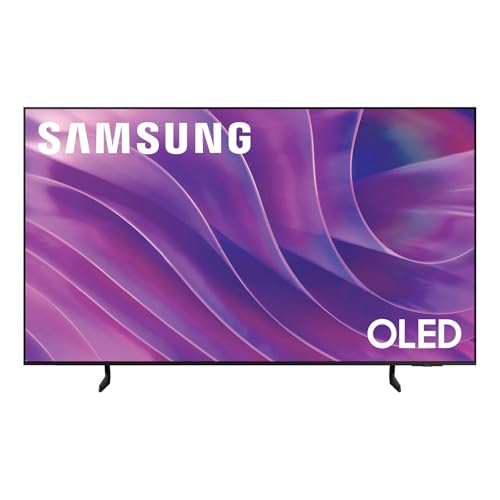
- 77-inch OLED screen for immersive play
- Motion Xcelerator 120Hz with 4K support
- Pantone Validated color and AI upscaling
Best For: Large-room gaming and home theater
Competitive Gaming Pick
Samsung 55-Inch S90H OLED Smart TV
- Glare Free OLED with strong contrast
- Motion Xcelerator 165Hz gaming support
- NQ4 AI Gen3 with 4K AI Upscaling Pro
Best For: Fast-paced gaming in brighter rooms
Editor’s Pick
LG 65-Inch OLED evo AI C6 for Gaming

- 165Hz refresh rate
- 0.1ms response time
- G-Sync and FreeSync Premium support
Best For: Gamers who want a premium 65-inch OLED with fast motion handling
Value Pick
Samsung 65-Inch S85H OLED for Gaming

- 120Hz refresh rate
- G-SYNC and FreeSync Premium support
- 4K AI upscaling included
Best For: Gamers who want a 65-inch OLED with solid basics and value-minded performance
LG Bright-Room Gaming Pick – LG 65-Inch OLED evo AI 4K C5 Series Smart TV
If you want one of the more feature-packed oled televisions for gaming, the LG C5 is built to deliver speed, flexibility, and strong all-around picture quality. Its 0.1ms response time, up to 144Hz refresh rate, and support for NVIDIA G-Sync, AMD FreeSync Premium, and VRR make it a strong fit for fast-moving games, while Brightness Booster and Bright Room Ready certification help it handle tougher lighting conditions.
Best For: Gamers who want a bright-room-friendly OLED with top-tier gaming features and multiple HDMI 2.1 inputs.
Pros:
- 0.1ms response time and up to 144Hz refresh rate for smooth, low-blur gaming
- Supports NVIDIA G-Sync, AMD FreeSync Premium, and VRR
- Four HDMI 2.1 inputs for consoles, PCs, and other gear
- Brightness Booster and UL-verified glare reduction help in brighter rooms
Cons:
- Up to 144Hz gaming benefits may depend on connected device and supported content
- Premium feature set may be more than casual viewers need
This LG model stands out if you want a versatile OLED that balances competitive gaming specs with solid bright-room performance. It should appeal most to players who value responsiveness and connectivity as much as image quality.
Sony PS5-Ready OLED Choice – Sony 48 Inch A90K BRAVIA XR 4K HDR TV
The Sony A90K is a compact OLED option for gamers who want strong contrast and PlayStation-friendly features in a smaller size. It pairs the Cognitive Processor XR with XR OLED Contrast Pro, and for gaming it offers input lag as low as 8.5ms, a Game Menu, HDMI 2.1 support, 4K/120, VRR, and ALLM. For OLED televisions for gaming in a 48-inch form factor, it is aimed squarely at responsive play.
Best For: PlayStation 5 owners and anyone looking for a smaller OLED with low lag and HDMI 2.1 gaming support.
Pros:
- Input lag as low as 8.5ms for responsive gaming
- HDMI 2.1 features include 4K/120, VRR, and ALLM
- Game Menu keeps gaming settings in one place
- Acoustic Surface Audio+ and Dolby Atmos support add immersive sound
Cons:
- 48-inch size may be too small for buyers wanting a large-screen centerpiece
- Refresh rate is listed at 120Hz, not higher-end gaming rates
This is a well-targeted gaming OLED if you prioritize console performance and a compact footprint over sheer screen size. Its PS5-focused features make it especially appealing for living rooms or desks where space is limited.
Samsung Bright HDR Gaming OLED – Samsung 65-Inch Class S90H Series
The Samsung S90H is built for gamers who want a bright OLED with modern motion and anti-reflection features. It combines OLED HDR+ with Glare Free technology, the NQ4 AI Gen3 processor, and Motion Xcelerator 165Hz with NVIDIA G-SYNC or AMD FreeSync Premium Pro for ultra-smooth play. If you are comparing oled televisions for gaming, this model is a strong pick for rooms with tricky lighting and fast-action content.
Best For: Gamers who want a high-brightness OLED with glare reduction and advanced motion support.
Pros:
- Motion Xcelerator 165Hz with G-SYNC or FreeSync Premium Pro support
- Glare Free technology helps reduce distracting reflections
- OLED HDR+ and NQ4 AI Gen3 processor for strong picture processing
- AI Motion Enhancer Pro helps keep fast action clearer
Cons:
- Listed refresh rate is 120Hz in the details despite 165Hz motion features
- Newer model may be priced for buyers wanting the latest generation
This S90H version is well suited to players who game in bright or reflective rooms and want a polished, high-end OLED experience. Its blend of glare handling and gaming features makes it a practical premium option.
Samsung Fast-Action Gaming OLED – Samsung 65-Inch Class OLED S90F 4K Smart TV
The Samsung S90F is a speed-focused OLED for gamers who want strong AI processing and smooth competitive play. It uses the NQ4 AI Gen3 processor, Motion Xcelerator 144Hz, and supports VRR gaming at up to 4K 144Hz, which makes it a compelling choice among oled televisions for gaming. The set also adds HDR-like upscaling for SDR content and motion smoothing aimed at fast-moving sports and text.
Best For: Competitive gamers who want a 144Hz OLED with upscaling and responsive motion handling.
Pros:
- Supports VRR gaming at up to 4K 144Hz
- Motion Xcelerator 144Hz for smooth gameplay
- NQ4 AI Gen3 processor with 4K upscaling and HDR-like enhancement
- Motion smoothing helps reduce blur in fast-moving scenes
Cons:
- Listed as a 2025 model, so it may be a newer premium buy
- Gaming-focused spec set may exceed what casual viewers need
The S90F is a strong fit for players who care most about refresh rate, low-latency responsiveness, and modern processing. It is especially appealing if you want your TV to double as a fast, sharp screen for both games and everyday viewing.
Compact Speed Pick – LG 42-Inch Class OLED evo AI 4K C6 Series Smart TV
If you’re comparing oled televisions for gaming and want a smaller screen that still feels premium, this 42-inch LG C6 is built for fast, responsive play. It pairs self-lit OLED picture quality with a 165Hz refresh rate, 0.1ms response time, and support for NVIDIA G-SYNC and AMD FreeSync Premium, making it a strong fit for competitive gaming setups.
Best For: Gamers who want a compact OLED with high-end motion handling and modern gaming features.
Pros:
- 165Hz refresh rate with 0.1ms response time for very fast gameplay
- NVIDIA G-SYNC and AMD FreeSync Premium support for smoother visuals
- Alpha 11 AI Processor Gen3 and a11 AI Super Upscaling 4K for improved processing
- Dolby Vision, Dolby Atmos, and Filmmaker Mode add strong all-around picture and sound support
Cons:
- 42-inch screen may feel small for living-room gaming
- Only 120Hz is listed in the detailed specs despite 165Hz being highlighted in the notes
Overall, this LG makes a lot of sense if you want a smaller OLED gaming display with premium responsiveness and a full smart TV feature set. It balances speed, picture quality, and compact placement better than many larger models.
Big-Screen Immersion Pick – Samsung 77-Inch OLED S84F Series Smart TV
For shoppers browsing oled televisions for gaming in a large format, this 77-inch Samsung S84F is aimed at big-screen immersion and smooth play. It combines a self-illuminating OLED panel with Motion Xcelerator 120Hz, 4K AI upscaling, and support for up to 4K 120Hz, so it can handle fast-moving games while still serving as a centerpiece TV.
Best For: Players who want a huge OLED screen with smooth motion and AI-assisted picture processing.
Pros:
- 77-inch OLED panel for a very immersive gaming and viewing experience
- Supports up to 4K 120Hz with Motion Xcelerator 120Hz
- Pantone Validated color and skin tones for more realistic image quality
- AI-enhanced 4K upscaling and optimized sound for mixed-use entertainment
Cons:
- Large size may be too much for smaller rooms
- Refresh rate is listed as 120Hz in the detailed specs rather than a higher gaming rate
This model is a good match if you want a massive OLED TV that still covers the essentials for gaming. It leans more toward cinematic scale than esports-first speed, but it offers a strong balance of size, motion handling, and picture processing.
Competitive Gaming Pick – Samsung 55-Inch S90H OLED Smart TV
If your priority is one of the more gaming-focused oled televisions for gaming, the Samsung S90H stands out for speed and reflection control. It features OLED HDR+ with Glare Free technology, a powerful NQ4 AI Gen3 Processor, and the Ultimate Gaming Pack with Motion Xcelerator 165Hz plus NVIDIA G-SYNC or AMD FreeSync Premium Pro for low-latency play.
Best For: Competitive gamers who want a glare-reducing OLED with high refresh-rate gaming support.
Pros:
- Glare Free screen helps reduce distracting reflections
- Motion Xcelerator 165Hz with G-SYNC or FreeSync Premium Pro support
- NQ4 AI Gen3 Processor with 4K AI Upscaling Pro for sharper image processing
- OLED HDR+ delivers deep contrast with advanced AI detail enhancement
Cons:
- 55-inch size may be smaller than some buyers want for shared living spaces
- HDR format support is limited to HDR10+ in the detailed specs
As a gaming display, this Samsung is one of the strongest balanced options here because it combines fast motion features with a matte, glare-reducing finish. It should appeal most to players who care about responsiveness, contrast, and clearer visibility in bright rooms.
Editor’s Pick – LG 65-Inch OLED evo AI C6 for Gaming
For shoppers comparing oled televisions for gaming, the LG 65-Inch Class OLED evo AI C6 stands out with a 165Hz refresh rate, 0.1ms response time, and support for NVIDIA G-Sync and AMD FreeSync Premium. It also adds Brightness Booster, self-lit pixels, and Dolby Vision support, making it a strong fit if you want fast gameplay and a premium picture in one large-screen package.
Best For: Gamers who want a premium 65-inch OLED with fast response, high refresh support, and advanced sync features.
Pros:
- 165Hz refresh rate with 0.1ms response time for smooth gameplay
- NVIDIA G-Sync and AMD FreeSync Premium support
- Brightness Booster and over 8.3 million self-lit pixels for strong contrast
- Dolby Vision, Dolby Atmos, and Filmmaker Mode included
Cons:
- 65-inch size may be too large for smaller gaming setups
- More premium features can push it beyond budget-focused buyers
If you want an OLED that leans heavily into gaming without giving up cinematic extras, this LG checks a lot of boxes. It feels especially well-rounded for players who also care about picture processing and smart TV features.
Compact Gaming Choice – Samsung 42-Inch S90H OLED
The Samsung 42-Inch Class S90H is a compact option for oled televisions for gaming, especially if you want a smaller screen for a desk, bedroom, or tighter room layout. It combines Motion Xcelerator 165Hz, NVIDIA G-SYNC or AMD FreeSync Premium Pro, and ultra-low-latency gaming support, while the Glare Free panel helps cut distracting reflections.
Best For: Gamers who want a smaller OLED with fast refresh features and a glare-reducing screen.
Pros:
- Motion Xcelerator 165Hz for ultra-smooth gameplay
- NVIDIA G-SYNC or AMD FreeSync Premium Pro support
- Glare Free screen helps reduce distracting reflections
- OLED HDR+ with NQ4 AI Gen3 processing for detailed picture quality
Cons:
- 42-inch size may feel limited for couch gaming in larger rooms
- 2-channel speaker design is less robust than higher-end audio setups
This model makes a lot of sense if screen space is limited but gaming performance still matters. It brings the key specs most players look for, along with the convenience of a smaller OLED form factor.
Value Pick – Samsung 65-Inch S85H OLED for Gaming
If you want oled televisions for gaming in a larger living room, the Samsung 65-Inch Class S85H offers a balanced mix of performance and value. It includes a 120Hz panel, Motion Xcelerator120Hz, NVIDIA G-SYNC or AMD FreeSync Premium support, and 4K AI upscaling, so it covers the essentials for smooth gameplay and sharp-looking content.
Best For: Gamers who want a 65-inch OLED with solid gaming features and a more value-focused feature set.
Pros:
- 120Hz refresh rate with Motion Xcelerator120Hz
- NVIDIA G-SYNC or AMD FreeSync Premium support
- 4K AI upscaling helps sharpen games and streaming content
- Pantone Validated color and OLED HDR for strong picture quality
Cons:
- 120Hz is lower than some premium gaming OLEDs
- Brightness is listed below the higher-end Samsung S90H model
This is a practical pick if you want the OLED look in a 65-inch size without stepping all the way up to the most gaming-focused model. It still delivers the low-latency essentials many players want, with extra help from Samsung’s AI processing.
How We Picked the Best Oled Televisions for Gaming
We focused on gaming-first features that matter most: low input lag, strong motion handling, HDMI 2.1 support, VRR, 120Hz or higher refresh rates, and reliable HDR performance. We also weighed screen size options, smart platform usability, and value across premium and midrange models.
Quick Comparison: What Matters Most
For competitive play, prioritize refresh rate and latency. For cinematic gaming, favor HDR tone mapping, color accuracy, and larger screen sizes. If you want a versatile all-rounder, look for a balanced mix of gaming specs, picture quality, and smart TV convenience.
Key Buying Factors for Oled Televisions for Gaming
Refresh Rate and Input Lag
A 120Hz panel is the baseline for modern consoles and high-end PCs, while 144Hz can be a useful bonus for PC gamers. Lower input lag helps controls feel more immediate, especially in fast-paced titles.
HDMI 2.1 and Gaming Features
Look for HDMI 2.1, VRR, ALLM, and support for 4K at 120Hz if you want the most flexible setup. These features help reduce screen tearing, improve motion smoothness, and keep latency low.
Panel Size and Viewing Distance
Smaller models, such as 42-inch and 48-inch displays, work well for desks and close-up gaming. Larger 55-inch, 65-inch, and 77-inch options are better for living rooms and immersive couch gaming.
HDR, Brightness, and Room Lighting
OLED contrast is excellent, but brighter rooms can still benefit from stronger HDR performance and good anti-reflection handling. If you game mostly at night, almost any quality OLED will look superb.
Who Should Buy Which Oled Televisions for Gaming?
Competitive gamers should lean toward the fastest, most feature-rich models with high refresh rates and strong connectivity. Console gamers who want an easy, premium picture should choose a balanced 55-inch or 65-inch option. PC gamers and desk setups may prefer 42-inch or 48-inch screens for sharper desktop ergonomics and responsive play. If you want the biggest, most cinematic experience, step up to a 77-inch model for maximum immersion.
In short, the best choice depends on your room size, gaming platform, and whether you value speed, image quality, or overall versatility most.