A balanced patch bay for studio rack setups can make routing faster, cleaner, and far easier to change as your system grows.
In this roundup, we focus on practical, rack-friendly options that help reduce cable clutter while keeping balanced connections organized and accessible.
Best 10 Balanced Patch Bay for Studio Rack Picks for 2026
Flexible 48-Point TRS Patchbay
Behringer Ultrapatch Pro PX3000

- 48-point balanced TRS patchbay
- Selectable Parallel, Half-normalled, Normalled, and Open modes
- Rugged construction with high-quality jack connectors
Best For: Studios needing flexible TRS routing in a 1U rack
Balanced 1U Toggle Patchbay
Samson S-Patch Plus 48-Point Patch Bay

- Fully balanced 48-point 1/4-inch patch bay
- Front-panel switches for Normalled, Half-normalled, or Thru
- 1U rack-mount unit with solid construction
Best For: Rack studios that want easy front-panel routing control
XLR Rack Interface Patchbay

- 32 XLR connectors in a 1U rack unit
- Fully shielded black all-steel enclosure
- Reversible rack ears and 3-year warranty
Best For: XLR-based studios and installed systems
Shielded 48-Point Studio Patchbay
ART Pro Audio P48 48-Point Balanced Patch Bay

- 48-point balanced TRS patch bay
- Fully shielded 19-inch rack design
- Helps organize cables and reduce connector wear
Best For: Studios wanting simple, shielded TRS routing
Black Lion Audio XLR Rack Patch
16-Point XLR Patchbay for Studio Rack Routing

- 16 patch points with 32 gold-plated XLR connectors
- Built for recording and live audio studio routing
- Aluminum body with a 2-year warranty
Best For: Studios that want front-panel XLR access for balanced routing
ART Balanced TRS Patch Bay
8-Point Balanced TRS Patch Bay with Normal Modes
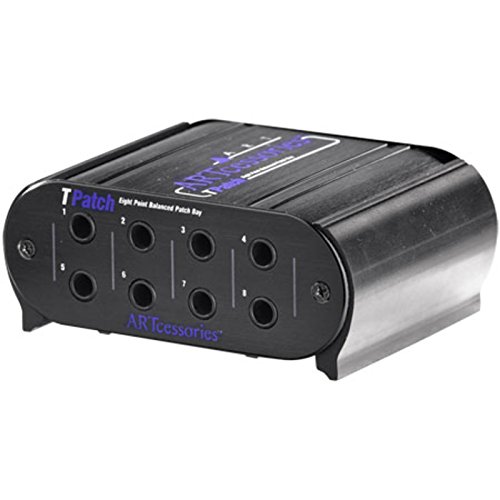
- Eight balanced points with four linked I/O pairs
- Half-normal and normal modes for flexible routing
- Rugged extruded aluminum case
Best For: Small studios needing flexible TRS routing and normalization
Hosa Front-Access XLR Patch
12-Point Reversible XLR Patchbay for Rack Access

- 12-point reversible XLR patch bay
- Brings hard-to-reach inputs to the front of the rack
- Compatible with mixers, interfaces, and preamps
Best For: Racks that need convenient front-access XLR patching
Flexible Rack I/O Panel

- 1U metal panel for 19-inch racks
- 12 D-series punch-outs for multiple connector types
- Hinged access helps rear-side wiring
Best For: Mixed audio, video, and data rack I/O
Compact Balanced XLR Module

- 3-point balanced XLR patchbay module
- Rolled-steel chassis with gold-plated contacts
- Includes limited lifetime warranty
Best For: Compact professional XLR routing
Modular Balanced Patch Panel

- Factory-assembled 4-block modular design
- Configurable for 4, 8, 12, or 16 channels
- Full-steel chassis with gold-plated pins
Best For: Expandable studio XLR routing
Flexible 48-Point TRS Patchbay – Behringer Ultrapatch Pro PX3000
Behringer ULTRAPATCH PRO PX3000 Multi-Functional 48-Point 3-Mode Balanced Patchbay
Check Price On AmazonIf you want a balanced patch bay for studio rack use that can adapt as your routing changes, the Behringer Ultrapatch Pro PX3000 is built for exactly that kind of workflow. Its 48-point layout and selectable operating modes make it a practical way to reduce cable clutter while keeping your studio wiring organized and easy to reconfigure.
Best For: Studios that need flexible TRS routing with selectable normaling modes in a 1U rack unit.
Pros:
- 48-point balanced TRS patchbay helps organize studio cabling.
- Each channel can switch between Parallel, Half-normalled, Normalled, and Open.
- Rugged construction is designed for long life.
- High-quality jack connectors support dependable use.
Cons:
- Built around TRS connections, so it is not the right choice for XLR-only setups.
- Best suited to users who want to manage routing modes manually.
The PX3000 is a strong fit if your priority is routing flexibility in a compact rack footprint. It is especially appealing for studios that want one patchbay to handle multiple connection styles without adding clutter.
Balanced 1U Toggle Patchbay – Samson S-Patch Plus 48-Point Patch Bay
Samson S-Patch Plus Balanced 48-Point 1/4" Patch Bay | 1/4 Inch Phone Connections
Check Price On AmazonThe Samson S-Patch Plus is a balanced patch bay for studio rack setups that need simple, central access to a lot of 1/4-inch connections. With 48 front and 48 rear phone plugs plus front-panel toggle switches, it helps you route gear cleanly without constantly reaching behind your rack.
Best For: Rack studios that want a fully balanced 48-point bay with easy front-panel mode switching.
Pros:
- Fully balanced 48-point patch bay with 1/4-inch phone connections.
- Mini toggle switches allow Normalled, Half-normalled, or Thru operation.
- 1U rack-mount design keeps the footprint compact.
- Solid construction and clear, easy-to-read blue anodized panel.
Cons:
- Focused on 1/4-inch phone connections rather than XLR routing.
- Mode switching is manual, which may be more than some simple setups need.
This model stands out for users who want a straightforward patching workflow with lots of routing flexibility. If you are building a clean rack and want fast access from the front, it is a very practical option.
XLR Rack Interface Patchbay – ART P16 XLR Balanced Patchbay
If your rack is built around XLR wiring, the ART P16 offers a simple balanced patch bay option that keeps those connections centralized. Its 19-inch, 1U rack mount design and fully shielded steel enclosure make it a straightforward choice for users who want tidy XLR access without extra routing complexity.
Best For: Studios or installs that need a rugged XLR-to-XLR patchbay in a 1U rack space.
Pros:
- Uses 32 XLR connectors with 16 female on the front and 16 male on the rear.
- Fully shielded black all-steel enclosure adds ruggedness.
- 19-inch, 1U rack mount with reversible rack ears.
- 3-year warranty provides added peace of mind.
Cons:
- Designed for XLR connections, so it is less flexible for TRS-based racks.
- Does not offer the switchable normaling options found on some multi-mode patch bays.
The P16 is best viewed as a purpose-built XLR patching solution rather than an all-purpose routing hub. If your studio or installed system is already centered on XLR, its simplicity can be a strength.
Shielded 48-Point Studio Patchbay – ART Pro Audio P48 48-Point Balanced Patch Bay
The ART Pro Audio P48 is a balanced patch bay for studio rack setups that need a simple way to organize lots of 1/4-inch audio connections. Its fully shielded design and 48-point layout make it a practical option for reducing wear on equipment connectors while keeping signal routing accessible in one rack space.
Best For: Home and professional studios that want a fully shielded 48-point TRS patchbay for general audio routing.
Pros:
- 48-point balanced patch bay in a single 19-inch rack space.
- Fully shielded design helps keep installations tidy.
- Helps reduce wear and tear on audio equipment connectors.
- Suitable for home or professional recording studios, PA, AV, home theatre, and live sound.
Cons:
- Supplied notes do not mention selectable normaling modes.
- Designed around TRS 1/4-inch connections rather than XLR.
This is a sensible choice if you want a broad-use patchbay that emphasizes organization and connector protection. It is less about advanced switching and more about clean, reliable physical routing in a rack.
Black Lion Audio XLR Rack Patch – 16-Point XLR Patchbay for Studio Rack Routing
If you need a balanced patch bay for studio rack routing with XLR connections, the Black Lion Audio PBR XLR keeps things straightforward with 16 patch points and 32 gold-plated XLR connectors. It is built for audio signal routing in recording or live audio studios and uses an aluminum outer material for a clean rack-friendly fit.
Best For: Studios that want front-panel XLR access for balanced signal routing.
Pros:
- 16-point patchbay with 32 gold-plated XLR connectors
- Made for audio signal routing in recording or live audio studios
- Aluminum outer material and compact rack-ready build
- Includes a 2-year warranty
Cons:
- XLR-only design, so it is not a 1/4-inch TRS patch bay
- Best suited to XLR workflows rather than mixed-format setups
For rack systems that rely on XLR connectivity, this model offers a simple way to bring signal access to the front of the rack. It is a focused, studio-oriented option rather than an all-purpose patch solution.
ART Balanced TRS Patch Bay – 8-Point Balanced TRS Patch Bay with Normal Modes
The ART Pro Audio TPatch is a practical balanced patch bay for studio rack use when you want eight points of direct signal routing over 1/4-inch TRS connectors. It includes four linked input/output pairs and switchable half-normal and normal operation, making it a flexible fit for DAW-based setups and other balanced signal chains.
Best For: Small studios that need a flexible balanced TRS patch bay for direct routing.
Pros:
- Eight points of balanced direct signals
- Four linked input/output pairs for organized routing
- Switchable half-normal and normal modes
- Rugged extruded aluminum case
Cons:
- Only eight channels, so it is smaller than larger rack patch bays
- Designed around 1/4-inch TRS connections rather than XLR
This is a no-frills option for users who want balanced patching with flexible normalization in a compact chassis. Its strength is in straightforward signal management, especially for Windows-based DAW environments.
Hosa Front-Access XLR Patch – 12-Point Reversible XLR Patchbay for Rack Access
The Hosa PDR-369 is a balanced patch bay for studio rack setups that need hard-to-reach XLR connections brought to the front panel. It provides 12 XLR channels in a reversible design and uses a one-unit rack chassis, making it a useful fit for audio mixers, audio interfaces, and microphone preamps.
Best For: Rack systems that need front-access XLR patching for mixers and preamps.
Pros:
- 12-point reversible XLR patch bay
- Helps bring hard-to-reach mixer inputs to the front of the rack
- Works with audio mixers, audio interfaces, and microphone preamps
- Limited lifetime warranty
Cons:
- XLR format only, so it is not meant for TRS patching
- Steel chassis and 1U form factor are straightforward rather than premium-featured
For users who want a balanced XLR patch point without complicating the rack, the PDR-369 stays focused on access and practicality. Its reversible layout and front-rack convenience make it especially handy in tight studio installations.
Flexible Rack I/O Panel – 1U 12D XLR Patchbay
If you want a balanced patch bay for studio rack use that also handles other I/O types, this 1U D-series panel is built for practical cable organization. It fits a 19-inch rack and gives you 12 punch-out positions for mounting connectors where you need them, making it useful for audio, AV, and computer setups that need a tidy front-facing termination point.
Best For: Studios and AV racks that need a flexible 1U patch panel for XLR plus mixed-format I/O.
Pros:
- Strong metal 1U construction designed for neat wire management.
- 12 D-series punch-outs support a range of connector types, including XLR, HDMI, USB, and RJ45 hardware.
- Hinged sides make rear access easier without fully removing the panel.
- Compatible with common panel-mount hardware for flexible rack integration.
Cons:
- It is a punch-out panel, so final connector selection and installation are up to the user.
- Best suited to mixed I/O routing rather than a dedicated multichannel balanced audio bay.
This is a versatile front-end rack solution if you want one panel to consolidate several kinds of connections. For users who need a balanced patch bay for studio rack layouts with extra video or data lines, its flexibility is the main selling point.
Compact Balanced XLR Module – Hosa MXL-369 3-Point
The Hosa MXL-369 is a straightforward balanced patch bay module for studio rack systems where you want a simple XLR routing point. Its rolled-steel chassis and gold-plated contacts are aimed at dependable professional audio use, and its 3-point XLR layout keeps the format compact for recording or live sound setups.
Best For: Engineers who want a compact XLR balanced patch bay module for professional audio routing.
Pros:
- Balanced XLR patchbay module in a compact 3-point format.
- Rolled-steel chassis adds ruggedness for studio or live use.
- Gold-plated contacts are included for the connection points.
- Backed by a limited lifetime warranty.
Cons:
- Only a 3-point module, so capacity is limited.
- Best for XLR routing rather than broader multi-connector patching.
If your priority is a small, purpose-built balanced patch bay for studio rack signal paths, this model keeps things simple. It makes the most sense when you need one reliable XLR module instead of a larger, more configurable patch field.
Modular Balanced Patch Panel – AP16 16-Channel XLR Patchbay
The AA AUDIO ACCESSORY AP16 is a stronger fit if you need a balanced patch bay for studio rack use with room to scale. It supports 4, 8, 12, or 16 channels through four factory-assembled modular blocks, so you can build the layout you need without cutting PCBs or reworking the whole panel later.
Best For: Studio owners who want a modular 16-channel balanced patch bay with flexible configuration.
Pros:
- Factory-assembled modular blocks avoid PCB cutting and reduce setup risk.
- Supports 4/8/12/16-channel configurations for scalable routing.
- 24K gold-plated pins are designed for stable, transparent audio transmission.
- Full-steel chassis and reversible rack ears support flexible rack mounting.
Cons:
- More complex than a basic fixed-layout patch module.
- Built for XLR-balanced workflows, so it is less universal than a mixed-format panel.
For a studio rack that may grow over time, this is the most configurable option in the group. Its modular design and removable blocks make it especially appealing if you want a balanced patch bay that is easier to maintain and reconfigure later.
How We Picked the Best Balanced Patch Bay for Studio Rack
We focused on rack-ready models that support balanced routing, offer sensible channel counts, and suit real studio use. Priority went to durable construction, clear labeling options, flexible wiring modes, and compatibility with common line-level gear.
We also considered how well each Balanced Patch Bay for Studio Rack applications fits different setups, from compact project rooms to larger multi-device systems.
Quick Comparison
Higher-channel bays are better for full interfaces, outboard racks, and complex insert chains. Smaller XLR or modular options are often the better choice when you only need to patch a few key sources, destinations, or rack-mounted pieces.
If your studio changes often, choose a model with straightforward front-panel access and easy-normalized configuration. If your wiring is more fixed, a simpler balanced design may be the cleaner and more economical route.
Key Buying Factors for a Balanced Patch Bay for Studio Rack
Connection Type
Match the bay to your gear: 1/4-inch TRS for most line-level studio routing, XLR for balanced mic or analog connections, or modular formats if you want maximum flexibility.
Normaling Mode
Full-normal, half-normal, and through/parallel wiring affect how signals pass when nothing is patched. Choose the mode that matches your recording workflow so you do not accidentally interrupt a default signal path.
Channel Count and Density
Count the number of inputs, outputs, and inserts you actually use today, then leave room for expansion. Overbuying can waste rack space, but underbuying leads to a second patch bay sooner than expected.
Build Quality and Serviceability
Look for sturdy jacks, clear rear access, and designs that simplify installation or replacement. In busy studios, reliability matters more than fancy branding.
Labeling and Workflow
Readable labeling and a logical front-panel layout save time during sessions. The easier it is to trace signal flow, the faster you can work under pressure.
Who Should Buy Which Balanced Patch Bay for Studio Rack?
Choose a larger, multi-point model if you run several outboard processors, preamps, and interface connections through one rack. Pick a compact XLR or small-format patch bay if you only need to organize a few balanced lines and want a simpler install.
If you are building a permanent studio core, prioritize durability and routing flexibility. If your setup is still evolving, go with a Balanced Patch Bay for Studio Rack use that makes rewiring painless and keeps future expansion in mind.