Looking for a more tactile way to mix, automate, and control your DAW? A good fader controller can speed up edits, improve workflow, and make studio sessions feel far more hands-on.
Below, we’ve rounded up 10 strong options for different budgets and workflows, from compact desktop controllers to multi-fader surfaces built for mixing studio use.
Best 10 Motorized Fader Controller for Mixing Studio Picks for 2026
Multi-Fader Studio Pick
EM-12F 12-Channel Motorized MIDI Fader Controller

- 12 motorized 100mm faders with position feedback
- Programmable MIDI mapping for volume, pan, and CC control
- USB bus-powered, class-compliant, and driver-free
Best For: Studio mixers and performers who want 12 motorized faders in a compact desktop layout
Automation-Focused Pick
PreSonus FaderPort V2 Single Motorized Fader Controller

- Touch-sensitive 100mm motorized fader for automation
- 24 buttons plus large encoder for DAW control
- Broad DAW compatibility with native Studio One support
Best For: Producers and engineers who want a single motorized fader for automation and transport control
Metered 8-Track Pick
EM-VU8 8-Track MIDI Fader Controller with VU Light

- 8-track layout for broader hands-on control
- Built-in VU light for visual feedback
- 10cm faders and USB plug connection
Best For: Studio and live users who want an 8-track MIDI surface with meter-style visual feedback
Simple Studio Classic
PreSonus FaderPort Classic USB DAW Controller

- Touch-sensitive 100mm long-throw motorized fader
- Full transport control for faster recording sessions
- Compatible with virtually all Mac and Windows recording software
Best For: Users who want a simple one-fader surface for automation and transport control
Compact 4-Channel Pick
4-Channel MIDI Controller CC Fader

- Four 10cm faders in a slim footprint
- 12-bit resolution for smooth control
- Works with most DAW software
Best For: Portable, precise MIDI CC control in small studio setups
Full-Layout Mixer Pick
Akai Professional MIDImix USB MIDI Mixer Controller

- 8 faders plus a master fader
- 24 knobs and 16 buttons for mix control
- Instant 1:1 Ableton Live mapping
Best For: A compact mixer-style controller for broader DAW mixing
USB-C Custom Mapping Pick
4-Channel MIDI Fader with Custom CC Mapping

- USB-C plug-and-play on Mac and Windows
- Four smooth damping 42mm faders
- Custom CC settings save to hardware
Best For: Simple, customizable fader control across major DAWs
Studio Automation Console
10-Channel Customizable MIDI Fader Controller
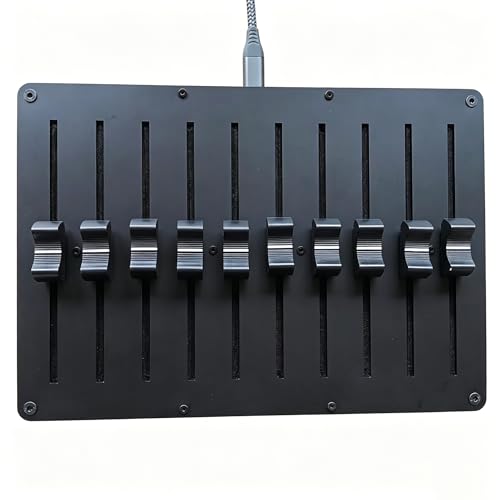
- 10 customizable long-throw faders
- Fully programmable MIDI CC messages
- USB and Type-C connectivity
Best For: Producers and engineers needing a portable 10-fader DAW control surface
Compact Mix Desk
4-Fader USB MIDI DAW Controller

- Plug and play on macOS and Windows
- Customizable CC mapping for DAW and plugins
- Dual USB Type-B and Type-C ports
Best For: Users who want a simple 4-fader control surface for small studio setups
Portable Automation Panel
6-Channel MIDI Fader Controller

- 6 smooth damping faders with 45mm travel
- Save custom MIDI messages in hardware
- Includes USB cable and storage bag
Best For: Mac and Windows users who want portable mapped fader control
Multi-Fader Studio Pick – EM-12F 12-Channel Motorized MIDI Fader Controller
If you want a motorized fader controller for mixing studio use with a true multi-fader workflow, the EM-12F gives you 12 motorized 100mm sliders with position feedback. It is built for DAW mixing, volume, pan, CC, and expression mapping, so it fits well when you need hands-on control across multiple tracks instead of managing one channel at a time.
Best For: Studio mixers, live performers, and post-production users who want 12 motorized faders in a compact desktop unit.
Pros:
- 12 independent 100mm motorized faders with automatic DAW sync
- Fully programmable MIDI CC, volume, pan, send/return, and expression mapping
- USB bus-powered and class-compliant, so no extra driver is needed
- Compact aluminum desktop base helps save space on a crowded studio desk
Cons:
- No dedicated software bundle is listed in the supplied details
- May be more controller than needed if you only mix one channel at a time
For users who want tactile mixing with multiple motorized lanes, this controller stands out by combining track recall, flexible MIDI mapping, and a small footprint. It is the most console-like option here if your workflow benefits from having many faders under your fingers.
Automation-Focused Pick – PreSonus FaderPort V2 Single Motorized Fader Controller
The PreSonus FaderPort V2 is a focused motorized fader controller for mixing studio sessions when you want fast automation and transport control from one dedicated surface. Its touch-sensitive 100mm fader, large encoder, and deep button set make it a practical fit for writing fades, managing playback, and moving through DAW sessions efficiently.
Best For: Engineers and producers who want one high-quality motorized fader with strong DAW control and automation tools.
Pros:
- Touch-sensitive 100mm motorized fader for real-time fades and automation
- 24 buttons and a large encoder provide quick access to many DAW functions
- Native support for Studio One plus broad compatibility with major DAWs
- USB connection and footswitch jack add straightforward studio convenience
Cons:
- Only one fader, so it is not built for multi-channel hands-on mixing
- Included software extras may not matter if you already have a DAW package
This is a strong choice if your workflow revolves around one channel at a time, detailed automation, and efficient transport navigation. It offers a more streamlined approach than larger surfaces while still keeping the tactile feel that many mixers want.
Metered 8-Track Pick – EM-VU8 8-Track MIDI Fader Controller with VU Light
8-Track MIDI Fader Controller with VU Light, USB Plug for Studio & Live Performance EM-VU8 (Black)
Check Price On AmazonThe EM-VU8 is a motorized fader controller for mixing studio setups where track count and visual feedback both matter. With 8 faders, 10cm slider travel, and built-in VU light support, it is geared toward hands-on control during studio work and live performance, especially when you want a compact surface that still feels track-oriented.
Best For: Users who want an 8-track MIDI fader surface with visual metering support for studio or live use.
Pros:
- 8-track layout gives you more hands-on control than a single-fader unit
- Built-in VU light adds helpful visual feedback during mixing
- 10cm fader size is practical for compact desktop workflows
- USB plug connection makes it easy to add to a studio or live rig
Cons:
- Supplied details do not list DAW compatibility specifics
- No motorized feedback details are provided in the notes
This model makes sense if you want a broader MIDI mixing surface without moving up to a full 12-fader controller. The added VU lighting gives it a more monitoring-oriented feel, which can be useful in fast-paced production or performance environments.
Simple Studio Classic – PreSonus FaderPort Classic USB DAW Controller
The PreSonus FaderPort Classic is a practical motorized fader controller for mixing studio users who want a simple, dependable way to write automation and control playback. Its touch-sensitive 100mm long-throw fader and full transport controls keep the focus on fast in-the-box mixing rather than mouse-driven editing.
Best For: Mac and Windows users who want a straightforward single-fader control surface for recording and automation.
Pros:
- Touch-sensitive 100mm motorized fader with long-throw feel
- Full transport control helps streamline recording and mixing sessions
- Compatible with virtually all Mac and Windows recording software
- Dual-servo belt motor design is built for fast, precise operation
Cons:
- Single-fader design limits multi-track hands-on mixing
- Older model compared with newer control-surface options
If you need a no-frills controller that prioritizes automation and transport over extra controls, this remains a sensible studio tool. It is especially appealing for users who want the tactile benefits of a motorized fader without adding complexity to their desk setup.
Compact 4-Channel Pick – 4-Channel MIDI Controller CC Fader
If you want a motorized fader controller for mixing studio-style control without taking up much desk space, this compact 4-channel MIDI fader gives you a simple hands-on way to ride CC parameters in your DAW. Its 10cm faders and 12-bit resolution are aimed at smooth, precise adjustments for production or live use.
Best For: Producers and performers who want a slim, portable 4-fader controller for precise MIDI CC work.
Pros:
- Four 10cm faders provide direct control in a compact layout.
- 12-bit resolution supports smooth, precise fader moves.
- USB MIDI design works with most DAW software.
- Slim 140 x 85 x 18 mm footprint suits tight setups.
Cons:
- Only four channels, so it is better for smaller control tasks.
- Focused on MIDI CC adjustment rather than a full mixer surface.
This is a practical choice if you value portability and fine control over a large control surface. It keeps the workflow simple while still giving you tactile access to key mix and automation moves.
Full-Layout Mixer Pick – Akai Professional MIDImix USB MIDI Mixer Controller
For a motorized fader controller for mixing studio workflows that needs more hands-on channel access, the Akai Professional MIDImix offers a fuller mixer-style layout. With 8 line faders plus a master fader, it is built for quick DAW control, track balancing, and one-button mapping in Ableton Live.
Best For: Users who want a compact but more complete MIDI mixer layout for DAW mixing and control.
Pros:
- 8 individual faders plus 1 master fader support broader mix control.
- 24 assignable knobs add control over EQ, sends, and instrument parameters.
- 16 buttons provide mute, solo, and record-arm functions per channel.
- Instant 1:1 mapping with Ableton Live is a strong workflow benefit.
Cons:
- It is a MIDI controller, so it does not provide motorized faders in the hardware sense.
- Best-known integration is with Ableton Live, which may matter if you use another DAW.
Overall, this is the strongest fit if you want a compact control surface that feels closer to a real mixer. It offers the most channel-level hands-on control of the three options here.
USB-C Custom Mapping Pick – 4-Channel MIDI Fader with Custom CC Mapping
If you need a motorized fader controller for mixing studio use that prioritizes simple connectivity and custom setup, this 4-channel USB-C unit keeps things straightforward. It uses smooth damping faders, plug-and-play operation, and software mapping so you can assign controls inside your DAW.
Best For: Mac and Windows users who want a simple USB-C fader controller with customizable CC mapping.
Pros:
- Four 42mm smooth damping faders give tactile hands-on control.
- USB-C plug-and-play setup requires no driver.
- Compatible with major music production software on Windows and Mac.
- Configuration tool lets you save custom CC settings to the hardware.
Cons:
- Only four channels, so it suits focused control rather than larger mixes.
- Manual MIDI mapping is required inside your software.
This model is a clean option for users who want easy setup and custom control messages without extra complexity. The saved hardware settings make it appealing for repeatable studio workflows.
Studio Automation Console – 10-Channel Customizable MIDI Fader Controller
10-Channel MIDI Controller Fader - Customizable CC Messages, USB/Type-C for DAW Software
Check Price On AmazonIf you’re shopping for a motorized fader controller for mixing studio tasks, this 10-channel MIDI unit is built for hands-on DAW control with fully customizable CC messages. Its 10 long-throw faders give you plenty of surface area for level rides, automation, and mix balancing, while USB and Type-C connectivity keep setup flexible for studio or live use.
Best For: Producers and engineers who want a compact 10-fader control surface for DAW mixing and automation.
Pros:
- 10 customizable 10cm faders for smooth, accurate control
- Fully programmable MIDI CC messages for broad DAW compatibility
- USB and Type-C connectivity for convenient hookup
- Compact 209 x 147 x 100 mm design for portable studio use
Cons:
- Not a motorized fader system
- Focused on MIDI CC control rather than dedicated console features
Overall, this is a practical pick if you want more physical faders than a small desktop controller without giving up portability. The customizable mapping makes it adaptable across common production workflows.
Compact Mix Desk – 4-Fader USB MIDI DAW Controller
For a motorized fader controller for mixing studio workflows, this 4-fader USB MIDI controller is a straightforward way to manage track volume, panning, and rotary effects in your DAW. It’s plug and play on macOS and Windows, and the customizable CC mapping lets you tailor the controls to your software and plugin setup.
Best For: Laptop and desktop producers who want a simple plug-and-play mixer control for DAW and plugin work.
Pros:
- Works with most major DAWs on macOS and Windows
- Plug and play via USB with no drivers required
- Customizable CC mapping for workflow-specific control
- Dual USB Type-B and Type-C ports for flexible connectivity
Cons:
- Only 4 faders, so it’s better for smaller sessions
- Not designed as a motorized fader surface
This is the most compact option here, making it a good fit when desk space is limited and you mainly need tactile control over a few key channels. It keeps setup simple while still covering core mixer functions.
Portable Automation Panel – 6-Channel MIDI Fader Controller
If you need a motorized fader controller for mixing studio tasks in a portable format, this 6-channel MIDI fader unit focuses on customizable DAW control and smooth manual rides. The included configuration software lets you assign and save MIDI messages to the hardware, making it useful for automation, volume moves, and other mapped controls inside your host software.
Best For: Mac and Windows users who want a portable 6-fader controller with saved custom mappings.
Pros:
- 6 smooth damping faders with 45mm travel
- Configuration software for assigning and saving custom MIDI messages
- Compatible with Windows and Mac OS
- Includes USB cable and storage bag for transport
Cons:
- Fader travel is shorter than long-throw desktop controllers
- Not a motorized fader design
Among these three, this model lands in the middle for channel count and keeps the focus on portable, software-driven control. It’s a sensible choice if you want a manageable number of faders with enough flexibility for mapping and automation.
How We Picked the Best Motorized Fader Controller for Mixing Studio
We focused on practical features that matter in a Motorized Fader Controller for Mixing Studio work: fader count, fader length and feel, USB/MIDI connectivity, DAW compatibility, mapping flexibility, and whether the layout supports fast, accurate automation.
We also considered whether a controller is better suited to simple track writing, deeper mix navigation, or broader studio control, since the right choice depends on your workflow.
Quick Comparison
In general, fewer faders mean a smaller footprint and easier portability, while larger surfaces offer faster hands-on control for multitrack sessions. Motorized and semi-automated designs are best for users who want precise mix moves and immediate recall, while non-motorized MIDI fader boxes are often better for custom CC control, plugin parameters, and compact setups.
Key Buying Factors for a Motorized Fader Controller for Mixing Studio
Fader Count and Surface Size
Choose the number of channels based on how you mix. A single-fader unit can be enough for one-track-at-a-time editing, while 4- to 8-fader models offer a better balance for home studios. Larger controllers are more efficient for projects with many tracks.
Motorization and Automation Workflow
Motorized faders shine when you need session recall and accurate automation passes. If you regularly write volume rides, pan moves, or plugin automation, prioritize smooth response and reliable DAW integration.
DAW Compatibility and Mapping
Make sure the controller works well with your software. Native support usually saves time, while customizable CC mapping is helpful if you use multiple DAWs or want to control nonstandard parameters.
Build, Feel, and Connectivity
Fader resistance, spacing, and overall build quality affect day-to-day comfort. USB-C can be a convenience upgrade, but plug-and-play simplicity matters just as much for fast setup and stable performance.
Who Should Buy Which Motorized Fader Controller for Mixing Studio?
If you want the most direct mixing workflow, choose a multi-fader motorized surface with strong DAW support. If your priority is portability or budget, a smaller USB MIDI fader controller can still add useful hands-on control without taking over your desk.
Producers who mainly automate a few key channels should look at compact 4-fader units, while users managing larger sessions may prefer 8, 10, or 12-channel options for quicker navigation and less banking.
For most buyers, the best choice is the one that matches your track count, software, and how often you touch faders during a session.