The best multi-effects looper pedals combine tone shaping, rhythm backing, and phrase looping in one guitar-friendly unit. That can simplify a practice setup, reduce pedalboard clutter, and provide enough flexibility for live performance or home recording.
This roundup compares 10 options across different budgets and feature levels, from straightforward loop stations to full multi-effects processors with amp models, impulse responses, expression control, MIDI, and USB connectivity.
Best 10 Multi Effects Looper Pedals Picks for 2026
Best Simple Looper

- 12 minutes of stereo recording time
- Clear 24-segment loop-status indicator
- Battery or optional AC-adaptor power
Best For: Players who want uncomplicated phrase layering
Best for Live Control

- 200 presets and 170 effects
- Four multifunction footswitches plus expression pedal
- 80-second stereo looper and USB/OTG recording
Best For: Guitarists needing hands-free control during performances
Best Battery-Powered Option
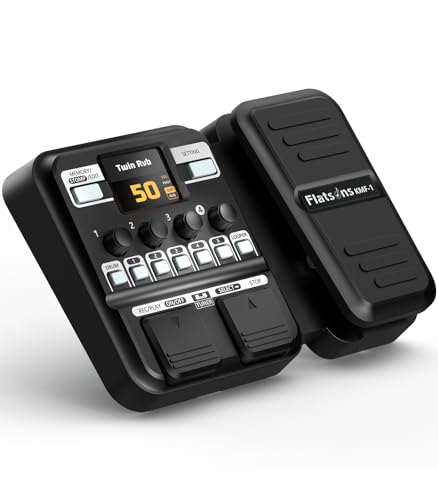
- 77 effects with 18 amp and 18 cabinet models
- 30-second looper and 42 drum rhythms
- Runs on a 9V adapter or six AA batteries
Best For: Portable practice and flexible everyday guitar setups
Feature-Rich Portable Pick
SORAN Dual Stomp Multi-Effects Pedal

- 125 effects, 99 presets, and 11 simultaneous modules
- 40-second stereo looper with 100 drum patterns
- Rechargeable battery rated for up to six hours
Best For: Portable practice, layered tones, and flexible looping
Smart Editing Choice
MOOER GE100Pro Multi-Effects Pedal

- 80-second stereo looper with rhythms and metronome patterns
- 3.5-inch display, Bluetooth, RGB lighting, and USB Type-C
- AI tone assistant with mobile and desktop editing
Best For: Connected practice, tone editing, and extended looping
Versatile Practice Workhorse
FLAMMA FX100 Multi-Effects Pedal

- 151 effects, 55 amp models, and 10 third-party IR slots
- 80-second looper with drums, metronome, and tap tempo
- 200 presets with headphone, OTG, and USB connectivity
Best For: Practice, preset-heavy live rigs, and mobile recording
Best Budget Practice Hub

- 80 preset and 80 user patch locations
- 180-second looper with 40 rhythm patterns
- Assignable expression pedal and battery operation
Best For: Budget-conscious players building tones and practicing without an amp
Best Guided Practice Option

- 71 effects and 13 amp models
- 30-second looper with 68 rhythm patterns
- Expression pedal, aux input, and headphone output
Best For: Portable practice, tone building, and rhythm-assisted guitar sessions
Best Connected All-in-One Modeler
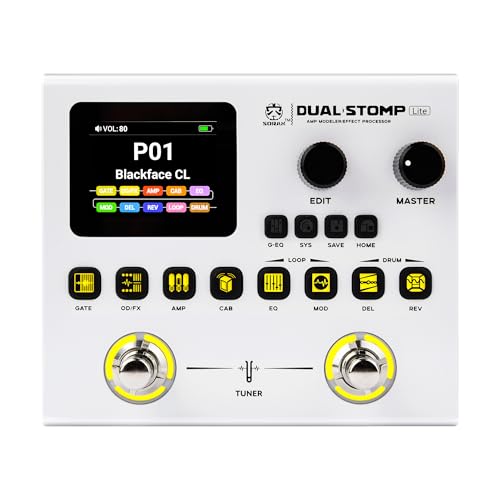
- 125 effects, 99 presets, and 10 simultaneous modules
- USB audio plus IR/NAM import support
- 40-second looper, 100 rhythms, and six-hour battery
Best For: Recording, live rigs, and players who want expandable digital tones
Best All-in-One Rig – Donner Arena 2000
The Donner Arena 2000 is a versatile choice for players comparing multi effects looper pedals for practice, recording, and live use. It combines 278 effects, amp and cabinet modeling, a 60-second looper, drum rhythms, expression control, and stage-friendly connectivity in one unit.
Best For: Guitarists who want broad tonal coverage and one pedal for looping, rhythm practice, recording, and live performance.
Pros:
- Includes 278 effect types, 80 amp simulations, and 50 cabinet simulations.
- Offers a 60-second looper, 40 drum rhythms, headphone output, and OTG support.
- Provides XLR outputs, MIDI, USB-C, AUX input, and customizable control options.
Cons:
- Its extensive feature set may require more setup time than a simple looper.
- It does not include a battery compartment.
- Headphone use is recommended with 32–64-ohm models.
With its combination of modeling, looping, rhythms, and stage connections, the Arena 2000 is a strong fit when flexibility matters more than minimal controls.
Best Simple Looper – BOSS RC-1 Loop Station
The BOSS RC-1 is a straightforward option for musicians who want looping without the complexity of a full multi-effects processor. Its intuitive controls support recording, overdubbing, playback, undo, and redo, making it an accessible entry point among multi effects looper pedals.
Best For: Guitar, bass, and keyboard players who prioritize easy phrase layering and dependable core looping functions.
Pros:
- Provides 12 minutes of stereo recording time.
- Uses a 24-segment LED indicator to show the current loop mode.
- Supports stereo inputs and outputs, battery operation, and optional AC power.
Cons:
- It is a dedicated looper rather than a multi-effects unit.
- The AC adaptor is sold separately.
- It offers fewer creative tools than pedals with built-in effects, drums, or amp modeling.
The RC-1 is best if you want a compact, familiar stompbox for building loops rather than an all-in-one sound-shaping system.
Best for Live Control – MOOER GE150 Pro
The MOOER GE150 Pro gives players extensive patch and foot-control options in a multi-effects looper pedal format. It includes 200 presets, 170 effects, four multifunction footswitches, an expression pedal, an 80-second stereo looper, drum rhythms, and USB/OTG recording features.
Best For: Performers and practice-focused guitarists who need hands-free patch changes, looping, rhythm tools, and phone or computer connectivity.
Pros:
- Offers 200 presets, 55 amp models, 26 cabinet simulations, and 20 IR slots.
- Four multifunction footswitches can control patches, looping, and rhythm functions.
- Includes an 80-second stereo looper, 40 drum rhythms, 10 metronome modes, and an expression pedal.
Cons:
- The standard model is mains-powered; integrated battery life applies to the separate GE150 Pro Li edition.
- Its broad editing and control options may take time to learn.
- It uses a mono input, though it provides stereo outputs.
The GE150 Pro is a practical choice when live navigation and integrated practice tools are as important as the number of available effects.
Best Battery-Powered Option – KMF-1 Multi-Effects Pedal
The KMF-1 is a flexible option for players comparing multi effects looper pedals with portable power. It combines 77 effects, 50 presets, amp and cabinet simulation, a 30-second looper, drum rhythms, AUX input, and an expression pedal in a unit that can run from a 9V adapter or six AA batteries.
Best For: Guitarists who want a compact practice and performance processor with battery-powered flexibility and straightforward tone shaping.
Pros:
- Provides 77 effects across amp, cabinet, drive, modulation, delay, dynamics, reverb, and filter modules.
- Includes a 30-second looper, 42 drum rhythms, tuner, AUX input, and 50 presets.
- Supports six AA batteries for up to 2.5 hours of use, alongside a 9V DC adapter.
Cons:
- The looper is shorter than those on the Arena 2000 and GE150 Pro.
- Battery operation is listed for up to 2.5 hours.
- Cabinet simulation must be managed carefully to avoid double-cabinet coloration with an amp or real cabinet.
Its battery compartment and practice-oriented features make the KMF-1 appealing for portable sessions, while the editable effect blocks add useful control for more involved setups.
Feature-Rich Portable Pick – SORAN Dual Stomp Multi-Effects Pedal
The SORAN Dual Stomp is a versatile option for players comparing multi effects looper pedals with extensive sound-shaping tools. It combines 125 effects, 99 presets, a 40-second stereo looper, drum patterns, an expression pedal, and rechargeable operation in a compact digital unit.
Best For: Guitarists who want broad preset flexibility, portable practice, and integrated looping and rhythm features.
Pros:
- Offers 125 effects, 99 presets, and 11 simultaneous modules.
- Includes a 40-second stereo looper and 100 drum patterns.
- Dual-mode expression pedal supports wah and volume control.
- Rechargeable battery provides up to six hours of continuous use.
Cons:
- The 2-inch screen is smaller than the display on some competing units.
- Its large feature set may require time to learn.
The SORAN stands out when you value portability and a high number of onboard effects. Its USB audio interface, IR support, and rechargeable battery add flexibility for recording, streaming, and practice away from an outlet.
Smart Editing Choice – MOOER GE100Pro Multi-Effects Pedal
The MOOER GE100Pro is a modern choice among multi effects looper pedals, pairing an 80-second stereo looper with amp modeling, expandable IR support, AI-assisted tone creation, and app or desktop editing. Its 3.5-inch color screen is designed to make navigating sounds more visual.
Best For: Players who want app-connected editing, a longer looper, and contemporary recording and practice features.
Pros:
- Provides an 80-second stereo looper, 40 drum rhythms, and 10 metronome patterns.
- Includes AI tone assistance and support for MNRS, NAM A2, and third-party IR files.
- Offers a 3.5-inch color display, RGB lighting, Bluetooth audio, and USB Type-C.
- Supports mobile and desktop editing through the MOOER ecosystem.
Cons:
- The listed standard model uses an AC adapter rather than rechargeable power.
- Its connected features may be more than a player seeking a simple pedal needs.
The GE100Pro is especially compelling for guitarists who edit tones on a phone or computer and want practice tools in the same unit. The 80-second looper gives it more layering time than many compact processors, while Bluetooth and Type-C expand its usefulness for playback and recording.
Versatile Practice Workhorse – FLAMMA FX100 Multi-Effects Pedal
The FLAMMA FX100 is a practical contender among multi effects looper pedals, combining 151 effects, 55 amp models, an 80-second looper, drum rhythms, and 200 presets. Headphone, OTG, and USB connections also make it suited to silent practice, recording, streaming, and live setups.
Best For: Beginners and experienced players who need many presets, flexible routing, and a complete practice-to-performance toolkit.
Pros:
- Combines 55 amp models, 151 effects, 26 factory IRs, and 10 third-party IR slots.
- Includes an 80-second looper, 40 drum rhythms, 10 metronome options, and tap tempo.
- Offers 200 presets and a customizable expression pedal.
- Supports headphone practice, OTG mobile recording, and PC editing.
Cons:
- Uses corded power rather than an integrated rechargeable battery.
- The micro-USB OTG connection may require compatible mobile devices or adapters.
The FX100 balances extensive sound options with useful rehearsal and connectivity features. It is a strong fit when you want a long looper, lots of presets, and the ability to move between headphones, an amplifier, a mixer, or direct mobile recording.
Best Budget Practice Hub – MOOER GE100
The MOOER GE100 is a practical choice for guitarists seeking multi effects looper pedals with a broad preset library, built-in rhythms, and straightforward controls. Its 180-second looper, 66 effect types, and adjustable output mode make it suitable for practice, songwriting, and direct playing without an amplifier.
Best For: Players who want an affordable, feature-packed practice and performance unit with a long looper and expression control.
Pros:
- Includes 80 preset patches, 80 user patches, and 66 effect types.
- 180-second looper and 40 rhythm patterns support solo practice and songwriting.
- Assignable expression pedal offers six controllable parameters.
- Can run from a DC 9V adapter or four AA batteries.
Cons:
- Its feature set and control layout may take time to learn.
- It does not offer the newer USB audio and IR/NAM features found on some modern units.
The GE100 stands out when looper time, preset storage, and flexible power options matter more than advanced recording connectivity. Its headphone output and line-out mode also make it adaptable for quiet or amplifier-free practice.
Best Guided Practice Option – Zoom G1X FOUR
The Zoom G1X FOUR is a compact pick among multi effects looper pedals for players who value guided practice and simple tone experimentation. It combines 71 effects, 13 amp models, a 30-second looper, 68 rhythm patterns, and an integrated expression pedal.
Best For: Guitarists who want a portable practice pedal with rhythms, amp modeling, headphone monitoring, and computer-based patch editing.
Pros:
- Provides 71 effects and 13 amp models for varied tones.
- 30-second looper supports riff practice, songwriting, and layering.
- 68 rhythm patterns provide accompaniment for timing and practice.
- Aux input, headphone connectivity, and Guitar Lab software add flexibility.
Cons:
- The 30-second looper is shorter than the loop time on the MOOER GE100.
- Supplied information lists battery power but does not specify battery runtime.
The G1X FOUR is a sensible everyday practice tool rather than a large-format stage controller. Its expression pedal and Guitar Lab compatibility give players useful control while keeping the unit focused and portable.
Best Connected All-in-One Modeler – SORAN JME-02 Dual Stomp Lite
The SORAN JME-02 Dual Stomp Lite is designed for guitarists comparing multi effects looper pedals with modern modeling and recording features. It offers 125 effects, 99 presets, 10 simultaneous modules, a 40-second looper, 100 drum rhythms, and USB audio connectivity in a compact rechargeable unit.
Best For: Players who need extensive tone options, direct recording, external IR or NAM support, and portable operation.
Pros:
- Includes 125 effects, 99 presets, and 10 independent effect modules.
- Supports third-party IR and NAM imports with 20 customizable slots.
- Provides 48kHz/24-bit USB audio, stereo output, headphone output, and TRRS AUX input.
- Combines a 40-second looper, 100 drum rhythms, tuner, and Auto Rec Mode.
Cons:
- Its extensive feature set may be more than casual players need.
- Rechargeable battery operation is rated for six hours, so longer sessions may require recharging.
- External IR and NAM features can add setup and file-management work.
The JME-02 is the strongest fit here for players building a flexible desktop, live, or recording rig. Its USB interface, modeling architecture, and expandable tone slots make it considerably more versatile than a basic practice-oriented multi-effects pedal.
How We Picked the Best Multi Effects Looper Pedals
We compared these pedals by looking at the features that matter most in everyday guitar use: sound variety, looping capability, preset management, rhythm tools, editing controls, connectivity, portability, and overall value. We also considered whether each model is better suited to beginners, home practice, recording, rehearsals, or live performance.
Feature counts can be useful, but they do not tell the whole story. A pedal with fewer effects may be easier to operate, while a larger processor may offer deeper signal-chain editing and more convincing amp or cabinet options. The right choice depends on how much control you need and how quickly you want to create usable sounds.
Quick Comparison
| Best for | What to prioritize |
|---|---|
| Simple looping | Dedicated loop controls, clear operation, and dependable overdubbing |
| Practice | Drum patterns, headphones, compact design, and easy preset access |
| Live performance | Footswitch layout, preset navigation, expression control, and reliable switching |
| Recording | USB connectivity, amp modeling, cabinet simulation, and impulse-response support |
| Maximum versatility | Large effect libraries, flexible signal chains, MIDI, and multiple outputs |
Key Buying Factors for Multi-Effects Looper Pedals
Looper Length and Controls
Check the maximum loop time and whether loop, stop, undo, and overdub functions are easy to reach with your feet. A long loop time is helpful, but intuitive controls are often more important during performance.
Effects, Amp Models, and IR Support
Count the effects you are likely to use rather than choosing solely by the biggest advertised number. Amp models and cabinet simulations matter when connecting directly to headphones, an audio interface, powered speakers, or a mixer. Third-party IR support can provide additional flexibility for recording and direct performance.
Presets and Editing
More presets help when you need several sounds for a set, while a clear screen and practical navigation make editing less frustrating. AI-assisted or simplified tone tools may be especially useful for beginners who do not want to build every signal chain manually.
Connectivity and Control
Look for the connections your rig requires, such as USB, MIDI, XLR, headphone output, auxiliary input, or external expression and footswitch support. These features can determine whether a pedal works well as the center of your setup.
Power, Size, and Durability
Confirm the power requirements before buying. Rechargeable or battery-capable models can be convenient for portable practice, while larger units may offer sturdier footswitches and more hands-on control at the cost of pedalboard space.
Who Should Buy Which Multi Effects Looper Pedals?
Choose a dedicated loop station if your priority is layering guitar parts with minimal setup. Pick a compact processor with built-in rhythms and headphones for quiet practice or travel. Players who perform with several tones should look for extensive presets, expression control, and accessible footswitches.
For direct recording or amplified-less setups, prioritize amp modeling, cabinet simulation, IR loading, USB, and suitable outputs. Beginners may prefer a simpler interface and guided tone tools, while experienced players will benefit more from flexible routing, MIDI, and deeper editing. Before buying, match the pedal’s connections and control layout to your existing amplifier, interface, and performance workflow.