If you need cleaner studio workflow, tighter synchronization, and easier gear integration, the right interface can make a big difference. This roundup focuses on practical options for musicians who want dependable MIDI control and simple recording setups.
We picked models that suit everything from compact home studios to multi-device DAW rigs, with an emphasis on reliability, connectivity, and ease of use.
Best 10 Midi Interfaces for Recording Picks for 2026
Flexible MIDI Routing Pick
CME U6MIDI Pro 3-in-3-out MIDI Interface

- 3-in-3-out standalone MIDI routing
- USB-C plug-and-play on major OS
- Low-latency support for full MIDI messages
Best For: keyboardists and producers who need routing plus reliable MIDI timing
Simple Two-Channel Recording Interface
Focusrite Scarlett 2i2 4th Gen USB-C Audio Interface

- 120dB dynamic range with 24-bit/192kHz audio
- Auto Gain and Clip Safe for easier recording
- Includes software and plugin bundle
Best For: solo vocalists and guitarists who want an easy USB recording interface
Basic Direct MIDI Cable
LEKATO MIDI Cable USB-C Interface

- 1-in/1-out MIDI connection with LEDs
- Plug-and-play on Windows and Mac
- Supports up to 16 MIDI channels
Best For: users who need a simple MIDI cable for standard keyboard or synth recording
Best All-Round Studio Hub
Focusrite Scarlett 4i4 4th Gen USB-C Audio Interface

- Dedicated MIDI In/Out included
- 4 line inputs and 4 line outputs
- Two mic pres plus two Hi-Z inputs
Best For: small studios needing both audio connectivity and MIDI I/O
Portable Creative Hub
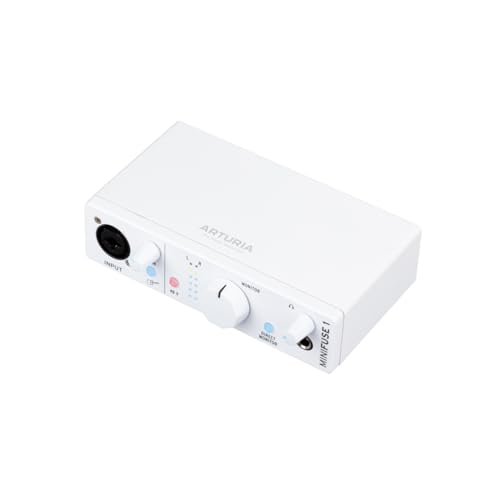
- 5-pin MIDI in/out for synths, controllers, and drum machines
- 1 combo input plus 2 instrument/line inputs
- Includes Loopback, USB hub, and 5-year warranty
Best For: Solo creators needing a compact MIDI-capable interface
Value-Packed Starter
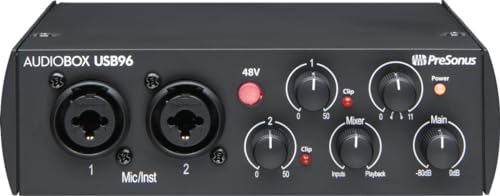
- MIDI I/O plus 2 mic preamps and 2 instrument inputs
- Up to 24-bit/96 kHz recording with studio-grade converters
- USB bus-powered with zero-latency mixer monitoring
Best For: Budget buyers who need MIDI and portable recording
Pro Essentials
Focusrite Scarlett Solo 3rd Gen

- High-performing mic preamp with switchable Air mode
- 24-bit/192 kHz conversion for detailed recordings
- Includes Hi-Z input and a strong software bundle
Best For: Singer-songwriters who need clean vocal and guitar recording
All-in-One Starter Pick
Arturia MiniFuse Recording Pack

- Interface, mic, headphones, XLR cable, and software included
- MIDI in/out with 2 inputs, 2 outputs, and headphone out
- Plug-and-play design with Loopback and 5-year warranty
Best For: Beginners who want a complete recording bundle with MIDI connectivity
Songwriter’s Compact Choice

- 120dB dynamic range with 24-bit/192kHz conversion
- Air mode adds presence for vocals and guitars
- Includes Pro Tools Intro+, Ableton Live Lite, and Cubase LE
Best For: Songwriters recording vocals and guitar with a simple setup
Budget Dual-Input Pick
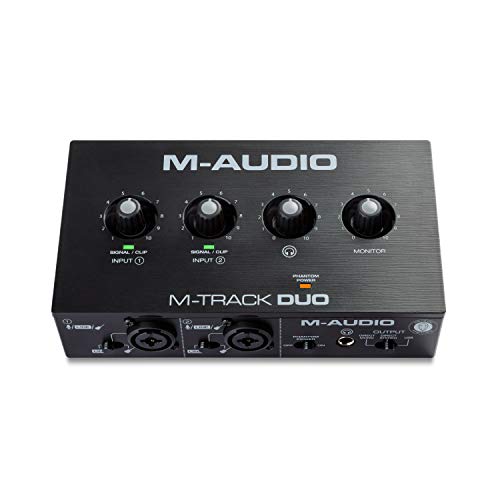
- Two combo XLR/Line/Instrument inputs with phantom power
- USB/Direct switch for zero-latency monitoring
- Includes MPC Beats and Ableton Live Lite
Best For: Budget users who need a simple dual-input recording interface
Flexible MIDI Routing Pick – CME U6MIDI Pro 3-in-3-out MIDI Interface
If you need midi interfaces for recording that can also handle routing chores, the CME U6MIDI Pro is built for flexible setups. It works as a plug-and-play USB-C MIDI interface on major operating systems and also functions as a standalone 3-in-3-out MIDI router with split, thru, merge, and filtering options.
Best For: Players and producers who want a compact MIDI interface with routing, filtering, and broad device compatibility.
Pros:
- Standalone 3-in-3-out design with MIDI router, filter, split, thru, and merge tools
- Supports all MIDI channels and messages, including clock, sysex, MIDI timecode, and MPE
- Close to zero latency with no jitter and high-precision transmission
- Compatible with macOS, iOS, Windows, Android, Linux, and Chrome OS
Cons:
- MIDI only, so it does not capture audio for recording
- Advanced routing setup depends on the free software tool
For studios built around keyboards, drum machines, or synths, this interface stands out because it does more than simple USB-to-MIDI conversion. It is a practical choice when reliable timing and flexible MIDI management matter more than extra audio inputs.
Simple Two-Channel Recording Interface – Focusrite Scarlett 2i2 4th Gen USB-C Audio Interface
For midi interfaces for recording that also need solid audio capture, the Scarlett 2i2 4th Gen is a straightforward two-channel interface for vocals and instruments. It focuses on studio-quality recording features like updated mic preamps, Auto Gain, Clip Safe, and Air mode, while remaining easy to set up over USB.
Best For: Solo artists and home-recording users who want a simple USB interface for vocals and guitar.
Pros:
- 4th Gen mic pres with 120dB dynamic range and 24-bit/192kHz support
- Auto Gain and Clip Safe help prevent bad levels during recording
- Air mode adds presence and harmonic drive to vocals and guitars
- Includes recording software and plugin bundle for getting started quickly
Cons:
- Only 2 channels, so it is not built for larger multi-input recording sessions
- No MIDI I/O is listed in the supplied details
This is a strong pick if your priority is clean audio recording with easy controls rather than complex studio expansion. It is especially appealing for beginners who want dependable sound quality and bundled software in one box.
Basic Direct MIDI Cable – LEKATO MIDI Cable USB-C Interface
If you want a simple addition to your midi interfaces for recording setup, this LEKATO USB-C MIDI cable keeps things minimal. It provides a 1-in/1-out connection with plug-and-play use on Windows and Mac, plus LED indicators that make it easier to see power and signal activity.
Best For: Players who want an affordable direct MIDI cable for keyboards, synths, and drum pads.
Pros:
- 1-in/1-out MIDI interface with indicator lights for troubleshooting
- Supports up to 16 input and output channels
- Plug-and-play operation with Windows and Mac systems
- Built-in driver and EMI resistance for stable transmission
Cons:
- Basic 1-in/1-out design is less flexible than multi-port interfaces
- Compatibility may vary with some older or vintage synths
This is a practical low-friction option when you just need to get MIDI data into a computer for editing or recording. It is best suited to standard setups where simplicity matters more than expanded routing.
Best All-Round Studio Hub – Focusrite Scarlett 4i4 4th Gen USB-C Audio Interface
For midi interfaces for recording that need both audio and hardware connectivity, the Scarlett 4i4 4th Gen is a more complete studio hub. It adds MIDI In/Out alongside mic preamps, Hi-Z inputs, line inputs, and line outputs, making it easier to connect synths, drum machines, and other gear.
Best For: Small studios and producers who want audio inputs plus dedicated MIDI I/O in one interface.
Pros:
- Includes dedicated MIDI In/Out along with 4 line inputs and 4 line outputs
- Two mic preamps and two Hi-Z inputs support a range of recording sources
- 120dB dynamic range and 24-bit/192kHz support for studio-quality audio
- Auto Gain, Clip Safe, and Air modes help simplify tracking
Cons:
- More expensive and complex than a basic MIDI-only interface
- Not as compact as a simple cable-style MIDI solution
This is the most versatile option in the group if your setup includes both recording and external MIDI gear. It is a good fit when you want one interface to handle instruments, microphones, and MIDI without juggling separate devices.
Portable Creative Hub – Arturia MiniFuse 1
If you want one of the more flexible MIDI interfaces for recording, the Arturia MiniFuse 1 is a compact choice that handles audio, instruments, and 5-pin MIDI in a simple plug-and-play setup. It is built for desktop or mobile use, with useful extras like a USB hub and Loopback for capturing voiceovers or app audio.
Best For: Solo creators who want a compact interface with MIDI I/O, bundled software, and strong warranty coverage.
Pros:
- Includes 5-pin MIDI input and output for connecting synths, controllers, and drum machines.
- Offers 1 combo mic/inst/line input plus 2 instrument/line inputs for flexible recording.
- Built-in Loopback makes it easier to capture voiceovers and in-app audio.
- Comes with a 5-year warranty and is tested with over 200 reliability checks.
Cons:
- Only one main mic/inst/line combo input, so it is best suited to smaller recording setups.
- Uses a compact design that prioritizes portability over larger studio expandability.
Overall, MiniFuse 1 is a practical pick if you need a small USB interface that can record vocals, guitars, and MIDI gear without a complicated setup. The included software bundle and long warranty add extra value for beginners and home-studio users.
Value-Packed Starter – PreSonus AudioBox USB 96
The PreSonus AudioBox USB 96 is a straightforward option among midi interfaces for recording, especially if you want a portable 2-channel interface with MIDI I/O and a simple monitoring setup. Its bus-powered design and included software make it easy to get started without adding much to a home studio or mobile rig.
Best For: Budget-conscious recordists who want MIDI I/O, zero-latency monitoring, and bundled software.
Pros:
- Includes MIDI I/O along with 2 mic preamps and 2 high-headroom instrument inputs.
- Supports up to 24-bit/96 kHz recording and playback with studio-grade converters.
- USB bus-power makes it easy to use as a portable interface.
- Zero-latency monitoring via the mixer control is helpful during tracking.
Cons:
- Max sample rate is 96 kHz, which is lower than some higher-end interfaces.
- Uses global +48V phantom power, so control is less granular than some competing models.
As a practical starter interface, the AudioBox USB 96 covers the basics well for recording instruments, vocals, and MIDI hardware. The combination of portability, bundled software, and hands-on monitoring makes it a solid value pick for new setups.
Pro Essentials – Focusrite Scarlett Solo 3rd Gen
The Focusrite Scarlett Solo 3rd Gen is a compact USB-C interface for recording vocals and instruments with a clean, polished signal path. While it does not include MIDI I/O, it is still a strong small-studio option if your focus is capturing guitar or vocal takes with the included software and high-resolution conversion.
Best For: Singer-songwriters and podcasters who want a compact interface for vocals and guitar, not MIDI gear.
Pros:
- High-performing mic preamp and switchable Air mode add clarity to recordings.
- 24-bit/192 kHz conversion supports detailed, studio-quality capture.
- Includes a Hi-Z instrument input for guitar or bass.
- Comes with Pro Tools Intro+, Ableton Live Lite, Cubase LE, and Hitmaker Expansion.
Cons:
- No MIDI input or output, so it is not suitable for connecting external MIDI hardware.
- Only one XLR mic preamp and one instrument input limit larger recording setups.
If you do not need MIDI connections, the Scarlett Solo is a reliable compact interface with strong audio quality and a useful software bundle. It is best viewed as a focused recording tool for voice and guitar rather than a full MIDI recording hub.
All-in-One Starter Pick – Arturia MiniFuse Recording Pack
If you want midi interfaces for recording that also simplify the rest of your setup, the Arturia MiniFuse Recording Pack is built to get you started fast. It combines a compact USB interface with a microphone, headphones, an XLR cable, and software, so you can move from unboxing to recording voice, guitar, synths, and other MIDI gear with minimal hassle.
Best For: New recordists who want a complete, plug-and-play setup for vocals, instruments, and MIDI devices.
Pros:
- Includes an interface, microphone, headphones, XLR cable, and premium recording software.
- Offers MIDI in and out plus 2 inputs, 2 outputs, and 1 headphone out.
- Plug-and-play workflow is designed to make recording simple and fast.
- Loopback support adds flexibility for voiceovers and in-app or in-game audio.
Cons:
- More of a starter bundle than a stripped-down standalone interface.
- USB 2.0 hub and bundled extras may be unnecessary if you already own studio gear.
- Software bundle is broad, which may feel overwhelming for some beginners.
This is a practical choice if you want one package that covers recording basics and MIDI connectivity without requiring separate purchases. The 5-year warranty also adds some peace of mind for first-time buyers.
Songwriter’s Compact Choice – Scarlett Solo 4th Gen
For streamlined midi interfaces for recording, the Focusrite Scarlett Solo 4th Gen is a compact option focused on a mic-and-guitar workflow. It delivers studio-grade specs in a small USB-C interface, making it easy to capture vocals and instruments with the included recording software and plugin bundle.
Best For: Songwriters and solo creators who mainly record one mic and one instrument at a time.
Pros:
- 120dB dynamic range and 24-bit/192kHz support for high-quality recording.
- Improved Air mode adds presence and harmonic drive to vocals and guitars.
- Includes Pro Tools Intro+, Ableton Live Lite, Cubase LE, and Hitmaker Expansion.
- Compact USB-C design works with Mac, Windows, and iPad.
Cons:
- Only 1 XLR mic preamp and 1 Hi-Z instrument input.
- Not aimed at users who need multiple simultaneous inputs.
- No dedicated MIDI ports are listed in the supplied specs.
If your priority is a clean, simple recording chain for solo sessions, this interface is easy to recommend. It emphasizes sound quality, software value, and portability over expanded I/O.
Budget Dual-Input Pick – M-AUDIO M-Track Duo
If you are comparing midi interfaces for recording on a budget, the M-AUDIO M-Track Duo stands out for its flexible dual-input layout and straightforward monitoring. It supports guitar, vocals, and line input signals, while also including software for recording, streaming, and podcasting.
Best For: Budget-minded users who need two input channels for recording, streaming, or podcasting.
Pros:
- Two combo XLR/Line/Instrument inputs with phantom power.
- USB/Direct switch provides zero-latency monitoring flexibility.
- Transparent Crystal Preamps are designed to work well with condenser mics.
- Includes MPC Beats and Ableton Live Lite software.
Cons:
- 48kHz max sample rate is lower than some higher-end interfaces.
- More basic feature set than premium studio interfaces.
- No dedicated MIDI in/out ports are listed in the supplied details.
For simple home recording, the M-Track Duo gives you the core connections and monitoring tools without much complexity. It is a sensible pick if you want an affordable interface that can handle multiple recording tasks.
How We Picked These Midi Interfaces for Recording
We focused on interfaces that balance dependable MIDI performance with useful recording features, since many buyers want one device that can handle both controller connections and audio capture. Key factors included connection stability, driver support, MIDI port flexibility, bus-powered convenience, and how well each unit fits common studio workflows.
We also considered whether a model is better as a true MIDI interface, a hybrid audio interface with MIDI, or a simple cable-style solution for a single keyboard or synth.
Quick Comparison: What Makes the Best Fit?
Some buyers need multiple MIDI ports for several hardware devices, while others only need one keyboard connected to a laptop. If you are building a desktop studio, a hybrid interface can reduce clutter. If you mainly record one instrument at a time, a compact USB-C option may be all you need.
Key Buying Factors for Midi Interfaces for Recording
Ports and Expansion
Check whether you need one-in/one-out, multiple DIN ports, or a single cable adapter. More ports are useful for synth stacks, drum machines, and controllers, but not necessary for basic setups.
Latency and Driver Quality
For recording, stable drivers and low-latency performance matter more than flashy extras. A well-supported interface will feel more responsive when tracking parts in real time.
USB-C Vs. Legacy Connectivity
USB-C is increasingly common and convenient for modern laptops, but compatibility with your computer and music software should come first. Make sure the interface works cleanly with your operating system.
Audio I/O and Monitoring
Even if MIDI is the priority, audio inputs, headphone monitoring, and direct monitoring can add major value. Hybrid interfaces are often the smartest choice if you plan to record vocals, guitars, or synth audio too.
Who Should Buy Which Midi Interfaces for Recording?
If you only need a simple link between one controller and a computer, a compact MIDI cable interface is usually the most affordable choice. If you want to record instruments and MIDI together, a hybrid audio/MIDI interface is the better long-term option. If you run several hardware synths or need a more serious studio hub, choose a model with more dedicated MIDI connectivity and stronger routing flexibility.
In short, the best choice depends on your workflow: minimal setup, all-in-one convenience, or a more expandable studio center. Matching the interface to your current gear is the easiest way to get reliable results without paying for features you will not use.