Choosing the right MIDI interface can make a live rig faster to set up, easier to troubleshoot, and far more reliable on stage.
Below, we’ve rounded up standout options for performers who need dependable connectivity, flexible routing, and a clean workflow in real-world gigs.
Best 10 Midi Interfaces for Live Performances Picks for 2026
Standalone MIDI router for stage rigs
CME U6MIDI Pro 3-in-3-out Interface

- Standalone 3-in-3-out routing and filtering
- Close to zero latency with broad MIDI support
- USB-C plug-and-play across major operating systems
Best For: Performers who need flexible MIDI routing in a compact live-ready box
No-computer USB to DIN bridge
DigitalLife BridgeCore USB MIDI Host Box

- Connects USB MIDI gear to 5-pin DIN hardware
- Standalone operation with LED status indicators
- Best with class-compliant devices and no USB hubs
Best For: Performers needing a simple bridge between USB controllers and legacy MIDI gear
Hybrid audio and MIDI hub
Focusrite Scarlett 4i4 4th Gen

- MIDI I/O plus mic, instrument, and line connections
- High-quality 24-bit/192kHz audio with 120dB dynamic range
- Auto Gain, Clip Safe, and Air mode for easier sessions
Best For: Players who need one compact interface for both live MIDI and audio
DIN adapter pack for cable fixes
Voluty Tek 5-Pin DIN Gender Changers

- 4-pack of female-to-female 5-pin DIN adapters
- Gold-plated contacts for stable signal transmission
- Simple plug-in fix for compatible MIDI cabling
Best For: Users who need quick DIN-to-DIN extension and connection fixes
Compact Studio Interface
Focusrite Scarlett 2i2 4th Gen

- 2 mic preamps and 2 Hi-Z inputs
- Auto Gain and Clip Safe for easier level control
- 120dB dynamic range with Air mode
Best For: Solo performers and small setups needing simple, high-quality audio capture
Multi-Port MIDI Hub
ESI M4U eX 8-Port MIDI Interface

- Eight MIDI ports for larger setups
- Standalone routing and merging without a computer
- Built-in USB 3.0 hub with three connectors
Best For: Keyboard rigs and stage controller setups needing multiple MIDI ports
Ultra-Compact Recorder
Focusrite Scarlett Solo 4th Gen

- 1 XLR mic preamp and 1 Hi-Z input
- 120dB dynamic range with improved Air mode
- Compact, PC/Mac/iPad compatible design
Best For: Solo artists and mobile players needing a lightweight one-mic, one-instrument interface
Compact Starter Pick
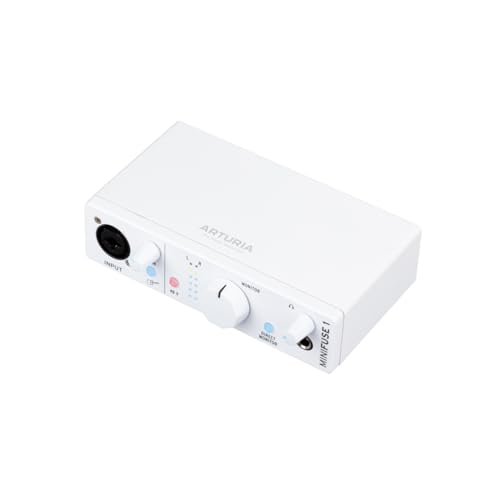
- 5-pin MIDI in/out for synths and controllers
- Compact USB design with plug-and-play workflow
- 5-year warranty with extensive reliability testing
Best For: Solo performers and beginners with simple MIDI setups
Budget Dual-Input Choice
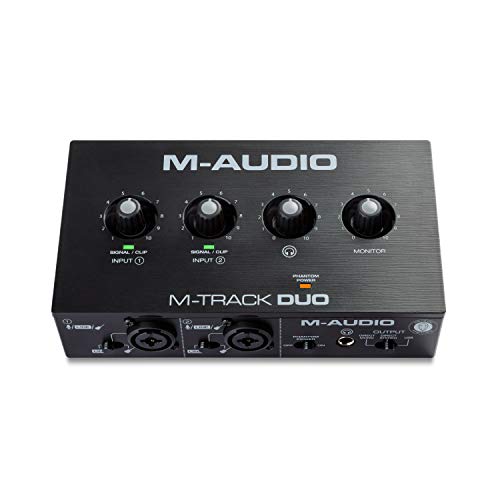
- Two combo XLR/line/instrument inputs
- USB/direct monitoring for low-latency use
- Portable interface with included software
Best For: Affordable recording and live-ready setups with basic audio needs
Dual-Input Performance Upgrade

- 5-pin MIDI in/out for external gear
- Two combo inputs for added flexibility
- 5-year warranty with robust build testing
Best For: Performers who need compact MIDI connectivity with two inputs
Standalone MIDI router for stage rigs – CME U6MIDI Pro 3-in-3-out Interface
If you need midi interfaces for live performances that can also handle routing duties, the CME U6MIDI Pro is built for fast, dependable stage use. It works as a plug-and-play USB-C MIDI interface on computers and as a standalone 3-in-3-out MIDI box with routing, filtering, split/thru, and merge functions.
Best For: Players who want a compact MIDI interface with flexible routing for keyboards, synths, drum pads, and other stage gear.
Pros:
- Standalone 3-in-3-out design with MIDI router, filter, split, thru, and merge functions
- Supports notes, controllers, clock, sysex, MIDI timecode, and MPE with close to zero latency
- Works across major systems including macOS, iOS, Windows, Android, Linux, and Chrome OS
- High-precision wired transmission is designed to avoid data errors and signal dropout
Cons:
- Advanced routing and filtering are configured through the companion software tool
- It is MIDI-only, so it does not provide audio inputs or outputs
For performers who need reliable MIDI control rather than audio features, this interface stands out for flexibility and low-latency operation. Its standalone routing tools make it especially useful when live setups change from gig to gig.
No-computer USB to DIN bridge – DigitalLife BridgeCore USB MIDI Host Box
For midi interfaces for live performances where you need to connect a USB controller to 5-pin DIN hardware without a computer, the DigitalLife BridgeCore is a simple standalone bridge. It converts USB MIDI to standard DIN MIDI and is aimed at studio, rehearsal, and live setups where quick compatibility matters.
Best For: Musicians who want a no-computer USB MIDI host box for linking class-compliant USB gear to traditional MIDI hardware.
Pros:
- Standalone USB MIDI host and bridge with no computer required
- Converts USB MIDI data to 5-pin DIN output for older MIDI hardware
- Built-in LED indicators show power and MIDI activity
- Compact plug-and-play design for fast stage setup
Cons:
- USB hubs are not supported
- Some non-standard USB MIDI devices may not transmit properly
This is a practical utility box when your live rig mixes USB controllers and DIN hardware. Just make sure your device is class-compliant and compatible before relying on it for a show.
Hybrid audio and MIDI hub – Focusrite Scarlett 4i4 4th Gen
If your live setup needs both audio and MIDI, the Focusrite Scarlett 4i4 4th Gen is a strong all-in-one choice among midi interfaces for live performances. It combines MIDI I/O with mic preamps, instrument inputs, line inputs, and line outputs, so you can run synths, drum machines, and other gear from one hub.
Best For: Musicians who want a compact audio interface with MIDI I/O for hybrid live and recording setups.
Pros:
- Includes MIDI In/Out alongside 4 line inputs and 4 line outputs
- Two Scarlett 4th Gen mic preamps and two Hi-Z instrument inputs
- 120dB dynamic range and 24-bit/192kHz support for high-quality audio
- Auto Gain, Clip Safe, and Air mode add useful performance and workflow features
Cons:
- Heavier and larger than a dedicated MIDI-only interface
- More features than needed if you only want MIDI connection
For performers who need a single device to handle both sound and MIDI control, this interface offers far more than basic connectivity. It is especially appealing if your live rig also doubles as a recording or rehearsal setup.
DIN adapter pack for cable fixes – Voluty Tek 5-Pin DIN Gender Changers
When you are building or repairing midi interfaces for live performances, small adapters like these can solve a very specific connection problem. This 4-pack of 5-pin DIN female-to-female gender changers is designed to extend or join compatible MIDI cables and hardware with minimal fuss.
Best For: Keyboard, drum machine, and effects users who need quick 5-pin DIN MIDI coupler adapters on stage or in the studio.
Pros:
- 4-pack gives you multiple adapters for live or studio cable management
- Gold-plated contacts and PVC body are made for stable signal transmission
- Compatible with any equipment using 5-pin DIN MIDI ports
- Simple plug-in use with no setup required
Cons:
- Only useful for 5-pin DIN MIDI connections, not USB MIDI
- Does not add routing, filtering, or other interface features
These adapters are not a full interface, but they can be a handy part of a live MIDI toolkit. They are best treated as a practical accessory for extending or adapting existing DIN connections.
Compact Studio Interface – Focusrite Scarlett 2i2 4th Gen
If you want midi interfaces for live performances and also need a straightforward way to capture vocals or instruments, the Scarlett 2i2 4th Gen is a compact USB-C audio interface with a live-friendly feature set. It offers two mic preamps, two Hi-Z instrument inputs, 24-bit/192kHz recording, and Auto Gain with Clip Safe to help keep levels under control when you need fast setup and reliable sound.
Best For: Solo performers and small setups that need simple, high-quality recording and playback support on stage or in rehearsal.
Pros:
- Two mic preamps and two Hi-Z instrument inputs for flexible connection options.
- Auto Gain and Clip Safe help set levels quickly and prevent unwanted clipping.
- 120dB dynamic range and 24-bit/192kHz support for polished sound quality.
- Air mode adds extra presence to vocals and guitars.
Cons:
- Only offers 2 channels, so it is not built for larger multidevice live rigs.
- It is an audio interface, not a dedicated MIDI routing box.
For performers who want a compact interface that is easy to manage on the fly, this model keeps the workflow simple while still delivering the studio-grade sound Focusrite is known for. It is a strong fit when you value fast setup, clean input handling, and included recording software.
Multi-Port MIDI Hub – ESI M4U eX 8-Port MIDI Interface
For midi interfaces for live performances, the ESI M4U eX stands out as a flexible 8-port USB 3.0 MIDI interface built for fast setup and dependable routing. It is class-compliant, plug-and-play, and can operate standalone, making it a practical option when you need to connect multiple MIDI devices and keep your rig moving without extra driver hassle.
Best For: Keyboard rigs, stage controllers, and performance setups that need multiple MIDI ports and standalone routing.
Pros:
- Eight adaptable MIDI ports for larger control setups.
- Class-compliant plug-and-play design reduces setup friction.
- Standalone operation supports routing and merging without a computer.
- Built-in USB 3.0 hub adds three extra connectors for gear consolidation.
Cons:
- Designed for MIDI control, so it does not handle audio recording.
- Best results for advanced multi-device use may depend on optional Windows driver support.
If your live rig includes several MIDI devices, this interface gives you the port count and routing flexibility to keep everything organized. Its low-latency standalone operation and integrated hub make it especially useful when you want one central connection point on stage.
Ultra-Compact Recorder – Focusrite Scarlett Solo 4th Gen
When you want a compact interface that can travel easily with your live or rehearsal setup, the Scarlett Solo 4th Gen delivers a simple USB-C solution for one mic and one instrument. It uses the same 120dB dynamic range as the larger Scarlett model, adds improved Air mode, and includes software to help you record and refine ideas after the performance.
Best For: Solo artists and mobile players who need a lightweight interface for one microphone and one instrument.
Pros:
- Very small and light, making it easy to carry for gigs and rehearsals.
- 1 XLR mic preamp and 1 Hi-Z instrument input cover a basic performance setup.
- 120dB dynamic range and Air mode support clean, present sound.
- Compatible with PC, Mac, and iPad.
Cons:
- Single mic and instrument input limit it to very small setups.
- Not a dedicated MIDI interface for multi-device live control.
This is a good pick if your priority is portability and a simple signal path rather than complex routing. It works best for straightforward setups where you only need one vocal mic and one instrument input, plus reliable recording quality.
Compact Starter Pick – Arturia MiniFuse 1
If you’re comparing midi interfaces for live performances and want a compact, easy-to-use option, the Arturia MiniFuse 1 is built for simple setups that still need solid connectivity. It gives you 5-pin MIDI in and out, plus a mic/instrument input, balanced outputs, and a headphone jack, making it a practical choice for small rigs, rehearsal spaces, and mobile performance setups.
Best For: Solo performers and beginners who need a portable interface with MIDI I/O and straightforward plug-and-play use.
Pros:
- Includes 5-pin MIDI input and output for connecting synths, controllers, and drum machines.
- Compact USB interface with a plug-and-play workflow for quick setup.
- 5-year warranty and over 200 reliability tests for added peace of mind.
- Bundled software can help new users get started faster.
Cons:
- Only one main input, so it is less flexible than larger interfaces.
- May be limited for performers who need multiple simultaneous audio sources.
Overall, this is a strong entry-level pick for live performers who need MIDI integration without a bulky box. It focuses on portability, dependable build quality, and enough I/O for streamlined setups rather than complex stage routing.
Budget Dual-Input Choice – M-AUDIO M-Track Duo
The M-AUDIO M-Track Duo is a straightforward option for anyone looking at midi interfaces for live performances on a tighter budget, especially if the priority is handling audio inputs alongside basic monitoring. It offers two combo XLR/line/instrument inputs, low-latency USB/direct monitoring, and a portable build that works well for compact live or rehearsal setups.
Best For: Performers who want an affordable dual-input interface for recording, streaming, or simple live setups.
Pros:
- Two combo inputs support microphones, instruments, and line sources.
- USB/direct monitoring helps reduce latency during performance or tracking.
- Compact, portable design suits mobile use.
- Includes software to help with basic production and recording.
Cons:
- Its listed maximum sample rate is 48 kHz, which is more modest than some rivals.
- Does not list dedicated 5-pin MIDI ports in the supplied details.
This model makes sense when you need an inexpensive interface that covers core audio duties without unnecessary extras. It is more about dependable, simple connectivity for small rigs than advanced stage routing or MIDI-heavy performance control.
Dual-Input Performance Upgrade – Arturia MiniFuse 2
For players building midi interfaces for live performances, the Arturia MiniFuse 2 adds more flexibility than a single-input model while keeping the same compact, portable approach. It includes 5-pin MIDI in and out, two combo mic/inst/line inputs, balanced outputs, and a headphone output, so it is better suited to small performance rigs that need a little more room to expand.
Best For: Live performers and producers who want a compact interface with MIDI I/O and two input channels.
Pros:
- 5-pin MIDI input and output for easy connection to external MIDI gear.
- Two combo inputs provide more flexibility for microphones and instruments.
- Compact design with plug-and-play workflow for quick setup.
- Backed by a 5-year warranty and extensive reliability testing.
Cons:
- Still a compact interface, so it is not aimed at larger multi-source stage rigs.
- Its software bundle may be more useful to beginners than advanced users.
Among compact options, this is the most balanced pick if you need MIDI connectivity plus extra input flexibility for live work. It is a practical middle ground between portability and a bit more performance-ready routing.
How We Picked These Midi Interfaces for Live Performances
We focused on gear that fits real stage use: stable connections, simple routing, straightforward power options, and hardware that is easy to integrate with controllers, synths, laptops, and sound modules. For Midi Interfaces for Live Performances, reliability and speed matter more than extra features you may never use on stage.
Quick Comparison: What Matters Most
Some performers need a compact USB interface for a laptop-based rig, while others need multiple DIN ports, standalone MIDI routing, or extra audio I/O for hybrid setups. If your show depends on tight timing and quick changeovers, prioritize low-latency behavior, class-compliant operation, and hardware controls that reduce setup mistakes.
Key Buying Factors for Midi Interfaces for Live Performances
Port Count and Routing Flexibility
Choose enough inputs and outputs for your current rig plus one or two expansion points. A solo synth player may only need a simple interface, while a multi-device stage setup benefits from additional ports and standalone routing.
Standalone Operation
Standalone MIDI features are valuable when you want your rig to keep working without a computer or when you need to route signals between devices quickly during a set.
Compatibility and Driver Support
Class-compliant devices are often the safest choice for live use because they reduce setup friction across Mac, Windows, and some tablet-based systems. If you rely on specific software, check driver stability and operating system support before buying.
Audio Needs Vs. MIDI-Only Needs
Some musicians only need MIDI connectivity, while others benefit from an audio interface that also handles instruments, monitoring, and backing tracks. If your live rig includes vocals or instruments, a combined audio/MIDI unit may simplify your signal chain.
Build Quality and On-Stage Practicality
Look for sturdy connectors, clear status indicators, and a layout that is easy to manage in low-light conditions. Small details like labeled ports and visible LEDs can save time during setup and troubleshooting.
Who Should Buy Which Midi Interfaces for Live Performances?
If you run a compact controller-and-laptop setup, a streamlined interface with dependable USB connectivity is usually the best fit. If you use multiple keyboards, sound modules, or external synths, choose a unit with more DIN ports and strong standalone routing. Performers who want one box to handle both MIDI and audio should consider a hybrid interface, especially when traveling light or building a minimal live rig.
For most buyers, the best option is the one that matches your exact stage workflow today while leaving a little room to grow. That keeps your live setup simple, fast, and dependable every night.