Choosing the best high-end headphones for mixing means prioritizing tonal accuracy, detail retrieval, comfort, and dependable translation over exaggerated bass or flashy features.
This roundup compares 10 professional studio headphones across open-back and closed-back designs, impedance levels, and monitoring styles to help you find the right fit for your room, workflow, and budget.
Best 10 High End Headphones for Mixing Picks for 2026
Mix Translation Specialist

- Planar magnetic drivers for studio-focused detail
- Open-back design helps remove room variables
- Durable aluminum and spring-steel chassis
Best For: Producers and mix engineers seeking monitor-like wired listening
Open-Back Reference Pick

- Open-back studio headphone design
- 245 g build with foldable construction
- Detachable cable and 3.5mm/6.35mm compatibility
Best For: Mixers wanting a lightweight, portable open-back studio model
Flexible Mixing Workhorse

- Wide soundstage with precise localization
- Includes mixing and producing ear pads
- Open-frame architecture and 5–36,000 Hz response
Best For: Producers and mixers needing adaptable studio listening
Isolation-Focused Studio Monitor

- Closed-back design with sound isolation
- Linear, transparent presentation
- Foldable build with detachable cable and case
Best For: Mixers working in noisy environments or mobile studios
Premium Planar Reference
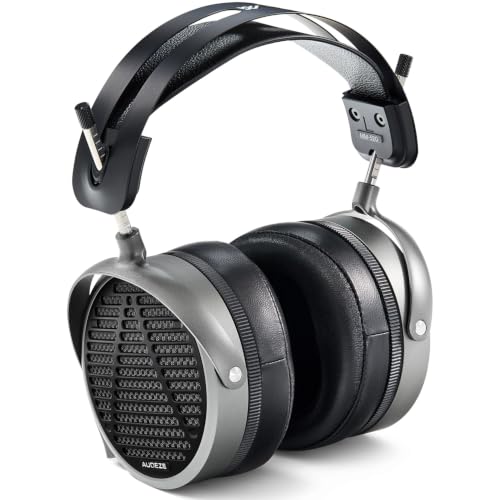
- 90mm planar magnetic drivers
- Open-back, spacious presentation
- Bass-focused SLAM acoustic technology
Best For: Professional mixing and mastering in quiet studios
Studio Isolation Pick
beyerdynamic DT 770 Pro 80 Ohm

- Closed-back sound isolation
- Balanced studio monitoring response
- Comfortable velour earpads
Best For: Recording and monitoring in versatile studio setups
Flexible Closed-Back Monitor

- 45mm drivers with accurate bass
- Strong sound isolation
- Swiveling earcups and detachable cable
Best For: Home-studio mixing, tracking, and monitoring
Best All-Rounder

- 48-ohm design works with many everyday sources
- Open-back soundstage supports precise mix placement
- Detachable cable and adapter included
Best For: Flexible open-back mixing and critical listening
Best Closed-Back Pick

- Closed-back design reduces leakage and outside noise
- Vibration attenuation supports clean monitoring
- Detachable cable and dual L/R jacks
Best For: Isolated studio mixing and mobile production
Best for Dedicated Studio Rigs
beyerdynamic DT 990 Pro 250 Ohm

- Open-back design delivers a spacious monitoring perspective
- 250-ohm impedance suits interfaces and headphone amps
- Replaceable velour pads support long sessions
Best For: Established studio setups with appropriate amplification
Mix Translation Specialist – Audeze MM-500
The Audeze MM-500 is a strong choice among high end headphones for mixing when your priority is producing mixes that translate consistently. Its planar magnetic drivers, open-back design, and 20-ohm impedance suit studio production with compatible interfaces, consoles, computers, and select tablets.
Best For: Producers and mix engineers who want monitor-like, room-free listening in a durable wired headphone.
Pros:
- Designed specifically for mixes that translate well.
- Planar magnetic drivers and open-back construction support studio-focused listening.
- Lightweight, durable chassis uses machined aluminum and spring steel.
- Includes a travel case and 6.3mm stereo cable.
Cons:
- Open-back construction provides no noise control.
- At 495 g, it is heavier than several competing studio models.
- Uses a 6.35mm headphone jack, so an adapter may be needed with some devices.
The MM-500 is particularly compelling for stationary mixing and producers who value a robust build, broad device compatibility, and a presentation intended to reduce room-related variables.
Open-Back Reference Pick – Neumann NDH 30
The Neumann NDH 30 is a premium open-back option for listeners comparing high end headphones for mixing. Its 120-ohm impedance, detachable cable, and over-ear design make it suited to studio setups equipped with a compatible headphone output.
Best For: Mixers who prefer an open-ear presentation and a relatively lightweight, foldable studio headphone.
Pros:
- Open-back studio design is appropriate for focused mixing sessions.
- Lightweight 245 g construction supports longer use.
- Detachable cable and foldable design make transportation easier.
- Works with devices offering 3.5mm or 6.35mm connections.
Cons:
- Open-back construction does not provide noise control.
- The 120-ohm impedance may benefit from a suitable studio headphone output.
- The supplied notes do not specify a carrying case.
Choose the NDH 30 when an open-back workflow, detachable connectivity, and portability matter. It is a focused studio tool rather than a noise-isolating option for shared or loud spaces.
Flexible Mixing Workhorse – Sennheiser HD 490 PRO
The Sennheiser HD 490 PRO stands out among high end headphones for mixing with its wide soundstage, stated 5–36,000 Hz frequency response, and open-frame architecture. Two included ear-pad sets let you choose between producing and mixing-oriented use, while the 130-ohm impedance suits compatible studio equipment.
Best For: Producers and mixers who want adaptable ear pads, precise localization, and a lightweight open-back design.
Pros:
- Wide, dimensional soundstage supports localization.
- Uncolored frequency response is specified from 5 to 36,000 Hz.
- Includes separate mixing and producing ear pads.
- Detachable cable connections on both left and right sides suit different studio configurations.
Cons:
- Open-back design provides no noise control.
- The 130-ohm impedance may require a capable headphone output.
- Its wired configuration is less convenient for casual, cable-free listening.
With two pad options, low stated weight, and a studio-oriented open design, the HD 490 PRO is a versatile pick for users who move between production and mixing tasks.
Isolation-Focused Studio Monitor – Neumann NDH 20
The Neumann NDH 20 is a practical choice among high end headphones for mixing when isolation is essential. This closed-back model is designed around a linear, transparent presentation, with sound isolation, a detachable cable, and a foldable form for studio or mobile work.
Best For: Mixers working in noisy environments who need closed-back isolation and a transportable wired design.
Pros:
- Closed-back construction provides sound isolation for noisier spaces.
- Linear, transparent sound is positioned similarly to Neumann studio monitors.
- Detachable cable, foldable design, and padded fabric case support transport.
- Adjustable headband and over-ear fit are suited to extended sessions.
Cons:
- The 150-ohm impedance may require a suitable headphone amplifier or studio output.
- Closed-back headphones may provide less room-like openness than open-back alternatives.
- The 97 dB sensitivity is relatively modest on paper.
The NDH 20 makes the most sense when isolation outweighs the spaciousness of an open-back design. It combines a monitor-inspired tonal goal with features useful for traveling between studios and workspaces.
Premium Planar Reference – Audeze MM-520
The Audeze MM-520 is a high-end option for mixing when accurate detail, low-frequency control, and a spacious presentation are priorities. Its open-back design and planar magnetic drivers are intended for recording, mixing, mastering, and critical listening.
Best For: Professional mixing, mastering, and extended critical-listening sessions in a quiet studio.
Pros:
- 90mm planar magnetic drivers with low distortion and detailed imaging
- Open-back design provides a natural, spacious soundstage
- SLAM acoustic technology supports bass accuracy and low-frequency extension
- Memory foam earpads and included protective case suit long-term studio use
Cons:
- Open-back construction provides no sound isolation
- Wired-only design may be less convenient for mobile listening
- Its professional feature set may be more than casual listeners need
Choose the MM-520 if you want a refined reference headphone for making detailed mix decisions and checking spatial information. Because it is open-back, it is best reserved for controlled, quiet environments.
Studio Isolation Pick – beyerdynamic DT 770 Pro 80 Ohm
The 80-ohm beyerdynamic DT 770 Pro is a practical high-end headphone choice for mixing, monitoring, and recording when closed-back isolation matters. Its balanced response, long cable, and replaceable components make it well suited to demanding studio workflows.
Best For: Recording, vocal tracking, monitoring, and versatile studio use with an 80-ohm setup.
Pros:
- Closed-back construction helps minimize sound leakage
- Balanced response supports mixing, mastering, and critical monitoring
- Breathable velour pads are designed for extended sessions
- Serviceable construction allows replacement of key components
Cons:
- Fixed 3m cable is less flexible than a detachable design
- 80-ohm impedance may be less suitable for some low-powered mobile devices
- Closed-back presentation is less spacious than an open-back model
The DT 770 Pro is a strong all-purpose studio monitor for producers who need isolation as well as reliable detail. The 80-ohm version offers a useful middle ground for studio equipment, while its serviceable design supports long-term ownership.
Flexible Closed-Back Monitor – Audio-Technica ATH-M50x
The Audio-Technica ATH-M50x is a practical choice among high end headphones for mixing, offering extended response, accurate bass, and useful studio-friendly handling. Its closed-back design isolates sound, while swiveling earcups and detachable cables support recording and monitoring work.
Best For: Home-studio mixing, tracking, monitoring, and one-ear cueing in louder environments.
Pros:
- 45mm drivers deliver clarity with deep, accurate bass response
- Circumaural design provides sound isolation
- 90-degree swiveling earcups support one-ear monitoring
- Detachable cable and foldable design improve studio convenience
Cons:
- Closed-back design offers less natural spaciousness than open-back headphones
- Dynamic drivers may provide less planar-style detail than the Audeze option
- No wireless listening is provided despite the listed wired connectivity
The ATH-M50x balances detailed monitoring with practical features for everyday production. It is especially useful when isolation, portability, and quick one-ear monitoring are more important than an open, room-like presentation.
Best All-Rounder – beyerdynamic DT 990 Pro X
For mixers seeking high end headphones for mixing that work across a laptop, interface, phone, or console, the beyerdynamic DT 990 Pro X combines a 48-ohm design with an open-back reference presentation. Its wide imaging and detailed STELLAR.45 driver suit critical monitoring without requiring a dedicated headphone amp.
Best For: Mixers who want open-back detail and easy compatibility with a broad range of sources.
Pros:
- 48-ohm impedance supports full volume from many common sources without a headphone amp.
- Open-back design provides a wide, natural soundstage for placement and depth decisions.
- Includes a detachable 3m mini-XLR cable, 1/4-inch adapter, and carrying pouch.
- Made in Germany with a two-year manufacturer warranty.
Cons:
- Open-back construction provides no noise control and is not suited to preventing sound leakage.
- Wired-only design limits use to connected devices.
The DT 990 Pro X is a practical choice when you need a detailed open-back monitoring perspective but do not want to plan around amplifier requirements. Its detachable cable and included adapter add useful studio flexibility.
Best Closed-Back Pick – Sennheiser HD 480 PRO Plus
The Sennheiser HD 480 PRO Plus is a strong option among high end headphones for mixing when passive isolation and reduced leakage matter. Its closed-back construction, vibration attenuation system, and 130-ohm impedance are designed for detailed studio monitoring, while the detachable cable supports different setups.
Best For: Studio mixing and monitoring where closed-back isolation and controlled leakage are priorities.
Pros:
- Closed-back passive shielding helps reduce outside noise and sound leakage.
- Vibration Attenuation System is designed to reduce distortion and support clean low-end monitoring.
- Dual L/R jacks and a detachable cable add studio setup flexibility.
- Angled earcups, grooved pads, and a precision-fit design address extended-session comfort.
Cons:
- At 130 ohms, source matching may require more consideration than with lower-impedance headphones.
- Its listed weight is 500 g, making it substantially heavier than many studio headphone designs.
Choose the HD 480 PRO Plus when you need a more contained monitoring experience than open-back headphones provide. Its closed-back isolation and studio-focused construction make it particularly practical for shared spaces and mobile production.
Best for Dedicated Studio Rigs – beyerdynamic DT 990 Pro 250 Ohm
The beyerdynamic DT 990 Pro remains a focused choice for high end headphones for mixing when your setup includes a professional interface, dedicated headphone amp, or home hi-fi system. Its 250-ohm open-back design delivers a wide soundstage for critical listening and editing, with replaceable velour pads for longer sessions.
Best For: Studio users with suitable amplification who want a traditional open-back monitoring sound.
Pros:
- Open-back construction provides a wide, natural soundstage for critical listening and editing.
- 250-ohm impedance suits professional interfaces, dedicated headphone amps, and home hi-fi systems.
- Soft, circumaural, replaceable velour ear pads support extended listening sessions.
- Handcrafted in Germany with a two-year Beyerdynamic warranty.
Cons:
- Its 250-ohm impedance is less convenient for phones and other low-power sources.
- Open-back construction provides no noise control and allows sound leakage.
- The straight cable is not detachable.
The DT 990 Pro makes the most sense as part of a prepared studio chain rather than a casual portable setup. If your interface or amplifier can properly drive 250 ohms, its open presentation and replaceable pads offer a capable long-session monitoring package.
How We Picked the Best High End Headphones for Mixing
We focused on headphones designed for professional monitoring rather than casual listening. The selection includes established studio models from Audeze, Neumann, Sennheiser, beyerdynamic, and Audio-Technica, with options for detailed mixing, tracking, editing, and reference listening.
Our evaluation criteria include frequency balance, midrange clarity, stereo imaging, transient response, comfort during long sessions, build quality, cable practicality, and compatibility with common interfaces and headphone amplifiers. We also considered whether each design is open or closed, since that choice affects leakage, isolation, spatial presentation, and suitability for recording.
Quick Comparison
| Design | Best For | Main Advantage |
|---|---|---|
| Open-back | Mixing and critical listening | Natural spatial presentation and reduced ear-cup resonance |
| Closed-back | Tracking and isolation | Less sound leakage and stronger external noise rejection |
| Planar magnetic | Detailed monitoring and low-end control | Fast response and precise retrieval of mix information |
| Lower impedance | Interfaces, laptops, and mobile setups | Easier amplification requirements |
| Higher impedance | Dedicated studio headphone outputs | Often well suited to professional monitoring chains |
Key Buying Factors for High-End Headphones for Mixing
Open-Back Versus Closed-Back
Open-back headphones are usually the stronger choice for final balance decisions because they can provide a more spacious, less enclosed presentation. They are not suitable for recording near microphones because sound can bleed into the track. Closed-back models are better for vocalists, instrumentalists, mobile work, and noisy environments, though their presentation may feel more contained.
Frequency Balance and Translation
Look for a controlled response that makes midrange detail, vocal placement, cymbal brightness, bass texture, and problematic resonances easy to identify. No headphone is perfectly neutral, so use reference tracks and learn how your chosen model translates to speakers, earbuds, and cars.
Impedance, Sensitivity, and Amplification
Check the headphone output on your audio interface before buying. Lower-impedance models are generally easier to drive, while 250-ohm versions may need a capable interface or dedicated amplifier to reach useful volume and retain headroom. Avoid judging performance from specifications alone; output quality and matching matter too.
Comfort and Practical Studio Features
Mixing sessions can last for hours, making clamp force, pad material, weight, heat buildup, and headband design important. A detachable cable, replaceable pads, robust hinges, and included storage can also reduce long-term ownership costs.
Who Should Buy Which High End Headphones for Mixing?
- For spacious critical mixing: Choose an open-back model with a balanced response and convincing imaging.
- For recording and isolation: Choose a closed-back design that limits leakage and blocks surrounding noise.
- For planar detail and low-end inspection: Consider a planar magnetic option such as an Audeze model.
- For a versatile studio workhorse: Look for durable construction, replaceable parts, and a familiar reference presentation.
- For portable or interface-based setups: Favor a model whose impedance and sensitivity match your available headphone output.
The best High End Headphones for Mixing are the ones you can wear comfortably, drive properly, and learn thoroughly. After choosing, spend time comparing familiar reference tracks and verify important decisions on speakers and other playback systems.