A camera gimbal with subject tracking can keep people, pets, and presenters in frame while delivering smoother handheld footage. The right model depends on your camera, payload, tracking method, and whether you need a compact phone setup or a full mirrorless rig.
We compare 10 notable options across smartphone and interchangeable-lens camera systems, including models with built-in AI tracking, detachable controllers, lighting, and native camera compatibility.
Best 10 Camera Gimbal with Subject Tracking Picks for 2026
Best All-Around GoPro Pick

- AI face and body tracking
- Works with phones and GoPro cameras
- Built-in fill light and multiple mounts
Best For: Mixed-device vloggers
Best Feature-Rich Phone Gimbal
- Magnetic AI tracking with native camera support
- Detachable touchscreen remote
- 500 g payload and built-in extension rod
Best For: Solo smartphone filmmakers
Best Modular Camera Upgrade
- Adds tracking to compatible DJI RS gimbals
- Tracks people, vehicles, cats, and dogs
- Compact magnetic module with adapter mount
Best For: Existing DJI RS owners
Best Portable Smartphone Pick

- AI tracking and gesture control via app
- Detachable remote reaches 32.8 feet
- Foldable 0.93-pound design with fill light
Best For: Traveling smartphone creators
Best Budget Phone Gimbal

- App-free AI face tracking
- 3-axis stabilization with four modes
- 10-hour battery and 350 g design
Best For: Mobile creators seeking portable, app-free tracking
Best Camera-and-Phone Gimbal

- Tracking module included
- Supports up to 2 kg
- Fast horizontal-to-vertical switching
Best For: Videographers using mirrorless cameras and phones
Best Phone Gimbal for Creators

- Integrated tracking and lighting module
- Built-in extension rod and tripod
- Up to 10 hours of operation
Best For: Vloggers wanting an all-in-one phone filming setup
Best DSLR/Mirrorless Pick

- Built-in AI tracking sensor
- 2.5 kg payload for DSLR and mirrorless cameras
- Touchscreen and vertical shooting support
Best For: DSLR and mirrorless solo filming
Best Lightweight Phone Gimbal

- 300 g phone-focused design
- ActiveTrack 7.0 subject tracking
- Built-in tripod and up to 10-hour operation
Best For: Portable iPhone and Android content creation
Best Versatile Tracking Gimbal
- 4.4 lb payload across multiple camera types
- AI tracking with a stated 59-foot range
- Detachable handle and OLED control screen
Best For: Mixed-camera creators and active filming
Best All-Around GoPro Pick – Fluid Pro AI Gimbal
For creators seeking a camera gimbal with subject tracking, the GoPro Fluid Pro combines 3-axis stabilization with an AI tracker that recognizes a person’s face or body. Interchangeable mounts also make it useful with smartphones, GoPro cameras, and select compact point-and-shoot cameras.
Best For: Vloggers who use both GoPro cameras and smartphones and want built-in lighting and broad mounting flexibility.
Pros:
- AI tracking can follow a person from the front or rear-facing position.
- Interchangeable mounts support smartphones, GoPro cameras, and select compact cameras.
- Integrated fill light helps improve lighting in your footage.
- Includes a tripod base, charging cables, and zippered case.
Cons:
- Not water resistant.
- Bluetooth functionality with GoPro cameras is limited to specified HERO models.
- Heavier than some compact smartphone gimbals at 551 g.
The Fluid Pro is a versatile choice when your setup spans multiple camera types. Its strongest advantage is the combination of AI tracking, lighting, and included mounts in one package.
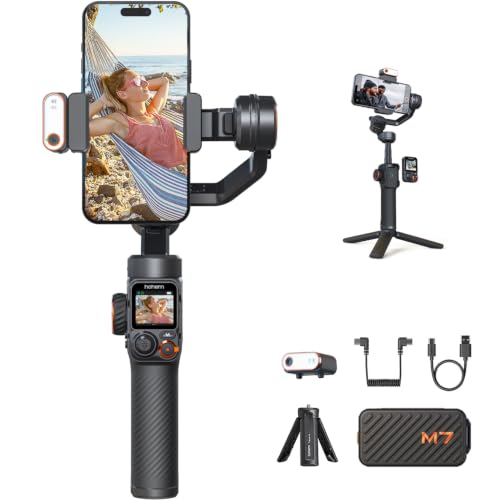
Best Feature-Rich Phone Gimbal – Hohem iSteady M7
The Hohem iSteady M7 is a camera gimbal with subject tracking designed for hands-free smartphone filming. Its magnetic AI tracker, detachable touchscreen remote, extension rod, and customizable fill light give solo creators more control over setup and framing.
Best For: Solo filmmakers, travel vloggers, and parents recording moving people, pets, or sports with a smartphone.
Pros:
- AI tracking works with a phone’s native camera and supports precise target selection.
- Detachable 1.4-inch touchscreen remote enables control and monitoring from up to 32 feet away.
- Built-in extension rod supports high- and low-angle shots.
- 500 g payload and three expansion ports accommodate accessories such as microphones and lights.
Cons:
- Designed for cellphones rather than interchangeable-lens cameras.
- Not water resistant.
- At 629 g, it is relatively substantial for a smartphone gimbal.
The M7 prioritizes control and expandability over minimal size. It is particularly appealing if you want to monitor a shot remotely or add accessories to a smartphone setup.
Best Modular Camera Upgrade – DJI RS Tracking Module
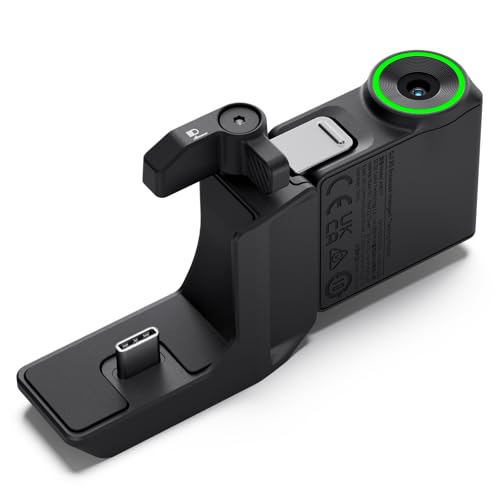
This DJI accessory adds camera gimbal with subject tracking capability to compatible DJI RS systems. After framing a target on the gimbal’s touchscreen, it can track a person, vehicle, pet, or other recognizable subject for orbit shots, backward tracking, and fixed-position solo filming.
Best For: Existing DJI RS 5, RS 4 Pro, RS 4 Mini, or RS 4 users who want to add intelligent tracking without replacing their gimbal.
Pros:
- Supports tracking of people, vehicles, cats, and dogs on compatible RS gimbals.
- Magnetic locking design allows quick attachment to RS 5 and RS 4 Mini.
- Adapter mount extends compatibility to RS 4 Pro and RS 4.
- Compact 19 g design adds little weight to the setup.
Cons:
- Requires a compatible DJI RS gimbal and current firmware.
- On RS 4, RS 4 Pro, and RS 4 Mini, tracking view cannot be displayed on the gimbal touchscreen.
- Using the adapter mount occupies the RSS port, preventing use of the camera control cable.
This is an upgrade component rather than a standalone stabilizer. Its value is highest for DJI RS owners who already have the compatible hardware and want subject tracking for solo camera work.
Best Portable Smartphone Pick – Hohem iSteady X3
The Hohem iSteady X3 is a portable camera gimbal with subject tracking for iPhone and Android creators. Its 3-axis stabilization, detachable remote, magnetic fill light, tripod, and foldable design cover everyday vlogging and social-video needs without requiring an extra operator.
Best For: Travelers and beginners who want a lightweight smartphone gimbal for vlogs, short-form video, and remote shooting.
Pros:
- AI tracking and gesture control work through the Hohem Joy app.
- Detachable remote supports shooting from up to 32.8 feet away.
- Foldable 0.93-pound design is convenient for travel.
- Includes a tripod, extendable rod, and magnetic fill light.
Cons:
- Subject tracking depends on the Hohem Joy app.
- Designed for smartphones rather than GoPro or dedicated cameras.
- Not water resistant.
The X3 is a practical entry point for mobile creators who value portability and simple controls. Its remote and included accessories make it well suited to solo shooting, while 3-axis stabilization helps smooth moving footage.
Best Budget Phone Gimbal – AOCHUAN XE AI
If you want a camera gimbal with subject tracking for smartphone videos without relying on an app, the AOCHUAN XE AI is a practical option. Its dedicated AI tracker supports face tracking, while the 3-axis stabilization and multiple shooting modes help keep footage steady for vlogs, TikTok videos, and outdoor clips.
Best For: Smartphone creators who want app-free face tracking, long battery life, and a compact gimbal for everyday filming.
Pros:
- Dedicated AI tracking module works without an app.
- 3-axis stabilization and four practical shooting modes support varied movements.
- Up to 10 hours of use and a lightweight 350 g design make it portable.
- Includes a mini tripod and supports many iOS and Android phones under 250 g.
Cons:
- Designed for smartphones rather than interchangeable-lens cameras.
- Phone compatibility is limited to devices within the specified size and weight range.
The XE AI stands out for combining app-free subject tracking with useful stabilization modes and a relatively light build. It is a strong fit for mobile-first creators who prioritize portability and straightforward tracking.
Best Camera-and-Phone Gimbal – DJI RS 4 Mini Combo
For creators who need a camera gimbal with subject tracking across mirrorless cameras and smartphones, the DJI RS 4 Mini Combo offers a more versatile setup. Its included Intelligent Tracking Module keeps subjects framed during orbit shots and solo filming, while the 2 kg payload supports a range of compatible camera setups.
Best For: Videographers who want intelligent follow-filming, quick vertical switching, and support for both cameras and phones.
Pros:
- Included Intelligent Tracking Module helps keep subjects framed.
- Supports cameras and smartphones up to a 2 kg payload.
- Auto axis locks allow setup in about one second.
- Switches from horizontal to vertical shooting in about 10 seconds.
Cons:
- At 1.03 kg, it is substantially heavier than the phone-focused options.
- It is not water resistant.
- The DJI Ronin app is not available through Google Play and requires an official-site download.
The RS 4 Mini Combo is the more capable choice for mixed camera workflows. Its payload, tracking module, and fast orientation changes make it suitable for more demanding shoots, though the larger build adds weight and setup considerations.
Best Phone Gimbal for Creators – DJI Osmo Mobile 7P
The DJI Osmo Mobile 7P is a convenient camera gimbal with subject tracking for iPhone and Android users. Its Multifunctional Module provides intelligent tracking, lighting, and audio-receiver features, while the 3-axis stabilization, built-in extension rod, and tripod support quick filming for vlogs and social content.
Best For: Phone-based vloggers and content creators who want native tracking, quick launch, integrated accessories, and easy handheld or tripod filming.
Pros:
- Multifunctional Module combines intelligent tracking, lighting, and microphone reception.
- 3-axis stabilization helps produce steady phone footage.
- Built-in extension rod and tripod add flexible shooting options.
- Offers up to 10 hours of operating time and supports phone charging.
Cons:
- Limited to phones up to the stated 300 g maximum.
- The DJI Mimo app is not available through Google Play and requires an official-site download.
The Osmo Mobile 7P is a well-rounded phone gimbal for creators who value convenience. Its integrated module and built-in hardware reduce the need for separate accessories, while dual-lens enhanced tracking is designed to keep moving subjects in focus.
Best DSLR/Mirrorless Pick – FeiyuTech SCORP 2
If you want a camera gimbal with subject tracking for a DSLR or mirrorless setup, the FeiyuTech SCORP 2 combines built-in AI tracking with a 2.5 kg payload. Its integrated sensor, touchscreen, and multiple control options make it suited to solo filming and more deliberate camera work.
Best For: DSLR and mirrorless users who want integrated tracking, vertical shooting, and hands-on camera controls.
Pros:
- Built-in AI tracking activates with an “OK” gesture, without an extra tracking accessory.
- Supports cameras up to 2.5 kg and includes a quick setup for vertical shooting.
- Offers Bluetooth or cable camera control, a 1.3-inch touchscreen, and a multifunction control knob.
Cons:
- At 1,070 g, it is substantially heavier than a phone gimbal.
- It is not water resistant.
- Tracking and advanced adjustments depend on compatibility with the camera and Feiyu SCORP app.
The SCORP 2 is a strong choice when you need tracking for a traditional camera rather than a smartphone. Its payload capacity and included mounting accessories add flexibility, while the built-in sensor keeps the tracking setup relatively streamlined.
Best Lightweight Phone Gimbal – DJI Osmo Mobile 7
For phone creators seeking a camera gimbal with subject tracking, the DJI Osmo Mobile 7 offers a compact 3-axis design with ActiveTrack 7.0 through DJI Mimo. Its built-in tripod, low 300 g weight, and long operating time make it practical for solo videos and mobile livestreams.
Best For: iPhone and Android creators who prioritize portability, automated tracking, and simple solo shooting.
Pros:
- ActiveTrack 7.0 helps follow subjects through the DJI Mimo app.
- Integrated foldable design and built-in tripod simplify setup and storage.
- Runs for up to 10 hours and can charge a phone via USB-C.
Cons:
- It is designed for phones and has a 300 g maximum weight recommendation, not interchangeable-lens cameras.
- The DJI Mimo app is not available on Google Play and requires downloading from DJI’s official website.
- The optional OM 7 Series Tracking Kit is sold separately.
The Osmo Mobile 7 is the most travel-friendly option in this group. It trades camera payload capacity for a comfortable, lightweight phone-first design with tracking, tripod functionality, and useful creator-oriented software features.
Best Versatile Tracking Gimbal – Feiyu SCORP Mini 3 Pro
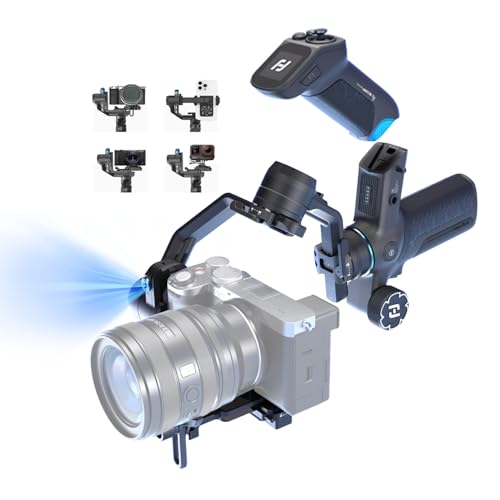
The Feiyu SCORP Mini 3 Pro is a versatile camera gimbal with subject tracking for mirrorless cameras, action cameras, and smartphones. Its 4.4 lb payload, upgraded AI tracking, detachable handle, and included cooling phone holder make it a flexible option for mixed-camera creators.
Best For: Creators who switch between mirrorless cameras, action cameras, and smartphones and want stronger tracking range and payload capacity.
Pros:
- Supports up to 4.4 lb and works with compatible mirrorless cameras, action cameras, and smartphones.
- AI tracking offers a stated 59-foot range and 0.003-second response time.
- Includes a detachable handle, 1.3-inch OLED screen, quick-release system, and cooling smartphone clamp.
Cons:
- Its broad compatibility still depends on the specific camera, phone, and included mounting accessories.
- The higher payload and detachable components may be more than casual phone users need.
- Some advanced tracking and remote-control capabilities may require additional setup.
This model stands out for creators who use more than one type of camera. The higher payload and long stated tracking range make it particularly appealing for active shooting, while the included phone and action-camera accessories reduce the need for separate stabilizers.
How We Picked the Best Camera Gimbal with Subject Tracking
We focused on the features that matter most during real-world shooting: stabilization design, subject-tracking approach, camera compatibility, payload support, controls, portability, and setup complexity. The lineup includes smartphone gimbals, action-camera options, and larger systems for DSLR and mirrorless cameras.
We also considered whether tracking works through a dedicated module, built-in hardware, a phone app, or an app-free AI system. Because these approaches differ substantially, buyers should confirm compatibility before choosing a gimbal.
Quick Comparison
| Best For | Look For | Product Types in This Roundup |
|---|---|---|
| Phone creators | Light weight, native tracking, easy controls | DJI Osmo Mobile, Hohem, AOCHUAN |
| Action-camera users | Camera mounting and wireless control | GoPro-focused gimbal |
| Mirrorless and DSLR shooters | Payload capacity, balance, camera compatibility | DJI RS and Feiyu SCORP models |
| Flexible tracking setups | Detachable or upgradeable AI modules | Hohem and DJI tracking systems |
Key Buying Factors for a Camera Gimbal with Subject Tracking
Camera and Payload Compatibility
Start with the device you will actually mount. Smartphone gimbals are not designed for interchangeable-lens cameras, while larger three-axis models require careful balancing. Check the supported camera bodies, lens combinations, clamp dimensions, and maximum payload rather than relying on a product’s general category.
Tracking Method and Reliability
Built-in AI tracking is convenient, while a detachable sensor or dedicated module may offer broader framing control and fewer app dependencies. App-based tracking can add creative features but may require permissions, a specific operating system, or a compatible native camera workflow. Look for tracking controls that let you start, stop, or reselect a subject quickly.
Stabilization, Range, and Controls
Three-axis stabilization helps smooth walking and panning, but motors must be strong enough for the mounted setup. Consider pan and tilt range, follow modes, joystick responsiveness, trigger controls, and whether the gimbal supports remote operation. A built-in light, touchscreen controller, or wireless shutter control can also reduce the need for extra accessories.
Size, Battery, and Setup
Compact phone gimbals are easier to carry and deploy, whereas camera gimbals typically provide more control at the cost of weight. Check battery runtime, charging method, folded dimensions, and balance time. If you frequently change lenses or cameras, quick-release plates and repeatable balance markings are especially useful.
Who Should Buy Which Camera Gimbal with Subject Tracking?
Choose a smartphone gimbal if you mainly record social videos, travel footage, live presentations, or family content. Prioritize low weight, fast subject acquisition, a comfortable grip, and dependable phone compatibility.
Choose an action-camera gimbal if your workflow centers on a GoPro-style camera and you want smoother motion plus wireless camera control or lighting options.
Choose a mirrorless or DSLR gimbal if image quality, lens choice, and professional control matter more than portability. Confirm the complete camera-and-lens payload, then select the tracking module or sensor that matches your body and shooting style.
For the simplest purchase, match the gimbal to your camera first, then compare tracking convenience, controls, and portability. That approach prevents buying an advanced system whose subject-tracking hardware or payload support does not fit your setup.