The right XLR cable helps preserve a clean, balanced signal between microphones, preamps, interfaces, mixers, and monitors. For studio work, construction quality, shielding, connector fit, and practical length matter more than flashy specifications.
We compared 10 options across premium single cables, budget-friendly pairs, and larger multi-packs so you can choose dependable leads for tracking, patching, rehearsals, or expanding a recording setup.
Best 10 Xlr Cables for Studio Picks for 2026
Premium Noise Rejection

- Quad-conductor design for improved noise rejection
- High-density copper shielding for cleaner signal paths
- Gold-plated contacts and rugged XLR connectors
Best For: Critical studio recording and interference-prone setups
Multi-Cable Studio Value

- Six male-to-female cables for multiple connections
- 20-foot length supports flexible routing
- Shielding helps reduce EMI and RFI interference
Best For: Multi-microphone studios and larger audio setups
Everyday Studio Essential

- All-copper conductors for standard audio connections
- Copper spiral shielding helps reduce interference
- Flexible, tangle-free 10-foot design
Best For: Home studios and routine microphone connections
Feature-Rich Balanced Pair
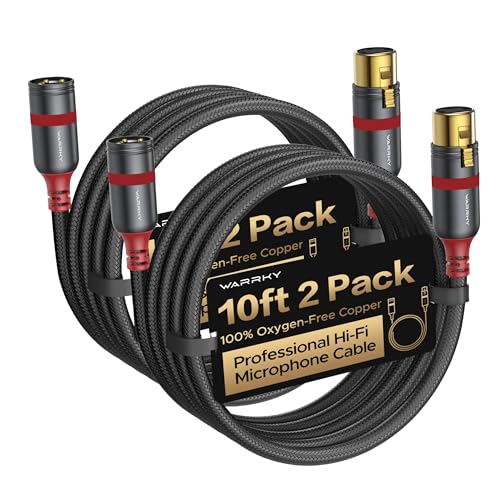
- 22 AWG oxygen-free copper core
- Dual-layer shielding for EMI/RFI resistance
- Braided jacket and gold-plated connectors
Best For: Two-cable studio or live setups needing added durability
Best Value Two-Pack
Cable Matters Premium XLR Cable 6ft

- Two 6-foot XLR cables in one bundle
- 21 AWG OFC conductors for clear audio
- Copper braided shielding and sturdy connectors
Best For: Compact studios and buyers who want a spare cable
Best Long-Reach Pair
Cable Matters Premium XLR Cable 15ft

- Two 15-foot XLR cables
- 21 AWG OFC conductors
- Shielding and strain relief for dependable use
Best For: Larger studios and flexible microphone placement
Best Multi-Pack
25-Foot Color-Coded XLR Cable 6-Pack

- Six 25-foot male-to-female cables
- Color-coded connectors for easy identification
- OFC conductors and braided shielding
Best For: Multi-device studio and live sound setups
Best for Long Runs
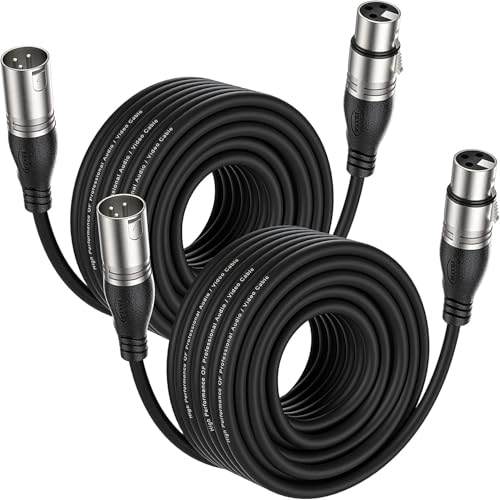
- Two 50-foot male-to-female cables
- Three-pin balanced connections
- Braided shielding and flexible PVC jackets
Best For: Large studios, stages, and extended cable runs
Best Single Cable
Amazon Basics 25-Foot XLR Cable
- One 25-foot male-to-female cable
- All-copper conductors with spiral shielding
- Nickel-plated zinc-alloy connectors
Best For: Single-cable studio and PA connections
Premium Noise Rejection – Mogami Gold Studio 10
For demanding recording chains, the Mogami Gold Studio 10 is a strong choice among xlr cables for studio use. Its Neglex quad-conductor construction, high-density copper shield, and gold-plated contacts are designed for clean, reliable signal transfer with reduced interference.
Best For: Critical vocal and instrument recording, professional studios, and compact home setups where low noise matters.
Pros:
- Quad-conductor design offers up to 30 dB better noise rejection than twisted-pair cables.
- High-density copper shielding helps limit RF and electromagnetic interference.
- Gold-plated contacts and rugged XLR connectors support dependable long-term use.
- Backed by Mogami’s stated lifetime warranty.
Cons:
- Its premium construction may be more than needed for basic patching.
- The 10-foot length may not suit every studio layout.
This is the most specialized option in the group for keeping a critical audio path quiet and clear. Choose it when interference rejection and recording fidelity take priority over minimum cost.
Multi-Cable Studio Value – GEARit 20 FT 6-Pack
The GEARit six-pack is a practical way to outfit several microphone or line-level connections at once. For buyers building a studio, podcast setup, or stage rig, these xlr cables for studio use combine 20-foot reach with oxygen-free copper conductors and shielding for balanced connections.
Best For: Multi-microphone studios, podcast rooms, rehearsal spaces, and live setups that need several long cables.
Pros:
- Six 20-foot male-to-female XLR cables provide useful reach and quantity.
- Oxygen-free copper conductors support balanced audio connections.
- Shielding is designed to reduce EMI and RFI interference.
- Metal connector housings are suited to repeated plugging and unplugging.
Cons:
- A 20-foot cable can create extra slack in compact workspaces.
- The multi-pack may be excessive if you need only one or two connections.
This pack emphasizes coverage and convenience rather than boutique construction. It makes sense when you are wiring multiple inputs and want matching cables in one purchase.
Everyday Studio Essential – Amazon Basics 10 ft XLR
The Amazon Basics 10-foot cable is a straightforward option for connecting microphones, mixers, speakers, and PA equipment. Its all-copper conductors, spiral shielding, and flexible PVC jacket make it a sensible entry point for common xlr cables for studio applications.
Best For: Home studios, basic microphone connections, PA systems, and everyday recording or live-sound use.
Pros:
- All-copper conductors support reliable signal connectivity.
- Inner copper spiral shielding helps minimize noise interference.
- Zinc-alloy, nickel-plated connectors use protective metal housings.
- Round, tangle-free design is easy to coil and store.
Cons:
- Only a single 10-foot cable is included.
- Its general-purpose design lacks the specialized quad-conductor construction of premium alternatives.
This cable covers the basics without adding unnecessary complexity. It is a good fit for routine connections when you want a flexible, shielded XLR cable at a practical price point.
Feature-Rich Balanced Pair – WARRKY 10ft 2-Pack
The WARRKY two-pack targets users who want upgraded materials and detailed shielding in a manageable cable length. Its 22 AWG oxygen-free copper core, dual-layer interference shielding, braided exterior, and gold-plated connectors make it a feature-rich option among xlr cables for studio connections.
Best For: Studio and live users who need two durable 10-foot cables with added shielding and reinforced connectors.
Pros:
- 22 AWG, 99.99% oxygen-free copper core is designed for clear signal transmission.
- Aluminum foil and braided copper mesh provide dual-layer EMI/RFI shielding.
- Gold-plated connectors and aluminum housings support corrosion resistance and connection durability.
- Nylon braiding and strain relief help protect against abrasion and repeated use.
Cons:
- Only two cables are included, which may not cover a larger setup.
- The braided, multi-layer construction may be more feature-heavy than necessary for simple patching.
WARRKY is a compelling middle ground for buyers who want more construction detail than a basic cable without purchasing a large bundle. The two 10-foot cables are convenient for stereo or paired connections.
Best Value Two-Pack – Cable Matters Premium XLR Cable 6ft
For studio setups that need dependable everyday connections, the Cable Matters 6-foot pair is a practical choice among XLR cables for studio use. Its balanced design, 21 AWG oxygen-free copper conductors, and copper braided shielding are suited to microphones, preamps, and mixing equipment.
Best For: Home studios, two-microphone setups, and buyers who want a spare cable included.
Pros:
- Includes two 6-foot male-to-female XLR cables.
- 21 AWG OFC conductors support clear audio transmission.
- Copper braided shielding helps reduce interference.
- Metal connectors and molded strain relief add durability.
Cons:
- Six feet may be limiting for larger rooms or distant equipment.
- Designed for indoor use according to the supplied specifications.
This bundle offers useful flexibility for compact studio wiring, with a second cable available as a backup or for another signal path.
Best for Everyday Use – Mogami Gold Studio 06 XLR Cable
The Mogami Gold Studio 06 is aimed at critical recording paths where low noise and signal clarity matter. Its Neglex quad-conductor design and full-coverage copper shield make it a strong contender among XLR cables for studio applications involving microphones, interfaces, and mixing consoles.
Best For: Critical vocal and instrument recording, professional studios, and noise-sensitive signal paths.
Pros:
- Quad-conductor construction provides up to 30 dB better noise rejection than twisted-pair designs.
- Ultra-high-density copper shielding helps block RF and EM interference.
- Gold-plated contacts resist corrosion and support reliable signal flow.
- Includes a lifetime warranty for the original purchaser.
Cons:
- Only one 6-foot cable is included.
- Premium construction may be more than needed for basic connections.
With its strong noise-rejection design and lifetime warranty, this cable is well suited to studios prioritizing clean, consistent performance over bundle quantity.
Best Long-Reach Pair – Cable Matters Premium XLR Cable 15ft
When your microphone and recording equipment are spaced farther apart, the Cable Matters 15-foot pair provides useful reach without giving up balanced XLR connectivity. It is a practical option among XLR cables for studio setups using microphones, preamps, mixers, or other 3-pin XLR equipment.
Best For: Larger recording spaces, flexible microphone placement, and setups needing two long cables.
Pros:
- Includes two 15-foot male-to-female XLR cables.
- 21 AWG OFC conductors support clear signal transmission.
- Balanced construction and copper braided shielding help minimize interference.
- Heavy-duty metal connectors include molded strain relief.
Cons:
- The longer pair is less convenient for compact setups with minimal cable runs.
- Its PVC jacket may be less flexible than softer premium cable designs.
This pair is a sensible fit when six-foot cables are too short, offering extra placement flexibility for microphones and connected studio hardware.
Best Multi-Pack – 25-Foot Color-Coded XLR Cable 6-Pack
If you need several connections around a recording setup, this six-pack is a practical option among XLR cables for studio use. Each 25-foot cable has a different connector color for quick identification, while gold-plated three-pin connectors, OFC conductors, and braided shielding support reliable balanced audio connections.
Best For: Studios, live setups, and users who need multiple long XLR runs with easy cable identification.
Pros:
- Six 25-foot male-to-female cables provide extensive coverage for multi-device setups.
- Color-coded connectors make individual cables easier to identify.
- OFC conductors, polyethylene insulation, and copper braided shielding help reduce noise and hum.
- Self-locking gold-plated connectors support secure connections and easier plugging and unplugging.
Cons:
- A six-pack may be more than needed for a simple one-microphone setup.
- The 25-foot length can be excessive for compact studio layouts.
Choose this set when quantity, cable identification, and long reach matter more than buying a single cable for a minimal setup.
Best for Long Runs – 50-Foot XLR Cable 2-Pack
For equipment spread across a room or stage, this two-pack offers 50-foot reach per cable. These XLR cables for studio and live use feature three-pin balanced connections, oxygen-free copper conductors, high-density braided shielding, locking metal connectors, and flexible PVC jackets.
Best For: Long-distance microphone, mixer, speaker, phantom-power, and stage-light connections.
Pros:
- Two 50-foot cables suit setups where shorter cables may not reach.
- Balanced three-pin design helps maintain a defined signal path and prevent connection errors.
- High-density braided shielding and OFC conductors are designed to resist interference.
- Flexible PVC protection is easy to clean and helps support repeated use.
Cons:
- Fifty-foot cables can be harder to manage in a small studio.
- The two-pack offers less quantity than a larger multi-cable bundle.
This is a sensible pick when cable length is the priority, particularly for larger recording rooms, live sound areas, or stage applications.
Best Single Cable – Amazon Basics 25-Foot XLR Cable
This single 25-foot cable is a straightforward choice for connecting XLR-compatible equipment in a studio or live-sound setup. Its all-copper conductors, inner copper spiral shielding, nickel-plated zinc-alloy connectors, and 6 mm PVC jacket cover the core features many buyers want in XLR cables for studio use.
Best For: Buyers who need one dependable 25-foot cable for a microphone, mixer, speaker, PA system, or other XLR-compatible equipment.
Pros:
- 25-foot length provides useful reach for studio and live-sound connections.
- All-copper conductors and copper spiral shielding are designed to minimize noise interference.
- Nickel-plated three-pin connectors use protective metal housing for secure, durable connections.
- Flexible 6 mm PVC jacket supports repeated handling.
Cons:
- Only one cable is included.
- It is specified for indoor use, so it may be less suitable when outdoor usage is required.
For a simple setup that needs one medium-length cable rather than a bundle, this Amazon Basics model keeps the configuration uncomplicated while covering common recording and PA connections.
How We Picked the Best Xlr Cables for Studio Use
We focused on balanced male-to-female XLR cables suited to microphones, interfaces, mixers, speakers, and other common studio equipment. The selection includes premium quad-conductor designs, standard shielded cables, and value multipacks in lengths from 6 to 50 feet.
Our comparison considered conductor materials, shielding claims, connector design, cable flexibility, available lengths, pack size, and likely use case. We also separated short patch leads from longer room or stage runs, since a cable that works well behind a rack may be inconvenient across a floor.
Quick Comparison
| Best For | Recommended Type | Useful Lengths |
|---|---|---|
| Premium studio tracking | Quad-conductor cable with quality connectors | 6–10 feet |
| Home studios | Shielded all-copper cable | 6–20 feet |
| Multiple microphones | Two-, four-, or six-pack | 10–25 feet |
| Large rooms and stages | Long balanced XLR cable | 25–50 feet |
Key Buying Factors for Xlr Cables for Studio
Connector Compatibility
Most microphone connections use a female XLR at the microphone end and a male XLR at the mixer, preamp, or interface end. Confirm that your equipment follows this standard, especially when buying cables for patch bays or specialized hardware.
Shielding and Conductor Construction
Balanced XLR wiring rejects much of the electromagnetic noise picked up along a cable run, but shielding and build quality still matter. All-copper conductors and a well-made shield are sensible choices for recording environments with computers, power supplies, lighting, or other potential interference sources.
Length and Cable Management
Choose the shortest practical length to reduce clutter, while leaving enough slack for microphone placement and equipment movement. Six- to 10-foot cables suit many racks and vocal setups; 15- to 25-foot leads offer more flexibility; 50-foot cables are better for distant microphones or stage-style layouts.
Durability and Flexibility
Look for strain relief, secure connector latches, a robust outer jacket, and cable flexibility that suits your workspace. Gold-plated contacts can resist corrosion, but connector fit and overall construction are usually more important than plating alone.
Who Should Buy Which Xlr Cables for Studio?
Choose a premium Mogami-style cable if you record frequently, need dependable performance, or want a durable lead for critical tracking and patching. A standard Amazon Basics or Cable Matters cable is a practical choice for home studios, podcasting, rehearsal rooms, and everyday microphone connections. Multi-packs from GEARit, WARRKY, or similar value-focused brands make more sense when you are wiring several inputs at once. For large rooms, live recording, or stage setups, select the 25- or 50-foot options—but route long cables carefully and avoid unnecessary coils near power cables.