Clear speech can make or break an interview, whether you are recording with a phone, camera, or portable audio setup. The right wireless microphone reduces cable clutter while helping voices sound focused and consistent.
We selected 10 wireless microphone systems for interviews, including dual-transmitter kits, smartphone lavaliers, and handheld options. Use the guide below to match features, compatibility, and recording needs to your budget.
Best 10 Wireless Microphones for Interviews Picks for 2026
Best Overall
DJI Mic Mini with Charging Case

- Two lightweight transmitters for interviews
- Up to 400 m range and automatic limiting
- Charging case delivers up to 48 hours
Best For: Frequent interviewers needing long runtime and dependable two-person audio
Best Audio Protection

- 48 kHz/24-bit audio with AI voice tuning
- Three noise-cancellation levels
- Auto-limit and safety-track backup
Best For: Outdoor interviews and recordings with unpredictable volume or background noise
Best Compact DJI Kit
DJI Mic Mini Two-Transmitter Set
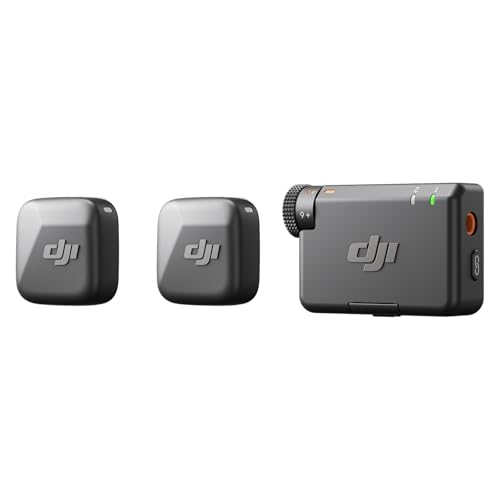
- Includes two 10 g transmitters
- 400 m maximum transmission range
- Up to 10 hours per transmitter and receiver
Best For: Mobile interview setups that need two transmitters without a charging case
Best Budget Option
PQRQP GT16 3-in-1 Lavalier Kit

- Dual microphones with a 3-in-1 receiver
- Works with phones, cameras, and computers
- Plug-and-play setup without an app
Best For: Casual interviews and livestreams across multiple device types
Best Handheld Pick
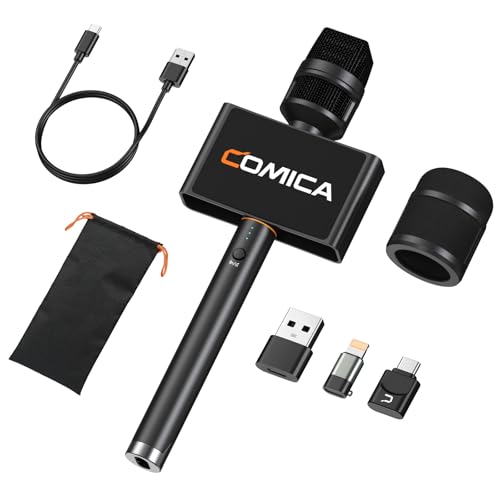
- 48kHz/24-bit audio with cardioid vocal pickup
- Three gain levels and one-key noise reduction
- Up to 15 hours of battery life
Best For: Handheld smartphone interviews and reporting
Best Lightweight Lavalier

- 5-gram transmitters for discreet, comfortable wear
- AI noise cancellation with limiter and safety track
- Up to 30 hours with the charging case
Best For: Portable clip-on interviews and mobile content
Best Long-Range System
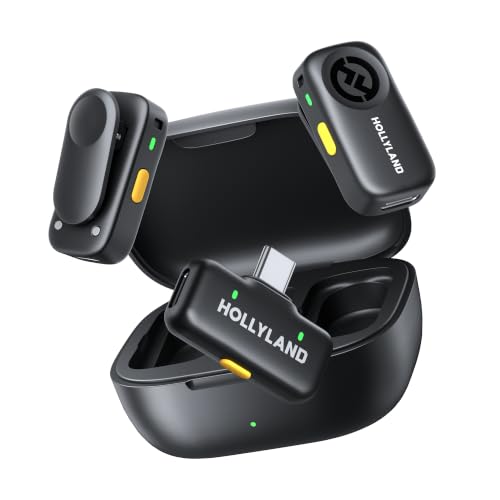
- Two transmitters for multi-person interviews
- Up to 650 feet of wireless transmission
- AI noise cancellation and Auto-Limit protection
Best For: Two-person interviews and mobile outdoor shoots
Dual-Voice Value

- Two microphones for interview pairs
- Low-latency audio-video synchronization
- Lightning and USB-C support
Best For: Two-person interviews and podcasts
Flexible Phone Fit

- USB-C and Lightning compatibility
- Longer receiver works with most phone cases
- Two mics with noise reduction and mute
Best For: Phone-based interviews and mobile creators
Best Overall – DJI Mic Mini with Charging Case
For shoppers comparing wireless microphones for interviews, the DJI Mic Mini stands out as a lightweight two-person system with long battery life, strong range, and useful audio safeguards. The included charging case makes it especially practical for extended interview days.
Best For: Interviews, livestreams, and outdoor content where long battery life and reliable audio matter.
Pros:
- Two 10 g transmitters are discreet and comfortable to wear.
- Up to 400 m transmission range and 48 kHz recording support clear, stable audio.
- Charging case provides up to 48 hours of total battery life.
- Two noise-cancellation levels and automatic limiting help protect vocal clarity.
Cons:
- The charging-case bundle is less compact than the receiver-only package.
- Some ecosystem features depend on compatible DJI devices.
This is the most complete option here for frequent interviewers who want two transmitters, extended runtime, and dependable performance in changing environments.
Best Audio Protection – Hollyland Lark A2 Mini Duo
The Hollyland Lark A2 Mini Duo is a strong choice among wireless microphones for interviews when noise control and protection against sudden volume spikes are priorities. Its app-based tuning and backup safety track add flexibility for demanding recordings.
Best For: Outdoor interviews, walk-and-talk videos, podcasts, and creators who want extra protection against clipping.
Pros:
- 48 kHz/24-bit audio, 68 dB SNR, and up to 120 dB SPL support detailed voice capture.
- Three adjustable noise-cancellation levels help manage distracting environments.
- AI Auto-Limit and a -6 dB Safety Track provide protection against unexpected loud sounds.
- The case extends total battery life to 42 hours, with quick charging support.
Cons:
- The 200 m range is shorter than the DJI Mic Mini’s stated maximum range.
- AI voice tuning and some controls rely on the HollyAudio app.
Choose this system if you value polished, adaptable audio and safety features more than maximum transmission distance.
Best Compact DJI Kit – DJI Mic Mini Two-Transmitter Set
This DJI Mic Mini package offers a streamlined way to record interviews with two transmitters and one receiver. Its 10 g transmitters, 400 m maximum range, and automatic limiting make it well suited to mobile camera and smartphone setups.
Best For: Interviewers who want DJI Mic Mini performance without the added charging-case bundle.
Pros:
- Two ultralight transmitters are discreet on camera.
- Up to 400 m transmission range supports movement during interviews.
- Noise cancellation and automatic limiting help maintain usable speech recordings.
- Each transmitter and the receiver can operate for up to 10 hours.
Cons:
- It does not include the dedicated charging case listed with the other DJI bundle.
- The supplied details list one channel, so buyers should confirm their intended device workflow.
This is a practical pick for DJI users who already have a charging routine and want a lightweight two-microphone setup for interviews and content creation.
Best Budget Option – PQRQP GT16 3-in-1 Lavalier Kit
For budget-minded shoppers seeking wireless microphones for interviews, the PQRQP GT16 offers a simple dual-lavalier setup with receiver connections for iPhone, Android, and cameras. Its plug-in design avoids app pairing and is aimed at straightforward recording.
Best For: Casual interviews, livestreams, vlogging, and creators who need broad device compatibility.
Pros:
- The 3-in-1 receiver supports iPhone, Android, and camera connections.
- Two microphones allow dual-speaker recording.
- Active noise reduction and omnidirectional pickup help emphasize voices.
- Automatic connection requires no app or Bluetooth pairing.
Cons:
- The stated 65-foot transmission range is much shorter than the premium alternatives.
- Rated working time is up to 7 hours when fully charged.
- Some Android and USB-C devices may require OTG to be enabled manually.
The GT16 is a convenient entry-level choice when simple setup and cross-device connectivity matter more than long range or advanced recording safeguards.
Best Handheld Pick – COMICA Revo S
The COMICA Revo S is a practical choice among wireless microphones for interviews when you want a familiar handheld format and direct vocal pickup. Its USB-C receiver, cardioid pattern, three-level gain control, and one-key noise reduction make it suitable for reporting, street interviews, and presentations.
Best For: Reporters, interviewers, and creators who prefer a handheld microphone for smartphone recording.
Pros:
- 48kHz/24-bit recording with a 14mm condenser capsule for detailed vocals.
- Cardioid pickup helps reduce sound from the sides and rear.
- Up to 15 hours of battery life and a wireless range of up to 65 feet.
- Includes USB-C, USB-C-to-Lightning, and USB-C-to-USB-A connectivity options.
Cons:
- Its 65-foot range is shorter than the range offered by some competing systems.
- The handheld design is less discreet than a clip-on lavalier microphone.
The Revo S stands out for interviewers who want clear, directional sound and simple plug-and-play operation without handling a separate camera-style microphone setup.
Best Lightweight Lavalier – BOYA mini 2
The BOYA mini 2 is one of the most convenient wireless microphones for interviews when a small, discreet setup matters. Each transmitter weighs just 5 grams, while adaptive AI noise cancellation, limiter protection, and app controls help maintain clear speech in changing environments.
Best For: Mobile creators, vloggers, and interviewers who want nearly invisible clip-on microphones.
Pros:
- Very compact 5-gram transmitters are designed for comfortable, discreet wear.
- 48kHz/24-bit recording with adjustable AI noise cancellation.
- Up to 30 hours of battery life with the charging case.
- Limiter and -12dB safety track help protect against clipping.
Cons:
- Does not support Bluetooth connectivity.
- Camera compatibility is limited to the listed DJI models and does not include several popular action-camera brands.
- The omnidirectional pattern can capture more surrounding sound than a directional handheld microphone.
Choose the BOYA mini 2 when portability and concealment are more important than a traditional reporter-style microphone. Its long case-assisted battery life is especially useful for extended shoots.
Best Long-Range System – Hollyland LARK A2
The Hollyland LARK A2 is a strong option among wireless microphones for interviews when you need two transmitters, extended range, and automatic audio protection. It records at 48kHz/24-bit, offers adjustable AI noise cancellation, and uses AI Auto-Limit plus a safety track to help manage sudden volume changes.
Best For: Two-person interviews, walk-and-talk videos, and dynamic outdoor shoots.
Pros:
- Two transmitters support interviews with multiple speakers.
- Up to 200 meters, or 650 feet, of wireless transmission.
- AI noise cancellation has three adjustable levels.
- Up to 42 hours of total battery life with the charging case.
Cons:
- Its feature set may be more than needed for simple single-speaker recordings.
- Each transmitter provides up to 7 hours of recording, or up to 9 hours with AI Power Saving, before the case is needed.
The LARK A2 is particularly well suited to interview setups that involve movement or two speakers. Its long transmission distance and real-time clipping protection provide useful flexibility for location recording.
Creator-Ready Pick – Mini Mic Pro
For creators seeking wireless microphones for interviews, the Mini Mic Pro combines plug-and-play setup with noise reduction and included wind protection. Its USB-C and Lightning adapters make it convenient for recording with phones, tablets, or laptops.
Best For: Mobile interviews, TikTok and YouTube creators, and users who want a compact two-microphone kit.
Pros:
- Includes USB-C and Lightning adapters with no app or Bluetooth setup required.
- Two lavalier microphones and a receiver support interview recording.
- Includes foam and deadcat wind protection for outdoor use.
- Offers up to six hours of recording per charge and allows simultaneous device charging.
Cons:
- The listed warranty coverage is limited to a 90-day refund guarantee and six-month replacement period.
- The system is specified as a single-channel kit.
The Mini Mic Pro is a practical choice when portability and fast setup matter most. Its broad device compatibility and supplied wind covers make it especially useful for run-and-gun interview content.
Dual-Voice Value – Labstandard K9
The Labstandard K9 is a dual wireless lavalier option for shoppers comparing wireless microphones for interviews. Its two microphones, low-latency 2.4 GHz transmission, and noise-reduction chip are designed to keep conversations aligned with video.
Best For: Two-person interviews, podcasts, livestreams, and creators switching between Lightning and USB-C devices.
Pros:
- Includes two wireless microphones for recording an interviewer and guest.
- Advertises 0.008-second latency and real-time audio-video synchronization.
- Supports Lightning and USB-C devices with a rechargeable Lightning adapter.
- Provides about six hours of battery life and multi-channel real-time mixing.
Cons:
- The product details list Bluetooth connectivity, while the feature description emphasizes 2.4 GHz transmission.
- Compatibility and functions may require checking the included manual.
With dual microphones and a one-year manufacturer warranty, the K9 is well suited to conversational recording. It is a particularly useful fit when an interview setup needs two separate voices captured wirelessly.
Flexible Phone Fit – MAYBESTA Wireless Mini Mic
The MAYBESTA two-pack is a flexible option among wireless microphones for interviews, with USB-C and Lightning support for phones, tablets, and laptops. Its extended receiver is designed to work with most phone cases, reducing setup friction when recording on the go.
Best For: Phone-based interviews, vlogging, livestreaming, and creators who prefer not to remove their phone case.
Pros:
- Supports Android, Lightning iPhone and iPad models, USB-C devices, laptops, and tablets.
- Longer receiver is designed for use with most phone cases.
- Plug-and-play connection requires no adapter or application.
- Includes noise reduction, windscreens, mute functionality, and two lavalier microphones.
Cons:
- The supplied warranty information is abbreviated and lists a 120-day refund policy with an 18-month replacement period.
- The details specify a single-channel system.
- Exact battery runtime is not provided in the supplied notes.
The MAYBESTA stands out for convenience rather than extensive specifications. Its case-friendly receiver, broad device compatibility, and automatic connection make it a sensible choice for casual and mobile interview recording.
How We Picked the Best Wireless Microphones for Interviews
We focused on the features that matter most when recording real conversations: voice clarity, dependable wireless performance, transmitter and receiver design, device compatibility, battery life, portability, and ease of setup. We also considered whether each kit supports one or two speakers and whether it is better suited to phones, cameras, or both.
Because product specifications and package contents can vary, check the current listing before buying—especially connector type, charging accessories, operating range, and compatibility with your recording device.
Quick Comparison
- Best for lightweight two-person interviews: DJI Mic Mini kits and Hollyland LARK A2 systems.
- Best for smartphone-first recording: BOYA mini 2, PQRQP, Labstandard, and MAYBESTA kits.
- Best handheld option: COMICA Revo S for interviewers who prefer a traditional microphone format.
- Best for flexible device support: Kits that include or support phone and camera connections through the appropriate receiver and adapters.
Key Buying Factors for Wireless Microphones for Interviews
Compatibility and Connectors
Confirm whether the receiver connects through USB-C, Lightning, a camera output, or an adapter. A microphone advertised for phones may not connect directly to a camera, and some newer phones require USB-C rather than Lightning.
Number of Transmitters
For interviewer-and-guest conversations, choose a two-transmitter kit. A single transmitter works well for solo videos or one-person presentations, while dual systems simplify recording two speakers on separate microphones.
Audio Quality and Noise Control
Look for clear speech reproduction, suitable sampling and bit-depth specifications, and noise-reduction controls that can be adjusted for the environment. Noise cancellation can help outdoors, but aggressive processing may make voices sound unnatural.
Range, Battery Life, and Monitoring
Longer wireless range is useful when the subject moves away from the camera, but line of sight and local interference still matter. Consider total runtime, charging-case support, and whether the system provides a headphone output or other way to monitor audio.
Form Factor and Setup
Clip-on lavaliers are discreet and convenient, while handheld microphones can feel more natural for street interviews. Prioritize a system you can pair quickly and secure comfortably to clothing.
Who Should Buy Which Wireless Microphones for Interviews?
Choose a compact dual-transmitter kit if you regularly interview guests and want a polished setup with separate microphones. Choose a smartphone lavalier kit if you record social content, podcasts, or quick interviews primarily on an iPhone or Android phone. Choose a handheld system if you conduct public, street, or event interviews and want the microphone visible and easy to pass between speakers.
Before recording, test the connector, place the microphone away from fabric rubbing, check input levels, and make a short sample recording. These simple steps can prevent compatibility problems and unusable audio in the final interview.