Drummers need dependable monitoring to stay locked in with the band without relying on floor wedges or turning up stage volume. The best wireless in-ear monitor system for drummers delivers clear timing, consistent range, and enough battery life for rehearsals, gigs, and studio work.
We compare 10 systems across UHF and 2.4GHz designs, mono and stereo operation, receiver count, connectivity, and setup convenience so you can choose a practical fit for your rig and budget.
Best 10 Wireless in Ear Monitor System for Drummers Picks for 2026
Best Overall Low-Latency Pick
Xvive U4 Professional IEM System

- Less than 5ms latency
- Up to six simultaneous channels
- Rechargeable battery lasts up to five hours
Best For: Drummers wanting clear mono monitoring and flexible audio inputs
Best Compact Touring Option
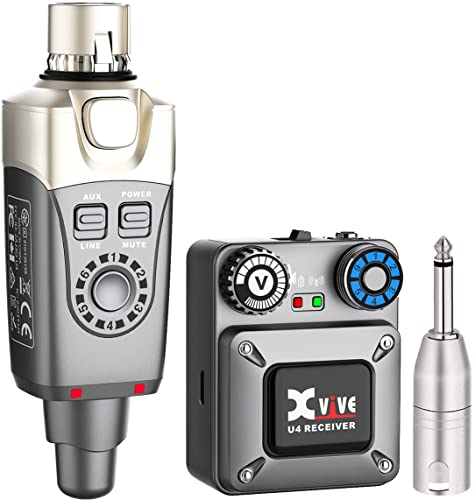
- More than 90 feet of range
- Under 5ms latency
- Includes adapter and carrying bag
Best For: Drummers playing small venues and transporting their monitoring gear
Best Long-Range UHF Choice

- 164-foot stated operating range
- 50 selectable UHF frequencies
- Separate inputs and pass-through outputs
Best For: Drummers needing flexible frequency selection and extended mono range
Best Battery-Life Pick

- Up to 10 hours of stated battery life
- Automatic transmitter-receiver pairing
- Mono or stereo input mode
Best For: Drummers wanting long runtime and simple setup
Professional Stereo Pick
Phenyx Pro PTM-10 Wireless IEM

- Stereo/mono monitoring with EQ and limiter controls
- 89 selectable 900MHz frequencies
- Rack-mountable transmitter with 160-foot stated range
Best For: Drummers wanting a configurable, rack-ready stereo monitoring system
Simple Starter Choice
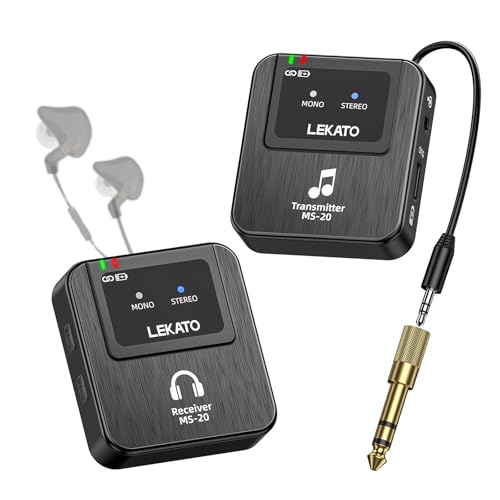
- Compact auto-pairing 2.4GHz system
- One transmitter supports up to 10 receiver pairs
- More than eight hours of stated battery life
Best For: Drummers needing an affordable, portable setup for practice and smaller gigs
Low-Latency Stage Option
POGOLAB 7-Channel Wireless IEM

- Stated 1ms ultra-low latency
- Seven selectable UHF channels and 164-foot range
- Rechargeable USB-C transmitter and receiver
Best For: Drummers prioritizing responsive timing and flexible stage inputs
Best Multi-Receiver Pick

- Two receivers included for shared monitoring
- Up to 30 hours with charging case
- 150-foot open-area range and OTG support
Best For: Bands and rehearsals needing multiple receivers
Best Low-Latency Pick

- Less than 5 ms stated latency
- 164-foot stated receiving distance
- Auto-pairing with mono/stereo switching
Best For: Individual performers needing responsive monitoring
Best Budget Practice Pick
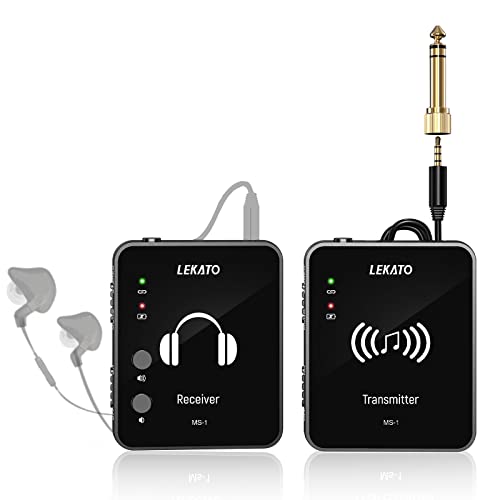
- Supports up to six receiver sets
- Stereo transmission with mono/stereo switch
- 100-foot range and over five-hour battery
Best For: Daily practice and small-to-medium performances
Best Overall Low-Latency Pick – Xvive U4 Professional IEM System
For drummers seeking a dependable wireless in ear monitor system for drummers, the Xvive U4 combines uncompressed 2.4GHz transmission, low latency, and a durable metal housing. Its balanced XLR or unbalanced 1/4-inch TS input makes it suitable for rehearsals, studio work, and live performance.
Best For: Drummers who want clear, low-latency mono monitoring with flexible mixer connections.
Pros:
- Less than 5ms latency with 24-bit/48kHz audio.
- Supports up to six simultaneous channels without interference.
- Rechargeable battery provides up to five hours of use.
- Built-in limiter helps reduce distortion from excessive input levels.
Cons:
- Battery life is limited to about five hours.
- Does not provide water resistance.
- Headphones or earphones are not included in the listed box contents.
The U4 is a practical choice when fast response and straightforward setup matter most. Its short battery runtime is worth considering for especially long performances.
Best Compact Touring Option – Xvive U4 Wireless IEM Set
The Xvive U4 is a compact wireless in ear monitor system for drummers designed for rehearsals, small venues, and live performance. Its 2.4GHz connection offers more than 90 feet of range, while six channels and under-5ms latency help keep monitoring responsive onstage.
Best For: Drummers playing small clubs or needing a portable transmitter-and-receiver setup.
Pros:
- More than 90 feet of stated operating range.
- Less than 5ms latency supports distraction-free performance.
- Six channels allow multiple systems to operate together.
- Includes a 1/4-inch-to-XLR adapter and carrying bag.
Cons:
- Battery life is rated at up to five hours.
- The package includes one transmitter and one receiver, not a multi-receiver kit.
- No water resistance is listed.
With its included adapter and bag, this version is convenient for mobile setups. It is best suited to shows where five hours of battery life is sufficient.
Best Long-Range UHF Choice – Phenyx Pro PTM-11 Mono IEM
The Phenyx Pro PTM-11 offers a UHF alternative for anyone comparing a wireless in ear monitor system for drummers. Its mono design, 50 selectable frequencies, separate outputs, and stated 164-foot operating range make it useful for stage, studio, and other monitoring applications.
Best For: Drummers who need extended range, frequency flexibility, and mono monitoring from a rack-friendly system.
Pros:
- Provides 50 adjustable frequencies and supports up to five systems together.
- Stated operating range reaches 164 feet under suitable conditions.
- Separate left and right inputs support a personal mix while passing audio through to the soundboard.
- Includes a bodypack receiver, earphone, rackmount kit, batteries, and carrying case.
Cons:
- Uses AA batteries in the supplied receiver rather than a rechargeable battery.
- Mono monitoring may not suit performers seeking stereo imaging.
- Range can be affected by thick walls, glass, and metal obstructions.
The PTM-11 is a strong fit for more structured stage systems where frequency selection and range are priorities. Its mono format keeps the setup focused but limits stereo monitoring options.
Best Battery-Life Pick – M6S Stereo Wireless IEM
The M6S is a convenient wireless in ear monitor system for drummers with a 2.4GHz connection, automatic pairing, and a switchable mono/stereo input mode. Its rechargeable transmitter and receiver are rated for up to 10 hours, making it appealing for long rehearsals and performances.
Best For: Drummers prioritizing long battery life, automatic pairing, and optional stereo monitoring.
Pros:
- Rechargeable batteries are rated for up to 10 hours of use.
- Automatic pairing avoids manual channel matching.
- Supports mono or stereo input with 24-bit/48kHz processing.
- Up to six units can work simultaneously with one transmitter.
Cons:
- The listed battery-life details vary between up to 10 hours and eight hours.
- Its operating range is not specified in the supplied notes.
- The package includes one receiver, limiting the initial setup to one performer.
The M6S stands out for convenience and endurance, especially when frequent charging is undesirable. Automatic pairing also makes it simpler to deploy than systems requiring manual channel selection.
Professional Stereo Pick – Phenyx Pro PTM-10 Wireless IEM
For drummers who need dependable stage monitoring, the Phenyx Pro PTM-10 is a versatile wireless in ear monitor system for drummers with selectable 900MHz UHF frequencies, stereo/mono operation, and up to 160 feet of stated range. Its transmitter is designed for rack mounting and accepts XLR or 6.3mm inputs.
Best For: Drummers and performers who want stereo monitoring, multiple frequency options, and professional-stage connectivity.
Pros:
- Stereo/mono modes, EQ, balance, limiter, PAD, and lock functions offer useful monitoring control.
- 89 tunable frequencies support operation with up to five systems simultaneously.
- Includes a metal transmitter, bodypack receiver, earbuds, rack-mount kit, batteries, and carrying case.
Cons:
- Its 160-foot range is a stated maximum and may vary with venue conditions.
- The included earbuds may not suit every drummer’s preferred fit or isolation needs.
The PTM-10 is the strongest fit here for a more traditional rack-based setup. Its stereo features and extensive controls are particularly useful when a drummer needs to shape a detailed personal mix, while the included mounting hardware suits fixed stage or studio installations.
Simple Starter Choice – LEKATO MS-20 Wireless IEM
The LEKATO MS-20 is a compact wireless in ear monitor system for drummers who prioritize straightforward setup and portability. Its 2.4GHz connection, auto-pairing receiver, mono/stereo switch, and belt-clip design make it practical for rehearsals, small or medium stages, and starter applications.
Best For: Drummers, singers, and bands seeking an easy-to-use, portable system for rehearsals and live performances.
Pros:
- Professional-grade 24-bit/48kHz audio, 20Hz–20kHz frequency response, and 100dB SNR are specified.
- Supports one transmitter with up to 10 receiver pairs.
- Offers auto-pairing, OTG input support, and more than eight hours of stated battery life.
Cons:
- Earphones are not included, so you must supply compatible earbuds or monitors.
- The 2.4GHz band can be more dependent on local wireless conditions than a dedicated UHF setup.
For drummers building their first monitoring rig, the MS-20 keeps the workflow simple and avoids a bulky rack setup. Its receiver works with your preferred earbuds and its one-to-many capability can also suit a band that wants to expand monitoring gradually.
Low-Latency Stage Option – POGOLAB 7-Channel Wireless IEM
The POGOLAB system is a practical wireless in ear monitor system for drummers who place a high priority on timing. Its stated 1ms latency, UHF connection, seven selectable channels, and XLR/AUX/LINE input options are aimed at real-time monitoring for bands, worship teams, rehearsals, and live stages.
Best For: Drummers who want very low stated latency, UHF transmission, and flexible mixer or audio-interface connections.
Pros:
- Advertises 1ms latency with 48kHz/24-bit audio and distortion under 0.5%.
- Seven selectable UHF channels and a stated 164-foot line-of-sight range support stage mobility.
- Rechargeable transmitter and receiver include USB-C charging, battery indicators, and up to five hours of operation.
Cons:
- The stated five-hour battery life is shorter than some rechargeable alternatives.
- Only seven selectable channels are provided, fewer than the Phenyx Pro’s listed 89 frequencies.
- Earbuds or in-ear monitors are not listed among the included package contents.
The POGOLAB stands out when a drummer wants a responsive monitoring path with conventional audio inputs. Its rechargeable design and belt-clipped receiver are convenient for mobile gigs, though performers with long events may want to plan charging around its stated runtime.
Best Multi-Receiver Pick – LEKATO MS-20 2.4G IEM System
For drummers comparing a wireless in ear monitor system for drummers, the LEKATO MS-20 stands out when multiple performers need the same monitor feed. It includes one transmitter and two receivers, with auto-pairing, a claimed 150-foot open-area range, and low-latency 24-bit/48 kHz audio.
Best For: Bands, rehearsals, and performances where two performers need receivers from one transmitter.
Pros:
- Includes two wireless receivers and supports up to 10 receiver pairs from one transmitter.
- Up to 30 hours of use with the charging case and a 2,000mAh battery.
- Supports OTG audio input for compatible USB-C phones and devices.
- Offers mono/stereo switching, a 150-foot open-area range, and low-latency monitoring.
Cons:
- Earphones are not included.
- It is not water resistant.
- The listed 150-foot range applies to open areas.
The MS-20 is a practical choice for drummers who value shared monitoring and extended battery support. Its included case and multiple receivers add convenience, while OTG support broadens its usefulness for practice and recording setups.
Best Low-Latency Pick – M6S 2.4G Wireless IEM System
The M6S is a straightforward wireless in ear monitor system for drummers who want fast setup and responsive stage monitoring. Its transmitter and receiver pair automatically, offer less than 5 ms of stated latency, and support mono or stereo input through compatible audio connections.
Best For: Individual drummers and performers who prioritize low latency and simple plug-and-play operation.
Pros:
- Less than 5 ms stated latency helps keep monitoring responsive.
- Automatic pairing simplifies setup before rehearsals or performances.
- Provides a claimed 164-foot receiving distance and up to 10 simultaneous channels.
- Supports 24-bit/48 kHz audio and mono/stereo switching.
Cons:
- Battery life is listed at approximately 10–12 hours per charge.
- Only one receiver is included.
- It is not water resistant and has no listed noise control.
With its very low stated latency and longer range than the other listed options, the M6S suits drummers who need dependable timing without a complicated setup. The single-receiver package is best for personal monitoring rather than outfitting an entire band.
Best Budget Practice Pick – LEKATO MS-1 Wireless IEM
The LEKATO MS-1 is a compact wireless in ear monitor system for drummers suited to everyday practice and smaller performances. It supports stereo transmission, automatic pairing, and one transmitter-to-many receiver operation, with a stated 100-foot open-area range and latency under 12 ms.
Best For: Small or medium-sized bands, church setups, and daily rehearsals with modest range requirements.
Pros:
- One transmitter can support multiple receivers, with up to six sets listed for simultaneous use.
- Supports true stereo transmission and one-key mono/stereo switching.
- Provides 24-bit/48 kHz audio, 20 Hz–20 kHz response, and stated latency under 12 ms.
- Automatic pairing and a claimed 100-foot open-area range simplify small-stage use.
Cons:
- Battery life is listed at more than five hours, shorter than the other options.
- The stated range is limited to 100 feet in open areas.
- A stereo source and stereo cable are required for stereo transmission.
The MS-1 makes sense when affordability, basic stereo monitoring, and multi-receiver capability matter more than all-day battery life. Its range and latency are adequate for many rehearsals and smaller stages, provided the system is used within its stated limits.
How We Picked the Best Wireless in Ear Monitor System for Drummers
We evaluated these wireless in-ear monitor systems for drummers based on the features that matter most during real rehearsals and performances: signal stability, operating range, latency, battery performance, audio format, connection options, and setup speed. We also considered whether each system supports mono or stereo monitoring, multiple receivers, rack installation, and common outputs from mixers, interfaces, and stage boxes.
UHF models can offer dependable range and strong resistance to crowded 2.4GHz environments, while 2.4GHz systems are often simpler to pair and more portable. Product specifications can vary by version and region, so confirm included accessories, frequency rules, and receiver count before ordering.
Quick Comparison
| Feature | What to Look For |
|---|---|
| Wireless band | UHF for selectable channels and range; 2.4GHz for simple plug-and-play setup |
| Audio mode | Mono for basic click and monitor mixes; stereo for more detailed mixes and panning |
| Latency | Very low latency helps preserve timing and natural playing feel |
| Receivers | Multiple beltpack receivers are useful for bands sharing one transmitter |
| Battery | Long runtime and charging cases reduce interruptions at rehearsals and shows |
Key Buying Factors for a Wireless In-Ear Monitor System for Drummers
Latency and Signal Stability
Drummers should prioritize a responsive system. Noticeable delay can make clicks, cues, and kick-drum timing feel disconnected. Look for low-latency specifications and test the system in the same environment where it will be used. Selectable frequencies are valuable in venues with heavy wireless traffic.
Mono Versus Stereo
Mono systems are often sufficient for a centered vocal, click, or straightforward monitor feed. Stereo systems provide better separation for vocals, instruments, and effects, but require a compatible stereo source and may cost more. Make sure the transmitter accepts the outputs your mixer provides, such as XLR, 1/4-inch, AUX, or line connections.
Range, Battery Life, and Comfort
Published range is measured under ideal conditions, so walls, people, and other wireless equipment can reduce coverage. Choose enough headroom for your stage layout. A receiver should remain comfortable when clipped to a waistband or drum hardware, and its battery should last beyond the full set, soundcheck, and encore.
Who Should Buy Which Wireless in Ear Monitor System for Drummers?
Choose a compact 2.4GHz system if you want quick pairing, straightforward setup, and a portable solution for practice, small venues, or home recording.
Choose a UHF system if you play larger stages, work around busy wireless networks, or need selectable channels and more flexible frequency management.
Choose stereo if your monitor mix uses panning or layered instruments and you want a more spacious, detailed in-ear experience. Choose mono when simplicity, low cost, and a focused rhythm-section mix matter most.
For bands sharing one monitor feed, prioritize systems that support multiple receivers or add-on beltpacks. Whatever you choose, use properly isolating in-ear headphones, set safe listening levels, and keep a wired backup available for critical performances.