Finding the right studio monitors with subwoofer output means balancing accurate mids and highs with a clean path to deeper bass. The best setup should fit your desk, room, equipment, and listening goals without adding unnecessary complexity.
This roundup includes compact near-field monitors, Bluetooth-enabled speakers, and complete monitor-and-subwoofer bundles. Use the guide below to narrow the options by connectivity, bass performance, size, and value.
Best 10 Studio Monitors with Subwoofer Output Picks for 2026
Best Value Pick
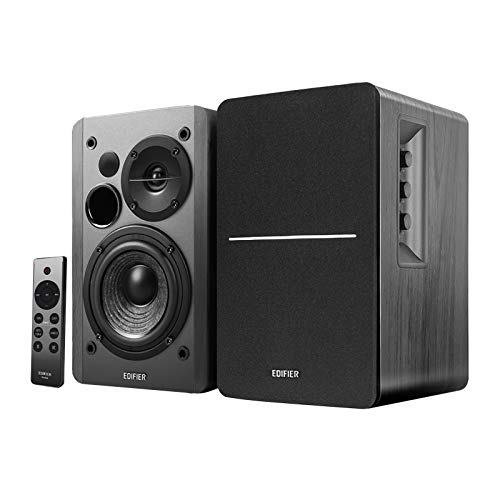
- Subwoofer output with auto crossover
- Bluetooth, optical, and coaxial inputs
- 42W RMS with tone controls
Best For: Flexible desktop and multimedia setups
Studio Accuracy Pick

- 50W Class AB stereo amplification
- Balanced TRS and RCA inputs
- Room-tuning controls and headphone output
Best For: Music production and near-field listening
Deep Bass Upgrade
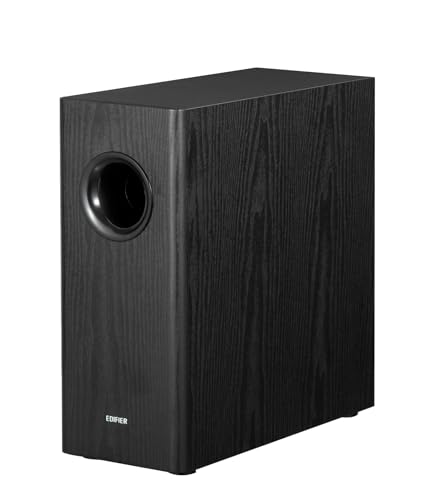
- 8-inch woofer with 70W RMS power
- Adjustable crossover and phase control
- Works with sub out or select RCA setups
Best For: Adding controlled bass to compatible active speakers
Desktop Subwoofer Pick
Mackie CR8SBT 8-inch Subwoofer

- TRS and RCA connections for CR monitors
- Adjustable crossover and sub bypass
- Bluetooth input with desktop remote
Best For: CR Series desktop monitor systems
Deep-Bass Expansion
Yamaha HS8S Powered Studio Subwoofer

- 8-inch driver with 22Hz–150Hz response
- 150-watt amplifier for extended bass
- Adjustable crossover and phase controls
Best For: Recording and live-music systems needing dedicated low-end support
Compact Desktop Pair
PreSonus Eris 3.5 Powered Studio Monitors

- Stereo pair with 50 watts of amplification
- 3.5-inch woofers and 1-inch tweeters
- TRS, RCA, aux, and headphone connectivity
Best For: Small desktop setups that may later add a separate subwoofer
Connected Near-Field Option
Edifier MR3 Active Bluetooth Studio Monitor

- 52Hz–40kHz stated Hi-Res response
- Balanced TRS, RCA, AUX, and Bluetooth
- App EQ plus Monitor, Music, and Custom modes
Best For: Versatile home studios and near-field listening with multiple sources
Complete Bass-Ready Bundle
Mackie CR3.5 Monitors with CR8SBT Subwoofer

- Includes monitors, subwoofer, remote, and RCA cable
- Adjustable tone and 40Hz–180Hz crossover controls
- Bluetooth, TRS, RCA, and headphone connectivity
Best For: A ready-to-use desktop 2.1 setup for production, gaming, and movies
Flexible Low-End Upgrade
PreSonus Eris Sub 8BT Studio Subwoofer

- 8-inch driver reaches down to 30Hz
- Balanced TRS, RCA, Bluetooth, and auxiliary inputs
- Adjustable highpass, lowpass, and frequency controls
Best For: Adding tunable low-end extension to an existing monitor system
Compact Monitor Pair
Ortizan C7 Bluetooth Studio Monitors

- 3.5-inch carbon-fiber drivers with silk-dome tweeters
- Includes balanced TRS, USB, RCA, AUX, and Bluetooth 5.3
- Compact design with front headphone output
Best For: Small desktop setups needing versatile wired and wireless inputs
Best Value Pick – Edifier R1280DBs
The Edifier R1280DBs are a practical entry point for shoppers seeking studio monitors with subwoofer output. Their 42W RMS stereo system combines Bluetooth 5.0 with optical, coaxial, and RCA connectivity, while the dedicated subwoofer output supports a simple upgrade path for deeper bass.
Best For: Desktop listening, TV audio, casual music production, and buyers who want flexible wired and wireless connections.
Pros:
- Dedicated subwoofer output with automatic crossover detection
- Bluetooth 5.0 plus optical and coaxial inputs
- Adjustable bass, treble, and volume controls
- Included remote simplifies everyday operation
Cons:
- Plastic enclosure may feel less premium than MDF alternatives
- Compact 4-inch drivers cannot deliver the low-end output of larger monitors
Choose the R1280DBs if convenient connectivity and an easy subwoofer upgrade matter more than professional balanced inputs. They are particularly well suited to multimedia setups and compact desks.
Studio Accuracy Pick – PreSonus Eris E4.5
The PreSonus Eris E4.5 pair emphasizes accurate near-field monitoring and useful room adjustment. For shoppers comparing studio monitors with subwoofer output, these monitors offer balanced TRS and RCA connectivity and can be expanded with the Eris Sub 8BT for a fuller 2.1 system.
Best For: Music production, hi-fi listening, and desktop users who want monitor-style sound with flexible input options.
Pros:
- 50W Class AB amplification, rated at 25W per side
- Balanced 1/4-inch TRS and unbalanced RCA inputs
- High- and low-frequency tuning controls help adapt to the room
- Front headphone output and auxiliary input are convenient
Cons:
- The supplied notes do not identify a dedicated subwoofer output on the monitors
- Adding the Eris Sub 8BT requires a separate purchase
The Eris E4.5 is a stronger fit for listeners prioritizing monitoring features and tonal adjustment. Consider it when you want a compact pair that can become a 2.1 setup with the matching subwoofer.
Deep Bass Upgrade – Edifier T5s Powered Subwoofer
The Edifier T5s is a powered subwoofer rather than a complete monitor pair, making it a useful add-on for compatible studio monitors with subwoofer output. Its 8-inch woofer, 70W RMS amplifier, adjustable crossover, and phase selector are designed to integrate deeper bass into a desktop or home audio system.
Best For: Owners of compatible active speakers or amplifiers who want stronger, adjustable low-frequency performance.
Pros:
- 8-inch woofer and 70W RMS Class-D amplification
- 30Hz–160Hz low-pass filter and 0°/180° phase selection
- Supports systems with sub out or certain RCA line-in/line-out configurations
- Auto-standby activates after 15 minutes of inactivity
Cons:
- It is a subwoofer only, not a complete pair of studio monitors
- Systems without sub out require compatible wired line-in and line-out connections
- Bluetooth, USB, and optical connections are not supported in the series connection method
The T5s makes the most sense as a targeted bass upgrade. Check your monitor’s outputs and the required connection method before buying, especially if your source relies on wireless or digital-only connections.
Desktop Subwoofer Pick – Mackie CR8SBT 8-inch Subwoofer
The Mackie CR8SBT is a dedicated 8-inch studio subwoofer for adding low-end weight to compatible desktop monitors. It connects through TRS or RCA, includes Bluetooth input, and provides adjustable crossover control plus a desktop remote for convenient volume and subwoofer bypass.
Best For: CR Series monitor users and desktop listeners who want remote-controlled bass expansion.
Pros:
- Designed to pair with CR Series monitors through TRS or RCA
- 8-inch driver with up to 200W listed maximum output power
- Adjustable crossover helps blend the subwoofer with the monitors
- Bluetooth input and desktop remote add convenience
Cons:
- It is a standalone subwoofer, so monitors must be purchased separately
- Its 40Hz listed frequency figure may not reach as deeply as some alternatives
- Bluetooth compatibility does not replace a wired monitor connection
The CR8SBT is a convenient choice when your desktop system benefits from quick bass control at the listening position. It is especially logical for CR Series owners, while TRS and RCA connectivity provide broader compatibility.
Deep-Bass Expansion – Yamaha HS8S Powered Studio Subwoofer
If you want studio monitors with subwoofer output, the Yamaha HS8S is a dedicated powered subwoofer designed to extend the low end of a recording or live-music setup. Its 8-inch driver, 150-watt amplifier, and adjustable crossover controls make it useful for shaping bass integration with compatible monitors.
Best For: Recording and live-music setups that need stronger, adjustable low-frequency reproduction.
Pros:
- 8-inch bass-reflex powered subwoofer with a 22Hz–150Hz frequency response.
- Built-in 150-watt amplifier provides substantial low-frequency output.
- Low-cut, high-cut, and phase controls help tailor monitor integration.
- Wired XLR connectivity suits studio-oriented systems.
Cons:
- This is a subwoofer rather than a complete pair of studio monitors.
- Its floor-standing cabinet is relatively large and weighs 33.6 pounds.
- It requires a corded-electric power source.
The HS8S is the most specialized option here for extending bass below a pair of monitors. Choose it when crossover and phase adjustment matter more than an all-in-one desktop solution.
Compact Desktop Pair – PreSonus Eris 3.5 Powered Studio Monitors
For shoppers comparing studio monitors with subwoofer output, the PreSonus Eris 3.5 offers a compact stereo-monitor foundation that can pair well with a separate subwoofer. The 3.5-inch woofers, 50 watts of amplification, and adjustable acoustic controls suit desktops, small rooms, and general-purpose listening.
Best For: Desktop music production, gaming, streaming, and everyday listening in space-conscious setups.
Pros:
- Sold as a complete stereo pair with 50 watts of built-in amplification.
- 3.5-inch woven-composite woofers and 1-inch silk-dome tweeters cover 80Hz–20kHz.
- High- and low-frequency controls help tailor the sound to the room.
- Balanced TRS, RCA, auxiliary, and headphone connections offer flexible hookup options.
Cons:
- The listed 80Hz low end may leave room for a dedicated subwoofer in bass-heavy work.
- It is a compact monitor pair, not a bundled monitor-and-subwoofer system.
- Bluetooth is listed, but the supplied notes emphasize wired studio inputs.
The Eris 3.5 is a practical starting point for a modular desktop system. Add a compatible subwoofer when you need more low-end extension without giving up a small footprint.
Connected Near-Field Option – Edifier MR3 Active Bluetooth Studio Monitor
The Edifier MR3 is a flexible choice for anyone building a studio-monitor setup with subwoofer output or other external low-end options. Its balanced TRS, RCA, and AUX inputs support varied sources, while Monitor mode, app-based EQ, and a 52Hz–40kHz stated response make it adaptable for home studios and near-field listening.
Best For: Home studios, video editing, guitar work, and listeners who want wired and Bluetooth connectivity.
Pros:
- Hi-Res Audio certified with a stated 52Hz–40kHz flat response.
- Balanced TRS, RCA, AUX, Bluetooth, and headphone connections support multiple sources.
- Monitor, Music, and Custom modes provide flexible listening and production options.
- EDIFIER ConneX app enables detailed EQ adjustment.
Cons:
- The listed 42-watt maximum output is lower than the Yamaha subwoofer’s dedicated power rating.
- It is sold as a monitor solution rather than a complete monitor-and-subwoofer package.
- Bluetooth and app features may be unnecessary for strictly wired studio workflows.
The MR3 stands out for connectivity and tuning flexibility rather than dedicated sub-bass. It makes sense for a versatile near-field system where source switching and app-based sound shaping are priorities.
Complete Bass-Ready Bundle – Mackie CR3.5 Monitors with CR8SBT Subwoofer
This all-in-one package is a practical choice if you want studio monitors with subwoofer output without assembling a system piece by piece. It combines Mackie CR3.5 powered monitors, an 8-inch CR8SBT subwoofer, a desktop remote, and a 10-foot RCA cable.
Best For: Desktop music production, gaming, movies, and listeners who want adjustable bass with Bluetooth convenience.
Pros:
- Includes monitors, subwoofer, remote, and RCA cable in one bundle.
- CR3.5 monitors offer tone control, desktop/bookshelf modes, multiple inputs, and a front headphone output.
- CR8SBT provides Bluetooth, RCA and TRS connectivity, plus adjustable 40Hz–180Hz crossover control.
Cons:
- The compact 3.5-inch monitors may be less suitable for large rooms.
- The package occupies more space than a monitor-only setup.
This is the most convenient option for buyers who want a coordinated 2.1 system and strong low-end extension immediately. Its remote level control and flexible connectivity also make it easy to adapt for everyday listening.
Flexible Low-End Upgrade – PreSonus Eris Sub 8BT Studio Subwoofer
The PreSonus Eris Sub 8BT is a standalone 8-inch subwoofer for adding controlled bass to studio monitors with subwoofer output or compatible monitoring systems. Its balanced and unbalanced inputs, Bluetooth 5.0, and adjustable crossover make integration flexible.
Best For: Content creators, music producers, and listeners who want deeper bass and room-tunable crossover control.
Pros:
- 8-inch driver reaches down to 30Hz and is rated at 100 watts.
- Highpass and lowpass filters help match the subwoofer to the main monitors.
- Offers balanced TRS, RCA, front auxiliary input, Bluetooth 5.0, and a front headphone output.
- High- and low-frequency controls support room-specific tuning.
Cons:
- This is a subwoofer only, so separate monitors are required.
- Its larger 8-inch cabinet may need more placement space than a compact desktop subwoofer.
Choose the Eris Sub 8BT when you already have suitable monitors and want more precise low-frequency integration. The crossover and tuning controls are particularly useful when matching different monitor models or adapting the system to a room.
Compact Monitor Pair – Ortizan C7 Bluetooth Studio Monitors
The Ortizan C7 is a compact pair of powered monitors for buyers comparing studio monitors with subwoofer output and wanting versatile connectivity in a small setup. It includes RCA, AUX, USB, Bluetooth 5.3, balanced 6.35mm TRS input, and a front headphone output, but the supplied specifications do not identify a dedicated subwoofer output.
Best For: Small desktop music-production, gaming, and multimedia setups that prioritize multiple inputs over built-in subwoofer integration.
Pros:
- Uses a 3.5-inch carbon-fiber mid-bass driver and 0.75-inch silk-dome tweeter.
- Provides balanced TRS, RCA, AUX, USB, Bluetooth 5.3, and front headphone connectivity.
- Designed with a tuned, balanced response for accurate audio monitoring.
Cons:
- The supplied notes do not confirm a dedicated subwoofer output.
- Its 3.5-inch drivers may provide less low-end authority than larger monitors or a system with a separate subwoofer.
The C7 is a sensible compact monitor choice when connection flexibility and nearfield use matter most. If adding a subwoofer is central to your setup, verify the available outputs and compatibility before buying.
How We Picked These Studio Monitors with Subwoofer Output
We selected products based on practical compatibility, listening versatility, connectivity, speaker size, power claims, and suitability for desktop or near-field use. The list includes standalone monitors with subwoofer connections as well as matched or convenient subwoofer pairings. Because specifications and included accessories can vary by seller, confirm the exact package contents and input/output layout before ordering.
For production work, priority goes to monitors designed for predictable near-field listening and controlled frequency response. For casual listening, Bluetooth, remote control, optical input, and simple volume adjustment may matter more than strict studio accuracy.
Quick Comparison
| Setup type | Best suited to | What to check |
|---|---|---|
| Compact 3.5-inch monitors | Small desks, bedrooms, and basic editing | Limited low-end extension and output |
| 4.5-inch monitors | Balanced desktop production and media | Desk placement and listening distance |
| 5- to 8-inch monitors | Larger rooms and stronger output | Room treatment, volume, and bass buildup |
| Monitor plus subwoofer bundle | Fuller music, gaming, and movie playback | Crossover, phase, and connection compatibility |
Key Buying Factors for Studio Monitors with Subwoofer Output
Connection and Signal Path
Look for a dedicated subwoofer output, pass-through, or compatible line-level connection. A speaker may advertise a “subwoofer line” without offering the same routing or crossover controls as a conventional studio monitor. Check whether the subwoofer connection is mono, stereo, filtered, or simply a full-range signal.
Woofer Size and Room Dimensions
Smaller monitors are easier to place on a desk and often work better in compact rooms. Larger drivers can deliver more output and bass, but they may overwhelm a small untreated space. A subwoofer adds extension, not necessarily accuracy, so placement and calibration remain important.
Accuracy Versus Convenience
For mixing, prioritize a stable, reasonably neutral presentation and consistent left-right imaging. Bluetooth, optical input, and remote control are useful for general listening, but wireless codecs and consumer-oriented voicing may not be ideal as the only reference for critical production.
Subwoofer Integration
Match the subwoofer’s input options and output capability to the monitors. Set the crossover conservatively, adjust the level gradually, and experiment with placement near the front wall. Excessive bass can mask vocals, muddy kick drums, and make mixes translate poorly.
Who Should Buy Which Studio Monitors with Subwoofer Output?
Choose Compact Monitors for Small Desks
Models such as the PreSonus Eris 3.5, Edifier MR3, and similar compact pairs are sensible for bedrooms, workstations, casual production, and everyday media. Add a subwoofer only if you have space and can control the additional bass.
Choose Larger Monitors for More Output
The PreSonus Eris E4.5 and other larger near-field options suit listeners who need more headroom and a fuller presentation without immediately adding a subwoofer. They still benefit from careful positioning and moderate listening levels.
Choose a Bundle for Straightforward Bass Expansion
A monitor-and-subwoofer package can simplify matching and purchasing, especially for gaming, movies, DJ practice, and music listening. Verify that the included cables and connections work with your source before buying.
Choose Feature-Rich Speakers for Mixed Use
Edifier, Ortizan, and Bluetooth-equipped options are appealing when one system must handle a computer, phone, television, or optical source. They are convenient all-rounders, while dedicated studio monitors remain the safer choice for critical mixing decisions.