Choosing studio monitors with digital input can simplify your setup while giving you a cleaner path from a computer, interface, mixer, or other digital source to your speakers. The right pair depends on more than wattage: connection options, room size, tonal balance, and placement all affect the result.
We’ve gathered 10 options ranging from compact desktop monitors and Bluetooth-enabled speakers to larger near-field models and a rack-mount monitoring solution. Use the guide below to narrow the list by workflow, space, and listening priorities.
Best 10 Studio Monitors with Digital Input Picks for 2026
Powerful USB Connectivity

- USB, XLR, TRS, and RCA inputs
- 8-inch woofers with 500W peak power
- MDF cabinets with bass and treble controls
Best For: Computer-based production and high-output desktop monitoring
Rackmount Digital Monitoring

- AES/EBU digital input
- Compact 1U rack-mount design
- LED meters and headphone output
Best For: Professional monitoring in space-constrained rack systems
Easy Optical Desktop Audio
- Optical and coaxial digital inputs
- Bluetooth and remote control
- 4-inch drivers with 42W RMS output
Best For: Convenient desktop, computer, and TV listening
Focused Near-Field Accuracy

- 5-inch bi-amplified near-field monitors
- 54Hz–30kHz specified response
- Balanced and unbalanced XLR/TRS inputs
Best For: Interface-based music production and studio monitoring
Versatile High-Resolution Pick

- Three-way 110W RMS active monitor design
- 24-bit/96kHz wired and LDAC wireless audio
- XLR, TRS, RCA, AUX, and headphone output
Best For: Flexible desktop and near-field listening setups
Compact Yamaha Monitoring

- Compact two-way pair with 4.5-inch woofers
- XLR/TRS, RCA, and stereo mini inputs
- Room-control and high-trim adjustments
Best For: Small production and video-editing desks
Optical-Ready Studio Choice

- Optical TOSLINK digital input
- Bluetooth aptX plus balanced TRS input
- 5-inch woofer and RCA subwoofer output
Best For: Small studios needing optical connectivity
Versatile Nearfield Pick

- 80W RMS bi-amped monitoring with Hi-Res support
- Balanced XLR/TRS, RCA, AUX, and Bluetooth 6.0
- DSP room compensation and app-based EQ
Best For: Flexible home studios and desktop listening
Compact Studio Value

- 18W per channel with Hi-Res Audio certification
- Balanced TRS, RCA, AUX, Bluetooth, and headphone output
- Three sound modes plus app-based EQ customization
Best For: Compact home studios and beginner creators
Premium Desktop Detail
- USB-C connectivity for computers and mobile devices
- 80W amplification with aluminum woofers and passive radiators
- D-ART tweeter, balanced TRS inputs, and placement DSP
Best For: Detail-focused desktop production and songwriting
Powerful USB Connectivity – Rockville APM8D
The Rockville APM8D is a practical choice for shoppers seeking studio monitors with digital input and substantial low-end output. This pair combines USB connectivity with XLR, TRS, and RCA inputs, making it suitable for direct computer playback or a more traditional studio setup.
Best For: Producers, content creators, DJs, and desktop listeners who want large 8-inch monitors with built-in USB audio.
Pros:
- USB input supports direct stereo connection to a computer.
- 8-inch woofers, bi-amplified Class-D design, and 500W peak power provide powerful output.
- MDF cabinets, adjustable bass and treble controls, and multiple analog inputs add flexibility.
Cons:
- The 8-inch pair is relatively large and heavy for a compact desk.
- It has no wireless communication technology.
The APM8D stands out when digital computer connectivity and strong bass are priorities. Its size makes it better suited to a roomy desktop or studio than a minimal near-field setup.
Rackmount Digital Monitoring – Fostex AMS-RM-3
For installations where rack space matters, the Fostex AMS-RM-3 is a specialized option among studio monitors with digital input. Its 1U rack-mount design accepts AES/EBU digital signals as well as analog XLR and 1/4-inch TS inputs, while built-in metering supports quick signal checks.
Best For: Broadcast, recording, and professional audio spaces that need compact rack-mounted stereo monitoring.
Pros:
- AES/EBU digital input complements XLR and 1/4-inch TS analog connections.
- 1U rack-mount format suits space-constrained systems.
- Headphone output, mute or -20 dB attenuation, and 26-dot LED meters support practical monitoring.
Cons:
- Its 10W-per-channel output is intended for monitoring rather than room-filling playback.
- The rack-mounted format is less suitable for a conventional desktop setup.
The AMS-RM-3 is best understood as a control-room utility monitor rather than a general-purpose pair of studio speakers. Its digital AES/EBU support and detailed metering are the main reasons to choose it.
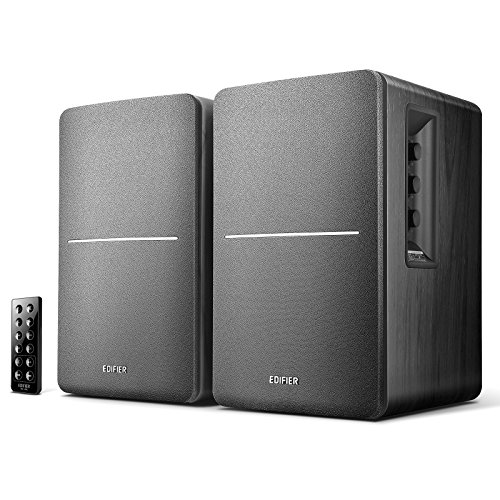
Easy Optical Desktop Audio – Edifier R1280DB
The Edifier R1280DB offers an accessible route into studio monitors with digital input, combining optical and coaxial connections with Bluetooth and dual RCA inputs. Its compact 4-inch bookshelf-speaker design and remote control make it especially convenient for desktop, television, and everyday indoor listening.
Best For: Desktop users and home listeners who want optical or coaxial connectivity alongside simple wireless playback.
Pros:
- Optical and coaxial inputs support digital connections to computers and TVs.
- Bluetooth, dual RCA inputs, and a remote provide flexible everyday use.
- Side-panel bass and treble controls allow basic sound adjustment.
Cons:
- The 4-inch drivers and 42W RMS output offer less scale than larger production monitors.
- It is positioned for indoor entertainment as well as monitoring, rather than strictly neutral studio work.
The R1280DB is a versatile choice when convenience and digital connectivity matter more than maximum output or dedicated professional inputs. Its optical input is particularly useful for simple computer and TV setups.
Focused Near-Field Accuracy – Yamaha HS5 Pair
The Yamaha HS5 pair is designed for listeners who prioritize a straightforward, uncolored monitoring presentation. While it does not include a digital input, its balanced and unbalanced XLR and TRS connections make it a strong analog counterpart to studio monitors with digital input when used with an audio interface or converter.
Best For: Music production and studio monitoring with an audio interface providing analog XLR or TRS outputs.
Pros:
- Bi-amplified two-way design uses a 5-inch woofer and 1-inch dome tweeter.
- Yamaha specifies a 54Hz–30kHz frequency response and 70W total amplification.
- XLR and TRS inputs accept balanced or unbalanced signals.
Cons:
- No digital input is listed, so a separate interface or converter is needed for digital sources.
- The 5-inch design provides less low-end extension than larger monitors.
The HS5 is a sensible pick for an interface-based production setup where accurate, intentionally uncolored sound is more important than built-in digital connectivity. Buyers specifically requiring direct digital input should plan on adding external hardware.
Versatile High-Resolution Pick – Edifier MR5
The Edifier MR5 is a flexible choice among studio monitors with digital input, combining detailed three-way sound with Bluetooth LDAC support and a broad selection of wired connections. Its 110W RMS output and room-tuning controls make it suitable for both near-field listening and larger desktop or room setups.
Best For: Creators who want high-resolution audio, substantial output, and flexible wired or wireless connectivity.
Pros:
- Three-way design with a 5-inch woofer, midrange driver, and silk dome tweeter for detailed reproduction.
- Supports 24-bit/96kHz audio over wired and LDAC wireless connections.
- Offers XLR, TRS, RCA, AUX, Bluetooth, and a front headphone output.
- Rear controls and the EDIFIER ConneX app provide room and EQ adjustment options.
Cons:
- Its larger, heavier cabinets may take more desk space than compact monitors.
- Digital connectivity is provided through wireless Bluetooth rather than a dedicated optical or USB input.
The MR5 stands out for buyers who value connectivity and tuning flexibility as much as monitor-style sound. It is especially appealing when one system must handle production, desktop playback, and home entertainment.
Compact Yamaha Monitoring – Yamaha HS4
The Yamaha HS4 is a compact pair for buyers comparing studio monitors with digital input, although its listed connections are analog rather than optical or USB. It focuses on straightforward monitoring through XLR/TRS combo, RCA, and stereo mini inputs, with room-control and high-trim adjustments for desktop workspaces.
Best For: Music production and video editing in smaller desktop setups where compact, familiar Yamaha monitoring is the priority.
Pros:
- Pair of powered two-way monitors with 4.5-inch woofers and 1-inch dome tweeters.
- Includes XLR/TRS combo, RCA, and stereo mini inputs for common analog sources.
- Room-control and high-trim response controls help adapt the speakers to the listening space.
- Includes speaker cable, stereo mini-to-RCA cable, and anti-slip pads.
Cons:
- The listed 26W output is lower than that of larger, more powerful monitors.
- No dedicated digital input is listed in the supplied specifications.
- The 60Hz–22kHz response may offer less low-end extension than larger models.
The HS4 is best viewed as a compact analog monitoring solution rather than a direct digital-input model. Choose it when desk space and simple studio connectivity matter more than built-in optical or USB conversion.
Optical-Ready Studio Choice – Fluid Audio C5BT
The Fluid Audio C5BT is a practical option among studio monitors with digital input, thanks to its optical TOSLINK connection alongside Bluetooth aptX and analog studio inputs. Its 5-inch woofer, digital volume control, and subwoofer output make it adaptable for production, desktop playback, and home entertainment.
Best For: Users who need optical digital connectivity plus Bluetooth and balanced TRS input in a compact two-speaker system.
Pros:
- Optical TOSLINK input supports digital audio from compatible devices.
- Bluetooth with aptX adds convenient wireless playback.
- Balanced TRS and RCA inputs accommodate professional and consumer sources.
- Includes digital volume control, input selection, and an RCA subwoofer output.
Cons:
- The listed speaker output is 40W, which may be limiting for larger rooms.
- Bluetooth is specified as version 4.0 rather than a newer Bluetooth generation.
- The plastic enclosure may feel less substantial than MDF monitor cabinets.
With its optical input, the C5BT is the clearest fit here for a digital source such as a compatible television, computer, or media device. Its TRS and RCA connections also keep it useful in a small production setup.
Versatile Nearfield Pick – Edifier MR4.5
The Edifier MR4.5 is a flexible choice for shoppers seeking studio monitors with digital input and broad connectivity. Its 80W RMS bi-amped design, 4.5-inch drivers, DSP, and room-adjustment controls suit both accurate desktop monitoring and high-fidelity listening.
Best For: Home studios, nearfield monitoring, mixing, and listeners who want Bluetooth alongside wired inputs.
Pros:
- 80W RMS output with a 50Hz–40kHz response and Hi-Res Audio certification.
- Offers balanced XLR, balanced TRS, RCA, AUX, Bluetooth 6.0, and a front headphone jack.
- Includes DSP, adjustable EQ, low-cut settings, and room-compensation controls.
Cons:
- Its desktop-focused size may not provide the low-end impact of larger monitors.
- Advanced calibration features may require time in the Edifier ConneX app.
The MR4.5 stands out when you want one compact speaker pair for production, mixing, streaming, and general listening. Its extensive tuning options are especially useful when desk or wall placement causes bass buildup.
Compact Studio Value – Edifier MR3
The Edifier MR3 offers an accessible route into studio monitors with digital input, pairing a compact 3.5-inch mid-low driver with 18W per channel. Balanced TRS, RCA, AUX, Bluetooth, and app-based sound modes make it suitable for smaller workspaces and varied listening.
Best For: Beginner producers, video editors, guitar players, and near-field listeners working in compact home studios.
Pros:
- Hi-Res Audio certified with a stated 52Hz–40kHz flat response.
- Provides balanced TRS, RCA, AUX, Bluetooth, and a headphone output.
- Music, Monitor, and Custom modes support different listening and production needs.
Cons:
- 18W per channel and 3.5-inch drivers offer less output and low-end reach than larger monitors.
- The supplied details describe the system as a single item, so verify package contents before ordering.
The MR3 is a practical choice when desk space and budget matter more than maximum volume. Its multiple inputs and selectable monitoring modes give beginners room to use it for both creative work and everyday audio.
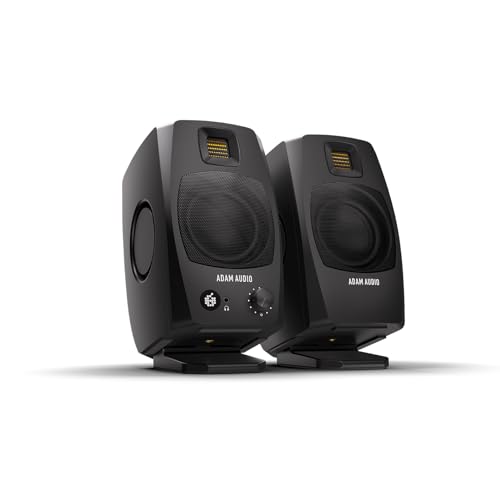
Premium Desktop Detail – ADAM Audio D3V
The ADAM Audio D3V is a desktop-focused option for shoppers comparing studio monitors with digital input. USB-C connectivity, 80W amplification, aluminum woofers, passive radiators, and ADAM’s D-ART tweeter target detailed monitoring without requiring a large speaker setup.
Best For: Songwriters, producers, and music-focused desktop users who want USB-C connection and precise high-frequency reproduction.
Pros:
- Connects directly to computers and mobile devices via USB-C.
- Uses 3.5-inch aluminum woofers, passive radiators, and a 1.5-inch D-ART tweeter.
- Includes balanced 1/4-inch inputs, placement DSP switches, headphone output, and angled stands.
Cons:
- Its compact 3.5-inch woofers may not suit listeners seeking deep, high-volume bass.
- Connectivity centers on USB-C and 1/4-inch TRS rather than a broad selection of consumer inputs.
The D3V is compelling for a clean desktop workstation where direct USB-C playback and detailed treble are priorities. The included stands and placement controls further simplify nearfield positioning.
How We Picked These Studio Monitors with Digital Input
We focused on models that offer a practical digital connection or digital-friendly workflow, including optical input, Bluetooth, USB-based connectivity, or rack-based monitoring functionality. We also considered monitor design, amplifier configuration, driver size, rated output, placement flexibility, and whether each model suits a home studio, desktop workspace, content-creation station, or professional rack setup.
Because specifications and included cables can vary by retailer and revision, verify the current product listing before buying. Digital input is useful, but it does not automatically guarantee better sound than an analog connection.
Quick Comparison
| Best For | What to Look For |
|---|---|
| Small desks and compact rooms | Smaller cabinets, moderate output, and front-accessible controls |
| Computer and TV-based setups | Optical, USB, or Bluetooth connectivity |
| Mixing and critical listening | Balanced response, controlled dispersion, and placement accuracy |
| Larger rooms and fuller low end | Larger woofers, higher headroom, and suitable listening distance |
| Rack-based monitoring | Rack compatibility, multiple source handling, and clear stereo indication |
Key Buying Factors for Studio Monitors with Digital Input
Digital Connection Type
Check whether the monitor accepts optical, USB, Bluetooth, or another digital format. Optical is convenient for compatible computers, televisions, and interfaces, while USB can reduce the need for an external converter. Bluetooth is useful for casual playback, but many producers still prefer a wired connection for primary monitoring.
Room Size and Driver Dimensions
A larger woofer can produce more bass and headroom, but it may overwhelm a small untreated room. Compact monitors are often easier to position close to the listener. Choose output based on listening distance rather than maximum wattage alone.
Accuracy Versus Versatility
Dedicated studio monitors generally prioritize a more revealing response, while multimedia-style models may add convenience features or a more relaxed presentation. Decide whether the speakers are mainly for mixing, music playback, video editing, gaming, or a combination of uses.
Placement and Adjustment
Look for rear-panel tuning controls, front-facing controls, mounting options, and a cabinet size that fits your desk. Place the tweeters near ear level, form an approximate listening triangle, and avoid pushing rear-ported speakers directly against a wall.
Who Should Buy Which Studio Monitors with Digital Input?
Choose a compact desktop model if space is limited or you sit close to the speakers. Bluetooth and optical-equipped options are better for buyers who want one system for music, television, and computer playback. Larger monitors are a stronger fit for bigger rooms or listeners who need greater low-frequency extension and headroom.
For serious mixing, prioritize a neutral presentation, stable stereo imaging, and a properly treated listening position over extra features. If your setup centers on a rack or multiple monitoring sources, a dedicated rack-mount monitor may be more appropriate than a conventional speaker pair. Whichever model you choose, leave room for stands or isolation pads and confirm every required input is supported before ordering.