Choosing the right standalone DMX controller can make lighting setup faster, cleaner, and far more reliable. Whether you run DJ gigs, small venues, or mobile shows, the best control surface depends on how many fixtures you use and how hands-on you want to be.
Below, we’ve narrowed the field to 10 practical options for 2026, with an eye on usability, compatibility, and the features that matter most in real-world lighting control.
Best 10 Standalone Dmx Controllers Picks for 2026
ADJ Multiverse Control

- 37 backlit silicone buttons
- 4 rotary encoders for control
- Up to 4 universes with 4 outputs
Best For: DJs and lighting users needing compact multi-universe control
Chauvet Compact Control

- Controls up to 8 intelligent lights
- 96 DMX channels of control
- Sequential linking of chases
Best For: Smaller rigs that need simple control and chase programming
SoundSwitch Performance Hub
Control One Lighting Controller

- 1:1 control for SoundSwitch software
- 2 DMX universes with thru option
- Dual-USB plus tactile performance controls
Best For: DJs using SoundSwitch or Engine DJ who want hands-on lighting control
Chauvet Rackmount Workhorse

- Controls up to 12 intelligent lights
- 384 DMX channels of control
- 30 banks of 8 scenes, 240 max
Best For: Larger rigs needing rackmount control and more scene storage
Wireless Pro Control
Rockville ROCKFORCE W4 Wireless DMX Controller
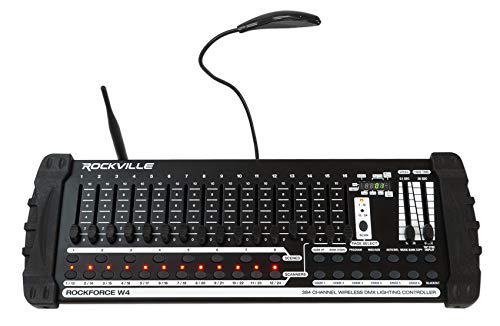
- 2.4GHz wireless DMX transmitter
- 384 channels with scenes and chases
- MIDI, music sync, and manual override
Best For: DJs and event setups that want wireless standalone control
Compact Fixture Control
CHAUVET DJ Obey 6 Compact DMX Controller

- Controls up to 6 fixtures individually
- Preset color and Quick Color buttons
- Variable fade times for layered effects
Best For: Small LED setups that need fast, simple control
Standalone Memory Control
Club 32 USB DMX Lighting Controller

- 32-channel DMX output in PC and standalone modes
- Internal memory for up to 2000 DMX steps
- DMX record, trigger, and in/out support
Best For: Compact setups that need onboard memory and trigger playback
Entry-Level 192-Channel Pick
CO-Z 192 DMX Stage Light Controller

- 192 channels for up to 12 fixtures
- Stores up to 240 scenes
- Voice control for scene switching
Best For: Amateur users and smaller event lighting setups
Most Feature-Rich 384-Channel Board
Rockville ROCKFORCE 384 DMX Controller

- 384 channels for up to 24 fixtures
- MIDI control plus built-in music mode
- Metal housing with LED gooseneck lamp
Best For: DJs and stage users needing more programming control
Rack-Mount 192-Channel Console
DMX512 Lighting Console with Cable
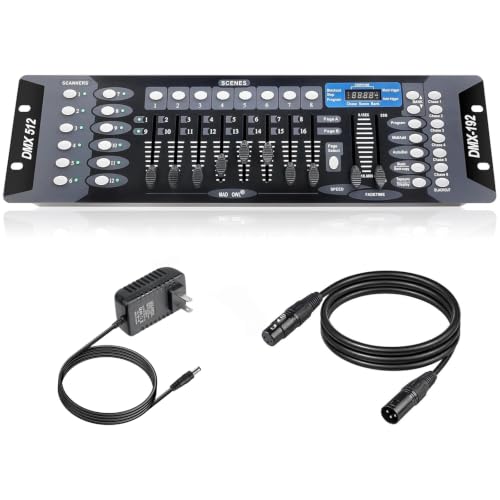
- 192 channels for up to 12 fixtures
- 23 banks of programmable scenes
- Includes a 6.6 ft DMX cable
Best For: Rack-mounted setups that need basic scene programming
ADJ Multiverse Control – Wolfmix Powered WMX1 MK2
If you want one of the more flexible standalone DMX controllers, the ADJ WMX1 MK2 is built for hands-on LED lighting control with 37 backlit silicone buttons, 4 rotary encoders, and support for up to 4 universes. Its USB-based hardware design and compact footprint make it a practical pick for mobile setups that need direct control without a full computer workflow.
Best For: DJs and lighting users who want a compact standalone controller with multi-universe capability.
Pros:
- 37 backlit silicone buttons for direct access
- 4 rotary encoders for live adjustments
- Supports up to 4 universes with 4 output sockets
- Compact 10 x 9.25 x 3.5-inch design
Cons:
- Heavier than some compact controllers at 2.36 pounds
- Focused on lighting control rather than general-purpose use
This model stands out if you need a standalone DMX controller with modern hands-on controls and expanded universe support. The WMX1 MK2 is a strong fit for users who want quick physical access and a controller that stays portable.
Chauvet Compact Control – Obey 10 DMX-512
The CHAUVET DJ Obey 10 is a straightforward option among standalone DMX controllers for smaller lighting rigs. It can control up to 8 intelligent lights, supports up to 12 channels, and offers 96 DMX channels of control, making it a practical choice when you need a simple controller for basic show programming.
Best For: Smaller lighting setups that need simple manual control and chase programming.
Pros:
- Controls up to 8 intelligent lights
- Up to 12 channels and 96 DMX channels of control
- Sequential linking of chases
- Compact 22.2 x 6 x 4.7-inch footprint
Cons:
- Less channel capacity than larger controllers
- Best suited to simpler rigs rather than complex shows
For users who want an uncomplicated controller with chase features and a modest channel count, the Obey 10 covers the basics well. It is a sensible pick when portability and easy programming matter more than advanced universe support.
SoundSwitch Performance Hub – Control One Lighting Controller
The SoundSwitch Control One fits well in a roundup of standalone DMX controllers if you want a controller/interface built around DJ performance and software integration. It offers 1:1 control for SoundSwitch software, 2 DMX universes with a thru option, and dual-USB connectivity for smoother transitions with Engine DJ hardware.
Best For: DJs who want tactile lighting control tied closely to SoundSwitch and Engine DJ.
Pros:
- 1:1 control for SoundSwitch software
- 2 DMX universes with thru option
- Dual-USB for seamless DJ transitions
- Touch strip, encoders, and RGB performance pads
Cons:
- SoundSwitch subscription fees apply after the trial period
- Best experience is tied to compatible software and hardware
This is a strong option if your lighting workflow centers on DJ software and you want responsive hands-on control. The Control One adds useful performance features, but it makes the most sense for users already in the SoundSwitch or Engine DJ ecosystem.
Chauvet Rackmount Workhorse – Obey 70 Universal Controller
The CHAUVET DJ Obey 70 is a larger standalone DMX controller for users who need more room for scenes and channels. It supports up to 12 intelligent lights, offers 384 DMX channels of control, and includes 30 banks of 8 scenes, which makes it useful when your lighting setup needs deeper programming than a compact board can provide.
Best For: Larger lighting rigs that need rackmount-style control and more scene storage.
Pros:
- Controls up to 12 intelligent lights
- 384 DMX channels of control
- 30 banks of 8 scenes, 240 scenes max
- Rack mount design for installed setups
Cons:
- Larger and heavier than compact controllers at 6.9 pounds
- Less portable for quick mobile setups
If you need a controller with more scene capacity and a wider channel range, the Obey 70 is a solid practical choice. Its rackmount format and broader programming options make it better suited to installed or more permanent lighting systems.
Wireless Pro Control – Rockville ROCKFORCE W4 Wireless DMX Controller
If you need one of the more flexible standalone DMX controllers for mobile shows or small rigs, the Rockville ROCKFORCE W4 gives you a lot to work with. It combines wireless 2.4GHz DMX, 384-channel control, and onboard scene/chase programming, so you can run lights without relying on a computer.
Best For: DJs, event operators, and small production setups that want wireless DMX control with manual and music-triggered operation.
Pros:
- Built-in 2.4GHz wireless DMX transmitter supports up to 7 light groups and 25 receivers.
- 384-channel layout with 30 banks of scenes and 6 chases for more programming options.
- Includes MIDI control, a built-in microphone for music sync, and manual override.
- Rack-mountable design with 16 sliders, LED display, and wired DMX in/out for flexible setups.
Cons:
- More advanced than basic compact controllers, so it may take time to learn all functions.
- Larger rack-style format may be less convenient for ultra-minimal setups.
Overall, this is a strong choice if you want a standalone DMX controller that can handle both wireless operation and deeper scene programming. It is built for users who need practical control options instead of a simple preset-only interface.
Compact Fixture Control – CHAUVET DJ Obey 6 Compact DMX Controller
The CHAUVET DJ Obey 6 is a compact option among standalone DMX controllers, especially if you need quick hands-on control for LED fixtures. Its simple layout and preset color buttons make it easy to set colors and layer effects without a complicated programming workflow.
Best For: Users who want a small, easy-to-use DMX controller for basic LED fixture control and quick live adjustments.
Pros:
- Controls up to 6 fixtures individually with up to 6 channels per fixture.
- Preset color buttons and Quick Color controls make live selection fast.
- Variable fade times help create layered effects across fixtures.
- Compact size and light weight make it easy to transport.
Cons:
- Designed for smaller fixture counts, so it is not ideal for larger systems.
- Focused on straightforward control rather than deep programming features.
This controller works well when you need a simple, reliable way to manage a few fixtures from the front of the room. It is a practical pick for smaller lighting setups that value speed and convenience over advanced programming.
Standalone Memory Control – Club 32 USB DMX Lighting Controller
The Club 32 is a practical pick if you want a standalone DMX controller with internal memory and USB-C input for recording or triggering lighting steps. It offers 32-channel DMX output in both PC and standalone use, which makes it useful when you need a small hardware controller that can also store sequences.
Best For: Users who want a compact stand-alone DMX interface with onboard memory for recording and triggering lighting steps.
Pros:
- 32-channel DMX output in both PC and standalone modes.
- Internal memory supports 200 KB and up to 2000 DMX steps.
- Includes DMX in/out, DMX record, and DMX trigger modes.
- Aluminum housing keeps the unit compact and durable.
Cons:
- Lower channel count than larger full-size controllers.
- Very compact form factor may limit hands-on control options.
For users who want a small controller with memory-based standalone operation, this model is well suited to simple stored lighting sequences. It is less about big-console flexibility and more about compact, practical DMX playback.
Entry-Level 192-Channel Pick – CO-Z 192 DMX Stage Light Controller
If you want one of the more approachable standalone DMX controllers for small-to-mid sized lighting setups, the CO-Z 192 gives you a straightforward way to run multiple fixtures and scenes. It supports up to 12 intelligent lights at 16 channels each, plus up to 240 scenes, making it a practical option for DJs, churches, weddings, and other events where you need simple control without a complicated workflow.
Best For: Amateur users and event setups that need easy scene control, voice-triggered switching, and support for a modest multi-fixture rig.
Pros:
- 192 channels with support for up to 12 fixtures
- Can store up to 240 scenes for custom shows
- Voice control adds convenience for scene switching
- Includes a 7-section layout aimed at easier operation
Cons:
- Plastic construction is less rugged than metal alternatives
- Best suited to smaller rigs than higher-channel boards
The CO-Z controller makes sense if you value simplicity and flexibility over advanced programming depth. It covers the basics well and gives you enough scene capacity to build a polished show without overcomplicating setup.
Most Feature-Rich 384-Channel Board – Rockville ROCKFORCE 384 DMX Controller
The Rockville ROCKFORCE 384 stands out among standalone DMX controllers if you need more channel capacity and programming flexibility. It can operate up to 24 intelligent lights with 16 channels each, store 30 banks of 8 scenes and 6 chases, and includes MIDI control plus a built-in microphone for music-triggered operation.
Best For: DJs, clubs, and stage users who want a higher-capacity controller with MIDI support, chase programming, and music mode.
Pros:
- 384 channels support larger lighting setups
- Stores 240 scenes across 30 banks
- MIDI control and built-in mic add flexible operation
- Metal housing and LED gooseneck lamp improve usability
Cons:
- More advanced than basic entry-level controllers
- Bulkier than compact boards at over 5 pounds
For users who want a standalone board that can handle more devices and more programming options, this is the strongest feature set in the group. Its combination of scene memory, music mode, and MIDI control makes it especially useful for dynamic live lighting.
Rack-Mount 192-Channel Console – DMX512 Lighting Console with Cable
This DMX controller is a practical standalone option if you want a 192-channel board in a rack-mount form factor. It supports up to 12 fixtures at 16 channels or less, includes 23 banks of 8 programmable scenes, and can edit 240-step scenes across 6 chases, giving you a workable setup for stage and DJ lighting.
Best For: Users who want a rack-mount DMX controller with basic programming tools and included cable connectivity.
Pros:
- 192 channels with support for up to 12 lighting fixtures
- 23 banks of 8 programmable scenes
- 6 programmable chases for custom sequences
- Includes a 6.6 ft DMX cable
Cons:
- Fewer channels than 384-channel controllers
- Basic feature set compared with MIDI-equipped boards
As a rack-mount choice, this controller fits users who prefer a more fixed installation and want the essentials for programming scenes and chases. It is a straightforward option for smaller performance venues that still need reliable DMX control.
How We Picked These Standalone Dmx Controllers
We focused on controllers that are useful for real setups, not just spec sheets. Priority went to channel capacity, fixture compatibility, live control layout, portability, and extra features such as MIDI, wireless support, or software integration. We also considered whether a controller feels practical for solo operators who need fast access during a show.
Quick Comparison: What Matters Most
In this category, the biggest differences are channel count and workflow. Smaller controllers are easier to learn and carry, while larger units provide more flexibility for complex rigs. Some Standalone Dmx Controllers are best for simple DJ lighting, while others are built for broader stage systems or hybrid setups that include software or wireless control.
Key Buying Factors for Standalone Dmx Controllers
Channel Count and Fixture Size
Choose a controller that comfortably covers your current fixtures plus some room to grow. A 192-channel unit can suit basic lighting rigs, while 384-channel and higher options are better for larger or more layered setups.
Layout and Live Access
For live work, the best controller is the one you can operate quickly without second-guessing. Look for clear faders, dedicated buttons, and logical scene or chase access so changes can happen smoothly mid-performance.
Stand-Alone Operation Vs. Software Support
Some Standalone Dmx Controllers are truly self-contained, while others work best when paired with software or an external computer. If you want maximum portability and fewer failure points, prioritize units that can run your show independently.
Compatibility and Expansion
Check whether the controller supports the fixtures you use most, especially moving heads, pars, washes, fog effects, or RGB/RGBW fixtures. If your rig may expand, consider a model with enough headroom to avoid replacing it later.
Who Should Buy Which Standalone Dmx Controllers?
DJs and mobile entertainers should lean toward compact controllers that are quick to set up and easy to learn. Venue operators and production users may prefer higher-channel models for more scenes and fixture control. If you want a hybrid workflow with performance features, look for options that include MIDI, wireless, or software-friendly control. For the simplest setup, choose a controller with straightforward channel mapping and a layout you can trust under pressure.
In short, the best choice is the one that matches your lighting complexity, your comfort level, and how often you need to make changes live. A well-matched standalone DMX controller saves time on setup and gives you more confidence once the show starts.