Choosing a sampling workstation keyboard for music production is about more than keys. The right model can speed up beatmaking, simplify sampling, and keep your ideas moving from sketch to finished track.
Below, we focus on 10 strong options for producers who want a practical, performance-ready setup with the right balance of portability, pads, sequencing, and standalone capability.
Best 10 Sampling Workstation Keyboard for Music Production Picks for 2026
Standalone Sampling Workstation

- Standalone sampling and sequencing
- 37-key synth-action keyboard
- 16 pads, touchscreen, wireless MIDI
Best For: Producers who want a hardware-first MPC keyboard for beatmaking and sampling
Portable Music Workstation Keyboard

- 790 sounds and 59 drum kits
- 61 velocity-sensitive keys
- Style-based track creation and performance controls
Best For: Keyboardists building complete tracks and live performances on a portable workstation
Next-Gen Standalone Beat Center

- Standalone sampling and sequencing
- USB-C with audio and MIDI over one cable
- 8-core processor with 4GB RAM
Best For: Producers who want a compact MPC for sampling, sequencing, and hybrid studio work
Standalone Groovebox Sampler
Polyend Play+ Groovebox Sampler
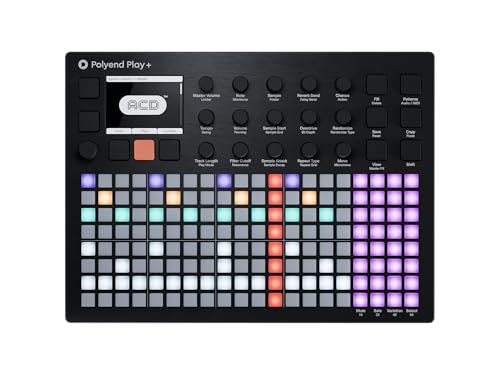
- 16 stereo tracks for arrangements
- 5000+ onboard samples
- Backlit performance pads and microSD storage
Best For: Beatmakers who prefer a pad-driven standalone sampler and groovebox
Professional Song-Builder Workstation

- 8 tracks and 128 clips for arranging songs
- Tone, Drum Kit, and Looper track types
- 128-step sequencer with track and master effects
Best For: producers and performers building songs and live sets without a computer
Compact MIDI Control Pick

- 37-key controller with velocity-sensitive mini keys
- 8 MPC pads and 64-step sequencer
- MIDI/CV/Gate I/O for external gear
Best For: beat makers who want portable control and hardware integration
Ultra-Portable DAW Surface

- 25-key compact controller with 16 pads
- Bluetooth LE and USB connectivity
- 3.5mm TRS MIDI Out for external gear
Best For: mobile Bitwig producers needing a lightweight control surface
Standalone MPC Keyboard Workstation

- 37-key synth-action keybed with 16 MPC pads
- Standalone MPC3 OS for full track building
- USB-C audio/MIDI and fast sampling workflow
Best For: Producers who want an all-in-one keyboard MPC for sampling and sequencing
Portable Sampling Hub

- Battery-powered standalone sampler with speaker and mic
- 16 pads with instant chop, timestretch, and resampling
- USB-C, SD storage, and full MPC workflow
Best For: Mobile beatmakers who want a compact standalone sampler
Compact Key Controller

- 25-key mini keyboard with built-in speaker
- 8 MPC pads, 8 knobs, and onboard sounds
- Includes MPC Beats and Melodics lessons
Best For: Beginners and portable producers who want a compact keyboard with sounds
Standalone Sampling Workstation – Akai MPC Key 37
If you want a sampling workstation keyboard for music production that works without a computer, the Akai Professional MPC Key 37 is built for that lane. It combines a 37-note synth-action keybed, 16 MPC pads, touchscreen control, and full standalone sampling, sequencing, and beat-making tools in one desktop unit.
Best For: Producers who want a self-contained keyboard workstation for beatmaking, sample chopping, and full song creation.
Pros:
- Standalone workflow means no computer is required for production
- 37 full-size keys plus aftertouch for more expressive playing
- 16 velocity-sensitive RGB pads and a 7-inch multi-touch display
- Wi-Fi, Bluetooth MIDI, and broad MIDI/audio connectivity for flexible setups
Cons:
- More focused on production workflow than traditional arranger-keyboard features
- Desktop form factor may take more space than a compact controller
- Best value depends on how much you’ll use the standalone MPC ecosystem
The MPC Key 37 is a strong fit if your priority is fast sampling and beat construction in a hardware-first setup. It offers plenty of modern connectivity and MPC workflow tools, making it a serious all-in-one center for music creation.
Portable Music Workstation Keyboard – Korg i3 Workstation Keyboard
The Korg i3 is a practical music workstation keyboard for players who want a ready-to-use composing and performing setup. While it is not a dedicated sampling workstation keyboard for music production, it does give you a wide sound set, onboard drum kits, layered styles, and a 61-key velocity-sensitive layout for building complete tracks.
Best For: Keyboardists who want a portable workstation for composing, arranging, and live performance with a broad sound palette.
Pros:
- 790 instrument sounds and 59 drum kits for broad musical coverage
- 61 velocity-sensitive keys with three touch curves
- Onboard style performance sound sets help sketch complete tracks quickly
- Joystick and backlit controls support real-time performance use
Cons:
- Not a dedicated sampler-first workstation
- Sampling and deep production features are not highlighted in the supplied specs
- Less centered on pad-based beat creation than MPC-style units
If you want a workstation that emphasizes sounds, styles, and fast song building, the i3 is a solid portable option. It is better suited to composition and performance than sample-heavy beat production, but it still covers a lot of ground for general music-making.
Next-Gen Standalone Beat Center – Akai MPC One G2
If your search for a sampling workstation keyboard for music production leans toward compact hardware beatmaking, the Akai Professional MPC One G2 fits well. It is a standalone production center built for sampling, sequencing, arranging, and USB-C studio integration, with a 7-inch touchscreen and a fast workflow for turning ideas into full tracks.
Best For: Beatmakers and producers who want a compact standalone sampler with strong sequencing and computer integration.
Pros:
- Standalone sampling and sequencing without needing a laptop
- USB-C offers one-cable audio and MIDI integration
- 8-core processor and 4GB RAM for a stronger workflow than the previous generation
- Supports up to 16 stereo audio tracks and 32 plugin instruments per project
Cons:
- Uses 16 pads rather than a built-in piano-style keyboard
- Best for producers comfortable with pad-based workflow
- Compact format may feel limited if you want more hands-on keys
The MPC One G2 is a strong choice if you want serious standalone production power in a smaller footprint. It is especially appealing for sample chopping, beat sequencing, and hybrid studio use, with enough connectivity to bridge hardware and DAW workflows.
Standalone Groovebox Sampler – Polyend Play+ Groovebox Sampler
The Polyend Play+ is a standalone synthesizer, sampler, and MIDI workstation aimed at groove-based production. For buyers comparing a sampling workstation keyboard for music production, this model stands out more as a pad-driven groovebox than a traditional keyboard, with 16 stereo tracks, backlit performance pads, and a large onboard sample library.
Best For: Beatmakers who want a standalone groovebox sampler with pad performance and lots of onboard sounds.
Pros:
- 16 stereo tracks for building layered patterns and arrangements
- 5000+ onboard samples plus 16GB microSD storage
- Backlit performance pads for hands-on triggering
- Standalone sampler and MIDI workstation design
Cons:
- Pad-based design, not a full piano-style keyboard
- Less suited to players who want traditional keys for performance
- Hardware details emphasize groovebox features over deep keyboard control
The Play+ is best understood as a creative sample-and-groove machine rather than a conventional keyboard workstation. If your workflow centers on drums, patterns, and onboard sample playback, it offers a focused and portable route into standalone production.
Professional Song-Builder Workstation – Roland MC-707 Groovebox
If you want a sampling workstation keyboard for music production that can handle full song creation and live performance, the Roland MC-707 is built for that workflow. It combines clip-based sequencing, multiple track types, and onboard effects so you can sketch, arrange, and perform without relying on a computer.
Best For: Producers and performers who want an all-in-one workstation for composing, sampling, and live sets.
Pros:
- 8 tracks and 128 clips give you plenty of room to build arrangements.
- Tone, Drum Kit, and Looper track types support different production approaches.
- 128-step step sequencer plus track and master effects add hands-on control.
- Includes SD card support for saving project data and audio data.
Cons:
- It is positioned as a professional workstation, so it may be more than casual users need.
- It is not a traditional piano-style keyboard with a full key count listed in the specs.
The MC-707 stands out as a serious production hub for beat making and live arranging. If your priority is a compact workstation that can act as the center of a sampling-heavy setup, this model gives you a broad feature set in one box.
Compact MIDI Control Pick – Akai MPK Mini Plus 37-Key
The Akai Professional MPK Mini Plus is a practical sampling workstation keyboard for music production if you want a compact controller with sequencing and deep connectivity. Its 37-key layout, MPC pads, and built-in 64-step sequencer make it a flexible choice for beat making and DAW-based composing.
Best For: Beat makers and producers who want a portable controller with pads, sequencing, and MIDI/CV integration.
Pros:
- 37 velocity-sensitive keys provide three full octaves for melodic work.
- 8 RGB MPC pads and 8 assignable knobs support hands-on production control.
- Built-in 64-step sequencer lets you compose without a computer.
- MIDI/CV/Gate I/O expands control over synths, modular gear, and sound modules.
Cons:
- It is a compact controller, so it may feel small if you prefer larger keys.
- It is focused on control and sequencing rather than onboard sound generation.
For producers who want a portable command center, the MPK Mini Plus covers a lot of ground. It is especially appealing if your workflow blends DAW control, step sequencing, and external hardware.
Ultra-Portable DAW Surface – Reloop Keypad Pro
The Reloop Keypad Pro is a compact sampling workstation keyboard for music production when your priority is portability and DAW control. With 25 keys, 16 pads, transport buttons, and channel strips, it is designed to give you quick hands-on access in a small footprint.
Best For: Mobile producers and Bitwig users who want a lightweight DAW controller with pads and transport control.
Pros:
- 25-key layout keeps the controller compact and easy to carry.
- 16 pads plus transport controls support beat programming and navigation.
- Bluetooth LE and USB connectivity add flexible connection options.
- 3.5mm TRS MIDI Out expands compatibility with MIDI gear.
Cons:
- It is built around Bitwig Studio, so the best experience is tied to that software.
- 25 keys may feel limited for players who want more range.
If you want a small, streamlined controller for producing on the move, the Keypad Pro is easy to fit into a travel setup. It is best viewed as a focused DAW workstation rather than a full-sized performance keyboard.
Standalone MPC Keyboard Workstation – Akai MPC Key 37 G2
If you want a sampling workstation keyboard for music production that can handle writing, chopping, sequencing, and arranging in one box, the Akai MPC Key 37 G2 is built for that workflow. Its 37-key synth-action layout, 16 MPC pads, 7-inch touchscreen, and standalone MPC3 OS make it a practical all-in-one center for producers who prefer hands-on hardware.
Best For: Producers who want a standalone keyboard-based MPC for sampling, sequencing, and full song building without relying on a computer.
Pros:
- 37-key compact keybed combines melody playing with 16 legendary MPC pads for beat creation and sampling.
- Standalone MPC3 OS lets you create, arrange, and finish tracks without a computer.
- USB-C connectivity supports multichannel audio, expanded MIDI, and easy studio integration.
- Fast sampling workflow can capture audio from phones, tablets, and external devices.
Cons:
- Focuses on a standalone workflow, so it may be more instrument than some users need for simple MIDI control.
- Compact 37-key layout may feel limiting for players who want a larger keyboard range.
- Best suited to users comfortable with MPC-style production rather than a traditional synth-only setup.
This is the most complete option here for producers who want a true keyboard-based production hub. If your priority is sampling, sequencing, and finishing tracks from one device, the MPC Key 37 G2 is the most capable choice in this group.
Portable Sampling Hub – Akai MPC Sample
For buyers looking for a sampling workstation keyboard for music production in the most portable form possible, the Akai MPC Sample is a compact standalone sampler built for fast ideas anywhere. It skips the keyboard entirely, but it keeps the MPC workflow, offering pads, a color display, battery power, built-in speaker, and onboard recording tools for quick beatmaking on the move.
Best For: Beatmakers, DAWless creators, and mobile producers who want a pocketable standalone MPC sampler for chopping and sequencing.
Pros:
- Battery-powered standalone design includes a built-in speaker and internal microphone for true on-the-go use.
- 16 MPC pads, Instant Sample Chop Mode, and real-time timestretch/repitch support fast sampling workflows.
- Four internal FX processors and 60 effect types give you strong onboard sound design options.
- USB-C, SD card storage, and stereo I/O make it flexible for studio and live setups.
Cons:
- Does not include a keyboard, so it is not a keyboard-based production instrument.
- 2.4-inch display is small compared with larger MPC devices.
- Best for sampling and sequencing rather than performance playing on keys.
The MPC Sample is a focused, highly portable option for producers who care more about capturing and shaping sounds than playing them from keys. If your workflow starts with samples and you want it anywhere, this is the most travel-friendly pick.
Compact Key Controller – Akai MPK Mini Play MK3
If you need a sampling workstation keyboard for music production that stays small and simple, the Akai MPK Mini Play MK3 is a practical compact controller with built-in sounds. It combines 25 mini keys, 8 MPC pads, 8 knobs, and a speaker, so you can sketch ideas, trigger patterns, and work without always depending on software.
Best For: Beginners, traveling producers, and beat makers who want a compact keyboard controller with onboard sounds and pads.
Pros:
- 25-key mini layout keeps the controller compact and easy to carry.
- Built-in speaker and over 100 internal sounds let you play without immediate computer dependency.
- 8 velocity-sensitive MPC pads, arpeggiator, and note repeat support beat creation.
- Includes MPC Beats software, instrument software, and Melodics lessons for getting started.
Cons:
- Mini keys are less suited to players who want a full-size keyboard feel.
- It is a controller with onboard sounds, not a full standalone MPC production system.
- Less focused on deep sampling than the dedicated MPC units in this roundup.
The MPK Mini Play MK3 makes sense if you want a lightweight keyboard for writing ideas, finger drumming, and basic sketching. It is the most approachable option here for casual production and portable practice.
How We Picked the Best Sampling Workstation Keyboard for Music Production
We prioritized models that help producers sample, sequence, and build tracks with minimal friction. That means a mix of standalone workstations, grooveboxes, hybrid keyboard controllers, and compact beat-making rigs. We also looked at workflow speed, hands-on controls, portability, connectivity, and how well each unit fits real production use.
Quick Comparison
If you want the most self-contained experience, standalone MPC-style units and grooveboxes are the easiest place to start. If you already work in a DAW, compact controllers with pads and sequencing can be the better value. Portable battery-powered options are ideal for travel, while larger keyboard workstations tend to suit studio users who want a fuller playing surface.
Key Buying Factors for a Sampling Workstation Keyboard for Music Production
Standalone Vs. Controller
Standalone models let you sample and arrange without a computer. Controllers depend on software, but they can be lighter, cheaper, and better if you already have a DAW-based setup.
Keys, Pads, and Sequencing
For a Sampling Workstation Keyboard for Music Production, the best workflow usually combines playable keys with responsive pads and a capable sequencer. Look for velocity-sensitive keys if you plan to perform melodies or basslines, and make sure the pads suit finger drumming and clip launching.
Sampling and Storage
Check how the unit handles sample input, editing, and project storage. Important details include input options, sample trimming tools, internal memory, and whether file transfer is simple enough for fast beat sessions.
Portability and Power
If you produce away from the studio, battery power, compact sizing, and built-in speakers or recording input can be major advantages. For desktop use, a larger layout and stronger connectivity may matter more than travel-friendly design.
Who Should Buy Which Sampling Workstation Keyboard for Music Production?
Choose a standalone workstation if you want an all-in-one creative center for sampling and arranging. Choose a compact controller if you mainly produce in software and want better hands-on control. Choose a groovebox-style unit if your priority is fast pattern building and live performance. Choose a portable sampler or mini keyboard if you need a lightweight, idea-first tool that can travel easily.
For most buyers, the best choice comes down to workflow: standalone freedom, DAW integration, or pure portability. Match the hardware to how you actually make music, and you will get far more value from your setup.