The best multitrack loop stations make it easier to build complete performances from guitar, vocals, percussion, keyboards, and prerecorded material. The right model can turn a solo act into a layered live arrangement while also supporting songwriting, rehearsal, or home recording.
This roundup includes dedicated floor pedals, tabletop recorders, grooveboxes, and compact loopers. Compare track capacity, controls, connectivity, synchronization, and portability to find a setup that fits your workflow.
Best 10 Multitrack Loop Stations Picks for 2026
Flagship Performance
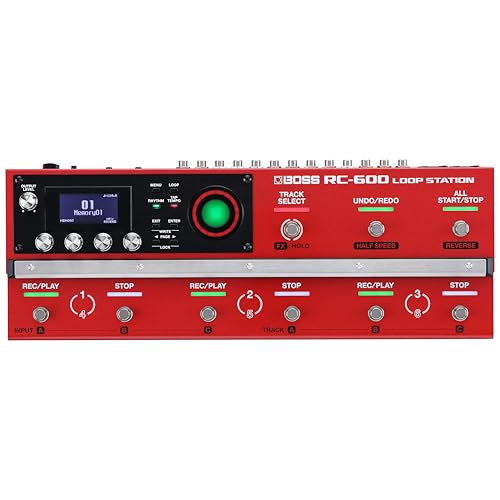
- Six simultaneous stereo phrase tracks
- 32-bit processing and extensive onboard effects
- Nine assignable footswitches for flexible control
Best For: Complex live looping and layered stage performances
Touchscreen Workstation

- Five looping modes with up to four tracks per loop
- 7-inch touchscreen and eight performance pedals
- Over seven hours of storage plus USB audio
Best For: Feature-rich live performance and recording setups
Six-Track Laboratory

- Six tracks with stereo I/O
- More than six hours of looping
- Quantized or free-running recording modes
Best For: Hands-on multitrack loop recording and performance
Tabletop Recording Hub

- Eight-track simultaneous recording
- Built-in stereo condenser microphones
- USB interface, sampler, and rhythm machine
Best For: Portable songwriting and tabletop multitrack recording
Best Stereo Twin-Pedal Looper

- Two synchronized stereo tracks
- Up to three hours of stereo recording
- 99 phrase memories and built-in effects
Best For: Guitarists needing hands-on stereo looping
Best Portable Production Workstation

- Four-track sequencing with 64 clips
- Includes a looper track type
- Runs on AA batteries or USB
Best For: Mobile producers combining loops and sequencing
Best Expandable Solo Looper

- 35 minutes onboard, up to 32 hours with MicroSD
- Glitch-free tempo stretching
- JamSync and stereo auxiliary input
Best For: Solo performers wanting expandable stereo looping
Best Value Multitrack Looper
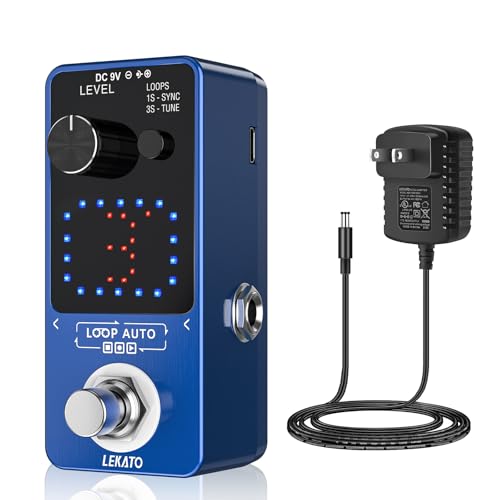
- Three loops and 18 minutes of total recording time
- 48 kHz/24-bit uncompressed audio with analog dry-through
- USB transfer, tuner, synchronous recording, and power supply included
Best For: Affordable layered guitar looping and USB-based loop management
Best for Extended Storage

- Up to 16 hours with microSD and 35 minutes onboard
- Stereo looping with JamSync synchronization
- Ten drum tracks plus included power supply
Best For: Long-form practice, performance loops, and synchronized setups
Best for Live Simplicity

- Three series loops with unlimited recording time
- True bypass and discreet tuner mute for live use
- Flexible input placement and sturdy metal shell
Best For: Straightforward live layering for guitar and bass pedalboards
Flagship Performance – BOSS RC-600
The BOSS RC-600 is a flagship choice for musicians who need a highly capable multitrack loop station for complex live performances. It combines six simultaneous stereo tracks, extensive effects, real-time editing, and flexible foot control in a floor-based design.
Best For: Guitarists, singer-songwriters, multi-instrumentalists, and performers building layered live arrangements.
Pros:
- Records and edits up to six simultaneous stereo loops in real time.
- Provides 32-bit AD/DA and 32-bit floating-point processing for class-leading sound quality.
- Includes 49 Input FX and 53 Track FX types, with up to four usable at once in each section.
- Nine freely assignable footswitches and three pedal modes support customized control.
Cons:
- Its extensive controls and features may require more setup time than a basic looper.
- The 8.2-pound floor-based unit is relatively substantial for a pedal.
Choose the RC-600 when control depth and layered stereo performance matter more than simplicity. Its advanced routing, effects, and footswitch customization make it especially well suited to demanding stage rigs.
Touchscreen Workstation – Sheeran Looper X
The Sheeran Looper X is a full workstation for performers wanting a modern multitrack loop station with a touchscreen workflow. Its five looping modes, four tracks per loop, multi-effects, storage, and audio-interface features make it suitable for expansive standalone performances.
Best For: Touring musicians and vocalists or instrumentalists who want touchscreen control, deep looping modes, and integrated connectivity.
Pros:
- Offers five looping modes and up to four tracks per loop.
- Supports unlimited loop lengths, 99 layers per track, and over seven hours of internal loop storage.
- Includes a 7-inch multi-touch display and eight die-cast aluminum pedals with RGB LEDs.
- Works as a 2-in/2-out USB audio interface and includes extensive XLR, MIDI, SD, and USB connections.
Cons:
- Its workstation-sized design is less compact than a conventional pedal looper.
- The feature-rich touchscreen and routing options may be more than casual loopers need.
The Looper X is a strong fit for musicians who want a central performance hub rather than a simple phrase pedal. Its storage, effects, external MIDI support, and recording functions give it broad stage and studio flexibility.
Six-Track Laboratory – Electro-Harmonix 95000
The Electro-Harmonix 95000 Performance Loop Laboratory is a focused multitrack loop station for players who want six tracks, stereo I/O, and extended recording time. BPM control, quantized or free-running recording, and speed adjustment provide useful tools for shaping loop-based performances.
Best For: Musicians who want a dedicated six-track looper with hands-on timing and playback controls.
Pros:
- Provides six tracks, stereo I/O, and more than six hours of looping.
- Supports both quantized and non-quantized recording modes.
- Offers BPM tapping, overdubbing, punch-in/out recording, and bar/beat loop display.
- Allows speed adjustment across a two-octave range.
Cons:
- The supplied notes describe fewer built-in effects than some more effects-focused loop stations.
- Its control layout may appeal more to dedicated looping users than beginners seeking a simple one-button workflow.
The 95000 emphasizes recording flexibility and loop control over an oversized effects feature set. It is a practical option for performers who value multiple tracks, timing choices, and long recording capacity in a dedicated unit.
Tabletop Recording Hub – Zoom R8 Multi-Track Recorder
The Zoom R8 is a tabletop alternative for musicians who want multitrack loop stations and recording functions in one compact unit. It supports eight-track simultaneous recording, 16-track playback, built-in stereo condenser microphones, a pad sampler, and a rhythm machine.
Best For: Songwriters and small recording setups needing portable multitrack recording with built-in microphones and rhythm tools.
Pros:
- Records up to eight tracks simultaneously and provides 16-track playback.
- Includes built-in stereo condenser microphones for convenient capture.
- Records 16/24-bit, 44.1 kHz linear PCM WAV files to SD memory.
- Combines a recorder, USB audio interface, pad sampler, and rhythm machine.
Cons:
- Its 44.1 kHz maximum sample rate is less flexible than higher-rate recording systems.
- It uses SD or SDHC cards up to 32GB for storage.
- The tabletop format is less foot-operated than purpose-built floor loop stations.
The R8 is best viewed as a compact recording and arrangement tool with multitrack capability rather than a conventional live pedal looper. Its microphones, sampler, rhythms, and USB connectivity make it useful for sketching and producing ideas away from a larger studio.
Best Stereo Twin-Pedal Looper – BOSS RC-30
The BOSS RC-30 is a strong choice for guitarists seeking multitrack loop stations with true stereo connectivity and hands-on control. Its two synchronized stereo tracks, dedicated faders, and track-select buttons make it practical for building and balancing layered performances.
Best For: Guitarists and performers who want a dedicated stereo looper with substantial onboard storage and built-in effects.
Pros:
- Two synchronized stereo tracks with dedicated volume faders.
- Up to three hours of stereo recording and 99 onboard memory phrases.
- Built-in effects for processing loops.
Cons:
- Its dedicated pedal format is less production-oriented than a compact groovebox.
- Requires a 9-volt, 300-milliamp power setup.
The RC-30 stands out when immediate pedal control, stereo operation, and generous internal phrase storage matter more than an all-in-one sequencing workstation.
Best Portable Production Workstation – Roland MC-101 Groovebox
The Roland MC-101 is a compact alternative to traditional multitrack loop stations, combining an audio looper with four-track sequencing and clip-based production. It is designed for creating and arranging music on the go, with battery or USB power and broad connectivity.
Best For: Producers who want portable looping alongside drums, tones, clips, effects, and detailed step sequencing.
Pros:
- Four tracks with 64 clips and a 128-step sequencer.
- Includes Tone, Drum Kit, and Looper track types.
- Portable operation with four AA batteries or USB power.
- Offers extensive track, master, reverb, chorus, and delay effects.
Cons:
- Its broader groovebox workflow may be less immediate than a dedicated pedal looper.
- The compact interface uses buttons and touch controls rather than traditional pedal controls.
Choose the MC-101 if you want multitrack loop stations functionality within a broader music-production setup, especially when portability and sequencing flexibility are priorities.
Best Expandable Solo Looper – DigiTech JamMan Solo HD
The DigiTech JamMan Solo HD is a compact stereo option for musicians comparing multitrack loop stations and wanting extended loop storage. It provides 35 minutes of onboard memory, expandable capacity with a MicroSD card, tempo adjustment, and JamSync support for compatible loopers.
Best For: Solo performers who want a compact stereo looper with expandable storage, auxiliary input, and glitch-free tempo changes.
Pros:
- Stores up to 35 minutes onboard or up to 32 hours with a MicroSD card.
- Glitch-free time stretching adjusts loop tempo.
- JamSync synchronizes multiple compatible loopers.
- Includes USB transfer, stereo aux input, and 10 drum loops.
Cons:
- MicroSD card is required for the maximum stated looping time and is not included.
- The supplied package is centered on solo looping rather than four-track production.
The JamMan Solo HD is a practical pick for straightforward stereo looping, particularly if expandable memory and tempo flexibility are more important than extensive onboard sequencing.
Best Value Multitrack Looper – LEKATO 3-Loop Guitar Looper
For players seeking practical multitrack loop stations functionality in a compact pedal, the LEKATO offers three loops, visual timing feedback, and up to 18 minutes of total recording time. Its synchronous recording mode and built-in tuner make it suited to both practice and live creative work.
Best For: Guitarists who want affordable layered looping with USB file management and an included power adapter.
Pros:
- Three loops provide up to 18 minutes of total recording time, with six minutes per loop.
- 48 kHz/24-bit uncompressed audio and analog dry-through support a clean signal.
- USB import/export, automatic saving, synchronous recording, and a built-in tuner add flexibility.
- Includes a 9V 0.6A power supply and USB cable.
Cons:
- The three-loop design may be limiting for players who need extensive song-length loop storage.
- The supplied notes do not specify stereo operation or onboard drum patterns.
The LEKATO is a well-rounded option when recording time, sound quality, and computer file transfer matter more than advanced accompaniment features. It is especially attractive for building layered guitar parts without a complicated setup.
Best for Extended Storage – DigiTech JamMan Solo HD
The DigiTech JamMan Solo HD is one of the more storage-focused multitrack loop stations in this group. It provides 35 minutes of onboard memory and up to 16 hours with a microSD card, along with stereo looping, JamSync compatibility, and USB transfer.
Best For: Performers and practice-focused musicians who need substantial loop storage, drum tracks, and synchronization with compatible loopers.
Pros:
- Supports up to 16 hours of looping time with a microSD card.
- Includes 35 minutes of onboard memory and stereo looping.
- JamSync can automatically synchronize multiple compatible loopers.
- Includes 10 recorded drum tracks and a power supply.
Cons:
- Expanded storage requires a separately supplied microSD card.
- Its included USB connection is Mini-B rather than a newer USB connector.
Choose the JamMan Solo HD when capacity and synchronization are priorities. Its drum tracks and computer loop transfer make it more feature-oriented for extended sessions than a basic single-purpose looper.
Best for Live Simplicity – Metal 3-Series-Loop Pedal
This compact metal pedal takes a straightforward approach to multitrack loop stations, offering three series loops with unlimited recording time. True bypass, flexible input placement, and a discreet tuner mute are useful details for guitarists and bassists building a live pedalboard.
Best For: Live guitarists and bassists who want simple layered arrangements, silent tuning, and a durable pedalboard enclosure.
Pros:
- Three series loops support layered soundscapes and arrangements.
- Unlimited recording time removes a stated limit on loop duration.
- True bypass preserves the clean signal when the looper is off.
- Flexible input placement and discreet tuner mute support pedalboard convenience.
Cons:
- The supplied notes do not specify onboard memory, USB transfer, or power-supply inclusion.
- The 554 g metal pedal is less lightweight than some compact alternatives.
- No drum tracks or synchronization feature is listed.
This pedal is best suited to players who value live usability over computer integration or accompaniment features. Its unlimited loop duration, tuner mute, and sturdy enclosure make it a practical choice for simple performance layering.
How We Picked These Multitrack Loop Stations
We focused on the features that matter most when creating and controlling layered music: independent tracks or phrases, overdub flexibility, foot-control access, input options, storage, synchronization, and ease of use. The selection spans advanced performance workstations, multitrack recorders, grooveboxes, and simpler pedals so different types of musicians can find a practical fit.
We also considered whether each unit is better suited to live performance, songwriting, practice, or computer-based production. A higher track count is not automatically better; reliable controls and a clear workflow can matter more than maximum specifications.
Quick Comparison
| Best For | What to Prioritize |
|---|---|
| Solo live performers | Hands-free controls, multiple inputs, effects, and dependable phrase switching |
| Songwriters | Fast overdubbing, simple storage, and flexible loop arrangement |
| Home studios | Multitrack recording, USB connectivity, and computer integration |
| Electronic performers | MIDI, pattern sequencing, synchronization, and sample support |
| Practice and beginners | Intuitive operation, built-in timing tools, and compact design |
Key Buying Factors for Multitrack Loop Stations
Track Layout and Loop Control
Check whether the device offers one continuous loop, multiple independent tracks, or several synchronized phrases. Independent track control is especially useful for muting verses, choruses, percussion, and backing parts during a live set.
Inputs, Outputs, and Connectivity
Count the inputs you actually need. Microphone support, multiple instrument inputs, stereo operation, auxiliary input, MIDI, and USB can significantly expand a station’s usefulness. Also verify whether outputs support a mixer, headphones, amplifier, or audio interface.
Timing, Synchronization, and Storage
Quantization, rhythm patterns, MIDI sync, and tap-tempo tools help keep layers aligned. If you plan to save many songs, compare internal memory, removable storage, phrase-management tools, and transfer options.
Controls and Portability
Floor units are convenient for hands-free performance, while tabletop devices may provide deeper editing and recording control. Consider switch spacing, display visibility, power requirements, durability, and whether the unit fits your pedalboard or travel setup.
Who Should Buy Which Multitrack Loop Stations?
Choose an advanced floor-based workstation if you perform solo and need several inputs, effects, independent phrase control, and hands-free navigation. A multitrack recorder is a better choice for musicians who want to capture complete arrangements or transfer projects to a computer.
Songwriters may prefer a straightforward stereo or multitrack pedal that makes recording ideas fast without a complicated menu system. Electronic musicians should look for groovebox features, sequencing, MIDI, and sample-based control. Beginners and practice-focused players can save money and setup time with a compact looper that offers dependable overdubbing, basic rhythm support, and an easy-to-read interface.
Before buying, map your typical signal chain and performance routine. Confirm the number of simultaneous sources, how you will start and stop loops, and whether you need saved songs or only spontaneous layers. That checklist will usually narrow the field more effectively than track count alone.