When you travel with a keyboard, controller, or hardware synth, the right MIDI interface can save space, reduce setup time, and keep your rig dependable from hotel rooms to tour buses.
We focused on compact, road-friendly options that make syncing, recording, and routing easier without adding unnecessary bulk.
Best 10 Midi Interfaces for Traveling Musicians Picks for 2026
Wireless MIDI Adapter
CME WIDI Jack Premium Bluetooth MIDI Interface

- Adds Bluetooth MIDI to DIN/TRS gear
- Supports SysEx and MPE
- Low-latency, compact travel-friendly design
Best For: Travel musicians who want wireless MIDI for existing DIN/TRS devices
Portable Audio Interface
Focusrite Scarlett Solo 3rd Gen USB-C Audio Interface

- Compact USB-C interface for vocals and instruments
- 24-bit/192kHz recording with Air mode
- Includes software bundle for quick setup
Best For: Solo performers who need a portable audio interface, not MIDI
USB Host Wireless MIDI Bridge
CME WIDI Uhost Premium Bluetooth MIDI Interface & USB Host

- Turns USB MIDI gear into wireless Bluetooth MIDI
- USB-C host and client support
- Ultra-low latency with app-based optimization
Best For: Travel musicians who want a wireless bridge for USB MIDI controllers
Compact Studio Interface

- USB-C 2-in/2-out interface with 2 preamps
- Hardware monitoring for travel recording
- 24-bit/192kHz support in a compact body
Best For: Traveling musicians who need a portable audio interface for recording
Compact USB Host MIDI Interface
CME H2MIDI Pro Compact USB Host MIDI Interface

- Standalone USB host mode for class-compliant MIDI gear
- USB-C client mode works with major OS platforms
- Small body with routing, filtering, and preset storage
Best For: Travelers who need a compact bridge between USB MIDI devices and 5-pin DIN gear
Simple Plug-and-Play MIDI Cable
LEKATO MIDI Cable USB-C Interface

- 1-in/1-out cable with built-in driver support
- Low-latency signal path with connection indicators
- Works with Windows, macOS, and iPad for standard MIDI setups
Best For: Travelers who want a lightweight basic MIDI connection for keyboards and synths
Compact Audio and MIDI Recording Interface
Arturia MiniFuse 1 Compact Audio and MIDI Interface
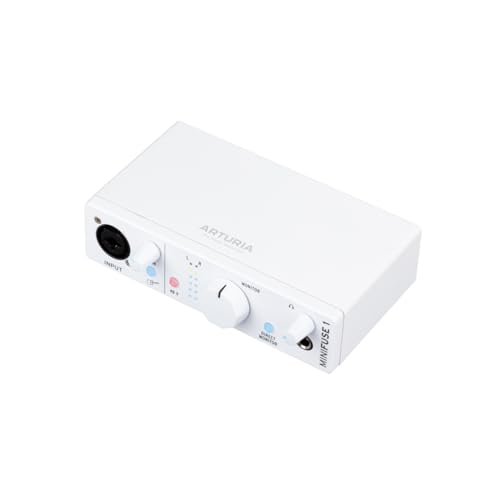
- 5-pin MIDI in/out plus USB audio connectivity
- Compact design for voice, guitar, synth, and mic recording
- Includes a USB type A hub and a 5-year warranty
Best For: Traveling musicians who want audio recording and MIDI in one portable interface
Compact Dual-Mode Pick
CME C2MIDI Pro USB-C MIDI cable

- USB-C interface or standalone MIDI cable
- Routing, filtering, and mapping via UxMIDI Tools
- Works across macOS, Windows, iOS, Android, and more
Best For: Travelers who need one compact cable for both computer and hardware MIDI
Simple Travel Cable Pick
FORE USB-C MIDI to USB interface
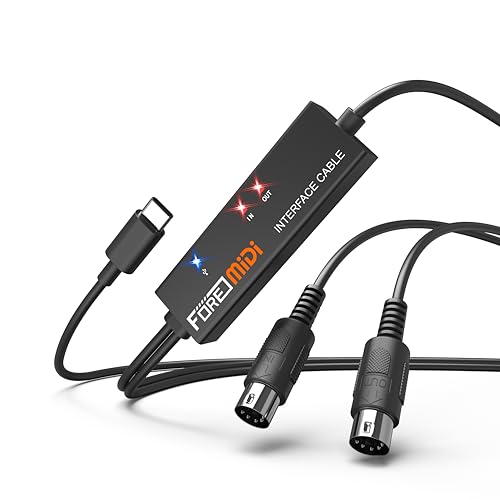
- Plug-and-play MIDI in/out cable with built-in driver
- Works with iOS, Android, Windows, and Mac OS
- 6.5-foot USB bus-powered design for easy packing
Best For: Musicians who want a simple portable cable for one MIDI device
Advanced Routing Hub
iConnectivity mioXM multi-port MIDI interface

- 4x4 DIN MIDI plus 4 USB-MIDI host ports
- Ethernet RTP-MIDI and virtual network ports
- USB computer connectivity for Mac and Windows
Best For: Traveling rigs that need many MIDI connections and network routing
Wireless MIDI Adapter – CME WIDI Jack Premium Bluetooth MIDI Interface
If you want midi interfaces for traveling musicians that cut cable clutter without giving up timing, the CME WIDI Jack is built for wireless MIDI on the move. It adds Bluetooth MIDI to DIN/TRS gear, supports SysEx and MPE, and is designed for simple pairing with compatible devices.
Best For: Players who want a tiny wireless MIDI adapter for stage or travel setups with DIN/TRS gear.
Pros:
- Bluetooth MIDI support for reducing cables in portable rigs
- Can send all MIDI messages, including SysEx and MPE
- Ultra-low claimed 3 ms latency with sub-1 ms jitter
- Power options include MIDI Out or USB-C
Cons:
- TRS/DIN cables are sold separately
- General Bluetooth pairing does not work; setup must follow WIDI instructions
- USB-C is for power only, not data
For traveling players who mainly need wireless MIDI rather than audio, this is a compact way to modernize existing hardware. It is most useful when your gear is already MIDI-capable and you want a small adapter with app-based optimization.
Portable Audio Interface – Focusrite Scarlett Solo 3rd Gen USB-C Audio Interface
For musicians who need a compact recording interface while traveling, the Focusrite Scarlett Solo 3rd Gen is a straightforward USB-C option for capturing voice and instruments. It is not a MIDI interface, but it can still fit a portable music bag when you need reliable audio input, monitoring, and broad software compatibility.
Best For: Solo artists who need a small USB audio interface for recording vocals and guitar on the road.
Pros:
- Compact USB-C audio interface with mic and instrument inputs
- 24-bit/192kHz recording for high-resolution capture
- Air mode adds clarity to acoustic recordings
- Includes software bundle for getting started quickly
Cons:
- Not a MIDI interface
- Only 2 channels, so it is limited for larger setups
- Best suited to recording, not wireless stage MIDI
If your travel setup is centered on recording rather than MIDI control, the Scarlett Solo keeps things simple and lightweight. It is a sensible pick when you want dependable audio capture and headphone monitoring in one portable box.
USB Host Wireless MIDI Bridge – CME WIDI Uhost Premium Bluetooth MIDI Interface & USB Host
Among midi interfaces for traveling musicians, the CME WIDI Uhost stands out for making USB MIDI gear wireless while also working as a USB host bridge. It is aimed at class-compliant controllers and computers, and it supports Bluetooth MIDI pairing with compatible devices for cable-free setups.
Best For: Musicians who want to turn USB MIDI controllers or instruments into a portable wireless rig.
Pros:
- Makes USB MIDI gear wireless through Bluetooth MIDI
- USB-C host and client support for broad device compatibility
- Claims ultra-low 3 ms latency and sub-1 ms jitter
- WIDI app offers updates and personalized group settings
Cons:
- General Bluetooth pairing does not work; setup needs the WIDI process
- Compatibility depends on class-compliant USB MIDI devices
- Some workflows may require bridge apps on non-Bluetooth MIDI software
This is the more flexible travel pick if your gear is USB-based and you want fewer cables on stage or in transit. It is especially useful when you need wireless MIDI plus a host bridge in a very small unit.
Compact Studio Interface – MOTU M2 USB-C Audio Interface
The MOTU M2 is a portable USB-C audio interface built for clean recording, not MIDI control, so it belongs in a travel rig when your priority is audio capture. With two preamps, hardware monitoring, and 24-bit/192kHz support, it is a practical choice for musicians who need dependable sound on the road.
Best For: Traveling musicians who need a compact 2-in/2-out audio interface with solid monitoring.
Pros:
- USB-C interface with 2 preamps and 2-in/2-out design
- Hardware monitoring helps with low-latency tracking
- 24-bit/192kHz support for high-quality recording
- Small enough to fit easily into a mobile setup
Cons:
- Not a MIDI interface
- Only 2 channels, so it is not built for larger sessions
- Windows support is listed in the notes, so platform checking matters
For musicians building a compact travel recording kit, the M2 is a clean, straightforward interface with the essentials covered. If MIDI is your main need, look elsewhere; if audio quality and portability matter more, it is an easy contender.
Compact USB Host MIDI Interface – CME H2MIDI Pro Compact USB Host MIDI Interface
If you want one of the most versatile midi interfaces for traveling musicians, the CME H2MIDI Pro is built for compact, mixed-gear setups. It can act as a standalone USB host for class-compliant MIDI devices without a computer, or connect by USB-C to a Mac, Windows, iOS, Android, Linux, or ChromeOS system for hybrid workflows.
Best For: Players who travel with modern USB MIDI gear and also need reliable 5-pin DIN connectivity in a very small interface.
Pros:
- Standalone USB host mode lets you connect class-compliant USB MIDI gear directly to 5-pin DIN hardware.
- USB-C client mode adds 2-in/2-out virtual MIDI support across major operating systems.
- 32-bit processor is designed for accurate handling of clock, sysex, MTC, and MPE data.
- HxMIDI Tools enables routing, filtering, mapping, splitting, and up to 4 saved presets.
Cons:
- Advanced setup features depend on the HxMIDI Tools software.
- Best suited to class-compliant USB MIDI devices rather than every possible legacy USB device.
For traveling musicians who need one tiny box to bridge modern controllers and traditional DIN gear, this model offers strong flexibility without tying you to a laptop. Its host mode, cross-platform support, and compact footprint make it especially practical for mobile rigs and quick stage changes.
Simple Plug-and-Play MIDI Cable – LEKATO MIDI Cable USB-C Interface
For musicians who want a straightforward pick among midi interfaces for traveling musicians, this LEKATO MIDI cable keeps the setup simple. It offers a 1-in/1-out connection, built-in driver support, and USB-C compatibility for quick use with keyboards, synths, drum pads, and a Windows or Mac computer.
Best For: Players who want a lightweight, no-fuss MIDI cable for basic keyboard or synth connections on the road.
Pros:
- Plug-and-play design with built-in driver support.
- 1-in/1-out indicators help monitor incoming and outgoing MIDI data.
- Low-latency transmission with shielding against electromagnetic interference.
- Compatible with Windows, macOS, and iPad use for standard MIDI setups.
Cons:
- Only supports basic 1-in/1-out operation rather than larger multi-port routing.
- Some older or specific vintage synths may need compatibility checks or special settings.
This is a practical travel option if your priority is fast connection over advanced routing. It is best used as a simple bridge for standard MIDI gear, especially when you want a compact cable instead of a larger interface box.
Compact Audio and MIDI Recording Interface – Arturia MiniFuse 1 Compact Audio and MIDI Interface
The Arturia MiniFuse 1 is a compact pick for musicians who want audio recording and MIDI connectivity in one portable box. It includes 5-pin MIDI in and out, USB connectivity, and a built-in USB type A hub, making it useful for travelers who need to record voice, guitar, synths, or controllers without carrying extra gear.
Best For: Traveling musicians who want a small USB audio interface with MIDI ports, recording inputs, and bundled software.
Pros:
- Includes 5-pin MIDI input and output for MIDI gear integration.
- Compact interface design supports voice, guitar, synth, and microphone recording.
- Built-in USB type A hub adds a little extra connection flexibility.
- 5-year warranty and extensive reliability testing add peace of mind for portable use.
Cons:
- It is a single-channel interface, so it is not aimed at larger recording setups.
- It is larger and more audio-focused than a dedicated MIDI-only interface.
If you need one compact device to handle both recording and MIDI on the move, the MiniFuse 1 is a strong all-rounder. Its portability, included MIDI I/O, and long warranty make it a sensible travel companion for small creative rigs.
Compact Dual-Mode Pick – CME C2MIDI Pro USB-C MIDI cable
If you want midi interfaces for traveling musicians that stay lightweight without giving up routing control, the CME C2MIDI Pro is a strong fit. It works as a USB-C MIDI interface for computer-based setups or as a smart standalone cable between two MIDI devices, which is useful when you need fewer pieces in your bag.
Best For: Traveling players who want a compact USB-C MIDI cable with standalone routing and filtering options.
Pros:
- Dual-purpose design works as a USB MIDI interface or a direct MIDI-to-MIDI cable
- UxMIDI Tools lets you set routing, filtering, and mapping on supported devices
- Supports major systems including macOS, Windows, iOS, Android, Linux, and Chrome OS
- Compact retractable USB-C plug and durable build suit tight stage or travel setups
Cons:
- Advanced configuration depends on using the UxMIDI Tools software
- Best suited to gear with standard 5-pin DIN MIDI sockets
For musicians who pack light but still want flexible MIDI control, this cable stands out for being both simple to use and surprisingly configurable. It is especially appealing if you switch between laptop-based work and direct hardware connections on the road.
Simple Travel Cable Pick – FORE USB-C MIDI to USB interface
Among midi interfaces for traveling musicians, this FORE cable is aimed at simple plug-and-play capture from 5-pin MIDI gear to modern devices. Its built-in driver and USB bus-powered design make it easy to toss in a gig bag and use with phones, tablets, laptops, or desktops when you need a straightforward connection.
Best For: Players who want a basic, portable MIDI-to-USB cable for quick recording and editing on the go.
Pros:
- Plug-and-play setup with a built-in driver for fast use
- 1 MIDI in / 1 MIDI out with 16-channel support
- Compatible with iOS, Android, Windows, and Mac OS
- 6.5-foot cable and USB bus power help keep travel setups simple
Cons:
- USB A-C adapter is not included
- More basic than interfaces with advanced routing or network features
This is a practical choice if you mainly need a dependable way to record or edit MIDI from one hardware device while traveling. It keeps the setup compact and avoids extra accessories, though it is less feature-rich than more advanced interfaces.
Advanced Routing Hub – iConnectivity mioXM multi-port MIDI interface
iConnectivity mioXM USB MIDI Interface with 2x MIDI Cable Male to Male Cable 10' Bundle
Check Price On AmazonIf your travel rig needs more than a basic cable, this iConnectivity mioXM bundle is the most expanded option in this group of midi interfaces for traveling musicians. It combines multiple DIN ports, USB-MIDI host ports, Ethernet RTP-MIDI networking, and computer connectivity, making it well suited to more complex live or studio-on-the-road setups.
Best For: Mobile players who need a high-connectivity MIDI hub for multiple devices, computers, and network routing.
Pros:
- 4 in x 4 out DIN MIDI ports for hardware-heavy rigs
- 4 USB-MIDI host ports support multiple class-compliant devices
- Ethernet RTP-MIDI and virtual network ports add flexible routing options
- USB computer port supports Mac and Windows connectivity
Cons:
- More complex than a simple travel cable or single-device interface
- Overkill if you only need one keyboard-to-laptop connection
This interface makes sense when your portable setup still has to handle lots of MIDI gear and routing paths. It is the least minimal option here, but also the most capable for musicians who want a central MIDI hub that can travel with them.
How We Picked the Best Midi Interfaces for Traveling Musicians
For Midi Interfaces for Traveling Musicians, portability matters as much as compatibility. We prioritized compact footprints, bus-powered or low-cable setups, stable connections, and broad support for USB-C, DIN MIDI, and Bluetooth where practical. We also favored products that are easy to pack, quick to configure, and flexible enough for both studio and live use.
Quick Comparison
The right choice depends on how you work on the road. Bluetooth options can be ideal for a minimal carry setup, while USB-C interfaces are usually the safest bet for lower latency and predictable performance. If you need to connect hardware synths, multiple controllers, or a laptop-based rig, a multiport MIDI interface offers more routing flexibility. If you only need a simple connection between a keyboard and computer, a smaller cable-style interface may be the most convenient.
Key Buying Factors for Midi Interfaces for Traveling Musicians
Portability and Power
Look for compact units that fit in a gig bag and draw power from your laptop or a single USB connection. Fewer external adapters mean fewer things to forget or break in transit.
Connection Type
USB-C is the most convenient option for modern laptops and mobile workflows. Bluetooth can reduce cable clutter, but it is best for players who can tolerate a little extra setup and who do not need the absolute lowest latency. Traditional DIN MIDI is still important if you travel with older synths or stage gear.
Compatibility
Check whether the interface works as a class-compliant device across your operating systems and apps. For Midi Interfaces for Traveling Musicians, compatibility is critical because you may switch between different laptops, tablets, and DAWs.
Workflow and Routing
Some interfaces are simple pass-through devices, while others can filter, merge, or route messages between multiple devices. If your rig changes from session to session, more flexible routing can be worth the extra size.
Who Should Buy Which Midi Interfaces for Traveling Musicians?
Choose a Bluetooth MIDI interface if your priority is minimal cabling and quick setup with a compact controller or synth. Pick a USB-C cable-style interface if you want the easiest possible travel solution for single-device connections. Go with a multiport interface if you bring several hardware pieces or need a more complete road rig. If you also need audio capture, a combo audio-and-MIDI interface may be the most efficient choice because it reduces what you have to pack.
For most traveling players, the best option is the one that stays simple, packs small, and works reliably every time you plug it in.