Choosing an in-ear monitor transmitter for studio use comes down to clarity, latency, reliability, and how easily the system fits your workflow. The right pick can keep vocals and instruments tight without adding distraction.
Below, we focus on practical options that make sense for recording sessions, rehearsal spaces, and hybrid studio/live setups, so you can narrow your shortlist fast.
Best 10 In Ear Monitor Transmitter for Studio Use Picks for 2026
Ultra-Low-Latency Pick

- Less than 5ms latency
- 24-bit/48kHz audio, 107 dB SNR
- Metal build with built-in limiter
Best For: Studio and live users who want a simple low-latency wireless monitor
Portable Long-Run Choice

- Up to 30 hours with charging case
- OTG input for phones, tablets, laptops
- Mono/stereo switching and multi-receiver support
Best For: Portable studio and live monitoring with long battery life
UHF Stable Monitor Pick
Phenyx Pro PTM-11 Wireless IEM

- UHF 900MHz with 50 selectable frequencies
- Mono monitoring with separate outputs
- Metal base and carry case included
Best For: Studio and stage users who want stable mono wireless monitoring
All-in-One Battery Champion

- Up to 30 hours with charging case
- OTG support for USB-C devices
- 24-bit/48kHz audio with auto-pairing
Best For: Home studio and rehearsal monitoring with long battery life
Compact Stereo IEM
Phenyx Pro PDP-M UHF Wireless IEM
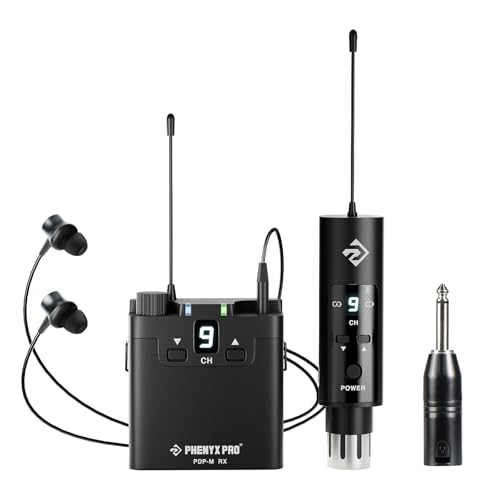
- Mono or stereo monitoring support
- 24-bit/48kHz digital audio path
- UHF hopping for steadier transmission
Best For: Small bands and performers needing a portable monitor system
Easy-Pair Multi-Receiver IEM
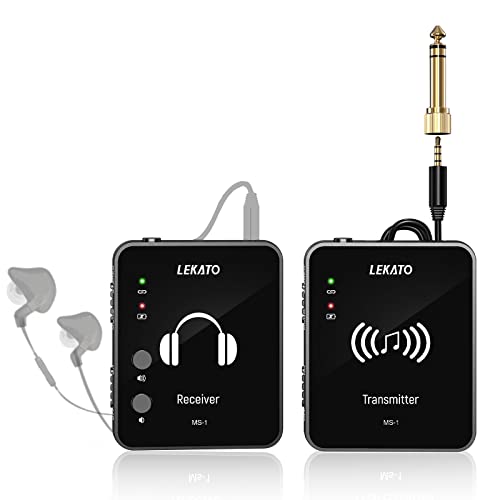
- Auto-pairing simplifies setup
- Up to 6 receivers on one transmitter
- True stereo transmission with low latency
Best For: Rehearsals and small studios needing simple multi-user monitoring
Channel-Scan Wireless IEM
Xvive U45 5.8GHz Studio Monitor System

- 5.8GHz true diversity wireless
- Channel Scan mode for easier setup
- 24-bit/48kHz audio with 110 dB SNR
Best For: Studio and rehearsal monitoring with cleaner wireless channel selection
Studio Cue Monitor

- 5.8GHz wireless with 4 channels
- Under 9.2ms latency
- Cue mic and stereo/mono switching
Best For: Studio and live teams needing cue talkback
Budget Rehearsal Pick

- Automatic pairing for quick setup
- 2.4GHz wireless with under 12ms latency
- Supports up to 6 devices
Best For: Affordable practice and small-studio monitoring
Long-Range Multi-Channel Choice

- 164 ft range
- 10 channels with no cross-interference
- 10-12 hour battery life
Best For: Larger rehearsal spaces and multi-user monitoring
Ultra-Low-Latency Pick – Xvive U4 Wireless IEM System
If you need an in ear monitor transmitter for studio use that stays simple and fast, the Xvive U4 is built around low-latency 2.4GHz monitoring. It supports mono balanced XLR or mono unbalanced TS input, and the system is designed to deliver clear audio with a broad 20Hz–20kHz response.
Best For: Studio players, bands, and live performers who want a compact wireless monitor setup with very low latency.
Pros:
- Less than 5ms latency for tight real-time monitoring
- 24-bit/48kHz audio with up to 107 dB signal-to-noise ratio
- Built-in limiter helps reduce distortion from excessive input levels
- Metal housing and rechargeable battery add practical durability
Cons:
- Battery life is about 5 hours per charge
- Mono-only input/output design limits stereo monitoring
- Uses a front-panel headphone jack rather than a more complex rack-style workflow
The Xvive U4 makes sense if your priority is straightforward wireless monitoring with minimal delay. It’s a compact option for rehearsals or studio sessions where dependable signal quality matters more than extra routing features.
Portable Long-Run Choice – MELONARE PM-2 Wireless IEM
For an in ear monitor transmitter for studio use that also travels well, the MELONARE PM-2 focuses on battery life and easy setup. It uses a 2.4GHz wireless link, supports OTG input for phones, tablets, and laptops, and adds mono/stereo switching for flexible monitoring.
Best For: Mobile studio setups, rehearsals, and performers who want long runtime and quick plug-and-play monitoring.
Pros:
- Up to 30 hours of total runtime with the charging case
- OTG support works with smartphones, tablets, and laptops
- Mono/stereo switching adds routing flexibility
- One transmitter can connect to multiple receivers with independent volume control
Cons:
- Maximum range is listed at 150 ft, which is suited to typical stage or room use
- Uses a plastic enclosure rather than metal
- Earphones are not included in the package notes
The PM-2 is a strong fit if you want a portable monitor system that can handle long sessions without constant recharging. Its OTG input and auto-pairing also make it easy to use in fast-moving studio or gig environments.
UHF Stable Monitor Pick – Phenyx Pro PTM-11 Wireless IEM
If you want an in ear monitor transmitter for studio use with a more traditional UHF approach, the Phenyx Pro PTM-11 is built around mono monitoring and stable wireless operation. It offers 50 selectable frequencies, separate outputs, and a metal transmitter base for a sturdier studio-and-stage workflow.
Best For: Users who prefer mono monitoring, UHF operation, and a durable transmitter base for studio or live use.
Pros:
- UHF 900MHz operation with 50 selectable frequencies
- Mono monitoring helps avoid phase issues and keep audio focused
- Separate left/right outputs preserve the original signal path
- Metal transmitter base and carry case support practical portability
Cons:
- Mono-only monitoring may not suit users who want stereo separation
- Maximum operating range is listed at 164 ft
- Heavier than some 2.4GHz portable systems
The PTM-11 is a sensible choice when you value dependable UHF monitoring and straightforward setup over extra features. Its mono design and pass-through outputs make it especially practical for sessions where clarity and signal stability matter.
All-in-One Battery Champion – LEKATO MS-20 IEM System
The LEKATO MS-20 is an in ear monitor transmitter for studio use that leans into portability, long runtime, and simple operation. It includes a charging box, supports OTG input, and uses 2.4GHz wireless audio with auto-pairing for quick setup.
Best For: Musicians and home-studio users who want a compact wireless IEM system with long battery life and easy setup.
Pros:
- Up to 30 hours of usage time with the charging case
- OTG support works with smartphones and USB-C devices
- One transmitter can send to multiple receivers
- 24-bit/48kHz audio with 100 dB signal-to-noise ratio
Cons:
- Earphones are not included
- Plastic enclosure is less rugged than metal alternatives
- Best range is listed at 150 ft in open areas
For compact studio monitoring, the MS-20 offers a useful mix of battery life, OTG compatibility, and easy pairing. It’s a good option if you want wireless monitoring without a complicated setup or heavy rack gear.
Compact Stereo IEM – Phenyx Pro PDP-M UHF Wireless IEM
If you need an in ear monitor transmitter for studio use that can also move easily to rehearsals and small live sets, the Phenyx Pro PDP-M focuses on practical, portable monitoring. It supports mono or stereo input, uses a 24-bit/48kHz digital signal path, and adds UHF frequency-hopping transmission for a steadier feed when you want a simple monitor solution.
Best For: Musicians, singers, and small bands that want a compact wireless IEM system with flexible mono/stereo monitoring.
Pros:
- Supports mono monitoring or stereo monitoring with the included adapter.
- 24-bit/48kHz digital audio helps keep the monitor feed clean and consistent.
- UHF 900MHz frequency-hopping transmission is designed for better stability and fewer dropouts.
- Includes transmitter, beltpack receiver, earphones, adapters, and a storage pouch.
Cons:
- Battery life is listed at up to 4 hours, which may require mid-day charging.
- Range tops out at 160-200 ft, so it is better suited to small to medium setups.
- Best results depend on having the proper stereo feed and correct cable connections.
This is a good fit if you want a compact system that is easy to pack, quick to set up, and adaptable enough for both rehearsal and stage monitoring. It emphasizes straightforward performance rather than advanced studio routing features.
Easy-Pair Multi-Receiver IEM – LEKATO MS-1 Stereo Monitor
For buyers comparing an in ear monitor transmitter for studio use, the LEKATO MS-1 stands out for simple setup and multi-receiver support. It offers auto-pairing, true stereo transmission, and low-latency 2.4GHz wireless audio, making it a practical choice when you want a straightforward monitoring system for practice or small sessions.
Best For: Small bands, churches, and home studios that want easy pairing and multiple receivers on one transmitter.
Pros:
- Auto-pairing makes setup fast and reduces channel management.
- Supports true stereo transmission when paired with a stereo source and cable.
- One transmitter can work with up to 6 receivers at the same time.
- Built-in rechargeable battery lasts more than 5 hours per charge.
Cons:
- Open-area range is listed at 100 feet, which is best for small to medium spaces.
- Claims about performance depend on using a stereo audio source for stereo mode.
- Battery life is solid, but not the longest in this group.
The MS-1 is best when convenience matters most: turn it on, pair it quickly, and send the same mix to multiple receivers. It is a strong fit for everyday monitoring where easy operation matters more than extra complexity.
Channel-Scan Wireless IEM – Xvive U45 5.8GHz Studio Monitor System
The Xvive U45 is a practical in ear monitor transmitter for studio use if you want a cleaner wireless path with simple channel management. Its 5.8GHz true diversity design, channel scan mode, and 24-bit/48kHz audio make it a strong option for monitoring audio interfaces or mixers without adding much setup complexity.
Best For: Studio users and performers who want reliable wireless monitoring with channel scanning and clear audio.
Pros:
- 5.8GHz true diversity wireless design helps provide a solid RF connection.
- Channel Scan mode makes it easier to find the best available channel.
- Delivers 24-bit/48kHz audio with a 110 dB signal-to-noise ratio.
- USB-C charging and dual cables support quick recharging of transmitter and receiver.
Cons:
- Battery life is up to 5 hours, so long sessions may need charging breaks.
- Manual channel matching is still required after scanning.
- Range is listed at 100 ft / 30.5 m, so it is aimed at smaller setups.
Overall, the U45 is a well-rounded choice for users who value clean audio, dependable wireless performance, and a fast way to find an open channel. It is especially sensible for home studio monitoring and compact live rigs.
Studio Cue Monitor – SWIFF WX520 5.8GHz IEM
If you need an in ear monitor transmitter for studio use that can also pull duty on stage, the SWIFF AUDIO WX520 is built around flexibility. Its 5.8GHz wireless platform, stereo/mono switching, and cue talkback support make it a practical fit for rehearsals, recording sessions, and live coordination.
Best For: Bands and studio setups that want cue talkback, low-latency monitoring, and one transmitter feeding multiple receivers.
Pros:
- 5.8GHz transmission with 4 selectable channels for stronger interference resistance
- Ultra-low latency under 9.2ms for real-time monitoring
- Supports stereo/mono switching plus cue communication with an external dynamic microphone
- Transmitter includes XLR, 1/4-inch, and 1/8-inch connector support
Cons:
- Receiver runtime is listed at about 5 hours
- Best suited to users who need the added cue mic and multi-input flexibility
The WX520 stands out if your priority is communication as much as monitoring. For studio crews, worship teams, or band rehearsals, it offers a useful mix of low latency, channel choice, and multi-user support.
Budget Rehearsal Pick – LEKATO 2.4G Stereo IEM
The LEKATO wireless in ear monitor transmitter is a straightforward option for studio use when you want simple setup and solid basic monitoring. It uses 2.4GHz transmission, automatic pairing, and mono/stereo switching, making it easy to get running for practice, rehearsal, or smaller performance rigs.
Best For: Players who want an affordable, easy-to-pair monitor system for practice rooms, small studios, and casual live use.
Pros:
- Automatic pairing saves setup time
- 2.4GHz wireless with low noise and less than 12ms latency
- Supports one transmitter to multiple receivers, up to 6 sets simultaneously
- Includes 3.5mm cables plus a 3.5mm-to-6.5mm adapter
Cons:
- Five-hour battery life is modest for long sessions
- Effective range is listed at 90 feet, which may suit smaller spaces best
This model focuses on convenience and value rather than premium features. If your studio setup needs an easy, no-fuss transmitter with stereo/mono flexibility, it is an approachable choice.
Long-Range Multi-Channel Choice – M6S 2.4G IEM System
If you want an in ear monitor transmitter for studio use with more reach and channel flexibility, the M6S is designed to cover a lot of ground. It offers 2.4GHz wireless, automatic pairing, stereo/mono switching, and support for 10 channels without cross-interference, which makes it appealing for larger rehearsal or monitoring setups.
Best For: Groups that need long-range monitoring, multiple channels, and simple plug-and-play operation.
Pros:
- 164 ft receiving distance for broader coverage
- 10 usable channels with no cross-interference or feedback
- Very low latency listed at less than 5ms
- Up to 10-12 hours of battery life per charge
Cons:
- Includes only one receiver and one transmitter in the box
- Uses a 6.35mm jack, so some setups may need adaptation
The M6S is a practical pick when range and channel capacity matter more than extra features. For studio rehearsal spaces or live rooms, its quick pairing and long battery life help keep the workflow simple.
How We Picked the Best In Ear Monitor Transmitter for Studio Use
For an In Ear Monitor Transmitter for Studio Use, we prioritized wireless stability, monitoring quality, channel flexibility, battery life, and ease of setup. We also looked for systems that make sense in real studio workflows, including simple pairing, usable range, and receiver options for one or multiple performers.
Quick Comparison
As you compare these systems, focus first on the wireless band and monitoring format. 2.4GHz models are often simpler and more compact, while UHF and 5.8GHz systems can offer different tradeoffs in range, interference behavior, and channel selection. Also check whether you need mono or stereo monitoring, one receiver or several, and whether the system includes charging support for longer sessions.
Key Buying Factors for in Ear Monitor Transmitter for Studio Use
Latency and Audio Detail
Low latency matters most when performers are tracking vocals, drums, or other timing-sensitive parts. Stereo monitoring can help with placement and separation, while mono may be enough for basic cue mixes.
Wireless Band and Interference Risk
If your studio already uses lots of Wi-Fi or wireless gear, the transmission band matters. UHF often appeals to users who want more traditional pro-audio control, while 2.4GHz and 5.8GHz can be convenient but may behave differently depending on your space and nearby signals.
Receiver and Monitoring Setup
Think about who needs a feed. Solo tracking only needs a simple transmitter and bodypack receiver, but band-style studio sessions may benefit from one-to-many support or extra receivers for multiple musicians.
Power, Charging, and Runtime
Long sessions are easier with strong battery life or a charging case. If you move between rooms or record for hours at a time, runtime can matter as much as sound quality.
Build Quality and Workflow
Metal housings, clear displays, and auto-pairing can save time and improve durability. If you frequently reset your setup, those conveniences add real value.
Who Should Buy Which In Ear Monitor Transmitter for Studio Use?
Choose a compact wireless system if you want fast setup and portability. Pick a UHF model if you want more traditional pro-audio control and potential flexibility for studio environments. Go with a stereo, charging-case-equipped system if you record long sessions or need easier daily use. If you are outfitting multiple performers, prioritize systems that support additional receivers and stable one-to-many monitoring.
In short, the best In Ear Monitor Transmitter for Studio Use is the one that matches your room, your number of performers, and how demanding your cue mixes are. Start with reliability, then choose the band, format, and battery life that fit your workflow.