Fretless bass guitars deliver a fluid, vocal-like response that makes slides, vibrato, and subtle pitch movement especially expressive. They can also demand more careful technique than fretted instruments.
This roundup compares 10 options across four-, five-, and six-string designs, acoustic-electric construction, bolt-on and through-neck builds, and a range of finishes and body materials.
Best 10 Fretless Bass Guitars Picks for 2026
Classic Fretless Foundation
Squier Classic Vibe ’60s Jazz Bass

- Four-string fretless Jazz Bass format
- Fender-designed alnico pickups
- Vintage-inspired finish and hardware
Best For: Players seeking a classic-style right-handed fretless bass
Extended-Range Fretless

- Five-string fretless configuration
- Spalted maple top with Natural Satin finish
- Passive pickups with active ABQ-3 EQ
Best For: Players wanting extended range and onboard tone shaping
Six-String Through-Neck Choice
TARIO Fretless 6-String Through-Neck Bass

- Six-string, 34-inch-scale design
- Neck-through Millettia Laurentii construction
- Passive/active Belcat pickup system
Best For: Experienced players needing maximum range and control
Fretless Acoustic-Electric Option
Ibanez AEGB24FE Fretless Acoustic-Electric Bass

- Four-string acoustic-electric fretless design
- Sapele top, back, and sides
- Built-in preamp/pickup with 1/4-inch output
Best For: Players seeking amplified acoustic-style fretless bass
Best Value 5-String
TARIO Black Fretless 5-String Bass

- Full-size 5-string design
- Dual soap-bar pickups
- Maple neck with composite ebony fingerboard
Best For: Players seeking extended range in a straightforward fretless bass
Best Equipped 5-String
TARIO Active/Passive Fretless Bass

- Active/passive Belcat pickup
- Padded gig bag included
- Two volume and three tone controls
Best For: Players wanting added electronics flexibility and easy transport
Best Extended Range
Fretless 6-String Sunburst Bass
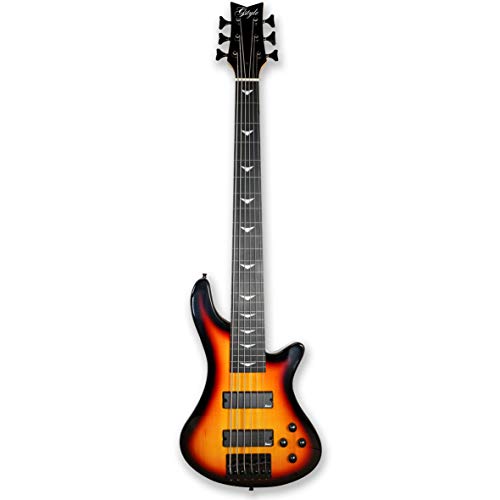
- Six-string fretless configuration
- 34 1/2-inch scale length
- Dual soap-bar pickups and 2-band controls
Best For: Players seeking the widest range in the lineup
Budget Natural Fretless

- Four-string fretless design
- Basswood body and maple neck
- Dual soap-bar pickups and four controls
Best For: Budget-minded beginners seeking a natural-finish fretless bass
Black Standard-Scale Fretless
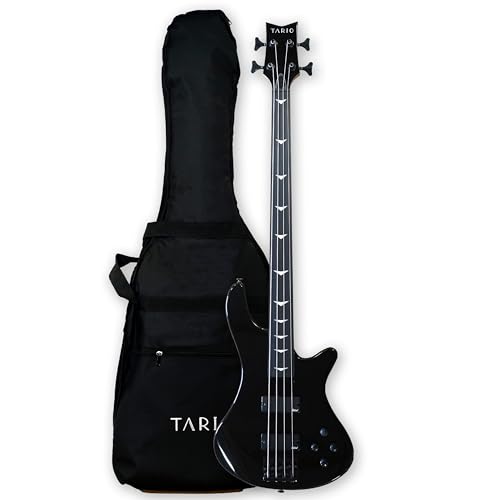
- 34-inch standard scale
- Poplar body and maple neck
- Fingerboard inlays and dual soap-bar pickups
Best For: Right-handed players wanting a marked, standard-size four-string bass
Best Simple Pick

- Six-string fretless configuration
- Basswood body and maple neck
- Dual soap-bar pickups with four controls
Best For: Players wanting affordable extended range from a fretless bass
Classic Fretless Foundation – Squier Classic Vibe ’60s Jazz Bass
Squier Classic Vibe 60s Jazz Bass, 3-Color Sunburst, Fretless, Laurel Fingerboard
Check Price On AmazonThe Squier Classic Vibe ’60s Jazz Bass is a straightforward choice for players seeking fretless bass guitars with a familiar four-string Jazz Bass format. Its alder top, poplar body, Fender-designed alnico pickups, and vintage-tinted gloss neck finish support a classic-inspired setup.
Best For: Players wanting a right-handed, full-size four-string fretless bass with vintage Jazz Bass styling.
Pros:
- Inspired by 1960s-era Jazz Bass models.
- Fender-designed alnico pickups.
- Vintage-tinted gloss neck finish and nickel-plated hardware.
- Includes a one-year manufacturer limited warranty.
Cons:
- Available in a right-handed configuration only according to the supplied details.
- Offers four strings rather than an extended-range layout.
This model makes sense for bassists who prefer a traditional Jazz Bass appearance and a focused four-string fretless platform over additional range or specialized electronics.
Extended-Range Fretless – ESP LTD B-205SM Fretless
The ESP LTD B-205SM is an appealing option among fretless bass guitars for players who want five-string range and active tone shaping. It combines an ash body, spalted maple top, passive ESP Designed SB-5 pickups, and an active ABQ-3 EQ in a Natural Satin finish.
Best For: Right-handed players who want a five-string fretless bass with active EQ and visible fret indicators.
Pros:
- Five-string configuration for extended range.
- Spalted maple top offers a distinctive coloration and grain pattern.
- Extra-thin U-shaped five-piece maple/jatoba neck.
- Includes passive pickups and an active ABQ-3 EQ.
Cons:
- The supplied details specify a right-handed model only.
- Active electronics add more controls and setup considerations than a passive-only bass.
With its five-string layout, fret indicators, and active/passive electronics combination, the B-205SM is suited to players who need broader range and more onboard tonal control.
Six-String Through-Neck Choice – TARIO Fretless 6-String Through-Neck Bass
TARIO Fretless 6 string through-neck electric bass Guitar Millettia Laurentii body
Check Price On AmazonThe TARIO Y120-6 stands out among fretless bass guitars with six strings, a neck-through construction, and a Millettia Laurentii body. Its Belcat BJ-80-6 pickup system, two volume controls, three tone controls, and included padded gig bag give it an extended-range, feature-rich design.
Best For: Experienced players seeking a full-size six-string fretless bass with neck-through construction and active/passive pickup operation.
Pros:
- Six-string configuration with a 34-inch scale and 2 1/16-inch nut width.
- Neck-through design intended to support sustain and resonance.
- Belcat BJ-80-6 passive/active pickup system.
- Includes a padded gig bag.
Cons:
- Only a 30-day no-reason return warranty is listed in the supplied details.
- The six-string format may be more instrument than beginners need.
- Specified as right-handed.
This is the most extended-range option in the group, making it a strong fit for bassists who specifically want six strings, multiple tone controls, and the feel of a through-neck instrument.
Fretless Acoustic-Electric Option – Ibanez AEGB24FE Fretless Acoustic-Electric Bass
Ibanez AEGB24FE AEG Fretless Acoustic-electric Bass Guitar - Mahogany Sunburst
Check Price On AmazonThe Ibanez AEGB24FE offers a different direction for fretless bass guitars as a four-string acoustic-electric model. Its sapele top, back, and sides, rosewood fingerboard, and built-in preamp/pickup system make it practical for players who want an acoustic-style bass that can connect through a 1/4-inch output.
Best For: Players wanting a right-handed four-string fretless acoustic-electric bass for amplified acoustic-style playing.
Pros:
- Acoustic-electric fretless design with a sapele top, back, and sides.
- Built-in preamp/pickup system with a 1/4-inch mono phone plug.
- Four-string format with a rosewood fingerboard.
- Includes a one-year warranty according to the supplied details.
Cons:
- Provides acoustic-electric functionality rather than the solid-body format of the other listed basses.
- Specified as right-handed.
- The supplied details do not list an onboard active EQ configuration.
The AEGB24FE is the natural choice here for musicians who value an acoustic body and plug-in capability, especially when a solid-body fretless bass is not the desired sound or format.
Best Value 5-String – TARIO Black Fretless 5-String Bass
For players seeking versatile fretless bass guitars, this full-size TARIO combines a 5-string layout with a poplar body, maple neck, composite ebony fingerboard, and two soap-bar pickups. Its metallic black finish and onboard 2-volume/2-tone controls give it a practical, straightforward setup.
Best For: Bassists who want a full-size 5-string fretless instrument with extended range and conventional passive-style control flexibility.
Pros:
- Five-string configuration with a 34-inch scale and 1 3/4-inch nut width
- Composite ebony fingerboard and bolt-on maple neck
- Dual soap-bar pickups with two volume and two tone controls
- Includes truss rod, side markers, and two strap hangers
Cons:
- Only a 30-day no-reason return warranty is listed
- No gig bag is specified among the included components
This model is a sensible option when you want the range of five strings without moving to a six-string design. The marked fingerboard, dual pickups, and familiar controls make it a practical entry point for exploring fretless playing.
Best Equipped 5-String – TARIO Active/Passive Fretless Bass
This TARIO is one of the more feature-oriented fretless bass guitars in the group, pairing a 5-string format with an Okoume body, maple neck, composite ebony fretboard, and Belcat BJ-80-6 pickup system. A padded gig bag is included, adding convenience for transport and storage.
Best For: Players who want a 5-string fretless bass with active/passive pickup operation and a supplied padded gig bag.
Pros:
- Belcat pickup supports passive and active operation
- Five-string layout with a 34-inch scale and 1 3/4-inch nut width
- Includes padded gig bag, truss rod, and two strap hangers
- Offers two volume and three tone controls
Cons:
- The listed warranty is limited to 30 days with no reason for return
- Its 45-inch overall size may be less convenient for compact storage
The active/passive electronics and extra tone control make this the most flexible 5-string choice here. It is particularly appealing if you want useful tonal options and a gig bag included from the outset.
Best Extended Range – Fretless 6-String Sunburst Bass
Among these fretless bass guitars, this model stands out for its six-string range. It uses a bolt-on maple neck, composite ebony fingerboard, poplar body, dual soap-bar pickups, and a matte tobacco sunburst finish, with a 34 1/2-inch scale and wider 2 1/8-inch nut.
Best For: Experienced bassists who specifically want the extended range and wider neck of a full-size six-string fretless bass.
Pros:
- Six-string configuration for the broadest range in this selection
- 34 1/2-inch scale and 2 1/8-inch nut width suit the extended layout
- Dual soap-bar pickups with two volume and two tone controls
- Includes 24 fret markers, truss rod, side markers, and two strap hangers
Cons:
- The 2 1/8-inch nut is wider than the 5-string models listed here
- No gig bag is specified in the supplied details
- Six strings can require more adaptation than a standard 4- or 5-string bass
The six-string layout is the defining reason to choose this bass. Its wider nut and extended scale provide the space expected from the format, while the dual pickups and familiar control layout keep the electronics uncomplicated.
Budget Natural Fretless – TARIO 4-String Electric Bass
For players exploring fretless bass guitars at a reasonable price, this TARIO model pairs a natural basswood body with a bolt-on maple neck and composite ebony fingerboard. Its four-string layout, soap-bar pickups, and straightforward control set make it a practical entry point for fretless playing.
Best For: Beginners and budget-minded bassists who want a natural-finish, four-string fretless electric bass.
Pros:
- Four-string fretless electric-bass configuration.
- Basswood body with bolt-on maple neck and composite ebony fingerboard.
- Two volume and two tone controls with dual soap-bar pickups.
- Includes a truss rod, die-cast black tuners, and two strap hangers.
Cons:
- Only a 30-day no-reason return warranty is listed.
- Manual operation and a 1/4-inch jack may feel basic to some players.
This is a sensible choice when affordability and a familiar four-string format matter more than premium appointments. The dual pickups and adjustable truss rod add useful flexibility for a starter or practice instrument.
Black Standard-Scale Fretless – 4-String Electric Bass
This black four-string model is a practical option among fretless bass guitars, offering a standard 34-inch scale, poplar body, bolt-on maple neck, and composite ebony fingerboard. Its inlay markings, dual soap-bar pickups, and conventional controls support approachable fretless playing.
Best For: Right-handed players who want a standard-size, black-finish four-string fretless bass with fingerboard inlays.
Pros:
- Standard 34-inch scale and 1 5/8-inch nut width.
- Poplar body with bolt-on maple neck and composite ebony fingerboard.
- Fingerboard inlays provide visual position references.
- Dual soap-bar pickups, two volume controls, and two tone controls.
Cons:
- Listed specifically for right-handed players.
- The product notes mention 24 frets despite the fretless designation, so buyers should confirm the exact fingerboard layout.
- Poplar construction may be less distinctive than higher-end body woods.
With its familiar scale length and marked fingerboard, this bass emphasizes accessible positioning for players learning fretless technique. Confirm the fingerboard specification before ordering if the fretless layout is a priority.
Best Simple Pick – TARIO 6-String Electric Bass
Players seeking broader range from fretless bass guitars may prefer this TARIO six-string model. It uses a basswood body, bolt-on maple neck, composite ebony fingerboard, nickel strings, and dual soap-bar pickups, with two volume and two tone controls for basic tonal adjustment.
Best For: Bassists who want a six-string fretless format for extended-range playing at a reasonable price.
Pros:
- Six-string configuration offers more range than a conventional four-string bass.
- Basswood body with bolt-on maple neck and composite ebony fingerboard.
- Dual soap-bar pickups with separate volume and tone controls.
- Includes a truss rod, die-cast black tuners, and two strap hangers.
Cons:
- The wider six-string format may require an adjustment for four-string players.
- Only a 30-day no-reason return warranty is listed.
- The notes do not specify a scale length or nut width.
This model stands out for adding six-string range without departing from a straightforward passive-style control layout. It is worth considering when extended range is the main priority and the missing sizing details can be confirmed before purchase.
How We Picked These Fretless Bass Guitars
We selected instruments that represent useful choices for different players rather than focusing on one specification alone. The lineup includes approachable four-string models, extended-range five- and six-string basses, an acoustic-electric design, and instruments with different neck constructions and body materials.
When comparing Fretless Bass Guitars, we considered string count, construction, electronics, playability-related features, tonal flexibility, and the likely needs of beginners, gigging musicians, recording players, and experienced bassists. Because fretless setup and intonation are highly personal, players should also confirm scale length, string type, pickup layout, and seller-specific specifications before ordering.
Quick Comparison
| Best For | Recommended Type | Why It Stands Out |
|---|---|---|
| Traditional fretless tone | Four-string Jazz-style bass | Familiar layout and versatile electric-bass character |
| Extra range | Five- or six-string model | Lower notes and broader melodic possibilities |
| Acoustic performance | Fretless acoustic-electric bass | Useful unplugged presence with amplification options |
| Extended sustain | Through-neck construction | Continuous neck design suited to a smooth, resonant response |
| Value-focused experimentation | Bolt-on four-string bass | Simple format for learning fretless technique |
Key Buying Factors for Fretless Bass Guitars
String Count and Scale
Four strings are usually the simplest starting point and offer a familiar range for most bass lines. Five-string models add a lower register, while six-string versions provide still more range but require a wider neck and greater muting discipline. Check the scale length and nut width if comfort is a priority.
Neck Construction and Materials
Bolt-on necks are common and can simplify maintenance or replacement. Through-neck designs may offer a continuous feel and strong sustain. Fingerboard materials, body woods, and neck profiles affect weight, attack, and comfort, but setup quality often matters more than wood names alone.
Fingerboard Markings and Intonation
Some fretless basses use visible lines or side markers to help you locate notes. These are especially useful while learning, although accurate intonation still depends on placing your finger directly where the note sounds correct. A professional setup can make the transition easier.
Electronics and Playing Context
Consider pickup configuration, active or passive controls, and whether you need onboard amplification for live use. An acoustic-electric model suits quieter performances and hybrid setups, while a solid-body electric bass is generally more predictable at higher stage volumes.
Who Should Buy Which Fretless Bass Guitars?
Beginners: Start with a four-string model that has a comfortable neck, clear position markers, and straightforward controls. The simpler layout helps you concentrate on pitch and muting.
Jazz and expressive electric players: A Jazz-style fretless bass or a versatile active instrument can provide the familiar control layout and tonal range needed for slides, sustained notes, and melodic lines.
Extended-range players: Choose a five- or six-string bass if you regularly need lower notes, soloing range, or chordal ideas. Be prepared for a wider neck and more demanding string muting.
Acoustic performers: The fretless acoustic-electric option is the natural fit for unplugged settings, rehearsals, and amplified acoustic-style performances.
Recording and sustain-focused players: A through-neck model may appeal if you value a smooth response and long sustain, while bolt-on instruments remain practical choices for straightforward maintenance and budget-conscious upgrades.