The best field monitors with touchscreens make it easier to judge focus, exposure, framing, and color without relying on a camera’s small built-in display. A bright screen can be especially valuable for outdoor shoots, while touch controls and monitoring tools can speed up setup on set.
We compare 10 practical options across brightness levels, screen sizes, 4K support, LUT features, battery design, and portability so you can choose a monitor that fits your camera, workflow, and budget.
Best 10 Field Monitors with Touchscreens Picks for 2026
Bright Outdoor Pick

- 2000-nit touchscreen with auto backlight control
- 4K HDMI loop input and output
- Custom LUT support and NP-F/USB-C power options
Best For: Outdoor filmmakers needing high brightness and advanced monitoring tools
Sunlight Visibility Pick

- 2800-nit brightness for direct sunlight
- 4K 60Hz HDMI 2.0 transmission
- Waveform and histogram tools with flexible power options
Best For: Outdoor creators who prioritize maximum brightness
Solo-Shooting Pick

- Touchscreen and physical control wheel
- Built-in battery with USB-C charging
- Reference-frame overlay and adjustable five-level fan
Best For: Solo creators and repeatable interview or product-video setups
Lightweight Compact Pick

- Light 5-inch Full HD touchscreen
- 4K30P input/output and wide viewing angle
- Waveforms, peaking, false color, and 3D LUT support
Best For: Compact DSLR and mirrorless camera rigs
Best Brightness Pick
FEELWORLD P6XL 6-Inch Touch Monitor

- 1200-nit screen for outdoor visibility
- Built-in 3300mAh rechargeable battery
- Waveform, vectorscope, histogram, and 3D LUT tools
Best For: Outdoor creators needing a bright, self-powered monitor
Best Large-Screen Value
NEEWER F100 7-Inch Touch Monitor
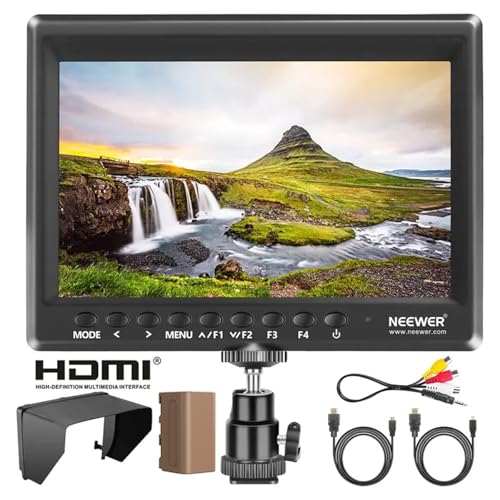
- Spacious 7-inch IPS display
- 4400mAh battery with about 3.5-hour runtime
- Includes sunshade and 360-degree mini ball head
Best For: Camera operators wanting a larger, accessory-rich monitor
Best Full-HD Compact Pick
Portkeys PT6 5.2-Inch Touch Monitor

- Sharp 1920 x 1080 Full HD display
- RGB and luma waveforms with advanced focus tools
- 3D LUT output and anamorphic support
Best For: Filmmakers building lightweight rigs with detailed monitoring controls
Lightweight Starter Monitor

- 7-inch 1280x800 IPS touchscreen
- Focus assist, histogram, zebra, and false color
- 300g body with two F550 batteries included
Best For: Beginners, vloggers, and lightweight camera rigs
Bright Outdoor Specialist

- 2000-nit daylight-viewable IPS touchscreen
- 4K HDMI input/output with Full HD native display
- Waveform, vectorscope, false color, and custom 3D LUTs
Best For: Outdoor shoots and advanced on-set monitoring
Compact Color-Control Monitor

- 5.5-inch Full HD IPS touchscreen with HDR
- 3D LUT, waveform, histogram, and vectorscope tools
- 340g body with 4K HDMI input/output
Best For: Compact filmmaking and color-conscious studio setups
Bright Outdoor Pick – NEEWER F700
For field monitors with touchscreens that remain readable outdoors, the NEEWER F700 combines a 2000-nit 7-inch IPS display with automatic backlight control. Its 4K HDMI loop-through, monitoring tools, and flexible power options make it a capable choice for camera crews working in changing conditions.
Best For: Outdoor filmmakers who need high brightness, HDMI loop-through, and extensive exposure and color tools.
Pros:
- 2000-nit touchscreen with ambient-light-based brightness adjustment
- Supports 4K HDMI input and output, plus headphone audio monitoring
- Includes professional tools, 15 LUTs, and support for up to 60 custom LUT files
- Accepts NP-F batteries, DC power, and USB-C charging
Cons:
- Battery and DC cable are not included
- At 1.6 pounds, it is heavier than more compact monitor options
- Cooling fans may add operational noise in quiet setups
The F700 is especially practical when sunlight visibility and signal pass-through matter more than minimum size. Its adjustable cooling and broad toolset also suit longer shoots, though its larger footprint and separate battery requirement should be considered.
Sunlight Visibility Pick – VILTROX DC-A1
The VILTROX DC-A1 is one of the stronger field monitors with touchscreens for direct-sunlight shooting, thanks to its 2800-nit 7-inch IPS display. It also pairs a wide viewing angle with 4K 60Hz HDMI transmission and essential waveform and histogram tools.
Best For: Outdoor creators who prioritize maximum screen brightness and smooth 4K HDMI transmission.
Pros:
- Very bright 2800-nit display for demanding outdoor conditions
- 7-inch 1920×1080 IPS screen with a 170-degree viewing angle
- HDMI 2.0 supports 4K video transmission at 60Hz
- Supports NP-F batteries, DC input, and USB-C power
Cons:
- The supplied notes do not specify included batteries or cables
- Built-in auto fan may be noticeable during quiet recording
- Tool details are less extensive than some monitors with larger LUT feature sets
Choose the DC-A1 when visibility in harsh light is the main concern. Its 2800-nit output is the standout feature, while the flexible power design and 4K 60Hz support help it fit modern camera and recording workflows.
Solo-Shooting Pick – FEELWORLD P6XL
The FEELWORLD P6XL is a practical option among field monitors with touchscreens for solo operators and repeatable production setups. Its 6-inch touchscreen, physical control wheel, built-in battery, adjustable fan, and reference-frame overlay are designed to speed up adjustments and maintain consistent framing.
Best For: Solo shooters, interviews, product videos, and productions where matching framing between takes matters.
Pros:
- Touch, swipe, and pinch controls plus a physical adjustment wheel
- Built-in 22.2Wh battery and USB-C charging support reduce dependence on external batteries
- Five-level fan offers adjustable cooling for different shooting conditions
- Supports custom LUTs and a broad set of waveform, vectorscope, focus, and exposure tools
Cons:
- 1200-nit brightness is lower than the brighter outdoor-focused options here
- Its 6-inch screen is smaller than the 7-inch alternatives
- Battery life is approximately two hours at maximum brightness with the fan at level 5
The P6XL stands out for workflow-oriented features rather than maximum brightness. The screenshot overlay and dual-control interface are valuable when one person must operate the camera while keeping framing and monitoring adjustments consistent.
Lightweight Compact Pick – Portkeys PT5 II
For users seeking compact field monitors with touchscreens, the Portkeys PT5 II offers a lightweight 5-inch design with a full-HD display and 178-degree viewing angle. Its 4K30P input/output, waveform tools, peaking, false color, and 3D LUT features provide useful video-assist capabilities without a larger 7-inch body.
Best For: DSLR and mirrorless shooters who want a small, lightweight monitor with detailed exposure and focus aids.
Pros:
- Compact 5-inch Full HD screen with a 178-degree viewing angle
- Very light design suited to smaller camera rigs
- Includes luma and RGB waveforms, histogram, false color, and new peaking
- Supports 4K30P input/output, 3D LUTs, and NP-F or LP-E6 batteries
Cons:
- The supplied notes do not state the screen brightness
- Battery is not included
- Its smaller display provides less viewing area than 6- and 7-inch models
The PT5 II is a sensible fit for compact rigs where weight and physical footprint matter. It offers a strong collection of monitoring aids, but shooters who frequently work in bright sunlight may prefer a model with a specified high-nit rating.
Best Brightness Pick – FEELWORLD P6XL 6-Inch Touch Monitor
The FEELWORLD P6XL is a strong choice among field monitors with touchscreens when outdoor visibility and built-in power matter. Its 6-inch Full HD IPS display reaches 1200 nits, while the integrated 3300mAh battery provides up to about 3 hours of runtime depending on brightness.
Best For: Outdoor filmmakers, vloggers, photographers, and creators who want a bright, compact monitor with touchscreen controls and built-in battery power.
Pros:
- 1200-nit display is designed for clear outdoor viewing.
- Built-in 3300mAh battery offers approximately 2.2 to 3 hours of runtime.
- Includes waveform, vectorscope, histogram, focus assist, and 3D LUT support.
- Lightweight 332g design with 4K HDMI input and output.
Cons:
- Battery runtime varies significantly with brightness settings.
- The 6-inch screen is smaller than some 7-inch alternatives.
The P6XL stands out for creators who regularly shoot in bright conditions and want exposure and focus tools without adding an external battery. Its 1/4-20 mounting threads also make it easy to add to camera rigs, stabilizers, or supports.
Best Large-Screen Value – NEEWER F100 7-Inch Touch Monitor
The NEEWER F100 offers a larger 7-inch viewing area for filmmakers comparing field monitors with touchscreens. Its 1280 x 800 IPS panel, included 4400mAh F750 battery, and supplied sunshade make it a practical video-assist option for camera setups and outdoor shoots.
Best For: Shooters who prioritize a larger monitoring area, flexible mounting, and included battery power over full-HD resolution or very high brightness.
Pros:
- 7-inch IPS display provides a spacious 16:10 viewing area.
- Included 4400mAh battery delivers about 3.5 hours of runtime.
- Offers peaking, histogram, safe frames, image flip, freeze, and custom color temperature controls.
- Includes a 360-degree mini ball head, sunshade, and multiple HDMI cables.
Cons:
- 450-nit brightness is more limited for direct sunlight than brighter monitors.
- 1280 x 800 resolution is below Full HD.
- At 1.9 pounds, it is heavier than the compact alternatives here.
The F100 is a sensible pick when screen size and a ready-to-use accessory bundle are more important than maximum brightness. The USB power option can also help extend operation with a compatible portable charger or other USB power source.
Best Full-HD Compact Pick – Portkeys PT6 5.2-Inch Touch Monitor
The Portkeys PT6 is a compact option for shoppers comparing field monitors with touchscreens and advanced image-analysis tools. Its 5.2-inch Full HD display combines 600-nit brightness with RGB and luma waveforms, 3D LUT output, anamorphic support, and a wide 178-degree viewing angle.
Best For: Filmmakers who want a lightweight Full HD monitor with detailed waveform, focus, LUT, and framing controls.
Pros:
- 1920 x 1080 resolution delivers a sharp Full HD monitoring image.
- Includes RGB and luma waveforms, histogram, zebra, false color, and new peaking.
- Supports 3D LUT output, anamorphic viewing, image zoom, and custom image crop.
- Lightweight design weighs about 0.37 pound and offers a 178-degree viewing angle.
Cons:
- Battery is not included.
- At 600 nits, it is less bright than the FEELWORLD P6XL for direct sunlight.
- The 5.2-inch display is smaller than the NEEWER F100.
The PT6 is particularly appealing for compact rigs where image detail and professional monitoring functions take priority. It supports Sony NP-F and Canon LP-E6 battery types, but you will need to supply a compatible battery separately.
Lightweight Starter Monitor – FEELWORLD FW759 Pro 7-Inch
The FEELWORLD FW759 Pro is a practical entry point for creators seeking field monitors with touchscreens. Its 7-inch 1280×800 IPS display provides a larger framing view than a built-in camera screen, while focus and exposure tools help you check footage as you shoot.
Best For: Vloggers, interview setups, livestreams, and lightweight handheld or gimbal rigs.
Pros:
- Lightweight 300g design suits handheld and gimbal setups.
- Touchscreen controls plus histogram, zebra, focus assist, and false color tools.
- Supports NP-F battery, DC, and Type-C power options.
- Includes two F550 batteries, sunshade, HDMI cables, and mounting accessories.
Cons:
- Its 400-nit brightness is less suited to very bright outdoor conditions than higher-brightness alternatives.
- Native resolution is 1280×800 rather than Full HD.
The FW759 Pro emphasizes portability and a generous viewing area over advanced resolution or extreme outdoor brightness. It is a sensible choice for beginners who want touchscreen operation and essential monitoring aids in a ready-to-shoot kit.
Bright Outdoor Specialist – VILTROX DC-X2 6-Inch
The VILTROX DC-X2 stands out among field monitors with touchscreens for outdoor production, thanks to its 2000-nit display. It combines a Full HD IPS touchscreen with 4K HDMI input and output, professional scopes, and custom 3D LUT support for more controlled on-set monitoring.
Best For: Outdoor filmmakers, directors, and shooters who need strong daylight visibility and extensive monitoring tools.
Pros:
- 2000-nit brightness is designed for sunlight-readable viewing.
- Supports 4K HDMI signals and provides both HDMI input and output.
- Includes waveform, vectorscope, histogram, false color, and focus-assist functions.
- Offers touchscreen control, four customizable shortcut keys, and multiple power options.
Cons:
- At 1.29 kg, it is substantially heavier than the other listed monitors.
- Only one NP-F550 battery is included.
The DC-X2 is the most outdoor-oriented option here, pairing exceptional stated brightness with a broad toolkit for exposure, focus, color, and audio checks. Its heavier build may be a consideration for compact or handheld rigs.
Compact Color-Control Monitor – Desview A5 5.5-Inch
The Desview A5 is a compact choice for creators comparing field monitors with touchscreens for filming or studio work. Its 5.5-inch Full HD IPS screen, HDR support, 3D LUT capability, and waveform-based tools provide detailed image and color checking in a lightweight 340g package.
Best For: Filmmakers and streamers who want a small monitor with color tools, scopes, and 4K HDMI connectivity.
Pros:
- Lightweight 340g design with a 5.5-inch 1920×1080 display.
- Supports custom 3D LUTs, built-in presets, HDR, waveform, histogram, and vectorscope.
- 4K HDMI input and output plus a headphone jack for audio monitoring.
- Offers touchscreen controls and a tactile side knob.
Cons:
- 600-nit brightness is less powerful for direct sunlight than the VILTROX DC-X2.
- NP-F550 battery and DC adapter are not included.
- Not compatible with LP-E6 batteries.
The A5 balances portability with unusually capable color and exposure features for its size. It makes the most sense when compact dimensions, 3D LUT workflows, and Full HD detail matter more than maximum outdoor brightness or an included battery.
How We Picked the Best Field Monitors with Touchscreens
We focused on the features that matter during real filming rather than treating resolution alone as the deciding factor. The lineup includes compact 5- to 6-inch monitors for lightweight rigs, larger 7-inch models for easier viewing, and bright displays intended for daylight work. We also considered HDMI compatibility, touchscreen responsiveness, monitoring tools, battery practicality, and whether each model suits DSLR, mirrorless, cinema, studio, or gimbal setups.
Because specifications vary by version and seller, verify the exact model’s input/output format, included battery or plate, supported frame rates, and accessory package before ordering.
Quick Comparison
- Best for bright outdoor shoots: Choose a model rated around 1,200 nits or higher, such as the NEEWER F700 or VILTROX 7-inch monitor.
- Best for compact rigs: A 5- or 5.5-inch touchscreen monitor keeps weight and bulk down for gimbals and travel kits.
- Best for 4K workflows: Look for clearly stated 4K HDMI input support, while remembering that the display itself may remain 1080p.
- Best for basic video assist: Lower-cost 7-inch monitors can still provide a larger viewing surface and essential exposure or focus tools.
- Best for color and compositing checks: Prioritize 3D LUT support, wide color gamut claims, and dependable signal handling.
Key Buying Factors for Field Monitors with Touchscreens
Brightness and Viewing Conditions
Brightness is one of the biggest differences between models. A 400- to 600-nit display may work well indoors or in shade, but bright sunlight usually calls for a significantly brighter panel. A monitor hood can help, although it adds bulk and does not replace a genuinely high-nit display.
Resolution, Inputs, and Signal Support
Many camera monitors use a 1920×1080 panel while accepting a 4K HDMI signal. That can be perfectly suitable for monitoring, but check the supported frame rates and whether the monitor offers HDMI output for a second display or recorder. Confirm that your camera’s clean HDMI output matches the monitor’s requirements.
Touch Controls and Monitoring Tools
Touch operation is useful for navigating menus, moving through images, and accessing tools quickly. Focus peaking, false color, zebras, waveform, histogram, image magnification, and anamorphic or aspect-ratio guides can be more valuable than a higher quoted resolution.
Power, Mounting, and Durability
Check battery compatibility, runtime, charging options, and whether the battery is included. Also confirm the mounting points, cold-shoe arrangement, HDMI cable clearance, and overall weight. A monitor that is excellent on a tripod may be inconvenient on a handheld or gimbal rig.
Who Should Buy Which Field Monitors with Touchscreens?
Outdoor filmmakers and event shooters should prioritize the brightest models, especially when a sun hood is not practical. Travel and gimbal users will generally prefer a smaller 5- or 5.5-inch monitor with modest weight and simple cabling. Studio and interview creators may benefit more from a larger 7-inch screen and flexible power options than from maximum brightness.
Color-conscious filmmakers should favor models with 3D LUT support, wide-gamut claims, and a useful set of exposure and focus tools. Budget buyers can choose a basic touchscreen monitor if they mainly need a larger image and reliable HDMI monitoring, but should avoid paying for 4K labeling without checking exactly what the monitor accepts and displays.