If you want tighter playback timing, cleaner digital sync, and a more stable monitoring chain, an external clock can make a real difference in the right studio setup.
Below, we’ve narrowed the field to 10 standout options for home studios, from compact OCXO units to advanced master clocks built for serious digital systems.
Best 10 Audio Clock Generator for Home Studio Picks for 2026
Reference-Grade Master Clock
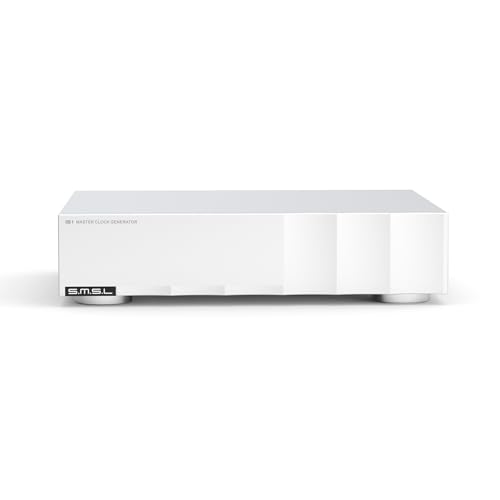
- SC-cut OCXO with low phase noise
- Independent buffered dual-channel output
- Isolated power and compact metal chassis
Best For: Home studios with compatible clock-ready DACs and players
Spectrum Display Utility

- VFD analyzer with clock display
- Aux and MIC inputs for monitoring
- Customizable modes and brightness settings
Best For: Visual metering and clock display in a studio or music room
Compact Word Clock Hub
Black Lion Revolution Clock Mini
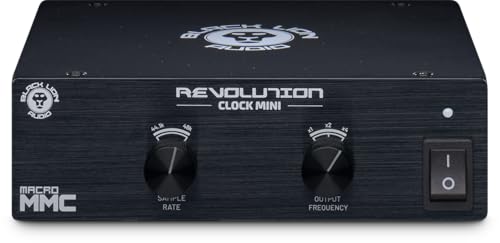
- Standalone word clock generator
- 44.1kHz to 384kHz sample-rate support
- Three BNC outputs for distribution
Best For: Small studios needing a simple multi-output clock source
Pro Studio Sync Clock
Antelope Audio OCXHD Master Clock
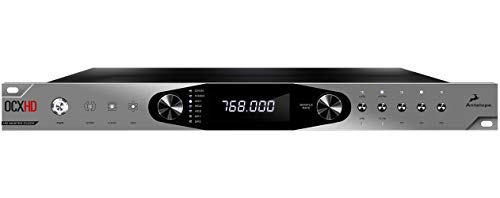
- Up to 768kHz sample-rate support
- 10 word clock outputs plus sync inputs
- 64-bit AFC clocking with OCXO
Best For: Advanced studios needing extensive synchronization and routing
Custom OCXO Reference Clock
Aune SC1 10MHz External Audio Clock

- Custom SC-cut OCXO design
- 4 isolated outputs: sine and square
- Low-jitter, low-noise power supply
Best For: Compatible 10MHz home studio systems
Atomic Studio Master Clock
Antelope Audio 10MX Rubidium Clock

- Rubidium atomic master clock
- 10 BNC outputs for multi-device sync
- Word clock plus AES/EBU and S/PDIF
Best For: Premium studios needing atomic-level clocking
Compact Master Clock
Black Lion Audio Micro Clock MKII
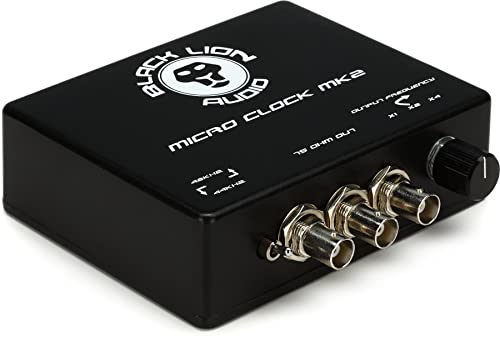
- Compact master clock format
- 3rd-order crystal oscillators
- Ultra-low jitter design
Best For: Small studios wanting a simple clock upgrade
Portable 10MHz Reference

- 10MHz OCXO with ±0.1 PPM precision
- Sine wave and HCMOS outputs
- USB-C powered and portable
Best For: Users needing a compact external 10MHz reference for compatible studio gear
Pro Word Clock Generator

- Standalone word clock generator
- 44.1kHz to 384kHz support
- 4 BNC outputs plus AES/EBU, S/PDIF, and ADAT
Best For: Studios needing a dedicated sync clock with multiple digital outputs
High-End External Clock

- Custom SC-cut OCXO reference
- Four isolated outputs: 2 sine, 2 square
- Claimed jitter below 200 fs
Best For: Compatible audio systems that need a premium external 10MHz reference
Reference-Grade Master Clock – SMSL G1 10MHz OCXO
If you’re shopping for an audio clock generator for home studio use, the SMSL G1 is built for setups that want a dedicated 10MHz master clock to support DACs and digital players. Its SC-cut OCXO design, low phase noise, and isolated power architecture are aimed at stable timing and reduced jitter in a compact desktop unit.
Best For: Home studios and hi-fi systems that need a compact external master clock for compatible digital gear.
Pros:
- SC-cut OCXO design with very low phase noise and claimed ±1ppm accuracy over 10 years
- Independent buffering on both channels for high-speed isolation and strong drive
- Constant-temperature cover and isolated linear power transformers for stable operation
- Small CNC aluminum body that fits neatly into a desktop setup
Cons:
- Requires compatible clock input support on your DAC, player, or processor
- Focused on 10MHz clock distribution rather than broader studio routing features
- Best value is tied to systems that can actually use an external master clock
The G1 is a specialized choice, but it brings serious timing hardware to a home audio chain. If your system supports external clocking, it offers a clean, well-isolated option for improving digital synchronization.
Spectrum Display Utility – Nobsound AK2515 Pro Analyzer
The Nobsound AK2515 Pro is not a traditional audio clock generator for home studio timing, but it does add a built-in clock display alongside spectrum analysis and level metering. If you want a visual monitoring unit for a music space, its VFD screen, AGC behavior, and flexible display modes make it a practical desktop accessory.
Best For: Musicians and audio enthusiasts who want a spectrum analyzer with a clock display for visual monitoring.
Pros:
- 25×15 VFD display with clear spectrum and level visualization
- Built-in crystal oscillator clock display with ±3.8ppm accuracy
- Multiple display modes, brightness control, and power-off memory
- Aux and MIC inputs for wired or wireless signal monitoring
Cons:
- Not a standalone master clock for studio synchronization
- Clock function is secondary to the analyzer and display features
- Best suited to visual feedback rather than audio timing correction
This model makes more sense as a monitoring and display device than as synchronization hardware. For a home studio that values visual feedback and a built-in clock readout, it offers a lot of flexibility.
Compact Word Clock Hub – Black Lion Revolution Clock Mini
For buyers looking for an audio clock generator for home studio setups, the Black Lion Audio Revolution Clock Mini is a straightforward standalone word clock generator. It supports sample rates from 44.1kHz to 384kHz and provides three BNC outputs, making it a practical timing source for compact digital rigs.
Best For: Small studios that need a simple external word clock generator with multiple BNC outputs.
Pros:
- Standalone word clock generator with 44.1kHz to 384kHz support
- Three BNC outputs for distributing clock to multiple devices
- Compact desktop-friendly footprint at 2.4 pounds
- Backed by a 2-year warranty
Cons:
- No detailed connectivity list beyond the BNC clock outputs in the supplied notes
- More focused on clock distribution than on extra studio features
- May be overkill if your interface already handles synchronization well
If you want a dedicated word clock source without a lot of extras, this is a clean, purpose-built option. It’s especially useful when you need to feed clock to more than one device in a compact studio.
Pro Studio Sync Clock – Antelope Audio OCXHD Master Clock
The Antelope Audio OCXHD is a high-end audio clock generator for home studio users who want pro-level synchronization hardware. With 768kHz support, 10 word clock outputs, dual inputs, and 64-bit AFC clocking, it is designed for demanding recording, mixing, mastering, and post-production chains.
Best For: Advanced home studios and project studios that need extensive clocking and sync options.
Pros:
- Supports sample rates up to 768kHz
- 64-bit AFC clocking with an oven-controlled crystal oscillator for stable timing
- 10 word clock outputs plus AES/EBU, S/PDIF, and video sync inputs
- Desktop app control on macOS and Windows, with a 1U rack-mount design
Cons:
- Likely more clocking hardware than a basic home studio needs
- Rack-mount format may be less convenient for ultra-compact desks
- Best suited to systems with multiple digital devices to sync
This is the most feature-rich option in the group for users who need broad synchronization capability. If your studio has multiple digital sources and you want a serious master clock, the OCXHD is built for that role.
Custom OCXO Reference Clock – Aune SC1 10MHz External Audio Clock
If you are shopping for an audio clock generator for home studio use, the Aune SC1 is aimed at systems that accept a 10MHz external reference and want a cleaner clock source. It pairs a custom SC-cut OCXO with isolated sine and square outputs, making it a fit for users trying to tighten system timing across compatible audio devices.
Best For: Home studio owners with compatible 10MHz clock input gear who want a dedicated external reference clock.
Pros:
- Custom SC-cut OCXO designed specifically for this model
- Four independent outputs: 2 sine wave and 2 square wave
- Low-noise, dedicated power supply with shielding for isolation
- Phase-synchronized outputs designed for multiple-device setups
Cons:
- Only useful with devices that support a 10MHz clock input
- Requires 110V operation, so voltage compatibility matters
- More specialized than a general-purpose studio accessory
The SC1 is a niche but serious clocking tool, especially if your studio already includes compatible Aune or other 10MHz-capable hardware. Its value comes from its custom oscillator, isolated outputs, and low-jitter design rather than broad compatibility.
Atomic Studio Master Clock – Antelope Audio 10MX Rubidium Clock
The Antelope Audio 10MX is a high-end audio clock generator for home studio and professional rooms that need atomic-grade stability. Its rubidium master clock, jitter-management engine, and multiple digital outputs make it a strong option when timing precision and multi-device sync are top priorities.
Best For: Studios that need a premium master clock with wide-format connectivity and up to 10 device synchronization.
Pros:
- Rubidium atomic clock with Acoustically Focused Clocking technology
- Ten BNC atomic clock outputs for up to 10 devices
- Four BNC word clock outputs supporting rates up to 768 kHz
- Includes AES/EBU and S/PDIF outputs for flexible integration
Cons:
- Large feature set is more than many small home studios need
- 1U rack format may be excessive for minimal setups
- Best suited to professional gear ecosystems, not casual use
This is the most advanced option in the group, and its strengths are clearly in precision, routing flexibility, and system-wide synchronization. If your studio can take advantage of all those outputs, it is built to perform like a serious central clocking hub.
Compact Master Clock – Black Lion Audio Micro Clock MKII
The Black Lion Audio Micro Clock MKII is a compact audio clock generator for home studio setups that want a dedicated master clock without the size and complexity of a larger rack unit. It is built around 3rd-order crystal oscillators, a high-current parallel drive circuit, and an ultra-low-jitter design.
Best For: Smaller studios that want a straightforward master clock in a compact format.
Pros:
- Compact master clock design for easier placement
- 3rd-order crystal oscillators for stable clocking
- High-current parallel drive circuit
- Ultra-low jitter focus
Cons:
- Supplied details do not list extensive connectivity options
- Less feature-rich than larger studio clock generators
- May be better suited to simple clocking needs than complex rigs
For buyers who mainly want a no-frills reference clock, the Micro Clock MKII keeps the pitch simple: compact size, crystal-based timing, and low-jitter operation. It looks best as a practical upgrade for modest studio setups rather than a feature-heavy centerpiece.
Portable 10MHz Reference – Compact OCXO Clock Source
If you need an audio clock generator for home studio use, this 10MHz OCXO reference is best suited to systems that accept an external frequency standard. It offers a stable 10.000000 MHz output with sine wave and HCMOS formats, so it can serve as a clean reference for compatible audio gear, DACs, and other lab-style equipment.
Best For: Home studio users who want a portable 10MHz external reference for compatible audio, radio, or measurement gear.
Pros:
- 10MHz OCXO reference with ±0.1 PPM precision at 23±5°C
- Sine wave and HCMOS square wave outputs via SMA female connectors
- USB-C powered for easy desktop or mobile use
- Compact, lightweight design for field calibration and travel
Cons:
- Requires a device that specifically accepts a 10MHz reference input
- Needs more than 15 minutes warm-up for stable operation
- Output and calibration are geared toward technical users
This is a practical pick if your studio setup already supports 10MHz clocking and you want a small external reference rather than a full studio word-clock box. The dual-output design and USB-C power make it flexible, but it is most useful when matched to compatible gear.
Pro Word Clock Generator – Multi-Format Studio Sync
For a home studio that needs a more traditional audio clock generator, the Black Lion Audio Revolution Clock is a standalone word clock generator built around studio synchronization. It supports sample rates from 44.1kHz to 384kHz and provides multiple outputs, including four BNC connections plus AES/EBU, S/PDIF, and ADAT.
Best For: Studios that need a dedicated word clock generator for syncing audio interfaces and digital gear.
Pros:
- Standalone word clock generator for studio sync
- Supports 44.1kHz to 384kHz sample rates
- Offers 4 BNC outputs plus AES/EBU, S/PDIF, and ADAT
- Backed by a 2-year warranty
Cons:
- Heavier and larger than portable reference sources
- More suited to rack-style studio setups than casual desktop use
- Details provided focus on connectivity rather than tuning controls
This model makes the most sense if your setup needs a purpose-built studio sync device with broad digital output support. It is not the smallest option, but it is clearly aimed at proper clock distribution across multiple pieces of gear.
High-End External Clock – SC-Cut OCXO Reference
If you’re shopping for an audio clock generator for home studio systems with 10MHz clock input, the Aune SC1 EVO is a more premium external reference option. It uses a custom SC-cut OCXO, offers four isolated outputs, and is designed for compatible audio devices that can accept an external 10MHz clock.
Best For: Owners of compatible audio gear who want a high-end external 10MHz clock reference with multiple isolated outputs.
Pros:
- Custom SC-cut OCXO with claimed jitter below 200 fs
- Four independent outputs: 2 sine wave and 2 square wave
- Outputs are synchronized and isolated for multi-device use
- Low-noise, independent power supply design
Cons:
- Only useful for gear with a 10MHz clock input
- Higher-end design is likely more than basic studio setups need
- Specifics center on reference quality rather than simple plug-and-play operation
This is the most specialized option in the group, aimed at users who already have compatible hardware and want a refined external reference. Its strength is the combination of low-noise design, multiple outputs, and broad voltage support for modern home and studio environments.
How We Picked the Best Audio Clock Generator for Home Studio
For this Audio Clock Generator for Home Studio roundup, we prioritized compatibility, clocking accuracy, output options, build quality, and practical value for real-world studio workflows. We also looked for models that fit different budgets and system sizes, since not every home studio needs a flagship master clock.
Quick Comparison
In general, compact OCXO-based units suit small to mid-sized setups that need a stable 10 MHz reference, while higher-end master clocks are better for studios with multiple digital components and more demanding synchronization needs. If your gear only accepts a specific input type, match the clock output before anything else.
Key Buying Factors for Audio Clock Generator for Home Studio
Clock Compatibility
Check whether your DAC, CD player, streamer, or studio interface accepts 10 MHz input, word clock, or another format. The best clock is useless if it cannot connect to your devices.
Jitter Reduction and Stability
Look for low phase noise, OCXO or rubidium references, and solid frequency stability. These features matter most when you want reliable digital timing and consistent playback behavior.
Output Type and Signal Shape
Some systems prefer sine wave outputs, while others need square wave or HCMOS. Multi-output designs are helpful if you plan to clock more than one device.
Studio Size and Use Case
A simple two-device home setup usually benefits from a compact external clock, while a larger hybrid studio may justify a more advanced master clock with multiple distribution options.
Who Should Buy Which Audio Clock Generator for Home Studio?
If you want a simple upgrade for a small home audio system, choose a compact 10 MHz OCXO model. If you run multiple digital sources or want the strongest possible timing foundation, consider a more advanced master clock. For buyers focused on value, midrange units often offer the best balance of performance, compatibility, and price.
For most shoppers, the best choice is the one that matches your existing inputs and your actual workflow—not the most expensive model on the list.