Choosing the right field monitor can improve focus, framing, color judgment, and on-set workflow in a video production studio. The best models balance brightness, connectivity, and accurate monitoring tools.
Below, we break down 10 strong options across different screen sizes, brightness levels, and feature sets so you can match the monitor to your shooting setup.
Best 10 Field Monitor for Video Production Studio Picks for 2026
7" Bright SDI/HDMI Touch Monitor

- 3000-nit screen for outdoor viewing
- Touch camera control on supported models
- Waveform, LUT, and exposure tools
Best For: Solo shooters and camera operators who want brightness plus hands-on control
13.3" Pro SDI Studio Monitor

- Large 13.3-inch Full HD IPS screen
- Broad input support with 3G-SDI and HDMI
- Tally plus focus and framing tools
Best For: Directors and studio crews who need a larger production monitor
7" 12G-SDI HDR Touch Monitor

- 1600-nit 7-inch touch display
- 12G-SDI and 4K HDMI in/out
- Built-in HDMI/SDI cross conversion
Best For: Crews that need a small bright monitor with signal conversion
15.4" Self-Calibrating HDR Monitor
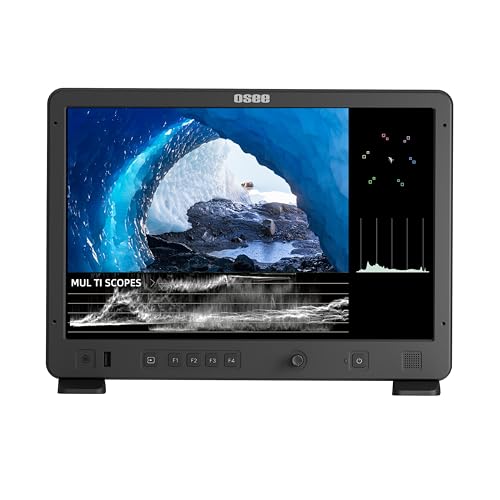
- Built-in color self-calibration
- 1500-nit daylight-friendly screen
- Includes hooded case and mounting gear
Best For: Teams needing a larger calibrated monitor for studio or outdoor use
VILTROX DC-X2 6" 2000-Nit Monitor

- 2000-nit 6-inch Full HD IPS panel
- Waveform, vectorscope, histogram, and false color
- 4K HDMI in/out with USB 3DLUT support
Best For: Compact, ultra-bright monitoring with pro exposure tools
FEELWORLD FVM215 21.5" Studio Monitor

- 21.5-inch 1000-nit Full HD IPS screen
- HDMI and 3G-SDI connectivity for studio gear
- Waveform, focus assist, HDR, and 3D LUT support
Best For: Studio teams needing a large SDI-ready production monitor
GODOX GM6S Pro 5.5" 2000-Nit Monitor

- 2000-nit 5.5-inch IPS touchscreen
- 4K HDMI in/out with 3D LUT support
- All-metal body with fanless cooling
Best For: Travel-friendly monitoring with touch control and rugged build
FEELWORLD FW759 7" 400nit IPS

- 7-inch IPS display for a bigger view than a camera screen
- Focus peaking, histogram, and false color for basic monitoring
- Lightweight 300g build with sunshade and NP-F support
Best For: Beginner creators needing a compact, affordable monitor for indoor shoots
NEEWER F600 7" 2400nit FHD

- 2400-nit touchscreen with auto backlight control
- 3D LUT, waveform, vectorscope, zebra, and HDR tools
- Includes 2 batteries plus cooling fans for longer sessions
Best For: Studio and field shooters who need maximum brightness and advanced monitoring tools
VILTROX DC-550 5.5" 1200Nits

- 5.5-inch touchscreen with 1200-nit daylight-viewable panel
- 4K HDMI in/out plus waveform, LUT, and false color tools
- Triple power options and included sunshade for flexibility
Best For: Travel-friendly shooters wanting a compact touchscreen monitor with core pro tools
Bright Control Monitor – 7" Bright SDI/HDMI Touch Monitor
If you need a field monitor for video production studio work that also travels well on set, the Osee G7 Pro is built around brightness, camera control, and pro monitoring tools. Its 7-inch 3000-nit screen is designed for outdoor viewing, while SDI and 4K HDMI I/O make it flexible for modern camera rigs and studio workflows.
Best For: Camera operators who want a bright, touch-enabled monitor with direct camera control and strong exposure tools.
Pros:
- 3000-nit brightness helps you monitor outdoors without needing a sunshade hood.
- Touchscreen camera control supports WB, ISO, aperture, shutter speed, recording, and touch focus on supported models.
- 3G-SDI and 4K HDMI in/out cover a wide range of camera and studio connections.
- Waveform, histogram, vectorscope, false color, and 3D LUT support improve image evaluation.
Cons:
- Camera control and touch focus depend on supported camera models and proper Type-C connection.
- SDI input/output is limited to up to 1080p60, while HDMI goes up to 4Kp30.
The G7 Pro stands out if your priority is a compact on-camera monitor with serious brightness and hands-on control. It is especially appealing for solo operators who want to adjust settings quickly without leaving the monitor.
Broadcast Studio Display – 13.3" Pro SDI Studio Monitor
For a field monitor for video production studio environments, the SEETEC P133-9HSD is aimed at director stations and broadcast-style monitoring. Its 13.3-inch Full HD IPS panel, broad input selection, and built-in tally support make it a practical choice when you need a larger reference display on set or in the control room.
Best For: Studio directors and production teams needing a larger broadcast monitor with tally and multiple signal options.
Pros:
- 13.3-inch IPS Full HD 1920×1080 screen offers a roomy viewing area.
- 3G-SDI, HDMI, YPbPr, AV, DVI-I, tally, and USB connectivity support versatile studio integration.
- Professional tools include peaking focus assist, image freeze, center marker, screen markers, and pixel-to-pixel.
- Built-in tally indicators help with live production coordination.
Cons:
- 400 cd/m² brightness is suited more to indoor or controlled-light environments than harsh sunlight.
- At 2 kg, it is less portable than smaller field monitors.
This monitor makes the most sense when size, signal flexibility, and production monitoring features matter more than ultra-portability. It is a strong fit for studio and director use where the display stays mostly on a stand or desk.
Compact Conversion Monitor – 7" 12G-SDI HDR Touch Monitor
The FEELWORLD S7 is a compact field monitor for video production studio and location work when you want modern connectivity in a small package. With 12G-SDI, 4K HDMI, 1600-nit brightness, and built-in HDMI/SDI cross conversion, it is designed for crews that need fast signal handling and a highly visible screen.
Best For: Shooters who need a bright compact monitor with 12G-SDI, 4K HDMI, and built-in signal conversion.
Pros:
- 1600-nit brightness and a Full HD 1920×1200 panel improve visibility outdoors.
- 12G-SDI and 4K HDMI inputs and outputs support professional and DSLR cameras.
- HDMI-to-SDI and SDI-to-HDMI cross conversion reduces the need for extra converters.
- Supports up to 32 LUTs plus waveform, histogram, and vectorscope tools.
Cons:
- Its 7-inch size may be small if you want a larger director-style viewing area.
- Viewing angle is listed at 80 degrees, which is narrower than some studio monitors.
For teams that want a compact monitor with strong signal flexibility, the S7 is easy to justify. Its mix of brightness, color features, and built-in conversion makes it especially efficient on mixed-camera productions.
Calibrated Production Monitor – 15.4" Self-Calibrating HDR Monitor
If you want a field monitor for video production studio use that behaves more like a serious on-set reference display, the osee Mega 15S brings a larger 15.4-inch panel, built-in color self-calibration, and a full set of HDR and analysis features. It is made for production teams that need accurate viewing, flexible mounting, and a monitor that can handle daylight shooting.
Best For: Crews that need a larger calibrated production monitor for outdoor and studio monitoring.
Pros:
- Built-in color self-calibration helps maintain accurate display color without a computer.
- 1500-nit brightness, 1650:1 contrast, and AR coating support daylight viewing.
- 10-bit panel, 22-bit processing, and tetrahedral 3D-LUT interpolation support detailed color reproduction.
- Includes a soft hooded carrying case, C-stand adaptor, V-mount plate, and multiple mounting options.
Cons:
- The 15.4-inch size and included accessories make it less compact than smaller field monitors.
- It is aimed at production workflows, so it may be more monitor than some lightweight camera rigs need.
The Mega 15S is a strong choice when the monitor is part of the production workflow, not just an accessory on the camera. Its calibration and mounting flexibility make it especially appealing for teams who care about consistency and setup speed.
Ultra-Bright Compact Pick – VILTROX DC-X2 6" 2000-Nit Monitor
If you need a field monitor for video production studio work that stays readable under bright lights, the VILTROX DC-X2 is built for that job. Its 6-inch Full HD IPS panel, 2000-nit brightness, and 4K HDMI input/output make it a practical monitoring tool for set work, studio setups, and quick camera checks.
Best For: Shooters who want a compact, ultra-bright monitor with strong exposure and focus tools.
Pros:
- 2000-nit brightness and 160-degree viewing angle improve visibility in bright environments.
- Includes waveform, vectorscope, histogram, RGB parade, false color, zebra, and focus assist tools.
- Supports USB 3DLUT input and a built-in 3DLUT list for color grading workflows.
- 4K HDMI input/output plus headphone monitoring add flexible studio connectivity.
Cons:
- 6-inch screen size may feel small for detailed shared monitoring.
- Glossy finish can be less forgiving in reflective lighting setups.
Overall, the DC-X2 is a strong pick if your priority is brightness, compact size, and a full set of exposure tools. It looks especially appealing for solo operators or studio crews who want a lightweight field monitor with professional monitoring features.
Studio Broadcast Display – FEELWORLD FVM215 21.5" Studio Monitor
For a field monitor for video production studio environments where screen size matters, the FEELWORLD FVM215 gives you a large 21.5-inch display with 1000-nit brightness. It pairs HDMI and 3G-SDI connectivity with focus assist, waveform tools, HDR, and 3D LUT support, making it a useful choice for broadcast-style monitoring and multi-device studio workflows.
Best For: Studio teams and production setups that want a large, bright monitor with SDI support.
Pros:
- 21.5-inch 1000-nit screen offers a large viewing area for studio production.
- HDMI and 3G-SDI inputs help it fit professional camera and recorder setups.
- Includes focus assist, false color, waveform, RGB parade, vector scope, and 3D LUT loading.
- Factory color calibration via CALMAN supports accurate color reproduction.
Cons:
- Large footprint and 9.4-pound weight make it less portable than compact monitors.
- 8-bit panel and 89-degree viewing angle may limit flexibility compared with higher-end displays.
In practice, this is the most studio-oriented option in the group: big, bright, and designed for connected workflows. If your priority is a desk or cart-based production monitor rather than a grab-and-go rig, the FVM215 fits well.
Pro Touchscreen Runner – GODOX GM6S Pro 5.5" 2000-Nit Monitor
The GODOX GM6S Pro is a compact field monitor for video production studio and on-set use when you want a bright, touch-enabled display in a rugged body. With 2000-nit brightness, 4K HDMI input/output, 3D LUT support, and anamorphic lens correction, it gives you a lot of control in a small 5.5-inch package.
Best For: Camera operators who want a durable, touch-friendly monitor with strong brightness and LUT control.
Pros:
- 2000-nit sustained brightness helps maintain visibility in direct light.
- Touchscreen, shortcut keys, and screenshot overlay improve speed on set.
- Supports 4K HDMI input/output, 3D LUTs, and anamorphic aspect-ratio tools.
- All-metal body and fanless cooling are designed for quiet, tough environments.
Cons:
- 5.5-inch screen may be too small for users who want a larger monitoring area.
- Power accessories are not included, so you’ll need to supply your own NP-F, DC, or USB-C setup.
The GM6S Pro stands out for combining brightness, durability, and creative monitoring features in a compact design. If you need a monitor that travels well but still offers serious control tools, this one is a very capable choice.
Budget-Friendly Beginner Field Monitor – FEELWORLD FW759 7" 400nit IPS
If you want a field monitor for video production studio use without adding much bulk, the FEELWORLD FW759 is a simple 7-inch on-camera option for checking framing, focus, and exposure on the fly. Its 400-nit IPS panel and 4K HDMI input make it a practical step up from a camera’s built-in screen, especially for beginner videographers and social creators.
Best For: Beginner creators who need a lightweight external monitor for indoor shoots, tripod setups, and basic on-set monitoring.
Pros:
- 7-inch IPS display gives a larger viewing area than a camera screen.
- Focus Peaking, Histogram, False Color, and Over Exposure Warning help reduce missed shots.
- Lightweight 300g design and slim 17mm body are easy to rig.
- Includes a sunshade and supports NP-F series batteries.
Cons:
- 400-nit brightness is better suited to indoor or controlled lighting than harsh daylight.
- Native resolution is 1280×800, not full HD.
- Best suited to straightforward monitoring rather than advanced studio workflows.
The FW759 is a sensible starter choice if you mainly need a reliable, affordable viewing tool for composition and basic exposure checks. It covers the essentials well and keeps your rig compact.
Bright Pro Touch Monitor – NEEWER F600 7" 2400nit FHD
For a field monitor for video production studio setups that need serious visibility, the NEEWER F600 stands out with its 2400-nit touchscreen and 1080p IPS panel. It adds pro-level monitoring tools, 4K loop in/out, and flexible power options, making it a strong fit when you need a brighter, more feature-rich assist monitor.
Best For: Creators and studio operators who need a very bright monitor with advanced exposure tools, touchscreen control, and long-run power flexibility.
Pros:
- 2400-nit brightness and auto backlight control improve outdoor and changing-light visibility.
- 1920×1080 IPS touchscreen with refreshed UI supports intuitive control.
- Includes 3D LUT upload support plus waveform, vectorscope, zebra, and HDR tools.
- Comes with 2 NP-F750 batteries, mounting options, and built-in cooling fans.
Cons:
- More expensive and feature-heavy than a basic entry-level monitor.
- At 7 inches, it is still compact rather than a large studio display.
- Cooling fans add complexity, even though they help with extended use.
The F600 is the strongest all-around choice here for creators who value brightness and monitoring depth. It is built to be used hard, especially when you want clear viewing and quick access to pro tools.
Portable Touch Monitor With LUTs – VILTROX DC-550 5.5" 1200Nits
The VILTROX DC-550 is a compact field monitor for video production studio work when you want a smaller rig and a clear daylight-viewable screen. Its 5.5-inch IPS panel, 1200-nit brightness, 4K HDMI in/out, and built-in monitoring tools make it a flexible option for shooters who want portability without giving up core assist features.
Best For: Shooters who want a compact touchscreen monitor with daylight visibility and solid exposure/focus tools.
Pros:
- 1200-nit brightness and included sunshade help visibility in brighter conditions.
- Touchscreen control and 4K HDMI input/output support a streamlined setup.
- Includes waveform, vector graph, histogram, false color, and focus assist.
- Triple power options add flexibility for indoor and outdoor use.
Cons:
- Smaller 5.5-inch display is less immersive than 7-inch options.
- Brightness is strong, but lower than the NEEWER model in this roundup.
- Package includes only one NP-F550 battery, so runtime may depend on your workflow.
If you want a compact monitor that still offers the essentials for accurate shooting, the DC-550 is easy to recommend. It balances portability, touchscreen convenience, and useful assist tools in a travel-friendly size.
How We Picked the Best Field Monitor for Video Production Studio
For this roundup of the best Field Monitor for Video Production Studio use, we prioritized real-world usability over spec sheets alone. Key factors included brightness for indoor and daylight work, resolution, panel quality, SDI and HDMI connectivity, touchscreen responsiveness, and monitoring tools such as waveform, focus assist, false color, HDR, and 3D LUT support.
We also considered build quality, mounting flexibility, and whether each display is better suited to solo shooters, small crews, or studio environments with directors and camera operators working together.
Quick Comparison
Smaller 5.5-inch and 6-inch monitors are the most portable and work well on compact rigs, gimbals, and handheld cameras. Seven-inch models are the most versatile for mixed production use, while 13-inch to 21.5-inch displays are better choices for directors’ stations, client viewing, and studio monitoring. Higher brightness matters most if you shoot near windows, on location, or under strong set lighting.
Key Buying Factors for a Field Monitor for Video Production Studio
Screen Size and Brightness
Choose a size that fits your workflow. Smaller monitors are easier to mount and travel with, while larger monitors improve visibility for directing and focus pulling. Brightness is just as important: 1000 nits is a solid starting point for many studio setups, while 1500 to 3000 nits is better for challenging light conditions.
Signal Compatibility
Make sure the monitor supports the outputs you actually use. HDMI is common for mirrorless and DSLR cameras, but SDI is often preferred in studio and broadcast environments because it is more secure over longer cable runs. Cross conversion can also simplify multi-device setups.
Monitoring Tools
Look for tools that help you make decisions quickly: waveform for exposure, focus peaking or assist for sharpness, false color for skin tones, HDR modes for wider dynamic range, and 3D LUT support for previewing a finished look. These features matter more than extra cosmetic features.
Power and Mounting
A practical Field Monitor for Video Production Studio work should offer flexible power options, battery compatibility, and reliable mounting points. If you use C-stands, cages, or director setups, check whether the monitor includes the hardware or plates you need.
Who Should Buy Which Field Monitor for Video Production Studio?
If you need a compact on-camera display, look for a smaller high-bright monitor with touchscreen control and HDMI support. If your work mixes studio and broadcast production, a larger SDI-ready monitor is usually the better choice. Directors, clients, and video village setups benefit most from the biggest screens in this group, while solo shooters will usually prefer a lighter 5.5-inch to 7-inch model with strong visibility and fast setup.
In short, the best choice depends on whether you value portability, brightness, or screen real estate most. Match the monitor to your workflow, and you will get more value than simply buying the brightest or largest option available.