The best dual-track looper pedals make it easier to build layered performances without stopping to manage complicated equipment. They can support practice, songwriting, solo gigs, and experimental live setups.
This roundup compares 10 options ranging from straightforward loop stations to feature-rich stereo and multitrack units. Pay close attention to loop storage, synchronization, effects, connectivity, and foot-control layout before choosing.
Best 10 Dual Track Looper Pedals Picks for 2026
Best for Creative Dual-Track Layering

- Two loop tracks for layered compositions
- MIDI sync for precisely timed loops
- Loop effects with true bypass and analog dry-through
Best For: Guitarists building layered live arrangements
Best for Flexible Stereo Looping

- Five dedicated footswitches for control
- Stereo looping and split routing
- Up to 13 hours or more across memories
Best For: Performers needing routing and loop-storage flexibility
Best for Simple Looping

- Simple record, overdub, playback, and undo controls
- 12 minutes of stereo recording
- Clear 24-segment loop-status indicator
Best For: Players wanting uncomplicated phrase layering
Best for Full Performance Control

- Four looping modes, including dual-track operation
- Stores 128 loops and over three hours of audio
- USB audio interface with microphone and stereo inputs
Best For: Gigging solo performers and recording-focused users
Best Budget Dual-Track Looper Pedal

- 3 loop slots and 90 minutes total recording
- Bright screen with unlimited overdubs
- Auto-save and true-bypass operation
Best For: Beginners, buskers, and layered practice
Best Advanced Dual-Track Looper Pedal
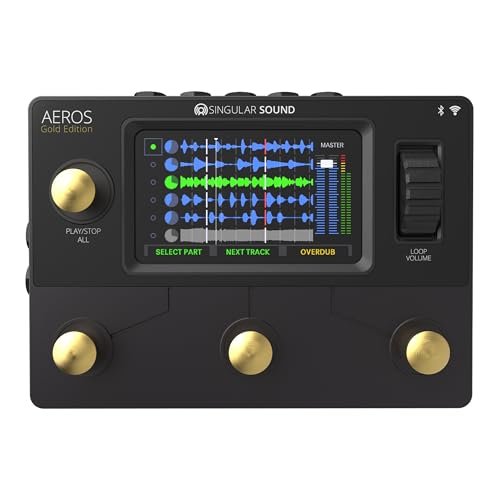
- Six song parts and six stereo tracks
- Up to 10 hours per song
- Touchscreen mixing plus MIDI and wireless connectivity
Best For: Live looping and complex stereo arrangements
Best Value Dual-Track Looper Pedal

- Nine loop slots and 40 minutes total recording
- Built-in tuner with uninterrupted switching
- USB WAV import/export and 48 kHz/24-bit audio
Best For: Guitarists practicing, songwriting, and managing loops by USB
Best Feature-Rich Pick
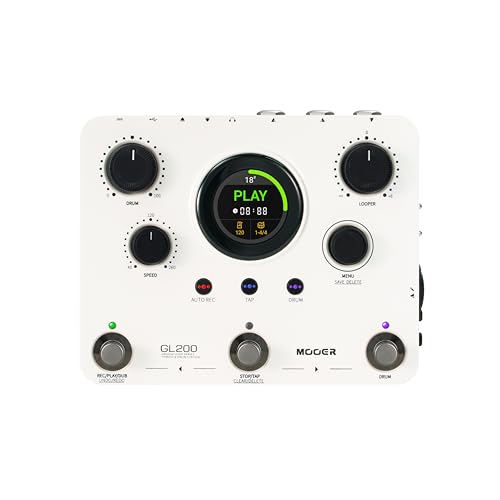
- 800 minutes of stereo recording in 100 slots
- 220 rhythms with DrumMatch AI
- Bluetooth, MIDI, XLR, and phantom power
Best For: Full arrangements and connected performance rigs
Best Compact Practice Pick
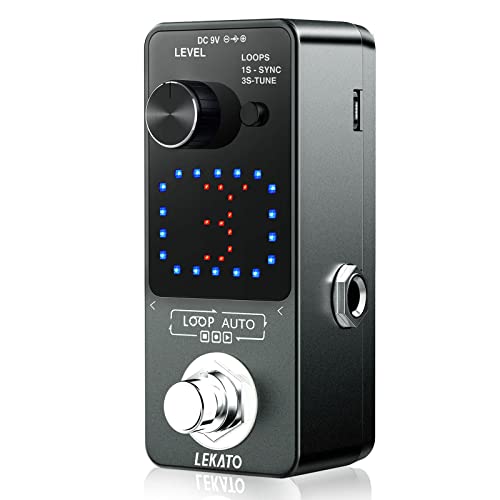
- Three loops with 18 minutes total recording
- Unlimited overdubs and synchronized recording
- USB WAV import/export and built-in tuner
Best For: Portable guitar and bass practice
Best Dedicated Dual-Track Pick

- Two loop tracks with Serial and Free modes
- 100 stereo rhythms in 16 styles
- MIDI and CTRL connectivity for synchronization
Best For: Live song sections and coordinated stereo loops
Best for Creative Dual-Track Layering – TC Electronic Ditto X4
The TC Electronic Ditto X4 is a practical choice for guitarists seeking dual track looper pedals for building evolving arrangements. Its two loop tracks, MIDI sync, and loop effects support tightly timed performances and layered compositions.
Best For: Guitarists creating layered live performances and multi-track compositions.
Pros:
- Two independent loop tracks for evolving arrangements or complete songs
- MIDI sync helps keep live loops precisely timed
- Includes loop effects, true bypass, and analog dry-through
- Power supply is included
Cons:
- Its feature set may be more than needed for basic one-loop practice
- The supplied notes list USB hardware connectivity but do not specify detailed computer-audio functions
The Ditto X4 stands out when independent track control and synchronized looping matter more than minimal operation. It is a strong fit for players who want room to develop arrangements onstage.
Best for Flexible Stereo Looping – Zoom MS-90LP+
The Zoom MS-90LP+ is a versatile option among dual track looper pedals, combining stereo looping, split routing, MIDI connections, and five dedicated footswitches. Its large memory capacity also suits players who want to save and manage many loops.
Best For: Performers who need stereo routing, MIDI connectivity, and extensive loop storage.
Pros:
- Five dedicated footswitches support hands-on control
- Offers stereo looping and split routing
- Stores up to 90 minutes on one track or 13 hours or more across memories
- Includes patch and instrument cables, a 9V power supply, and a cleaning cloth
Cons:
- The bundle includes accessories that may be unnecessary if you already own cables and power supplies
- The supplied notes do not identify separate physical loop tracks
With generous storage and flexible signal routing, the MS-90LP+ is aimed at players who value connectivity and loop management. Confirm that its workflow matches your preferred dual-track setup before buying.
Best for Simple Looping – BOSS RC-1 Loop Station
The BOSS RC-1 is a straightforward loop station for players who want essential recording, overdubbing, playback, and undo/redo controls. While it is not presented as a dual-track design, its stereo connectivity and simple interface make it a useful baseline when comparing dual track looper pedals.
Best For: Guitar, bass, and keyboard players who prioritize uncomplicated phrase layering.
Pros:
- User-friendly controls for recording, overdubbing, playback, and undo/redo
- 12 minutes of stereo recording time
- 24-segment LED indicator shows the current loop mode
- Includes a 9V battery and supports an optional PSA-series AC adapter
Cons:
- It is a single loop station rather than a dedicated dual-track looper
- AC adapter is optional and sold separately
- Its feature set is more basic than advanced multi-track models
The RC-1 is best viewed as a simple, dependable alternative rather than a direct dual-track competitor. Choose it when ease of use and core looping functions matter more than independent track management.
Best for Full Performance Control – HeadRush LOOPER+
The HeadRush LOOPER+ is a performance-focused choice among dual track looper pedals, with single- and dual-track modes, a full-color display, RGB loop-status ring, and four looping workflows. It also supports loop storage, USB audio, and microphone or instrument inputs for broader live setups.
Best For: Gigging musicians, solo performers, and creators who need advanced looping and recording flexibility.
Pros:
- Includes single, multi, sync, and song looping modes
- Stores up to 128 loops with more than three hours of total audio
- Works as a 2-in/2-out USB audio interface for recording or streaming
- Offers microphone input, stereo instrument inputs and outputs, MIDI, and battery operation
Cons:
- Its 1.7 kg weight and larger footprint may be less convenient for compact pedalboards
- Four AA batteries provide over six hours under typical use, so extended sessions may require replacements or another power plan
- Its broad feature set may be excessive for basic looping
The LOOPER+ is the most expansive option here for performers who need dual-track workflows plus vocals, storage, and computer connectivity. Its rugged chassis and battery operation also make it suitable for mobile performance.
Best Budget Dual-Track Looper Pedal – Donner Triple Looper
If you want dual track looper pedals with straightforward controls and generous recording capacity, the Donner Triple Looper is a practical option. Its three independent loop slots, bright display, and unlimited overdubs make it useful for building song sections or layered practice arrangements.
Best For: Beginners, solo performers, buskers, and players who want multiple saved loop sections.
Pros:
- Three independent loop slots with up to 90 minutes of total recording time.
- Bright screen shows loop status, recording progress, and timing.
- Unlimited overdubs, undo/redo, auto-save, and true bypass.
Cons:
- Power supply requirements should be checked before purchase; the listing notes 9V DC center-negative power and also indicates a supply may not be included.
- Single-footswitch operation may require learning multiple foot commands.
The Donner stands out for accessible operation and substantial loop storage in a compact pedal. It is a sensible pick for players who prioritize independent loop slots over advanced multi-track mixing.
Best Advanced Dual-Track Looper Pedal – Aeros Loop Studio Gold
Aeros Loop Studio Gold Edition - 6 Track, Stereo Looper Pedal | Touch Screen and Hands Free Mixing
Check Price On AmazonFor musicians comparing dual track looper pedals with a more complete live-looping workflow, the Aeros Loop Studio Gold Edition offers six song parts and six stereo tracks per song. Its touchscreen mixer, extensive storage options, and connectivity make it suited to complex arrangements.
Best For: Live-looping performers, multi-instrumentalists, and producers who need stereo tracks, hands-free mixing, and expanded connectivity.
Pros:
- Supports up to six song parts and six stereo tracks per song.
- Records up to 10 hours per song and stores more than 48 hours with a 32GB SD card.
- Includes 32-bit floating-point audio, creative effects, touchscreen mixing, MIDI, USB, Wi-Fi, and Bluetooth.
Cons:
- Its larger 8.5-by-6.25-inch footprint and 2.3-pound weight may be less convenient for compact pedalboards.
- A 32GB SD card is not included.
- Its advanced feature set may be more than needed for simple overdubbing.
The Aeros is the most capable choice here for arranging multiple stereo parts and managing a full performance from the pedal. Consider it when touchscreen control and connectivity matter more than minimal size or simplicity.
Best Value Dual-Track Looper Pedal – LEKATO Looper With Tuner
The LEKATO is a practical choice among dual track looper pedals for players who want a built-in tuner and computer transfer in a compact setup. It provides nine loop slots, 40 minutes of total recording time, and lossless 48 kHz/24-bit sampling.
Best For: Guitarists who want tuning, USB loop-file transfers, and multiple saved phrases in one pedal.
Pros:
- Nine loop slots with up to 40 minutes total recording time.
- Built-in high-sensitivity tuner supports continuous switching without interrupting the phrase.
- USB import/export for WAV loops, plus unlimited overdubbing and visual time indication.
Cons:
- Its 40-minute total capacity is lower than the Donner and Aeros options.
- Single-button foot control may take practice for undo, redo, stop, and erase commands.
The LEKATO balances useful features and manageable size, especially for guitarists who value onboard tuning and USB file management. It is a strong fit for practice and songwriting when extensive multi-track arrangement features are unnecessary.
Best Feature-Rich Pick – MOOER GL200 Drum Looper
The MOOER GL200 is a versatile choice among dual track looper pedals for players who want looping, rhythm accompaniment, and extensive storage in one unit. It combines 220 drum patterns, DrumMatch AI, Bluetooth audio, MIDI connectivity, and up to 800 minutes of stereo recording.
Best For: Full song arrangements, vocalists, instrumentalists, and performers who want integrated drum and MIDI features.
Pros:
- Stores up to 800 minutes across 100 configurable slots.
- DrumMatch AI can automatically match a groove and tempo to your phrase.
- Supports Bluetooth audio, dual TRS MIDI, an XLR/1/4-inch combo input, and 48V phantom power.
- Auto Rec, count-in, and End Sync help keep phrases aligned with the rhythm.
Cons:
- Its broad feature set and touchscreen may require more setup than a basic looper.
- It requires a 9V, 500mA power source.
The GL200 stands out when storage, drum variety, microphone support, and connectivity matter as much as basic looping. It is a particularly capable option for building structured arrangements rather than only layering short practice phrases.
Best Compact Practice Pick – LEKATO 3-Loop Looper
The LEKATO looper is a compact, straightforward option for guitarists and bassists comparing dual track looper pedals. It offers three loops, 18 minutes of total recording, unlimited overdubs, synchronized recording, a tuner, and USB transfer for WAV files.
Best For: Guitar and bass practice, compact pedalboards, and players who want simple overdubbing with USB backup.
Pros:
- Provides three loops with up to six minutes per loop and 18 minutes total.
- Supports unlimited overdubs plus undo, redo, stop, and erase foot commands.
- Offers 48 kHz/24-bit sampling and an analog-dry-through design.
- USB import and export makes it easy to move WAV loops to and from a computer.
Cons:
- Recording capacity is much lower than larger, feature-rich loopers.
- The 9V center-negative power supply is not included.
- Its controls are more limited than pedals with dedicated multiple footswitches.
The LEKATO focuses on essential looping rather than drum-machine or MIDI features. Its small footprint, tuner, synchronized recording, and USB file handling make it practical for players who prioritize portability and uncomplicated layering.
Best Dedicated Dual-Track Pick – VALETON VLP-200 Stereo Looper
The VALETON VLP-200 is a natural fit for shoppers specifically seeking dual track looper pedals. Its two-loop design supports Serial and Free collaboration modes, allowing parallel playback or smooth switching between song sections, while built-in stereo drums add rhythmic support.
Best For: Guitarists, bassists, keyboardists, and vocalists who need two coordinated stereo loop tracks.
Pros:
- Offers Serial and Free modes for parallel playback or section changes.
- Includes 100 stereo drum rhythms across 16 styles.
- Provides manual and auto recording modes for different workflows.
- CTRL and MIDI input/output support drum control and external synchronization.
Cons:
- The supplied notes do not specify total recording time or loop storage duration.
- Its 0.7 kg housing is less compact than the LEKATO.
- It requires a 9V, 0.5A power source.
For players who want the flexibility of two coordinated loops without moving to a larger arrangement workstation, the VLP-200 is a focused choice. Its dual-track modes, stereo drum library, and MIDI connectivity make it well suited to structured live song performance.
How We Picked the Best Dual Track Looper Pedals
We focused on the features that have the greatest effect on real-world looping: recording capacity, overdub behavior, loop management, footswitch usability, audio routing, and compatibility with guitars, basses, keyboards, microphones, and drum machines. We also considered whether each pedal is better suited to simple practice, songwriting, or demanding live performance.
Because “dual track” can describe different workflows, check the product specifications carefully. Some pedals provide two independently managed loops, while others offer stereo operation, multiple memory locations, or expanded track counts. Those differences matter when building arrangements or switching sections during a performance.
Quick Comparison
| What to compare | Best for | What to check |
|---|---|---|
| Simple controls | Beginners and practice | Record, overdub, stop, and undo functions |
| Multiple tracks or loops | Songwriting and solo performance | Independent track control and loop storage |
| Stereo operation | Keyboards, vocals, and complex pedalboards | Input/output routing and stereo effects |
| Rhythm features | Practicing in time and fuller performances | Drum patterns, tempo controls, and synchronization |
| USB or software support | Archiving and set preparation | File transfer, firmware support, and computer compatibility |
Key Buying Factors for Dual-Track Looper Pedals
Loop Control and Timing
Look for clearly separated controls if you plan to start, stop, layer, and switch loops while playing. Quantization, auto-start, and reliable timing can make a major difference when combining rhythm parts with melodic overdubs.
Recording Time and Memory
Short loop time is adequate for riffs and exercises, but longer recording capacity and saved projects are more useful for complete song sections. Confirm whether advertised time is shared across tracks and whether loops remain available after power is removed.
Connections and Compatibility
Mono pedals are often enough for guitar, while stereo inputs and outputs are valuable for keyboards, stereo effects, and wider live rigs. If you use vocals or an instrument with an active pickup, verify the input level, impedance, and available connections.
Rhythm, Sync, and Effects
Built-in drums can provide a useful time reference, while MIDI or other sync options help coordinate multiple devices. Integrated effects are convenient, but dedicated pedals may offer more control if you already have a carefully built signal chain.
Footswitch Layout and Power
Check whether switches support hands-free undo, redo, track selection, and tap tempo. Also verify the required adapter, current rating, polarity, and whether batteries are supported. A pedal that is easy to operate is usually more valuable than one with features you cannot access quickly.
Who Should Buy Which Dual Track Looper Pedals?
Beginners: Choose a model with a simple interface, dependable record/overdub/stop controls, and clear status indicators.
Songwriters: Prioritize generous memory, multiple loop locations, undo/redo, and USB transfer so ideas can be saved and developed later.
Solo performers: Look for independent track control, long recording time, rhythm tools, and footswitches that remain practical under stage pressure.
Players with complex rigs: Stereo routing, MIDI or sync support, flexible effects, and broad instrument compatibility will be more important than minimal size.
Budget-conscious buyers: Concentrate on reliable core looping first. Extra effects and storage are worthwhile only if they match the way you actually perform.