The best compact microphone stands save desk space without sacrificing stability, adjustability, or easy microphone positioning. This roundup compares 10 options for podcasts, streaming, recording, rehearsals, and portable setups.
From weighted desktop bases and foldable tripods to low-profile boom stands and floor models, these picks cover different microphones, spaces, and budgets.
Best 10 Compact Microphone Stands Picks for 2026
Best Portable Tripod

- Stable tripod base for desktop use
- Includes clip and thread adapter
- Supports microphones up to 6.6 lb
Best For: Portable desktop recording and dynamic microphones
Best Heavy-Duty Boom
Adjustable Weighted Desktop Stand

- Weighted base helps reduce vibration
- Boom arm adjusts in length and angle
- Supports up to 4.4 lb halfway extended
Best For: Heavier microphones and instrument recording
Best Low-Profile Pick

- Height adjusts from 4.7 to 8.7 in
- Tripod base distributes weight evenly
- Supports up to 5 lb
Best For: Low-height desktop recording and interviews
Best Everyday Desk Stand

- Weighted base with non-slip rubber pads
- Height adjusts from 8.0 to 12.8 in
- Supports up to 3.3 lb
Best For: Streaming, podcasting, and office recording
Best Portable Boom Stand
Amazon Basics Adjustable Boom Arm
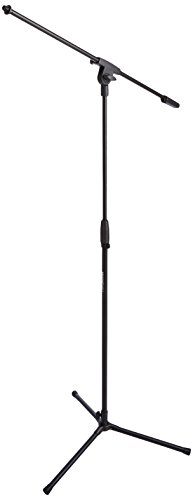
- Reaches 85.75 inches
- Folds flat for transport
- Supports up to 2 pounds
Best For: Portable singing, speaking, and instrument setups
Best Desktop Mic Stand

- Adjusts from 9 to 13 inches
- Weighted round base
- Standard 5/8-inch threading
Best For: Desktop recording, streaming, and podcasting
Best Travel Mic Stand
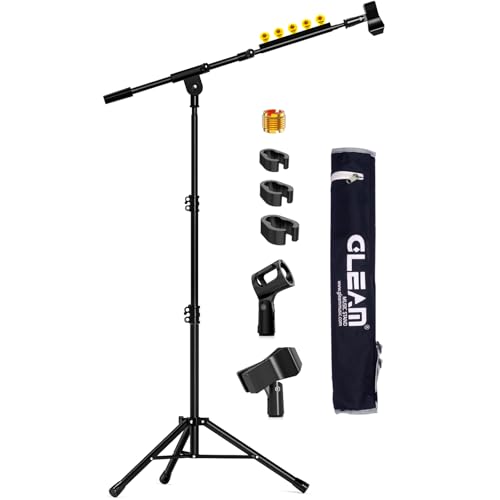
- Adjusts from 21 to 69 inches
- Includes carry bag and two clips
- Designed for mics under 1 pound
Best For: Gigs, rehearsals, and portable performances
Heavy-Base Stability Pick
Pyle PMKS5 Compact Microphone Stand

- 33.5- to 60.24-inch height adjustment
- Heavy die-cast base for stable placement
- Standard 5/8-inch thread
Best For: Home, studio, and performance setups needing a stable flat base
Low-Profile Portable Pick
Stage Rocker Foldable Boom Stand

- 9.65- to 16.93-inch low-profile height range
- Boom extends approximately 9 inches
- Foldable 2.3-pound tripod design
Best For: Kick drums, amps, and compact low-position setups
Most Versatile Tripod

- 28.1- to 89.8-inch height range
- Detachable, rotating 16- to 30-inch boom
- Carrying bag, clips, and thread adapter included
Best For: Singing, podcasting, and portable setups needing flexible positioning
Best Portable Tripod – Foldable Desktop Mic Stand
For shoppers comparing compact microphone stands, this foldable tripod offers a portable setup with adjustable positioning and broad thread compatibility. Its metal-and-PVC construction and tripod base are suited to desktop recording, podcasts, video calls, and presentations.
Best For: Portable desktop use with dynamic microphones and selected USB or broadcast microphones.
Pros:
- Tripod base helps provide stable placement on a table.
- Includes a mic clip and 3/8-inch to 5/8-inch screw adapter.
- Supports up to 6.6 pounds when properly balanced.
- Foldable, lightweight design is convenient to carry.
Cons:
- Requires one tripod leg to face the front of the microphone to avoid tipping.
- Maximum height is limited to 12.5 centimeters.
This is a practical choice when portability and simple desktop positioning matter most. Check the microphone’s weight and mounting requirements, then balance the stand carefully during use.
Best Heavy-Duty Boom – Adjustable Weighted Desktop Stand
Among compact microphone stands, this InnoGear model stands out for its weighted base and adjustable boom arm. It provides height adjustment from 11 to 15.8 inches and is designed for microphones used in podcasts, broadcasts, live performances, and instrument recording.
Best For: Heavier microphones, flexible desktop positioning, and amp or drum microphone applications.
Pros:
- Heavy-duty cast-iron base includes a rubber gasket to help absorb vibrations.
- Adjustable boom arm provides independent length and angle control.
- Supports up to 4.4 pounds when the boom is extended halfway.
- Includes 3/8-inch to 5/8-inch adapter and cable-management clips.
Cons:
- Heavier at 4.4 pounds, so it is less convenient to transport.
- Its broad application range may be more than needed for basic desk recording.
This stand is a strong fit when stability and boom-arm flexibility take priority over minimum weight. Its load rating and extension position should be considered before mounting a heavy microphone.
Best Low-Profile Pick – Pyle Adjustable Tripod Stand
This Pyle model is one of the more low-profile compact microphone stands for desks with limited vertical space. Its adjustable height range, tripod base, and included universal holder make it suitable for interviews, panels, podcasts, and desktop recording.
Best For: Low-height desktop setups and microphones using a standard 5/8-inch mount.
Pros:
- Adjusts from 4.7 to 8.7 inches for a compact profile.
- Tripod legs distribute weight evenly for steady placement.
- Heavy-duty clutch supports microphones up to 5 pounds.
- Includes a universal 5/8-inch-threaded microphone holder.
Cons:
- Maximum height is lower than many adjustable desktop stands.
- The supplied notes identify the body material as plastic and steel alloy rather than all metal.
Choose this stand when a short, stable base is more useful than extended height. It is especially practical for desk-level recording where the microphone needs to stay close to the work surface.
Best Everyday Desk Stand – InnoGear Weighted Mic Holder
For everyday desktop recording, this InnoGear holder combines a weighted flat base with secure height adjustment. It is a space-conscious option among compact microphone stands, with compatibility for several USB, condenser, and dynamic microphones through its adapter and included clip.
Best For: Streaming, podcasting, voiceovers, offices, and portable desk setups.
Pros:
- 1.85-pound metal base and four rubber pads help prevent shifting and desk scratches.
- Screw-in adjustment sets the height from 8.0 to 12.8 inches.
- Supports microphones and accessories weighing up to 3.3 pounds.
- Includes a 3/8-inch to 5/8-inch adapter and microphone clip.
Cons:
- Lower load capacity than the heavier-duty boom stand in this roundup.
- Flat weighted base does not offer boom-arm reach adjustment.
This is a balanced choice for users who want straightforward height adjustment and a stable footprint without a full boom-arm setup. Verify the microphone’s weight and mounting style before ordering.
Best Portable Boom Stand – Amazon Basics Adjustable Boom Arm
If you need compact microphone stands that can still reach full standing height, this Amazon Basics model offers a practical compromise. Its foldable tripod base, adjustable boom arm, and cable holder make it useful for singing, speaking, or seated instrument playing, while its 3.3-pound steel construction remains portable.
Best For: Singers, speakers, and musicians who want a portable boom stand with adjustable positioning.
Pros:
- Adjusts up to 85.75 inches for standing or seated use
- Folds flat and includes a clip-on cable holder
- Supports microphones up to 2 pounds
- Works with 3/8-inch and 5/8-inch connections
Cons:
- Microphone clip is sold separately
- Its 21-inch base width may require more floor space than a desktop stand
This is a versatile choice when portability matters but you still need the reach and flexibility of a full-size boom stand. Check the microphone weight and plan to supply a compatible clip.
Best Desktop Mic Stand – On-Stage DS7200B Adjustable
For compact microphone stands designed for close-range use, the On-Stage DS7200B is a straightforward desktop option. Its adjustable 9- to 13-inch height, round weighted base, and standard 5/8-inch threading suit recording, streaming, podcasting, and short-height miking on desks or floors.
Best For: Podcasters, streamers, and musicians who need a stable microphone stand for a desk, table, podium, or amp.
Pros:
- Compact footprint fits desks, tables, and podiums
- Adjusts from 9 to 13 inches
- Round weighted base provides a stable setup
- Powder-coated finish resists chips and scratches
Cons:
- Short height is not intended for standing performances
- Maximum recommended microphone weight is 2 pounds
This stand is a good fit when you want a simple, space-conscious platform rather than a floor-standing boom arm. Its limited height is best suited to seated or tabletop microphone placement.
Best Travel Mic Stand – GLEAM Foldable Tripod Boom
This foldable tripod model is one of the more travel-friendly compact microphone stands for light microphones. It adjusts from 21 to 69 inches, includes a detachable boom arm, two mic clips, a screw adapter, and a carrying bag, making it convenient for gigs, rehearsals, and mobile setups.
Best For: Performers and presenters who need a portable stand for microphones weighing less than 1 pound.
Pros:
- Height adjusts from 21 to 69 inches
- Detachable boom arm rotates for flexible positioning
- Includes two mic clips, a 3/8-inch-to-5/8-inch adapter, and carrying bag
- Disassembles into compact parts for transport
Cons:
- Limited to microphones weighing up to 16 ounces
- Its 3-pound weight may be less convenient than ultralight stands
Choose this model for a ready-to-carry setup with useful included accessories and a flexible boom. The under-1-pound microphone limit is the key compatibility detail to verify before buying.
Heavy-Base Stability Pick – Pyle PMKS5 Compact Microphone Stand
If you want compact microphone stands with a stable floor-standing base, the Pyle PMKS5 offers a practical balance of portability and support. Its height adjusts from 33.5 to 60.24 inches, while the die-cast base and listed counterweight help keep a microphone securely positioned for home, studio, or performance use.
Best For: Singers, recording setups, and performers who prefer a compact stand with a flat, heavy base.
Pros:
- Height-adjustable design covers a broad 33.5- to 60.24-inch range.
- Heavy die-cast base measures approximately 9.92 inches in diameter and is designed for stability.
- Uses a standard 5/8-inch thread and has a portable, compact build.
Cons:
- The flat base may take more floor space than a folding tripod when packed.
- The supplied notes do not indicate that a carrying bag is included.
The PMKS5 is a sensible choice when stability matters more than the smallest folded footprint. Its adjustable height and standard threading make it flexible, while the substantial base suits stationary vocal or instrumental setups.
Low-Profile Portable Pick – Stage Rocker Foldable Boom Stand
Among compact microphone stands, the Stage Rocker SR610121B stands out for low-position applications and easy transport. It adjusts from about 9.65 to 16.93 inches, includes a telescoping boom extending to roughly 9 inches, and folds into a lightweight tripod format for storage or travel.
Best For: Kick drums, guitar amplifiers, tabletop-style low setups, and musicians who need a foldable stand.
Pros:
- Low-profile height range is useful for drums, amps, and specialty placements.
- Telescoping boom provides angle and reach adjustments, with a molded counterweight.
- Foldable tripod legs, rubber feet, and a lightweight 2.3-pound construction support portability.
Cons:
- Its maximum height of 16.93 inches is not suitable for typical standing vocal use.
- The short boom extends only about 9 inches.
This stand is purpose-built rather than all-purpose. Choose it when a low microphone position, small footprint, and collapsible design are more important than full standing height.
Most Versatile Tripod – InnoGear TS186 Boom Mic Stand
The InnoGear TS186 is one of the more flexible compact microphone stands for users who need both height and boom-arm positioning. It adjusts from 28.1 to 89.8 inches, uses a detachable boom, and breaks down into a carrying bag, making it suitable for singing, podcasting, indoor use, and outdoor transport.
Best For: Performers, podcasters, and home users who need broad height adjustment, boom flexibility, and included accessories.
Pros:
- Wide 28.1- to 89.8-inch height range accommodates seated and standing use.
- Detachable boom adjusts from 16 to 30 inches and rotates horizontally and vertically.
- Includes two mic clips, a 3/8- to 5/8-inch adapter, cable clips, and a carrying bag.
Cons:
- At approximately 4.2 pounds, it is heavier than ultra-light compact stands.
- The tripod and boom configuration may occupy more setup space than a flat-base stand.
The TS186 is a strong all-around option if versatility is the priority. Its detachable boom can convert it to a straight stand, while the included adapter and clips broaden compatibility with common microphones.
How We Picked These Compact Microphone Stands
We focused on stands that balance a small footprint with dependable support and useful adjustment. The selection includes desktop stands, foldable tripod models, boom-arm designs, and compact floor stands so you can match the stand to your workspace and microphone technique.
Key considerations include base stability, height range, boom reach, folding portability, thread compatibility, microphone-clip support, and practical features such as cable management or included adapters. Weight capacity also matters, especially when using a heavier broadcast microphone, shock mount, or pop filter.
Quick Comparison
| Stand type | Best for | Main advantage | Watch for |
|---|---|---|---|
| Weighted desktop | Podcasts and streaming | Stable, space-efficient placement | Less portable than a tripod |
| Foldable tripod | Travel and occasional use | Easy storage and transport | Can be less stable with heavy microphones |
| Desktop boom | Flexible desk positioning | Better reach and positioning | Requires a firm base and tightened joints |
| Compact floor stand | Singing and instruments | More height and standing-room flexibility | Uses more floor space |
Key Buying Factors for Compact Microphone Stands
Base Stability and Weight
A weighted base is usually the safest choice for a desk, particularly with a large microphone or extended boom. Tripod legs are lighter and easier to pack, but they need enough spread and grip to resist tipping.
Height and Reach
Check whether the stand places the microphone at mouth level from your normal sitting or standing position. Boom reach is important when you want the stand beside the keyboard rather than directly in front of it. A telescoping arm provides more flexibility but may require additional tightening.
Mount and Thread Compatibility
Many microphone accessories use 3/8-inch or 5/8-inch threads. An included adapter can broaden compatibility, but confirm the stand works with your microphone clip, shock mount, or boom attachment before buying.
Portability and Footprint
For travel, prioritize folding legs, a collapsible boom, and a carrying bag. For permanent desktop use, compare the base diameter and clearance around your keyboard, monitor, and other equipment.
Who Should Buy Which Compact Microphone Stands?
- For podcasting and streaming: Choose a weighted desktop stand or desktop boom with enough reach to keep the microphone off your keyboard.
- For small desks: Look for a compact base, low-profile design, or boom that positions the microphone from the side.
- For travel: A foldable tripod with a clip, adapter, and carrying bag is the most convenient option.
- For singing or instruments: Choose a height-adjustable floor stand with a stable base and a pivoting microphone clip.
- For heavier microphones: Favor a weighted base, sturdy clutch, and conservative boom extension to reduce drooping or tipping.
Before ordering, measure your available space and confirm your microphone’s weight, clip style, and thread size. The right compact microphone stand should remain stable at your preferred height while keeping controls, cables, and your workspace accessible.