The best compact keyboard pianos make it easier to practice, learn songs, and create music without committing to a full-size digital piano. The 10 options in this roundup cover beginner-friendly learning tools, mini keyboards, complete starter kits, and portable 61- or 88-key models.
Use the guide below to compare key sizes, sounds, connectivity, accessories, and portability so you can choose a keyboard that fits your space, skill level, and playing goals.
Best 10 Compact Keyboard Pianos Picks for 2026
Best Beginner 61-Key Pick
RockJam RJ361 Compact Keyboard Piano
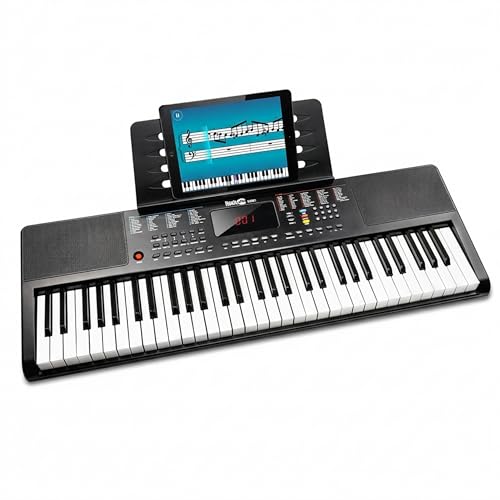
- 61 compact keys for beginner practice
- 200 sounds and 200 rhythms
- Includes lessons, note stickers, and stand
Best For: Beginners wanting a complete 61-key learning setup
Best Mini-Key Portable Pick
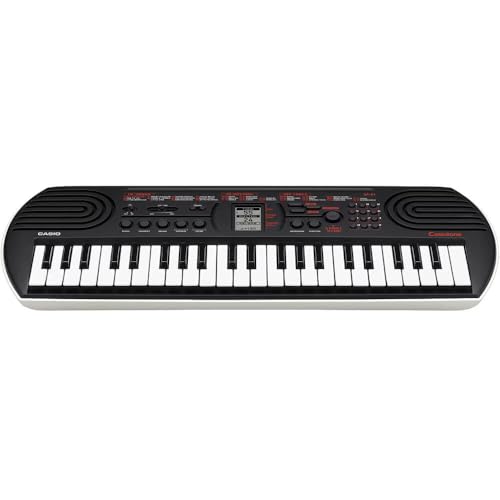
- 44 mini keys for easy playability
- 100 tones, 50 rhythms, and 10 songs
- Battery or AC-adapter powered
Best For: Young beginners and portable practice
Best Full-Size Learning Pick
Yamaha PSR-E283 61-Key Keyboard

- 61 full-sized keys for technique building
- Quiz Mode and Smart Chord learning tools
- Includes songs, music rest, and power adapter
Best For: Beginners learning on full-sized keys
Best Ultra-Portable Feature Set
Alesis Melody 32 Mini Keyboard

- 32 mini keys in a 1 kg portable design
- 300 voices and 300 rhythms
- USB or battery powered with lesson access
Best For: Mobile learners and older beginners wanting variety
Best Starter Pick

- 32 mini keys for smaller hands
- 100 tones and 50 rhythm patterns
- Battery powered with headphone output
Best For: Young beginners and portable practice
Best Complete Beginner Kit

- Includes stand, bench, headphones, and stickers
- 200 tones and 200 rhythm patterns
- 61 keys with pitch bend control
Best For: Beginners wanting an all-in-one setup
Best Folding Design

- Folds for travel and compact storage
- Touch-sensitive, slightly weighted 61 keys
- Bluetooth MIDI and up to 10-hour battery life
Best For: Travelers and compact-space musicians
Best Portable Starter
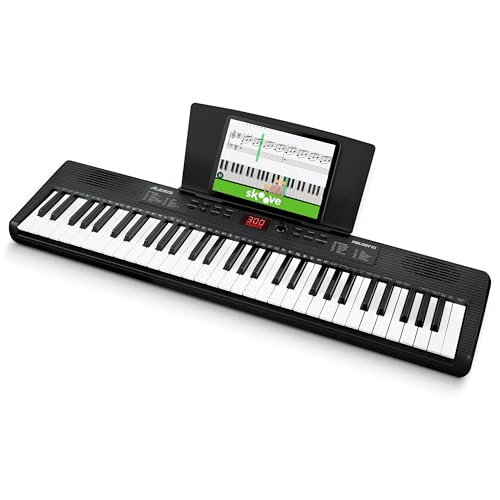
- 61 keys and only 6.6 pounds
- 300 sounds and 300 rhythms
- Includes lessons and USB-MIDI
Best For: Beginners who prioritize portability and guided practice
Best Full-Range Bundle
88-Key Semi-Weighted Digital Piano

- Full 88-key semi-weighted layout
- 1,000 timbres and 1,000 rhythms
- Includes stand, case, pedal, and headphones
Best For: Beginners wanting a complete full-range setup
Best Learning Bundle

- Three teaching modes with light-up keys
- 255 tones and 255 rhythms
- Includes stand, stool, headphones, and microphone
Best For: Learners seeking guided practice and a bundled setup
Best Beginner 61-Key Pick – RockJam RJ361 Compact Keyboard Piano
The RockJam RJ361 is a practical choice for shoppers comparing compact keyboard pianos with enough range for structured beginner practice. Its 61 keys, broad sound selection, learning accessories, and portable design make it suitable for both children and adults.
Best For: Beginners who want a full 61-key learning keyboard with built-in sounds and lessons.
Pros:
- 61-key compact design saves space while providing a useful playing range.
- Includes 200 sounds, 200 rhythms, sustain, vibrato, and record/playback functions.
- Comes with note stickers, Simply Piano lessons, a power supply, and sheet music stand.
- Includes a headphone jack and USB connectivity for flexible practice.
Cons:
- It is corded electric, so battery-powered portability is not listed.
- Its 2.84 kg weight is higher than that of the smaller mini-key models in this roundup.
Choose the RJ361 if learning support and a 61-key layout matter more than having the smallest possible keyboard. It offers a well-rounded starter package without requiring separate accessories for basic practice.
Best Mini-Key Portable Pick – Casio Casiotone SA-81
The Casio Casiotone SA-81 is one of the most travel-friendly compact keyboard pianos here, using 44 mini keys in a lightweight body. It combines straightforward beginner playability with built-in tones, rhythms, songs, and battery or adapter power.
Best For: Younger beginners and players who need a lightweight keyboard for home, school, or travel.
Pros:
- 44 mini keys are designed for easy playability and smaller hands.
- Offers 100 tones, 50 rhythms, and 10 built-in songs for exploration and practice.
- Layer mode, sustain, octave shift, scale tuning, and reverb provide extra creative control.
- Weighs about 3.7 pounds and supports battery or AC-adapter operation.
Cons:
- Mini keys provide less room than the full-sized 61-key keyboards.
- The supplied notes identify it as beginner-oriented, so advanced players may want a larger instrument.
The SA-81 makes the most sense when portability and approachable mini keys are priorities. Its built-in songs and flexible power options also make it convenient for casual practice away from a permanent setup.
Best Full-Size Learning Pick – Yamaha PSR-E283 61-Key Keyboard
The Yamaha PSR-E283 is a strong option for shoppers seeking compact keyboard pianos with full-sized keys and built-in learning tools. It pairs a portable 61-key format with quiz games, Smart Chord, built-in songs, and a dedicated Portable Grand Piano button.
Best For: Beginners developing full-sized-key technique while using guided practice features.
Pros:
- 61 full-sized keys provide a familiar layout for building playing technique.
- Quiz Mode offers two ear-training games for developing melodic memory.
- Smart Chord simplifies chord playing, while the Portable Grand Piano button quickly selects a piano sound.
- Includes built-in songs, a music rest, AC adapter, and support for batteries or corded power.
Cons:
- At 8.8 pounds and 37 inches wide, it is less compact than the mini-key options.
- The headphone connection is listed as 6.35mm, which may require an adapter for some headphones.
The PSR-E283 is a sensible middle ground for learners who want portability without giving up full-sized keys. Its practice games and chord assistance make it especially useful during the early stages of learning.
Best Ultra-Portable Feature Set – Alesis Melody 32 Mini Keyboard
The Alesis Melody 32 is a highly portable compact keyboard piano for beginners who value variety and flexible power. Its 32 mini piano-style keys, 300 voices, 300 rhythms, recording function, and included lesson subscriptions pack substantial practice features into a small body.
Best For: Older beginners and mobile players who want many sounds, rhythms, and computer-friendly lesson options.
Pros:
- Lightweight 1 kg design measures 22 inches wide and is easy to move.
- Includes 300 voices, 300 rhythms, 40 demo songs, accompaniment, and recording.
- Can run from the included USB cable or four AA batteries.
- Includes access to Melodics and Skoove lesson subscriptions, plus USB/MIDI connectivity.
Cons:
- Its 32 mini keys offer less range than the 44-key and 61-key alternatives.
- Four AA batteries are not included.
- It is not suitable for users under 12 according to the supplied notes.
The Melody 32 is best when compact size and feature breadth matter more than a traditional keyboard range. It is particularly appealing for players who want to experiment with computer-based lessons and USB/MIDI use.
Best Starter Pick – Casio Casiotone SA-51
The Casio Casiotone SA-51 is a practical choice for shoppers comparing compact keyboard pianos for young beginners or casual practice. Its 32 mini keys, battery-powered design, and lightweight 2.2-pound build make it easy to move and simple to start using.
Best For: Young beginners, portable practice, and creative play with varied instrument sounds.
Pros:
- 32 mini keys are designed for smaller hands.
- 100 built-in tones provide plenty of sound variety.
- Battery power and a compact design support portable use.
- Includes 50 rhythms, 10 songs, and a headphone jack.
Cons:
- The 32-key layout is more limited than a full-size beginner keyboard.
- Mini keys may not suit players seeking standard key dimensions.
Choose this Casio when portability and approachable controls matter more than an extended keyboard range. Dedicated tone buttons also make it easy for beginners to explore different sounds.
Best Complete Beginner Kit – RockJam RJ5061 61-Key
The RockJam RJ5061 stands out among compact keyboard pianos for beginners who want a more complete setup. It combines 61 keys with a stand, bench, headphones, note stickers, and access to Simply Piano lessons, reducing the need to buy accessories separately.
Best For: Beginners who want a ready-to-play home setup with private practice and guided lessons.
Pros:
- Includes a keyboard stand, bench, headphones, and note stickers.
- Offers 200 tones, 200 rhythms, and demo songs.
- Pitch bend wheel adds expressive control.
- Headphones support quieter practice in shared spaces.
Cons:
- The included setup is less compact than a small 32-key keyboard.
- It is designed for beginners rather than advanced players.
This kit is a strong value-oriented option when convenience is the priority. Its 61-key layout gives beginners more room to develop, while the included accessories make day-one setup straightforward.
Best Folding Design – Rhymo Folding 61-Key Piano
The Rhymo Folding Piano is an appealing option for shoppers seeking compact keyboard pianos with a full-size 61-key layout. It folds to a smaller form, includes a travel bag, and adds touch-sensitive keys, Bluetooth MIDI, and a rechargeable battery for flexible practice and music production.
Best For: Travelers, compact-apartment users, and players who need a portable 61-key instrument.
Pros:
- Folds to approximately 45 x 11 x 19 cm for easier transport.
- Provides 61 touch-sensitive, slightly weighted keys.
- Supports Bluetooth MIDI and USB-C charging and play.
- Offers up to 10 hours of battery operation and includes a travel bag.
Cons:
- At 3.63 kg, it is heavier than the smallest compact keyboards.
- The folding design may be less straightforward than a fixed keyboard for some setups.
This model makes the most sense when portability does not have to mean sacrificing a 61-key range. Its foldable construction and wireless MIDI support are particularly useful for travel, compact rooms, and connecting with electronic devices.
Best Portable Starter – Alesis Melody 61 MK4
The Alesis Melody 61 MK4 is a practical choice for shoppers comparing compact keyboard pianos for beginner practice, home use, or travel. Its 61 keys, 6.6-pound design, built-in lessons, and battery option make it easy to start learning without committing to a full-size setup.
Best For: Beginners who want a lightweight keyboard with plenty of sounds, lessons, and portable power.
Pros:
- Includes 300 sounds, 300 rhythms, 30 demo songs, and split/layer functions.
- Lightweight design can run on six AA batteries for mobile practice.
- Includes a music/tablet stand, power adapter, and access to Skoove and Melodics lessons.
- Offers headphone, sustain pedal, auxiliary, and USB-MIDI connections.
Cons:
- Uses 61 keys rather than a full 88-key layout.
- AA batteries are not included.
- Designed with beginners in mind, so advanced players may want more specialized features.
With its broad sound library and travel-friendly build, the Melody 61 MK4 is a well-rounded entry point for compact keyboard piano buyers. The USB-MIDI connection also leaves room to use compatible computer-based learning and recording software.
Best Full-Range Bundle – 88-Key Semi-Weighted Digital Piano
This 88-key digital piano is a strong option for shoppers seeking compact keyboard pianos with a full range and a beginner-ready package. Its semi-weighted keys aim to provide a more piano-like touch, while the included stand, case, headphones, and pedal reduce the need for separate accessories.
Best For: Beginner adults who want 88 keys, semi-weighted response, and a complete starter kit.
Pros:
- Full 88-key layout with semi-weighted keys for a more responsive playing feel.
- Includes 1,000 timbres, 1,000 rhythms, 150 demo songs, and dual-keyboard functionality.
- Starter bundle includes a stand, carrying case, headphones, sustain pedal, music rest, and key stickers.
- Supports USB-MIDI, Bluetooth, recording/playback, and USB-MP3 playback.
Cons:
- An 88-key instrument may be less convenient to move than a 61-key model.
- The keys are semi-weighted rather than fully weighted.
- The supplied notes do not specify the keyboard’s dimensions or weight.
This model makes sense when a full keyboard range matters more than maximum portability. It offers extensive sounds and connectivity while providing the accessories a new player typically needs to begin practicing immediately.
Best Learning Bundle – JIKADA 61-Key Keyboard
The JIKADA 61-Key Portable Electronic Keyboard Piano is worth considering among compact keyboard pianos for learners who want built-in teaching support and a generous accessory bundle. It combines light-up keys, three teaching modes, recording features, and a foldable-stool setup for practice at home.
Best For: Learners who want light-up keys, teaching modes, and included seating and accessories.
Pros:
- Three teaching modes, light-up keys, and note stickers support step-by-step learning.
- Provides 255 tones, 255 rhythms, 50 demo songs, and 61 keyboard percussion sounds.
- Bundle includes an X-shaped stand, foldable stool, headphones, microphone, music rest, and power adapter.
- Offers recording/playback, split, sustain, vibrato, transposition, and metronome functions.
Cons:
- Its listed dimensions are 36.4 by 13.4 by 3.5 inches, so it is not the smallest 61-key option.
- The product notes state that it is not intended for users under 12 years old.
- Connectivity details list auxiliary and 3.5mm connections rather than USB-MIDI.
The JIKADA stands out as a learning-focused package rather than a bare keyboard. Its included stool and stand add convenience, while the teaching modes and light-up keys can make early practice more approachable.
How We Picked the Best Compact Keyboard Pianos
We selected these Compact Keyboard Pianos to represent the main ways shoppers use portable keyboards: first lessons, casual home playing, songwriting, travel, and more complete beginner setups. We considered the number and type of keys, available tones and rhythms, learning features, portability, included accessories, and connection options.
Because compact keyboards vary widely, the right choice depends less on having the most features and more on matching the instrument to your needs. A 32-key model may be ideal for a child or a small desk, while a 61-key keyboard offers more room for two-handed practice. An 88-key option is better for players who want a more traditional piano range.
Quick Comparison
- Best for basic beginner practice: Look for 61 keys, lesson modes, a music rest, and simple controls.
- Best for children or limited spaces: Choose a lightweight 32-key mini keyboard with built-in sounds and rhythms.
- Best complete starter setup: A bundle with a stand, bench, headphones, or sustain pedal can reduce extra purchases.
- Best for portability: Consider compact dimensions, battery operation, folding construction, and a manageable weight.
- Best for piano-focused playing: Prioritize a larger key range, touch sensitivity, semi-weighted keys, and a sustain pedal.
Key Buying Factors for Compact Keyboard Pianos
Key Count and Feel
Key count affects both playing range and portability. Thirty-two keys are suitable for simple melodies, while 61 keys provide a useful middle ground for lessons and arrangements. Choose 88 keys if you need the full piano range. Also check whether the keys are touch-sensitive, semi-weighted, or lightweight. Touch sensitivity lets volume respond to playing force; weighted or semi-weighted keys feel closer to an acoustic piano but can add size and cost.
Learning Features and Sounds
Beginners may benefit from lesson modes, built-in songs, teaching modes, recording, metronomes, and split or dual-keyboard functions. Multiple tones and rhythms are useful for exploration, but a large sound count should not outweigh clear controls and a good piano tone.
Power, Connections, and Accessories
Check whether the keyboard includes a power adapter and whether it can run on batteries. Headphone support is valuable for quiet practice. USB or Bluetooth MIDI can connect the keyboard to learning apps and music software, while a sustain-pedal input improves piano technique. A stand, bench, music rest, or carrying case can make a bundle more practical, but confirm exactly what is included.
Who Should Buy Which Compact Keyboard Pianos?
New learners should focus on a 61-key model with teaching tools and straightforward controls. Children and casual players may prefer a smaller 32-key keyboard that is easy to carry and store. Home musicians and songwriters should look for touch-sensitive keys, recording or MIDI connectivity, and a broad selection of sounds. Serious piano learners should lean toward 88 keys and semi-weighted or weighted action, even if the instrument is less compact. Finally, traveling players should prioritize low weight, folding or portable construction, battery support, and durable accessories.