Traveling with a cello requires more than choosing a lightweight instrument. The right setup must protect the body, bridge, fittings, and finish while remaining manageable on commutes, lessons, rehearsals, and flights.
We selected 10 options spanning padded gig bags, backpack-style cases, acoustic beginner sets, silent electric cellos, and compact fractional-size models. Use the guide below to match your instrument and travel routine with the right level of protection and portability.
Best 10 Cellos for Travel Picks for 2026
Best Padded Protection

- 20 mm high-density foam padding
- Adjustable backpack straps and grab handles
- Front accessory and rear music pockets
Best For: 4/4 players prioritizing padding and organized carrying
Best Complete Beginner Set

- Includes bag, bow, bridge, and rosin
- Basswood body with maple scroll
- Steel strings and beginner-friendly 3/4 size
Best For: Beginners needing a ready-to-play 3/4 cello package
Best Lightweight Everyday Case

- 12 mm high-density foam padding
- Water-resistant nylon exterior
- Backpack straps with bow and music storage
Best For: Routine 4/4 transport and short-distance travel
Best for Silent Practice on the Go

- Headphones enable quiet practice
- Includes soft case, bow, rosin, and aux cable
- Adjustable output for headphones or amplifiers
Best For: Advanced players traveling with an electric cello setup
Best Cello Case Add-On
Bam Ergonomic Backpack for Cello Case

- Attaches to compatible BAM cases via D-rings
- Backpack straps enable hands-free carrying
- Includes a music pouch and weighs 800 g
Best For: BAM case owners seeking a backpack-style travel add-on
Best 1/4-Size Travel Bag
Gator Lightweight Cello Travel Bag

- Sized for 1/4 cellos
- Includes backpack straps, handles, and bow storage
- Durable nylon with YKK zippers and limited lifetime warranty
Best For: 1/4-size cello players traveling regularly
Best Foldable Electric Cello
Ktaxon 4/4 Silent Travel Cello

- Folds to roughly half its size
- Supports headphones and amplifier connection
- Includes a padded bag and playing accessories
Best For: Players needing a portable electric cello for travel or quiet practice
Lightweight Pick
- Approximately 2-pound lightweight design
- Foam padding with rainproof, water-repellent fabric
- Backpack straps, handle, and two pockets
Best For: 1/8-size cello players seeking easy everyday transport
Everyday Travel Choice
- 12mm high-density foam padding
- Waterproof 600D nylon exterior
- Pockets for bow, music, and accessories
Best For: 1/4-size cello players traveling locally and regularly
Organized Small-Size Option

- 2.3-pound design with adjustable backpack straps
- 12mm padding and non-abrasive lining
- Dedicated bow, accessory, and music pockets
Best For: 1/8-size cello players needing organized short-trip protection
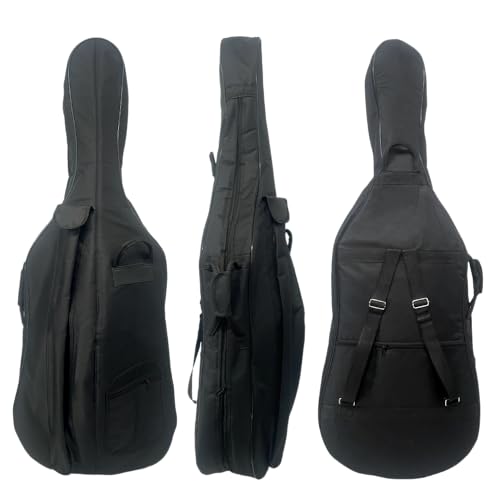
Best Padded Protection – 4/4 Nylon Cello Gig Bag
For musicians comparing cellos for travel accessories, this full-size gig bag emphasizes padding, carrying comfort, and organized storage. Its 20 mm foam interior, nylon exterior, adjustable backpack straps, and protective feet make it a practical option for routine transport.
Best For: 4/4 cello players who want substantial padding and backpack-style carrying for everyday travel.
Pros:
- Approximately 20 mm of high-density foam padding.
- Adjustable shoulder straps and grab handles support multiple carrying styles.
- Three compartments include front accessory and rear sheet-music storage.
- Nylon exterior and protective feet are designed for durable use.
Cons:
- Designed for 4/4 cellos, so it is not intended for smaller instruments.
- At about 2.2 kg, it is not the lightest travel case option.
This bag is a strong fit when padding and storage matter more than minimizing case weight. Confirm that your instrument is full-size before ordering.
Best Complete Beginner Set – Ktaxon 3/4 Acoustic Cello
For shoppers seeking cellos for travel and learning, the Ktaxon 3/4 set combines the instrument with a portable bag, bow, bridge, and rosin. Its basswood construction, steel strings, and included accessories provide a ready-to-start package for younger players or beginners.
Best For: Beginners and children who need a 3/4 cello package with essential accessories and a portable bag.
Pros:
- Includes the cello, portable bag, bow, bridge, and rosin.
- 3/4 size can suit players who do not need a full-size instrument.
- Basswood body and maple scroll are selected for a resonant, durable build.
- Steel strings are intended to help reduce finger fatigue.
Cons:
- The included bag has 5 mm cotton padding, less than heavily padded gig bags.
- Its 3/4 size is not suitable for players requiring a full-size cello.
- The manufacturer warranty is listed as 30 days.
This is best viewed as a convenient starter package rather than a specialized protective travel case. Check the player’s required instrument size and allow for appropriate care during transport.
Best Lightweight Everyday Case – MIVI 4/4 Cello Gig Bag
Among cellos for travel accessories, the MIVI soft case is geared toward daily use and short-distance trips. It combines 12 mm high-density foam, a water-resistant nylon exterior, adjustable backpack straps, and dedicated storage for music and accessories.
Best For: 4/4 players who need a lightweight, water-resistant case for routine transport and short trips.
Pros:
- 12 mm high-density foam provides lightweight instrument padding.
- Water-resistant materials add protection against light moisture.
- Adjustable backpack straps and double-stitched handles support easy carrying.
- Bow holder, rear music pocket, and front accessory compartment improve organization.
Cons:
- Its 12 mm padding is thinner than more heavily padded cases.
- It is positioned for daily and short-distance travel rather than maximum-impact protection.
- Designed around 4/4 cello sizing and may not fit every instrument shape.
The MIVI makes sense for commuters, lessons, rehearsals, and other regular trips where lower weight and storage are priorities. For demanding travel, compare its thinner padding with a more protective case.
Best for Silent Practice on the Go – Cecilio 4/4 Electric Cello
For musicians considering cellos for travel practice or portable performance, this full-size electric cello offers a different approach from a traditional acoustic instrument. It includes a lightweight soft case, headphones, aux cable, bow, and rosin, with adjustable output for headphone or amplifier use.
Best For: Advanced players and professionals who want a full-size electric cello for quiet practice, travel, or outdoor performances.
Pros:
- Headphones support silent practice sessions.
- Adjustable output works with headphones or amplifiers.
- Includes a padded soft case, bow, rosin, and aux cable.
- Ebony fittings and a hand-carved maple body provide a premium-oriented design.
Cons:
- It requires compatible power or audio equipment for its electric features.
- The included soft case is designed for portability but is not described with a specific padding thickness.
- Its full-size dimensions may be less convenient for compact travel.
This model is most compelling when silent practice and amplified versatility are more important than traditional acoustic simplicity. The included accessories make it travel-ready, but verify that your intended setup accommodates a full-size instrument.
Best Cello Case Add-On – Bam Ergonomic Backpack for Cello Case
For musicians comparing cellos for travel, the Bam Ergonomic Backpack is a lightweight carrying accessory designed to attach to compatible BAM cello, guitar, and bari sax cases using their D-rings. Its backpack-style design adds hands-free portability without replacing the instrument case itself.
Best For: BAM case owners who want a dedicated backpack carrying option for travel.
Pros:
- Backpack straps support hands-free carrying.
- Attaches to compatible cases through integrated D-rings.
- Includes an integrated music pouch.
- Weighs approximately 2 lb. 10 oz. (800 g).
Cons:
- Designed for compatible BAM cases rather than as a standalone cello case.
- The supplied notes do not specify padding or additional storage beyond the music pouch.
This is a focused travel accessory, not a complete instrument carrier. Confirm that your case has the required D-rings and is among the compatible BAM models before buying.
Best 1/4-Size Travel Bag – Gator Lightweight Cello Travel Bag
Gator Cases Lightweight Band and Orchestra Travel Bag for 1/4 Cello; (GBO-CELLO14)
Check Price On AmazonAmong cellos for travel accessories, the Gator GBO-CELLO14 is a purpose-built bag for 1/4-size cellos. Its durable nylon exterior, backpack straps, reinforced handles, bow storage, and YKK zippers make it suited to regular transit and carrying.
Best For: 1/4-size cello players who need a dedicated bag for daily travel and transport.
Pros:
- Designed specifically for 1/4-size cellos.
- Backpack straps and reinforced handles provide carrying flexibility.
- Front bow storage and a utility pocket add practical organization.
- Uses durable nylon and authentic YKK zippers; includes a limited lifetime warranty.
Cons:
- Not suitable for full-size or other cello sizes based on the listed 1/4-size design.
- The supplied notes do not specify interior padding thickness or weather resistance.
The Gator is a straightforward choice when size compatibility is the priority. Verify that your instrument is 1/4 size before ordering, then consider whether its storage and carrying features match your routine.
Best Foldable Electric Cello – Ktaxon 4/4 Silent Travel Cello
For shoppers seeking cellos for travel, the Ktaxon Foldable Electric Cello combines a full-size 4/4 instrument with a collapsible Z-style frame. The frame folds to about half its size, while headphone and auxiliary connections support silent practice, amplification, and convenient use on the move.
Best For: Adult beginners and advanced players who want a foldable electric cello for travel, practice, or performance.
Pros:
- Foldable frame reduces the cello’s size by 50% for backpacks and car trunks.
- Headphone output supports quiet practice.
- Aux cable enables connection to an amplifier.
- Includes a fitted 5 mm cotton-padded Oxford cloth bag, bow, headphones, rosin, and cable.
Cons:
- Requires a 9V battery, which is not included.
- It is an electric cello, so its use and sound profile differ from a traditional acoustic cello.
- The full-size 4/4 format may still require careful packing despite the folding frame.
This is the most travel-oriented instrument in the group, especially for players who value compact storage and silent practice. Remember to obtain the required 9V battery and confirm that an electric cello suits your playing needs.
Lightweight Pick – Compact 1/8 Cello Travel Bag
For smaller instruments, this 1/8-size bag is a practical option among cellos for travel. Its lightweight nylon construction, foam padding, water-repellent fabric, and backpack straps make it suited to carrying a student cello between lessons or rehearsals.
Best For: 1/8-size cello players who prioritize light carrying weight and basic organized storage.
Pros:
- Weighs approximately 2 pounds for easier transport.
- Heavy-duty rainproof fabric and high-density foam padding provide everyday protection.
- Includes backpack straps, a top handle, and two storage pockets.
Cons:
- Only sized for a 1/8 cello.
- Offers two compartments, so storage is more limited than some travel bags.
- The listed manufacturer warranty is one month.
This bag keeps the focus on portability and straightforward protection. Confirm your cello’s size before ordering, especially if you need space for several accessories.
Everyday Travel Choice – 1/4 Cello Gig Bag
This 1/4-size MIVI gig bag is designed for practical daily use and short-distance travel. It combines 12mm high-density foam, a 600D nylon exterior, adjustable backpack straps, and several pockets for carrying a cello and essential accessories.
Best For: 1/4-size cello players who need padded protection and organized storage for lessons, rehearsals, or local travel.
Pros:
- 12mm high-density foam padding and a non-abrasive lining help protect the instrument.
- Waterproof design and durable 600D nylon exterior suit regular travel use.
- Includes adjustable backpack straps, double-stitched grab handles, and multiple pockets for a bow, music sheets, and accessories.
Cons:
- Limited to 1/4-size cellos and compatible models.
- At 2.8 pounds, it is heavier than the listed 1/8-size MIVI version.
- Its stated focus is daily use and short-distance travel rather than heavy-duty transport.
With substantial padding and useful storage, this is a balanced choice for routine travel. Check the dimensions and cello fit before purchasing.
Organized Small-Size Option – 1/8 Cello Travel Gig Bag
For young players using a 1/8 cello, this MIVI soft case offers a useful combination of portability and organization. The 12mm foam padding, water-resistant nylon shell, adjustable backpack straps, and dedicated pockets make it well suited to lessons and short trips.
Best For: 1/8-size cello players who want a lightweight travel bag with dedicated storage for music and accessories.
Pros:
- Weighs 2.3 pounds and includes adjustable backpack straps and a leather handle.
- 12mm high-density foam and a non-abrasive lining add padded protection.
- Separate bow, accessory, and rear music-sheet pockets improve organization.
Cons:
- Designed specifically for 1/8-size cellos.
- Listed as water resistant rather than waterproof.
- Intended for daily use and short-distance travel, not described as a hard case.
This is a practical match for smaller cellos when carrying comfort and compartmentalized storage matter. Verify the case dimensions against your instrument before ordering.
How We Picked the Best Cellos for Travel
We focused on the features that matter most away from home: instrument compatibility, padding, carrying comfort, storage, portability, and practical protection. The selection includes cases for full-size and fractional cellos, as well as electric and foldable instruments that can be easier to transport in crowded or noise-sensitive settings.
Because a case cannot compensate for an incorrect fit, size accuracy was a priority. We also considered whether each option supports backpack carrying, includes useful accessory pockets, or offers a more compact design for students, commuters, and frequent travelers.
Quick Comparison
| Option type | Best suited to | Main advantage | Watch for |
|---|---|---|---|
| Padded gig bag | Everyday local travel | Lightweight carrying and storage | Less impact protection than a hard case |
| Backpack-style case | Walking, cycling, and transit | Hands-free portability | Straps and padding vary by model |
| Electric or foldable cello | Quiet practice and compact transport | Reduced sound and travel footprint | Requires power or amplification equipment |
| Fractional-size cello | Young players and smaller instruments | Better fit and easier handling | Not suitable for a full-size cello |
Key Buying Factors for Cellos for Travel
Correct Size and Fit
Check whether you need a 4/4, 3/4, 1/4, or 1/8 size before comparing padding or pockets. A loose instrument can shift inside a case, while an overly tight fit may stress the cello or bridge. Confirm body, neck, endpin, and bow-compartment dimensions whenever measurements are available.
Protection and Padding
Thicker foam generally provides better protection against bumps, but it can also increase weight and bulk. For air travel or rough baggage handling, consider the limits of a soft case and look for reinforced construction, secure closures, and a snug interior. For daily lessons and car travel, a lighter padded bag may be more convenient.
Carrying Comfort and Storage
Adjustable backpack straps distribute weight better than a single handle during longer walks. Look for padded, stable straps and a handle that lets you lift the case safely. Exterior pockets are useful for sheet music, rosin, tuners, cables, and personal items, but avoid overloading them.
Acoustic Versus Electric Designs
Acoustic cellos offer the traditional playing experience but usually require more room and sound control. Electric and foldable designs can suit apartment practice, rehearsal travel, or musicians who need a smaller transport profile. Check included accessories and connection requirements before buying.
Who Should Buy Which Cellos for Travel?
Choose a padded full-size gig bag if you already own a 4/4 cello and need an affordable option for lessons, rehearsals, or routine ground travel. A backpack-style case is the better choice for commuters who regularly walk or use public transportation.
Choose a fractional-size case or cello when the player uses a 3/4, 1/4, or 1/8 instrument; correct fit is more important than selecting the thickest general-purpose bag. Beginners may prefer a complete acoustic set, while apartment players and frequent practice travelers should consider a silent or foldable electric model.
For flights or unusually demanding travel, compare the soft case’s construction with airline requirements and consider additional protection rather than assuming a lightweight bag is sufficient.