The best camera gimbals make handheld footage smoother, more controlled, and easier to produce. This roundup compares ten options for smartphones, mirrorless cameras, DSLRs, and hybrid shooting setups.
Whether you prioritize lightweight travel, AI subject tracking, payload capacity, or a complete creator kit, use the guide below to match features with the way you shoot.
Best 10 Camera Gimbals Picks for 2026
Best Pro Camera Gimbal

- 3 kg payload for mirrorless and DSLR setups
- Native vertical shooting with a quick horizontal plate switch
- Teflon-coated axes and 12-hour battery
Best For: Creators using larger cameras and lenses
Best Compact Phone Gimbal

- Pocket-friendly foldable 0.79-pound design
- Detachable remote reaches up to 32.81 feet
- 11-hour battery with AI tracking and gesture control
Best For: Travelers and beginner smartphone creators
Best Versatile Camera Gimbal

- Works with phones, action cameras, and mirrorless cameras
- Built-in AI tracking requires no app
- Includes extension pole, fill light, case, and adapters
Best For: Creators using multiple camera types
Best Phone Gimbal for Tracking

- Native tracking with integrated audio and lighting
- 360-degree pan rotation for flexible movement
- Built-in extension rod, tripod, and 10-hour battery
Best For: Vloggers and phone users filming themselves
Smart Tracking Pick

- Built-in AI tracking sensor
- Supports up to 2.5 kg
- Quick vertical-shooting setup
Best For: DSLR and mirrorless users wanting tracking and higher payload capacity
Travel-Friendly Choice
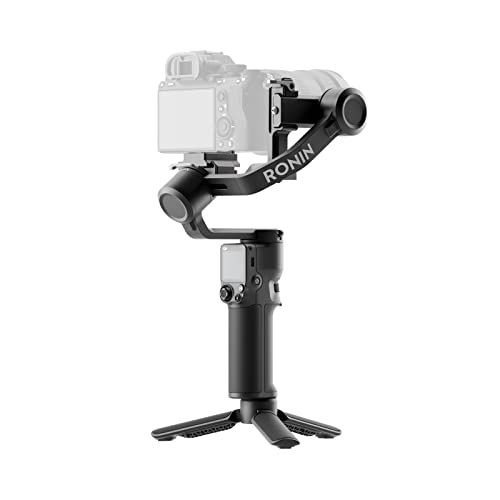
- Lightweight 795 g design
- Supports up to 2 kg
- Native vertical shooting
Best For: Traveling creators using compatible camera and lens combinations
Multi-Device Kit

- Supports cameras, phones, and action cameras
- Built-in AI tracking and fill light
- Includes case and extension rod
Best For: Creators using multiple device types and lighter camera setups
Best Premium Upgrade

- Built-in intelligent subject tracking
- Automated locks and fine-tuning knobs
- 14-hour standby with extensive accessories
Best For: Professional camera operators seeking advanced automation and a complete kit
Best Lightweight DSLR Option

- 3 kg payload in a lightweight design
- Native vertical shooting for social content
- Up to 16 hours of battery life
Best For: DSLR and mirrorless creators prioritizing portability and long runtimes
Best Multi-Device Pick

- Works with cameras, phones, and action cameras
- 18-meter AI tracking with 360-degree follow
- Detachable handle doubles as a remote control
Best For: Solo creators switching between multiple camera and device types
Best Pro Camera Gimbal – DJI RS 4
The DJI RS 4 is a strong choice for creators who need a full-size camera gimbal for mirrorless cameras and DSLRs. Its 3 kg payload, Teflon-coated arms, extended tilt axis, and native vertical-shooting plate make it practical for demanding solo video setups.
Best For: Mirrorless and DSLR users creating polished vertical or horizontal video.
Pros:
- Supports camera and lens combinations up to 3 kg.
- Switches efficiently to vertical shooting without an additional accessory.
- Teflon-coated axes help with smoother, more precise balancing.
- Includes multiple control modes, a 1.8-inch screen, and a 12-hour battery.
Cons:
- At 1.55 kg, it is substantially heavier than phone-focused gimbals.
- It is not water resistant.
- The DJI Ronin app must be downloaded from DJI’s official website rather than Google Play.
The RS 4 is best suited to creators who prioritize payload capacity, balancing control, and camera-system flexibility over compactness. The optional BG70 grip can extend runtime to 29.5 hours, but it is sold separately.
Best Compact Phone Gimbal – Hohem iSteady X3 SE
The Hohem iSteady X3 SE is a compact phone camera gimbal for travelers, vloggers, and first-time users. Its foldable 0.79-pound design, detachable remote, and app-based tracking features make smooth smartphone filming easy to manage on the go.
Best For: Smartphone vloggers, travelers, and beginners who want a portable stabilizer.
Pros:
- Foldable design fits easily into a travel kit.
- Detachable magnetic remote works from up to 32.81 feet away.
- iSteady 8.0 provides three-axis stabilization for dynamic movement.
- Offers AI tracking, gesture control, and up to 11 hours of operation.
Cons:
- Its 0.66-pound payload is limited to smartphones and similarly light devices.
- Advanced shooting features depend on the Hohem Joy app.
- It does not provide the camera-system payload or controls of a full-size gimbal.
For casual creators, the iSteady X3 SE balances portability and useful automation well. The included tripod and storage pouch also make it a convenient starter kit for social videos and travel footage.
Best Versatile Camera Gimbal – FeiyuTech SCORP Mini 2
The FeiyuTech SCORP Mini 2 is a flexible camera gimbal for creators who use more than one type of device. It supports smartphones, action cameras, compact cameras, mirrorless cameras, and vlogging cameras, while built-in AI tracking works without an app.
Best For: Beginners and content creators switching between phones, action cameras, and compact camera systems.
Pros:
- One stabilizer supports phones, action cameras, compact cameras, and mirrorless cameras.
- Built-in AI face tracking and gesture control do not require an app.
- Quick-release hardware supports rapid horizontal-to-vertical changes.
- Includes a carrying case, extension pole, mini fill light, tripod, and adapters.
Cons:
- Its 1.9-pound weight is less travel-friendly than a phone-only gimbal.
- The 2.7-pound payload is below that of the DJI RS 4.
- It is not water resistant.
The SCORP Mini 2 stands out when flexibility matters more than having the lightest possible setup. Its broad device compatibility and complete accessory kit reduce the need to buy separate stabilizers for different cameras.
Best Phone Gimbal for Tracking – DJI Osmo Mobile 8
The DJI Osmo Mobile 8 is a phone camera gimbal built around hands-free shooting and easy framing. Native tracking, integrated audio and lighting capabilities, 360-degree pan rotation, and a built-in extension rod make it well suited to vlogging, live streaming, and everyday videos.
Best For: Phone users who want tracking, flexible angles, and an integrated selfie-stick tripod design.
Pros:
- Combines native tracking with audio reception and lighting features.
- Provides 360-degree horizontal rotation for moving subjects and creative shots.
- Built-in extension rod and tripod support group shots and low-angle filming.
- Offers three-axis stabilization and up to 10 hours of battery life.
Cons:
- It is designed for cellphones rather than interchangeable-lens cameras.
- The DJI Mimo app must be downloaded from DJI’s official website instead of Google Play.
- Some tracking, audio, and lighting capabilities rely on the included multifunctional module and compatible setup.
With its 370-gram body and built-in shooting tools, the Osmo Mobile 8 is a convenient choice for creators who want more than basic stabilization without carrying a larger camera rig.
Smart Tracking Pick – FeiyuTech SCORP 2
For camera gimbals with built-in subject tracking, the FeiyuTech SCORP 2 combines 3-axis stabilization with an integrated AI tracking sensor. Its 2.5 kg payload, touchscreen, and vertical-shooting setup make it a flexible choice for DSLR and mirrorless camera users.
Best For: DSLR and mirrorless shooters who want built-in tracking, vertical filming, and multiple camera-control options.
Pros:
- Integrated AI tracking works without an additional tracking accessory.
- Supports camera setups weighing up to 2.5 kg.
- Offers quick vertical shooting through its upgraded mounting system.
- Includes a 1.3-inch touchscreen and multifunction control knob.
Cons:
- At 1,070 g, it is heavier than the DJI RS 3 Mini.
- It is not water resistant.
- Some advanced functions require the Feiyu SCORP app.
The SCORP 2 stands out when integrated tracking and high payload capacity matter more than minimizing weight. Bluetooth and cable control add flexibility, while the touchscreen and app expand its control options.
Travel-Friendly Choice – DJI RS 3 Mini
The DJI RS 3 Mini is one of the more portable camera gimbals for compatible mirrorless and DSLR setups. At 795 g, it is designed for easier extended handheld use while still supporting camera-and-lens combinations up to 2 kg.
Best For: Travelers and creators who want a lightweight gimbal with native vertical shooting and Bluetooth shutter control.
Pros:
- Lightweight 795 g design is convenient for travel and longer shoots.
- Supports payloads up to 2 kg.
- Native vertical shooting makes social-media filming straightforward.
- Includes a 1.4-inch full-color touchscreen.
Cons:
- It is not water resistant.
- Full functionality requires the DJI Ronin app for activation and updates.
- The payload is lower than the FeiyuTech SCORP 2.
Choose the RS 3 Mini if portability is a priority. Its stabilization algorithm, vertical mode, and Bluetooth shutter control create a practical feature set for travel and everyday video, provided your setup stays within the 2 kg limit.
Multi-Device Kit – FeiyuTech SCORP Mini 2
The FeiyuTech SCORP Mini 2 Kit is a versatile option among camera gimbals, supporting mirrorless cameras, smartphones, action cameras, and video cameras. It combines 3-axis stabilization with built-in AI tracking, a fill light, extension rod, and carrying case.
Best For: Creators who switch between cameras, phones, and action cameras and want a broad accessory bundle.
Pros:
- Supports four device categories with a payload up to 1.2 kg.
- Built-in AI tracking can follow faces or objects without connecting to the app.
- Includes a wireless fill light, extension rod, case, tripod, and device adapters.
- Weighs 852 g and has a 1.3-inch touchscreen.
Cons:
- The 1.2 kg payload is lower than the other gimbals in this roundup.
- Its broader device compatibility may be less useful for users with only a heavier DSLR setup.
- It is not specified as water resistant.
The SCORP Mini 2 Kit is a strong fit for mixed-device creators who value included accessories and built-in tracking. Its lower payload makes it better suited to lighter camera combinations than demanding DSLR or lens setups.
Best Premium Upgrade – DJI RS 5 Combo
The DJI RS 5 Combo is a feature-rich choice for camera gimbals when you want automated tracking, quick setup, and smooth balancing for heavier professional camera configurations. Its included tracking module, electronic briefcase handle, tripod, and battery grip make it a comprehensive kit for demanding shoots.
Best For: Videographers who want advanced tracking, fast setup, and extended operation with compatible Canon, Sony, Nikon, or Fujifilm cameras.
Pros:
- Enhanced Intelligent Tracking can follow people, vehicles, or pets from the touchscreen.
- Fine-tuning knobs, Teflon interlayers, and automated axis locks simplify balancing and setup.
- Up to 14 hours of standby time with one-hour charging.
- Includes an electronic briefcase handle, quick-open tripod, tracking module, and carrying case.
Cons:
- Its 1.62 kg weight may be less convenient for extended handheld use.
- The DJI Ronin app is not available through Google Play and must be downloaded from DJI’s website.
The RS 5 Combo stands out among camera gimbals for its automation and included accessories. Choose it if workflow speed, tracking, and professional balancing features matter more than minimizing kit weight.
Best Lightweight DSLR Option – ZHIYUN Weebill 3E
The ZHIYUN CINEPEER Weebill 3E is a practical option among camera gimbals for DSLR and mirrorless users who need a portable stabilizer with a 3 kg tested payload. Its native vertical mode and long battery life are especially useful for social content and full-day shoots.
Best For: Creators using compatible DSLR or mirrorless cameras who want lightweight handling, vertical shooting, and up to 16 hours of battery life.
Pros:
- Supports a tested payload of up to 3 kg while weighing about 1.05 kg.
- Native vertical shooting works without dismantling the gimbal or adding accessories.
- Bluetooth shutter control supports recording and photo functions after pairing.
- Up to 16 hours of battery life supports extended shooting sessions.
Cons:
- The package includes only a Panasonic control cable; other brands require additional cables.
- The sling grip and wrist rest for Sling Mode 2.5 are sold separately.
The Weebill 3E balances portability and payload capacity well for camera gimbals. Confirm camera and control-cable compatibility before buying, particularly if you use a Canon, Sony, or other non-Panasonic model.
Best Multi-Device Pick – FeiyuTech SCORP Mini-3-Pro
The FeiyuTech SCORP Mini-3-Pro is one of the more flexible camera gimbals for creators who switch between mirrorless cameras, compact cameras, smartphones, and action cameras. Its AI tracking, detachable remote handle, and modular mounting system support solo filming from multiple angles.
Best For: Solo content creators who use several device types and want remote operation, subject tracking, and quick horizontal-to-vertical switching.
Pros:
- Four-in-one compatibility supports mirrorless, compact, smartphone, and action cameras.
- AI Tracking 4.0 offers an 18-meter tracking distance and 360-degree follow capability.
- Detachable handle can function as a remote control for flexible filming.
- Supports up to 2 kg and includes adapters, a tripod, smartphone holder, and lens holder.
Cons:
- Its 2 kg payload is lower than the Weebill 3E’s stated 3 kg capacity.
- The unit is not water resistant.
For camera gimbals used across phones, action cameras, and interchangeable-lens setups, the SCORP Mini-3-Pro offers unusual versatility. It is a strong fit for solo shooters who value tracking and remote control over maximum payload capacity.
How We Picked the Best Camera Gimbals
We focused on the factors that most affect real-world shooting: stabilization performance, payload capacity, camera compatibility, controls, battery practicality, portability, and available tracking features. The selection includes dedicated phone gimbals, compact camera models, full-size DSLR and mirrorless stabilizers, and combination kits with accessories such as AI trackers and fill lights.
Because camera bodies and lenses vary significantly, compatibility should be confirmed before buying. A gimbal’s stated payload is only part of the equation; balance, lens length, accessories, and camera-control support also influence performance.
Quick Comparison
| Best For | Recommended Type | What to Prioritize |
|---|---|---|
| Smartphone creators | Three-axis phone gimbal | Foldable design, tracking, app features |
| Travel mirrorless kits | Compact camera gimbal | Low weight, quick balancing, adequate payload |
| Professional camera rigs | Full-size gimbal | Payload headroom, motor strength, camera controls |
| Solo creators | Gimbal with AI tracking | Reliable subject tracking and remote operation |
Key Buying Factors for Camera Gimbals
Camera and Payload Compatibility
Start with your complete setup rather than the camera body alone. Include the lens, battery, memory card, cage, microphone, monitor, and any other accessories. Choose a model with some payload reserve so the motors do not work at their limit.
Stabilization and Shooting Modes
Three-axis stabilization is the standard for smoothing pan, tilt, and roll movement. Look for useful modes such as follow, lock, POV, and vortex modes if you plan to create dynamic transitions or controlled tracking shots.
Tracking and App Support
AI tracking can help solo operators keep a face or subject centered while walking, presenting, or filming products. Check whether tracking requires a phone app, an external sensor, or a separate accessory, and confirm that it works with your preferred camera or phone.
Balance, Controls, and Battery Life
Fast balancing, a comfortable grip, a responsive screen, and direct camera controls can matter more than extra modes. For long shoots, compare operating time, charging options, and whether the gimbal can power or control compatible cameras.
Portability
Compact models are easier to carry and faster to deploy, while larger gimbals generally offer more payload capacity and control. Consider how often you will travel, whether you need a foldable design, and the size of your storage or transport case.
Who Should Buy Which Camera Gimbals?
Phone-first creators should choose a dedicated smartphone gimbal with three-axis stabilization and convenient tracking or app controls. Travel and everyday mirrorless shooters will usually prefer a lightweight model that balances quickly without sacrificing enough payload for their standard lens.
Solo presenters and social video creators should prioritize AI tracking, remote control, and optional lighting. Professional filmmakers or DSLR users should select a full-size gimbal with generous payload headroom, dependable motors, and broad camera compatibility. If you use several camera bodies, buying for the heaviest complete setup provides greater flexibility and reduces the need to upgrade later.