The best audio compressors help control dynamics, add punch, and give recordings a more polished, consistent sound. The right choice depends on your sources, workflow, channel count, and preferred compression character.
This roundup compares 10 hardware options, from affordable rack processors and dual-channel units to studio-focused FET, optical, VCA, and diode-bridge designs.
Best 10 Audio Compressors Picks for 2026
Tour-Ready Dynamics

- Compressor, expander/gate, and sidechain insert
- Separate LED metering for fast setup
- Single-rack-space analog design
Best For: Portable, tour, and studio rack systems
All-in-One Channel Control
Behringer Composer Pro-XL MDX2600

- Two-channel compressor, limiter, and gate
- Includes a de-esser
- Aimed at production, mixing, and mastering
Best For: Two-channel studio dynamics processing
Classic FET Character

- Single-channel discrete compressor
- CineMag USA transformers
- Supports all-buttons-in mode
Best For: Professional setups seeking classic-style compression
Vintage FET Flexibility

- Classic FET-style design modeled on 1176 revisions
- Selectable 4:1 to 20:1 ratios
- Discrete path with Class-A amplifier and Midas transformers
Best For: Hands-on professional FET-style compression
Tube Tone Specialist
Warm Audio WA-2A Optical Compressor

- Single-channel tube optical compressor
- All-discrete path with custom photocell
- Cinemag transformers and 2-year warranty
Best For: Vocal and voice-recording chains needing tube optical compression
Flexible Voice Shaper

- Selectable tube and solid-state control
- Variable compressed/uncompressed blend
- Switchable +4 dBu and -10 dBV modes
Best For: Single-channel analog setups needing flexible compression voices
Dual-Channel Control Hub
Rupert Neve Shelford Diode Bridge Compressor
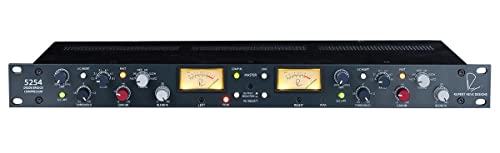
- Two-channel diode-bridge compression
- Sidechain highpass filter and inserts
- Onboard parallel processing with stereo linking
Best For: Stereo and complex analog compression chains
Warm Audio Studio Choice
Bus-Comp Stereo VCA Compressor

- Stereo VCA compression with five ratios
- Sidechain input filter included
- CineMag transformers and metal construction
Best For: Stereo bus compression for studio mixing and recording
ART Flexible Dynamics Rack
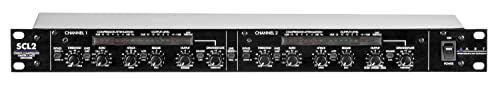
- Dual-channel or linked stereo operation
- Compression, limiting, expansion, and gating
- Balanced XLR and TRS connectivity
Best For: Versatile rack-based studio or live-sound dynamics control
Modern Dual-Channel Pick
Professional Compressor with Gate

- Dual-channel Overeasy VCA compression
- Built-in noise gate and LED monitoring
- Sidechain insert with XLR/TRS I/O
Best For: Studio, live, streaming, and vocal-processing setups
Tour-Ready Dynamics – dbx 266xs Compressor/Gate
The dbx 266xs is a practical choice among audio compressors when you need two-channel dynamics control for live rigs, portable systems, or studio work. Its compressor, expander/gate, and sidechain insert support tasks ranging from smoothing uneven levels to tightening mixes.
Best For: Portable, tour, and studio setups needing flexible compression and gating.
Pros:
- Can smooth uneven levels, add guitar sustain, fatten drums, and tighten mixes.
- Program-adaptive expander/gates use updated timing algorithms for smooth release characteristics.
- Separate LED displays show gain reduction, compression threshold, and gate threshold for quick setup.
- Single-rack-space, 19-inch design suits rack-based systems.
Cons:
- Analog, corded-electric operation may be less convenient for compact digital setups.
- At 6.6 pounds, it adds noticeable weight to a portable rack.
The 266xs stands out as an all-purpose dynamics processor rather than a specialized character compressor. Choose it if metering, gating, and straightforward rack integration are priorities.
All-in-One Channel Control – Behringer Composer Pro-XL MDX2600
The Behringer Composer Pro-XL MDX2600 is a two-channel option for audio compressors, with compression, limiting, gating, and de-essing aimed at production, mixing, and mastering applications. It is suited to users who want several dynamics functions in one rack-style processor.
Best For: Audio production, mixing, and mastering setups needing two-channel dynamics processing.
Pros:
- Provides two channels of compression, limiting, and gating.
- Includes a de-esser for additional vocal and program-control duties.
- Designed for audio production, mixing, and mastering uses.
- Portable construction and a stated 2-year warranty add practical appeal.
Cons:
- The supplied notes provide limited detail about metering, controls, and connectivity.
- Corded-electric operation requires a suitable power connection.
The MDX2600 makes sense when versatility matters more than a narrowly defined compressor character. Its two-channel format and added de-esser can reduce the need for separate processors.
Classic FET Character – Warm Audio WA76 Compressor
The Warm Audio WA76 is a single-channel discrete compressor for professional audio applications. Its fully discrete signal path, CineMag USA transformers, and support for the famous all-buttons-in setting make it a focused choice for adding classic FET-style compression character.
Best For: Professional audio applications requiring one channel of classic-style discrete compression.
Pros:
- Uses a fully discrete signal path.
- Includes custom CineMag USA transformers.
- Designed to stay true to the classic ’76 approach in design and performance.
- Supports the all-buttons-in ratio setting.
Cons:
- Single-channel operation is less efficient for stereo or multi-source processing.
- Its classic-focused design may be less versatile than a compressor with gating or de-essing.
- The supplied notes list a 1-year manufacturer warranty.
The WA76 is a targeted pick for buyers who value discrete construction and transformer-based design over multiple integrated dynamics functions. Consider it when one channel of classic compressor behavior is enough.
Vintage FET Flexibility – Klark Teknik 76-KT Compressor
The Klark Teknik 76-KT is a classic FET-style option among audio compressors, modeled after iconic 1176LN, D, and E revisions. Its discrete signal path, Class-A output amplifier, Midas transformers, and selectable ratios give it a focused vintage-inspired feature set.
Best For: Professional audio applications seeking discrete FET-style compression with selectable ratios.
Pros:
- Offers 4:1, 8:1, 12:1, and 20:1 compression ratios.
- Provides adjustable attack and release times.
- Uses a completely discrete signal path and Class-A line-level output amplifier.
- Includes custom-built Midas input and output transformers plus an all-button mode.
Cons:
- Single-channel operation limits its usefulness for stereo processing without a second unit.
- The vintage-style feature set may be less suitable for buyers wanting integrated gating or de-essing.
- Its 19-inch form factor is intended for rack-oriented setups.
The 76-KT is a strong fit when classic FET-style operation, selectable ratios, and transformer-based circuitry are central to the buying decision. Its controls favor hands-on shaping rather than all-in-one dynamics management.
Tube Tone Specialist – Warm Audio WA-2A Optical Compressor
The Warm Audio WA-2A is a single-channel tube optical compressor for users who want an all-discrete signal path and transformer-based analog hardware. Its custom optical photocell and Cinemag transformers make it a focused option for recording and voice-processing setups.
Best For: Single-channel vocal, instrument, and voice-recording chains where tube optical compression is the priority.
Pros:
- All-discrete signal path
- Custom optical photocell design
- Cinemag transformers
- 2-year warranty
Cons:
- Single-channel design limits stereo or multi-source processing
- Requires corded electric power
- At 6.6 pounds, it is not a lightweight portable unit
The WA-2A is a straightforward choice among audio compressors when its tube optical character, one-channel format, and transformer-based construction match your recording workflow.
Flexible Voice Shaper – ART Solo VLA Compressor
The ART Solo VLA is a single-channel compressor built around selectable tube and solid-state voices. Its optical isolators, variable blend control, and switchable operating levels give buyers useful flexibility when integrating audio compressors into different analog setups.
Best For: Engineers who want selectable tube or solid-state compression and parallel-style blend control in one channel.
Pros:
- Selectable MultiVoice tube/solid-state control
- Analog Optical Isolators
- Variable blend of uncompressed and compressed signals
- Switch-selectable +4 dBu and -10 dBV level modes
Cons:
- Single-channel design
- Uses corded electric power
- Weighs 7.03 pounds
With its blend control and selectable level modes, the Solo VLA is a versatile audio compressors option for users balancing different signal sources and connection levels.
Dual-Channel Control Hub – Rupert Neve Shelford Diode Bridge Compressor
The Rupert Neve Designs Shelford Diode Bridge Compressor is a two-channel analog unit with stepped controls and expanded routing features. A sidechain highpass filter, inserts, onboard parallel processing, and stereo linking make it suited to more involved audio compressors workflows.
Best For: Stereo or dual-channel processing where sidechain filtering, inserts, parallel processing, and linking are useful.
Pros:
- Two-channel diode-bridge compression
- Sidechain highpass filter
- Inserts and onboard parallel processing
- Stereo linking capability
Cons:
- Heavier than the other listed units at 10.7 pounds
- Requires corded electric power
- Its expanded feature set may be more than a simple single-channel setup needs
The Shelford is the most feature-rich choice here for stereo-oriented or complex analog chains, particularly when linking and parallel processing are part of the plan.
Warm Audio Studio Choice – Bus-Comp Stereo VCA Compressor
The Warm Audio Bus-Comp is a stereo VCA option for audio compressors buyers focused on mixing and recording. Its five ratios, sidechain input filter, and CineMag transformers provide useful control and character in a rack-based setup.
Best For: Stereo bus compression in studio mixing and recording workflows.
Pros:
- Stereo VCA bus compression with five selectable ratios.
- Sidechain input filter supports more targeted dynamics control.
- CineMag transformers add a specified transformer-based feature.
Cons:
- Designed for corded-electric, rack-style use rather than portable operation.
- Its listed 9.7-pound weight may be a consideration for mobile setups.
Choose this model if your priority is straightforward stereo bus control with a classic metal build and transformer-equipped signal path. It is especially suited to users who want dedicated hardware for mixing and recording.
ART Flexible Dynamics Rack – SCL-2 Compressor/Limiter
The ART SCL-2 combines compression, limiting, expansion, and gating in a dual-channel rack unit. For shoppers comparing audio compressors, its linked stereo operation, balanced XLR and 1/4-inch TRS connections, and selectable attack and release controls make it a flexible signal-processing choice.
Best For: Users who need dual-channel or linked-stereo dynamics processing with gate and expander functions.
Pros:
- Supports dual-channel or linked stereo operation.
- Combines compressor, limiter, expander, and gate functions.
- Offers balanced 1/4-inch TRS and XLR inputs plus precise LED level meters.
- Provides selectable automatic or manual attack and release settings.
Cons:
- Its 19-inch rack-oriented dimensions may not suit compact desktop setups.
- Operation requires corded electric power.
The SCL-2 is a strong fit when one rack unit needs to cover several dynamics tasks. Its stereo linking, metering, and balanced connectivity are practical advantages for more involved studio or live-sound routing.
Modern Dual-Channel Pick – Professional Compressor with Gate
This professional dual-channel unit is a practical choice among audio compressors for studio, live, and streaming applications. It pairs classic VCA circuitry with Overeasy compression, automatic attack and release, a noise gate, LED monitoring, and a sidechain insert.
Best For: Vocals, instruments, streaming, and live setups needing compression plus noise-gate and sidechain functions.
Pros:
- Dual-channel design with Overeasy compression and auto attack/release.
- Classic VCA circuitry is specified for vocal clarity and warmth.
- Includes a noise gate and independent LED indicators for monitoring.
- XLR and 1/4-inch TRS connectivity with sidechain insert flexibility.
Cons:
- Uses 110-volt alternating-current power, which may limit compatibility in some regions.
- The supplied notes do not identify a model name beyond its product description.
Consider this compressor if you want a compact 1U rackmount processor that combines dynamics control, visual feedback, and noise reduction. The sidechain insert is particularly useful for targeted frequency ducking in bass, kick, and vocal applications.
How We Picked the Best Audio Compressors
We selected these Audio Compressors across a range of budgets, formats, and compression styles. The lineup includes single-channel and stereo hardware, rackmount processors, classic-inspired designs, and flexible units with gates, expanders, de-essers, or sidechain connections. We focused on practical usefulness for recording, mixing, live sound, broadcast, streaming, and mobile or project studios.
We also considered control layout, connectivity, gain-reduction behavior, channel flexibility, build suitability, and the type of sonic character each design is intended to provide. Because compressor preferences are highly source- and workflow-dependent, the best model for one buyer may not be the best for another.
Quick Comparison
| Best For | What to Look For |
|---|---|
| Affordable live or studio rack processing | Dual channels, sidechain access, metering, and flexible controls |
| Vocals and individual instruments | Single-channel FET or optical compression with musical attack and release behavior |
| Stereo buses and mixes | Matched stereo operation, link controls, and transparent gain reduction |
| Noise control and broadcast-style work | Integrated gates, expanders, de-essers, and limiters |
| Color and premium studio character | Transformer-coupled circuitry and distinctive analog saturation |
Key Buying Factors for Audio Compressors
Compression Type
FET compressors are often chosen for fast, assertive control and added attitude. Optical designs typically offer smoother, more gradual leveling that suits vocals, bass, and other sustained sources. VCA compressors are versatile and commonly used on drum groups, stereo buses, and mixes. Diode-bridge designs are valued for their character and broad tone-shaping potential.
Channel Count and Stereo Linking
A single-channel unit can be ideal for a vocal, bass, or instrument insert, but it uses more rack space when processing multiple sources. Dual-channel and stereo compressors are more efficient for tracking, live rigs, and mix buses. For stereo applications, confirm that the channels can link and that the unit maintains stable image balance during gain reduction.
Controls and Connectivity
Check whether you need adjustable threshold, ratio, attack, release, makeup gain, and mix or blend controls. Sidechain inserts are useful for external keying and frequency-conscious compression. Gates, expanders, de-essers, and limiters can reduce the need for additional processors in live, broadcast, or streaming setups.
Headroom, Metering, and Practical Fit
Clear gain-reduction and output metering makes setup faster and helps prevent overcompression. Consider rack depth, power requirements, front-panel access, balanced connections, and whether the unit is intended for studio installation or frequent transport. Analog processors may also require careful gain staging to preserve headroom and avoid unwanted noise.
Who Should Buy Which Audio Compressors?
Choose an affordable dual-channel rack processor if you need dependable dynamics control for live sound, rehearsal spaces, project studios, or streaming. These models are practical when flexibility and channel count matter more than specialized coloration.
Choose a FET compressor for forward vocals, bass, guitars, drums, and sources that benefit from fast, noticeable control. An optical compressor is a better fit when you want smoother leveling and a more relaxed response. For stereo mixes or drum buses, look for a linked VCA or other dedicated stereo design.
Buy a premium diode-bridge or transformer-based compressor when sonic character, broad headroom, and high-end studio workflow are priorities. Finally, select a unit with integrated gating, expansion, or de-essing if you are building a compact live, broadcast, or voice-production rig and want several dynamics tools in one chassis.