Reliable dynamics control can make speech easier to understand, vocals more consistent, and worship mixes less fatiguing. The right compressor also helps protect headroom when services move from quiet announcements to full-band passages.
This roundup compares 10 options for church audio, including dual-channel rack processors, mixer-based solutions, and premium single- or dual-channel compressors. Consider your input count, operator experience, installation space, and budget before choosing.
Best 10 Audio Compressors for Church Sound Systems Picks for 2026
Flexible Rackmount Control

- Dual-channel compression with noise gate
- Sidechain insert for targeted control
- XLR/TRS connectivity and LED monitoring
Best For: Rack-based church systems needing detailed dynamics control
All-in-One Mixing Hub

- 12 inputs and 4-bus architecture
- One-knob compressors on channels
- USB interface and SPX digital effects
Best For: Churches wanting mixing, compression, effects, and USB in one console
Dedicated Dynamics Processing

- Two-channel compressor, limiter, and gate
- Designed for mixing and audio production
- Portable rack-style unit with two-year warranty
Best For: Churches adding dedicated outboard dynamics processing
Simple Analog Mixing

- 12 inputs with a 4-bus design
- One-knob channel compressors
- Analog operation without USB or effects
Best For: Churches preferring focused analog mixing with basic compression
Flexible Rack Control
- Dual-channel or linked stereo operation
- Balanced XLR and 1/4-inch TRS connections
- Selectable auto/manual attack and release
Best For: Churches needing versatile rackmount dynamics processing
All-in-One Mixing Power
Behringer PMP500 Powered Mixer

- 12-channel powered mixer with 2 x 250-watt output
- Simple one-knob compressors with control LEDs
- Built-in effects and FBQ feedback detection
Best For: Small churches wanting integrated mixing, compression, and amplification
Classic Stereo Bus Tone
Successor Stereo Bus Compressor

- Transformer-balanced Carnhill I/O
- Dedicated stereo bus compression
- Stepped controls for repeatable settings
Best For: Teams wanting classic analog stereo-bus processing
Versatile Rackmount Control
Dual-Channel Compressor/Limiter

- Two-channel dynamics control
- Built-in gate and LED metering
- XLR/TRS I/O with sidechain insert
Best For: Church systems needing flexible vocal and instrument processing
Classic Vocal Character

- Single-channel discrete design
- CineMag USA transformers
- Classic all-buttons-in setting
Best For: Dedicated lead-vocal or single-source compression
Two-Channel British-Style Control
Heritage Audio HA-609A Compressor

- Two-channel compression and limiting
- Class A signal path
- Transformer-balanced extended-range design
Best For: Vintage-oriented church production and two-channel processing
Flexible Rackmount Control – Dual-Channel Audio Compressor
For church sound systems that need hands-on dynamics control, this dual-channel rackmount compressor combines compression, gating, and sidechain routing in a compact 1U chassis. Its XLR and 1/4-inch TRS connections suit live vocals, instruments, streaming, and other signal paths.
Best For: Churches needing dedicated control over vocals, instruments, or low-end sources in a rack-based system.
Pros:
- Dual-channel design with adjustable attack and release controls
- Built-in noise gate and visual LED monitoring for gain reduction and thresholds
- Sidechain insert supports targeted frequency control for sources such as bass or kick
- Includes XLR and TRS inputs and outputs with a two-year manufacturer warranty
Cons:
- Requires separate rack space and external routing
- Its many controls may be more than needed for a basic church setup
This is a feature-rich choice when the church team wants detailed, independent processing rather than simple mixer-channel compression.
All-in-One Mixing Hub – Yamaha MG12XU Mixer
The Yamaha MG12XU is a practical option for church sound systems that want mixing, channel compression, USB connectivity, and effects in one console. Its 12 inputs and 4-bus layout support services, lectures, performances, and recording workflows.
Best For: Churches seeking a versatile mixer with simple one-knob compression, built-in effects, and USB connectivity.
Pros:
- 12-input, 4-bus configuration for flexible signal management
- One-knob compressors simplify control of vocals, guitars, bass, and snare
- USB interface and SPX digital effects support recording and live use
- Rugged powder-coated metal chassis with D-PRE preamps
Cons:
- Does not provide the same dedicated per-source control as a separate dual-channel processor
- At 4.2 kg and over 15 inches deep, it requires a suitable console position
Choose the MG12XU when streamlined operation and multiple integrated functions matter more than adding a separate rack compressor.
Dedicated Dynamics Processing – Behringer MDX2600 Compressor
The Behringer Composer Pro-XL MDX2600 is a dedicated two-channel compressor, limiter, and gate for church sound systems that use rack-mounted outboard processing. It is aimed at audio production, mixing, and mastering applications where separate dynamics control is useful.
Best For: Churches wanting a dedicated two-channel rack processor for compression, limiting, and gating.
Pros:
- Combines compression, limiting, and gating in one unit
- Two-channel design supports processing multiple signal paths
- Portable rack-style form factor and corded-electric operation
- Includes a two-year manufacturer warranty
Cons:
- The supplied notes do not specify connector types or detailed control features
- Requires external mixer routing and rack space
The MDX2600 is worth considering when a church prefers dedicated outboard dynamics processing, but verify its connection requirements against the existing system before purchase.
Simple Analog Mixing – Yamaha MG12 Mixer
The Yamaha MG12 provides a straightforward analog foundation for church sound systems with 12 inputs, 4 buses, D-PRE preamps, and one-knob compressors. It omits USB and effects, making it suited to teams that prefer a focused console and separate equipment where needed.
Best For: Churches wanting reliable analog mixing with simple channel compression and no built-in digital extras.
Pros:
- 12-channel, 4-bus layout for services and performances
- One-knob compressors offer simple control for vocals and instruments
- Three-band EQ and high-pass filters help shape and clean signals
- Rugged powder-coated metal chassis and XLR output connectivity
Cons:
- No USB connectivity or built-in effects
- Separate equipment may be needed for recording, effects, or advanced compression
The MG12 is a sensible fit for churches prioritizing uncomplicated analog operation and dependable basic dynamics control over integrated digital features.
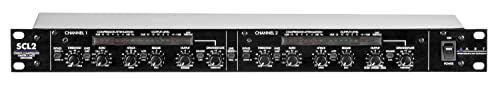
Flexible Rack Control – ART SCL2 Compressor/Limiter
The ART SCL2 is a practical choice for church sound systems that need dedicated audio compressors for church sound systems, especially when separate vocal, instrument, or stereo-bus processing is useful. Its dual-channel design, balanced XLR and 1/4-inch TRS connections, and selectable attack and release controls support flexible analog signal management.
Best For: Churches needing a rackmount dual-channel compressor, limiter, expander, and gate with balanced connectivity.
Pros:
- Supports dual-channel or linked stereo operation.
- Offers balanced 1/4-inch TRS and XLR inputs.
- Includes selectable automatic or manual attack and release settings.
- Provides precise LED level meters and a stereo-mode balance control.
Cons:
- Requires a separate rackmount unit rather than providing mixing or amplification.
- Uses analog signal formatting and corded power.
Choose the SCL2 when hands-on control and flexible routing matter more than an all-in-one mixer. Its combination of compression, limiting, expansion, and gating makes it a versatile processor for a church audio rack.
All-in-One Mixing Power – Behringer PMP500 Powered Mixer
The Behringer EUROPOWER PMP500 combines mixing, amplification, effects, feedback detection, and simple compression in one compact unit. For churches comparing audio compressors for church sound systems, its studio-grade one-knob compressors can provide straightforward vocal and instrument control without adding a separate compressor rack unit.
Best For: Small church systems seeking a compact 12-channel powered mixer with accessible compression and built-in processing.
Pros:
- Provides 12 input channels and 2 x 250-watt stereo power.
- Includes studio-grade one-knob compressors with control LEDs.
- Features a KLARK TEKNIK multi-effects processor with LCD display and tap function.
- Includes FBQ Feedback Detection to help identify critical frequencies.
Cons:
- Its built-in compressors offer simpler control than a dedicated multi-parameter compressor.
- Compression is part of a powered mixer rather than a standalone processor.
- The supplied notes do not specify the amplifier’s speaker-output connector details.
The PMP500 is a strong fit when minimizing equipment and setup complexity is a priority. It is less suited to engineers who need extensive independent compressor adjustments, but its integrated design can simplify smaller worship audio systems.
Classic Stereo Bus Tone – Successor Stereo Bus Compressor
The Successor Stereo Bus Compressor is designed for stereo bus compression with a classic analog approach. Among audio compressors for church sound systems, it may appeal to churches or production teams that want transformer-balanced I/O, XLR connectivity, and stepped controls for repeatable settings.
Best For: Church audio teams seeking a dedicated stereo bus compressor with transformer-balanced analog connections.
Pros:
- Uses Carnhill transformer-balanced input and output.
- Provides dedicated stereo bus compression.
- Features stepped controls for consistent setting recall.
- Uses a diode-bridge design and XLR connectors.
Cons:
- Designed for stereo bus use rather than dual-channel independent processing.
- The supplied notes list only the main device as included.
- Its classic analog design may be less convenient than integrated digital or mixer-based processing.
The Successor is best considered a specialized stereo-bus tool rather than a general-purpose church dynamics processor. Its transformer-balanced design and stepped controls suit users who value a classic analog workflow and repeatable adjustments.
Versatile Rackmount Control – Dual-Channel Compressor/Limiter
For church sound systems that need flexible control over vocals, instruments, or program audio, this dual-channel compressor offers a practical rackmount solution. Its adjustable attack and release, Overeasy compression, LED metering, and built-in noise gate support consistent levels in live, streaming, and stage applications.
Best For: Churches needing two-channel dynamics control with vocal processing, noise reduction, and flexible XLR/TRS connectivity.
Pros:
- Dual-channel design handles multiple sound sources.
- Overeasy compression provides a smoother transition into gain reduction.
- Includes a noise gate, LED metering, and sidechain insert.
- XLR and 1/4-inch TRS connections integrate with mixers and PA systems.
Cons:
- The 19-inch rackmount format requires suitable rack space.
- Its many controls may require more setup than a basic compressor.
This is a strong all-purpose choice for church audio teams that want hands-on control across vocals and instruments. The sidechain insert is especially useful when more detailed frequency-based shaping is needed.
Classic Vocal Character – Warm Audio WA76 Compressor
The Warm Audio WA76 is a single-channel option for church sound systems focused on shaping one important source, such as a lead vocal. Its fully discrete signal path, CineMag USA transformers, and classic 1176-style design are suited to professional audio applications where a distinctive compressor character is desired.
Best For: Churches prioritizing classic-style compression on a lead vocal or other single critical channel.
Pros:
- Fully discrete signal path supports its classic design approach.
- Custom CineMag USA transformers are included.
- Supports the recognizable “all buttons in” ratio setting.
Cons:
- Only one channel is provided.
- Its classic, specialized design may be less flexible for broad system-wide duties.
The WA76 makes the most sense when a church has a specific vocal or instrument channel that deserves dedicated processing. For multiple sources, plan on adding other dynamics equipment or choosing a dual-channel model.
Two-Channel British-Style Control – Heritage Audio HA-609A Compressor
The Heritage Audio HA-609A gives church sound systems two channels of British-spec compression and limiting in a vintage-style unit. Its transformer-balanced, extended-range design, Class A signal path, and special fast settings make it suitable for audio production and applications requiring dedicated two-channel control.
Best For: Churches seeking vintage-oriented two-channel compression and limiting for professional audio production.
Pros:
- Provides two compressor/limiter channels.
- Uses a Class A signal path.
- Features transformer-balanced, extended-range operation.
- Includes special fast settings for quicker response.
Cons:
- The vintage-style design may not suit users seeking a straightforward modern interface.
- The supplied notes do not specify connector types or detailed metering features.
This model is a good fit for church audio teams that value vintage-inspired processing while needing two channels. Its fast settings can add flexibility, but buyers should confirm the connection and installation requirements for their existing setup.
How We Picked These Audio Compressors for Church Sound Systems
We selected products that fit common church-audio workflows, from small volunteer-operated systems to larger front-of-house rigs. The lineup includes dedicated compressors, compressor/limiter/gate units, mixers with channel dynamics, and premium processors for critical vocal or bus duties.
Our comparisons focus on practical factors: channel count, control range, connectivity, metering, noise-management features, ease of setup, rack or mixer integration, and suitability for speech, vocals, instruments, and streaming feeds. A compressor should solve a real level-control problem without making the system harder to operate.
Quick Comparison
| Best For | Look For | Recommended Type |
|---|---|---|
| Small churches and simple systems | Easy controls and useful metering | Single- or dual-channel rack compressor |
| Volunteer operators | Integrated mixer processing | Mixer with built-in compressors |
| Speech and vocal consistency | Flexible threshold, ratio, attack, and release | Dedicated vocal compressor/limiter |
| Full-band or stereo bus control | Linked stereo operation and headroom | Stereo bus compressor |
| Problem channels and noisy sources | Gate, expander, or de-esser | Multi-function dynamics processor |
Key Buying Factors for Audio Compressors for Church Sound Systems
Channel Count and Signal Routing
Two-channel units can handle a pair of vocal microphones, stereo sources, or separate speech and music duties. If you need compression across many inputs, a mixer with channel compressors may be more practical. Check whether the unit offers balanced XLR or TRS connections, inserts, sidechain access, and stereo linking.
Controls and Metering
Threshold, ratio, attack, release, and makeup gain determine how naturally compression behaves. Clear gain-reduction meters are especially valuable for volunteer teams because they show whether a channel is being gently controlled or heavily squeezed. A limiter can provide an additional safety margin, but it should not replace proper gain staging.
Speech, Vocals, and Streaming Needs
Speech usually benefits from moderate, transparent compression that keeps announcements audible without sounding unnatural. Vocals may need faster control and more flexible timing. For livestreams, consider whether the compressor will serve the broadcast mix separately from the room mix; independent routing often produces better results than compressing the main house output.
Noise Gates, Expanders, and De-Essers
These features can reduce stage bleed, microphone spill, and harsh “s” sounds, but aggressive settings may cut off quiet words or musical sustain. Choose them when you have a specific problem to solve, not simply because more processing is available.
Who Should Buy Which Audio Compressors for Church Sound Systems?
Choose a dedicated dual-channel processor if you need dependable control for lead vocals, spoken-word microphones, or a stereo source. Choose a mixer with built-in compression when simplifying the signal path and reducing external rack gear matters most. Choose a stereo bus compressor for controlled, cohesive processing on a music or broadcast bus, provided the operator understands how bus compression affects the whole mix. Choose a premium compressor when vocal character, low noise, build quality, and detailed control justify the added cost.
Whatever you buy, start with conservative settings, set input gain correctly, and listen from the congregation’s position as well as the control position. The best processor is the one that improves consistency while remaining easy for your team to operate week after week.