The best analog synthesizers make sound design feel immediate, hands-on, and musical. This lineup covers compact instruments, bass-focused monosynths, polyphonic keyboards, and creative performance tools for beginners and experienced producers alike.
Use the guide below to compare key features, workflow, portability, and value before choosing the synth that fits your setup.
Best 10 Analog Synthesizers Picks for 2026
Best Polyphonic Workhorse
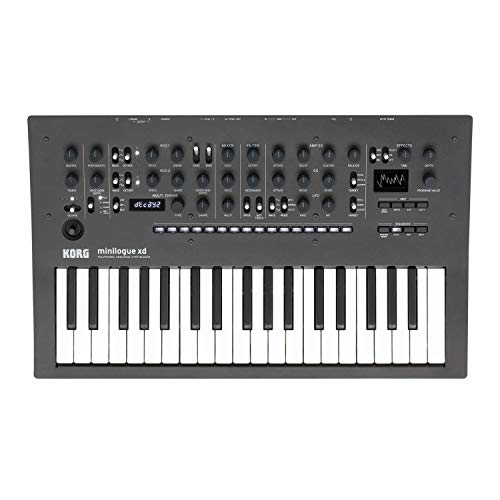
- Four-voice polyphony for chords and layered parts
- 16-step polyphonic sequencer with multiple voice modes
- Analog and digital multi-engine sound design
Best For: Performers and producers wanting a compact polyphonic synth
Best Experimental Hybrid
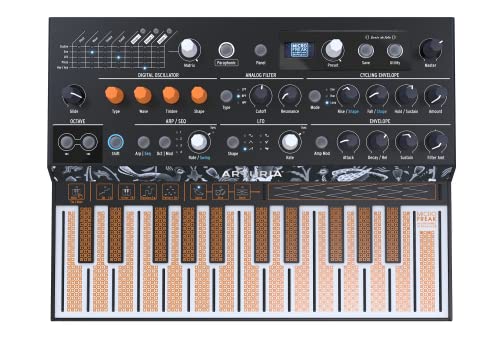
- 17 digital oscillator modes with an analog filter
- 25-key touch keyboard with poly-aftertouch
- CV, USB, and MIDI connectivity
Best For: Experimental producers and modular-friendly electronic musicians
Best Fat Analog Tones

- Four VCOs for thick, warm analog sounds
- Four-voice polyphonic and paraphonic modes
- 37 full-size velocity-sensitive keys
Best For: Keyboard players wanting a large, performance-focused analog synth
Best Pocket Synth

- Pocket-sized, battery-powered design
- Stylus-controlled three-octave touch surface
- Built-in speaker, headphone socket, and vibrato
Best For: Beginners and mobile players seeking retro synth fun
Best Portable Moog
Messenger Monophonic Analog Synthesizer

- Two wavefolding VCOs plus sub-oscillator
- 32 velocity- and aftertouch-sensitive keys
- Sequencer, CV, MIDI, and USB-C connectivity
Best For: Portable Moog sound design and performance
Best Compact Pick

- Compact 9.21-inch form factor
- Lightweight 0.65 kg alloy-steel body
- MIDI connectivity for compatible setups
Best For: Small workspaces and portable rigs
Best for Deep Sound Design
Subsequent 37 Paraphonic Analog Synthesizer

- 40 knobs and 74 switches for hands-on control
- Two-note paraphonic 37-key keyboard
- CV/GATE, MIDI, USB, audio, and editor software
Best For: Detailed Moog sound design and studio production
Best Portable Pick

- Battery-powered with built-in speaker
- LFO, filter, envelope, PWM, and delay
- CV/Gate outputs for modular setups
Best For: Portable performers and hardware synth users
Best for Acid Bass

- Fully analog 1 VCO, 1 VCF, 1 VCA design
- 128 patterns with Song Mode
- Haptic pads, arpeggiator, MIDI, and Sync
Best For: Acid basslines and pattern-based production
Best Beginner Pocket Synth

- Cassette-sized, battery-powered design
- 13-key monophonic touchpad and built-in speaker
- Alligator clips enable custom conductive keyboards
Best For: Beginners, students, and STEM music projects
Best Polyphonic Workhorse – Korg minilogue xd
The Korg minilogue xd is a versatile choice among analog synthesizers for musicians who want four-voice polyphony, hands-on sequencing, and a compact format. Its dual-oscillator analog engine, digital multi-engine, and OLED oscilloscope support both performance and detailed sound design.
Best For: Layered chords, evolving sequences, and portable studio or stage setups.
Pros:
- Four-voice polyphony with POLY, UNISON, CHORD, and ARP/LATCH modes.
- Built-in 16-step polyphonic sequencer and extensive effects section.
- Digital multi-engine adds noise, VPM, and user sound options.
- OLED oscilloscope provides real-time waveform visualization.
Cons:
- Four voices may be limiting for especially dense arrangements.
- At 2.8 kg, it is less pocketable than miniature synths.
The minilogue xd balances approachable controls with substantial synthesis depth. It is a strong all-around option if you want analog-style sound, polyphonic playability, and sequencing in one compact instrument.
Best Experimental Hybrid – Arturia MicroFreak
The Arturia MicroFreak stands out among analog synthesizers and hybrid instruments with experimental digital oscillator modes, a resonant analog filter, and an unusual touch-sensitive keyboard. It is designed for players who enjoy unconventional textures, modulation, and generative sequencing.
Best For: Experimental sound design, electronic production, and expressive compact setups.
Pros:
- Offers 17 oscillator modes spanning physical modeling, wavetable, vocoder, and more.
- 25-key touch keyboard provides poly-aftertouch and pressure sensitivity.
- Spice and Dice functions, automation recording, and a 5×7 modulation matrix encourage experimentation.
- CV, USB, and MIDI connectivity supports DAWs, modular gear, and external synths.
Cons:
- The unconventional touch-plate keyboard may require an adjustment period.
- Its digital oscillator and paraphonic design may not suit players seeking a traditional fully analog workflow.
MicroFreak is a flexible sound-exploration tool rather than a conventional keyboard synth. Its compact size and extensive modulation make it especially appealing for producers who want unusual tones and hands-on experimentation.
Best Fat Analog Tones – Behringer POLY D
The Behringer POLY D is a substantial option among analog synthesizers, combining four VCOs, a classic ladder filter, and four-voice polyphonic or paraphonic operation. Its full-size keys, sequencer, arpeggiator, chorus, and distortion make it suited to hands-on performance and bass-heavy tones.
Best For: Players seeking warm, rich analog sounds, full-size keys, and powerful mono or polyphonic performance options.
Pros:
- Four VCOs create thick, full analog tones.
- Supports mono, unison, polyphonic, and paraphonic modes.
- Includes 37 semi-weighted full-size velocity-sensitive keys.
- Built-in 32-step sequencer, arpeggiator, stereo chorus, and distortion add performance flexibility.
Cons:
- At 26.1 pounds, it is considerably less portable than compact synths.
- Its large 31.4-inch footprint may require dedicated desk or stand space.
The POLY D favors size, immediacy, and bold analog character over portability. It makes sense for players who want a substantial keyboard and classic-style synthesis with several performance-focused extras.
Best Pocket Synth – Stylophone Original
The Stylophone Original is a highly portable entry point into analog synthesizers and electronic instruments. Its stylus-controlled touch surface, three-octave range, built-in speaker, and battery operation make it easy to explore retro sounds almost anywhere.
Best For: Beginners, casual musicians, portable music-making, and nostalgic retro-synth sounds.
Pros:
- Compact design measures less than 12 cm wide and weighs 8.8 ounces.
- Stylus and touch-sensitive metal surface offer a simple, distinctive playing method.
- Battery-powered operation, built-in speaker, headphone socket, and optional vibrato support mobile use.
- Can connect to a computer or other gear through a 3.5mm stereo cable.
Cons:
- The stylus interface is less conventional than a standard keyboard.
- Its feature set and three-octave range are limited compared with larger synthesizers.
The Stylophone is best viewed as a fun, accessible pocket instrument rather than a full studio centerpiece. Its tiny format and recognizable vintage character make it an appealing introduction to synths or a playful addition to an existing setup.
Best Portable Moog – Messenger Monophonic Analog Synthesizer
The MOOG Messenger is a portable choice for musicians who want classic analog synthesizer sound with modern performance and sequencing features. Its two wavefolding VCOs, sub-oscillator, flexible ladder filter, and knob-per-function layout make it suitable for hands-on sound design.
Best For: Performers and producers seeking a versatile, portable Moog monosynth with expressive keys and extensive connectivity.
Pros:
- Two continuously variable-shape VCOs with sync, frequency modulation, and a sub-oscillator
- Flexible ladder filter with multiple responses and resonance bass compensation
- 32 full-size semi-weighted keys with velocity and aftertouch
- Built-in 64-step sequencer, arpeggiator, 256 presets, CV, MIDI, and USB-C connectivity
Cons:
- Monophonic architecture is less suited to full chords
- Its extensive modulation and sequencing features may take time to master
The Messenger is a strong all-around option when portability, expressive control, and recognizable Moog bass are priorities. It offers enough modulation and connectivity for both studio production and live setups.
Best Compact Pick – PHARA-O MINI Mini Synthesizer
The Behringer PHARA-O MINI is a compact analog synthesizer option for shoppers who need a small, lightweight instrument for accessible sound design. Its alloy-steel body measures about 9.21 by 6.1 by 2.56 inches and includes MIDI connectivity.
Best For: Buyers who prioritize a compact footprint and low weight for portable setups or limited workspaces.
Pros:
- Compact dimensions make it easy to fit into small setups
- Lightweight 0.65 kg construction supports portability
- MIDI connectivity supports integration with compatible equipment
Cons:
- The supplied notes provide limited information about its controls, sound engine, and sequencing features
- Its compact format may offer less hands-on space than larger synthesizers
The PHARA-O MINI stands out primarily for its compact, portable design. Consider it when size and weight matter most, but compare detailed control and sound specifications before choosing it for a more demanding setup.
Best for Deep Sound Design – Subsequent 37 Paraphonic Analog Synthesizer
The MOOG Subsequent 37 is a hands-on analog synthesizer built around extensive control, rich sound shaping, and two-note paraphonic playability. With 40 knobs, 74 switches, dual variable-waveshape oscillators, and programmable modulation routing, it is designed for detailed studio work and performance.
Best For: Experienced musicians and producers who want deep Moog sound design, expressive keys, and broad hardware or software integration.
Pros:
- Extensive front-panel control with 40 knobs and 74 switches
- Two variable-waveshape oscillators, sub-oscillator, noise generator, and external input/filter feedback
- 37 semi-weighted keys with velocity, aftertouch, and two-note paraphony
- Includes MIDI, USB, audio, headphone, CV/GATE connections, and editor software
Cons:
- Its 10 kg weight and larger footprint are less convenient for frequent transport
- Deep routing and control options may be overwhelming for beginners
The Subsequent 37 is a compelling choice when detailed control is more important than minimal size. Its paraphonic keybed, extensive modulation, and editor support give it a broad role in studio production and live sound design.
Best Portable Pick – Stylophone GENX-2
The Stylophone GENX-2 is a flexible choice for shoppers seeking portable analog synthesizers with hands-on sound shaping. Battery operation, a built-in speaker, and a stylus keyboard make it easy to create away from a studio, while CV/Gate outputs support integration with modular and semi-modular setups.
Best For: Portable performers, beginners who want extensive controls, and hardware-focused synth players.
Pros:
- Battery-powered design with built-in speaker, headphones, and audio outputs.
- Analog-style sound shaping includes an LFO, resonant low-pass filter, envelope, PWM, and dual sub-octave switches.
- CV/Gate connectivity enables control of modular and semi-modular equipment.
- Expression strip adds pitch bends, LFO modulation, and filter sweeps.
Cons:
- The stylus-powered keyboard may feel less familiar than a conventional keyboard.
- Its compact two-octave format may not suit players who need a larger playing surface.
The GENX-2 stands out as the most feature-rich portable option here. It combines immediate, tactile performance controls with useful external connectivity, making it suitable for both casual mobile creation and more involved hardware rigs.
Best for Acid Bass – Donner Essential B1
The Donner Essential B1 is a focused analog synthesizer and sequencer for producing basslines and classic acid-style patterns. Its straightforward 1 VCO, 1 VCF, and 1 VCA signal path keeps sound design approachable, while the step sequencer, haptic pads, and pattern memory support hands-on performance.
Best For: Electronic producers who want acid bass, pattern-based composition, and hardware sequencing.
Pros:
- Fully analog signal path designed for warm, organic bass textures.
- 128 pattern memory and Song Mode support more developed musical phrases.
- Haptic performance pads and an eight-mode arpeggiator encourage live jamming.
- Includes analog saturation and delay, plus USB-C, MIDI, and Sync connectivity.
Cons:
- The single-oscillator architecture is focused rather than broadly polyphonic.
- Its bass-oriented design may be less versatile for users seeking wide-ranging synthesis.
The Essential B1 is a practical pick when sequenced basslines matter more than a large set of synthesis features. It offers an accessible workflow, onboard effects, and several connection options for a compact hardware setup.
Best Beginner Pocket Synth – MicroKits Synth-a-Sette
The MicroKits Synth-a-Sette is one of the simplest and smallest analog synthesizers for learning and experimenting. Its cassette-sized format includes a 13-key monophonic touchpad, built-in speaker, batteries, and a line out, while the included alligator clips let users turn conductive objects into custom controls.
Best For: Beginners, students, portable music-making, and STEM-focused experimentation.
Pros:
- Extremely compact, battery-powered design with a built-in speaker.
- Simple 13-key monophonic touchpad is approachable for first-time users.
- Octave-up and vibrato controls add basic performance variety.
- Alligator clips support creative conductive-object experiments and custom keyboards.
Cons:
- Monophonic operation and simplified controls limit advanced synthesis work.
- The compact touchpad is better suited to experimentation than traditional keyboard technique.
The Synth-a-Sette is best viewed as an educational and creative entry point rather than a full studio instrument. Its accessible controls and conductive-object projects make analog synthesis approachable for curious beginners and younger learners.
How We Picked the Best Analog Synthesizers
We evaluated these Analog Synthesizers by looking at sound-shaping flexibility, keyboard or touch-playability, sequencing options, connectivity, portability, and overall usefulness in a real music setup. We also considered whether each model suits its intended audience, from first-time players to performers and studio producers.
Because “analog” can describe different architectures, the list includes true analog instruments alongside compact hybrid or analog-style synthesizers where their hands-on controls and musical workflow make them relevant alternatives.
Quick Comparison
| Best For | Look For | Why It Stands Out |
|---|---|---|
| Beginners | Simple controls and built-in speaker | Short learning curve and immediate results |
| Bass and leads | Monophonic architecture and filter control | Focused, powerful single-note sounds |
| Polyphonic playing | Multiple voices and full-size keys | Chords, pads, and layered parts |
| Portable production | Compact design, sequencing, and battery-friendly features | Easy to sketch ideas anywhere |
| Live performance | Hands-on modulation and reliable connectivity | Fast sound changes without menu diving |
Key Buying Factors for Analog Synthesizers
Voice Count and Playing Style
Monosynths play one note at a time and are ideal for basses, leads, and expressive solos. Paraphonic designs can handle multiple notes with shared sound circuitry, while true polyphonic synths are better suited to chords, pads, and complete keyboard parts.
Controls and Sound Design
Prioritize dedicated knobs for oscillators, filters, envelopes, and modulation if you want an instrument that encourages experimentation. A flexible filter and a useful modulation section often matter more than a long feature list.
Sequencing and Effects
A built-in sequencer can turn a compact synth into a self-contained songwriting tool. Arpeggiators, pattern memory, delay, chorus, and saturation are particularly useful for creating complete parts without immediately relying on a computer.
Size, Keys, and Connectivity
Check whether you need full-size keys, a compact touch keyboard, or no conventional keyboard at all. MIDI, USB, CV/Gate, and audio outputs determine how easily the synth will connect to controllers, modular gear, an interface, or a live rig.
Power and Portability
Small instruments are convenient for travel and casual practice, but miniaturization can mean fewer controls or a narrower performance range. Confirm power requirements, speaker availability, and whether the layout is comfortable enough for regular use.
Who Should Buy Which Analog Synthesizers?
Choose a Compact Beginner Synth
Pick a small, approachable model if you are learning synthesis, want a portable sketchpad, or need an affordable way to explore oscillators and filters. Built-in speakers and straightforward controls make practice easier.
Choose a Bass-Focused Monosynth
Producers making electronic, hip-hop, techno, or pop tracks should consider a monophonic synth with a strong filter, sequencer, and performance controls. These instruments excel at focused bass and lead parts.
Choose a Polyphonic Keyboard Synth
Players who want chords, pads, and fuller arrangements should prioritize multiple voices, comfortable keys, and a flexible sequencer. Polyphony is especially valuable when the synth needs to cover more than one musical role.
Choose a Portable Performance Instrument
For live players, travelers, and experimental musicians, compact models with built-in effects, speakers, or CV/Gate connectivity can offer more creative freedom than a larger studio-only keyboard.