Choosing the right in-ear monitors can make recording sessions cleaner, faster, and far more consistent. A good pair should deliver accurate sound, stay secure during long takes, and help you hear every detail without fatigue.
From wired studio monitors to wireless stage-ready systems, this roundup focuses on options that suit musicians, engineers, and performers who need dependable monitoring for recording work in 2026.
Best 10 Professional in Ear Monitors for Recording Picks for 2026
Balanced BA Monitoring

- Dual Knowles balanced armature drivers
- Balanced sound with custom crossover tuning
- Includes 1/4-inch adapter and cleaning tool
Best For: Studio, rehearsal, and live monitoring with a neutral sound
Warm Stage Monitoring

- Warm, high-resolution sound from 10mm driver
- Ergonomic flat-profile housing for comfort
- Replaceable cable with reinforced ear hook
Best For: Live performers and music production users wanting comfort and warm monitoring
Accuracy First Monitoring
Audio-Technica ATH-E40 Professional IEM

- Dual phase push-pull drivers for clarity
- Maximum isolation housing with memory cable
- Includes carrying case and 1/4-inch adapter
Best For: Studio, DJ, and professional monitoring where accuracy matters most
UHF Stereo Rack-Mount Pick

- True stereo/mono wireless IEM system
- 900MHz band with up to 5-system operation
- Rack-mountable with EQ, limiter, and lock controls
Best For: Users wanting a full wireless monitoring setup for stage or studio
Dynamic Studio Fit

- 10-mm dynamic driver for precise monitoring
- Secure ergonomic fit with strong shielding
- Includes foam/silicone tips, case, and cleaning tool
Best For: Wired monitoring for rehearsal, performance, and recording
Triple-Driver Isolation Pick
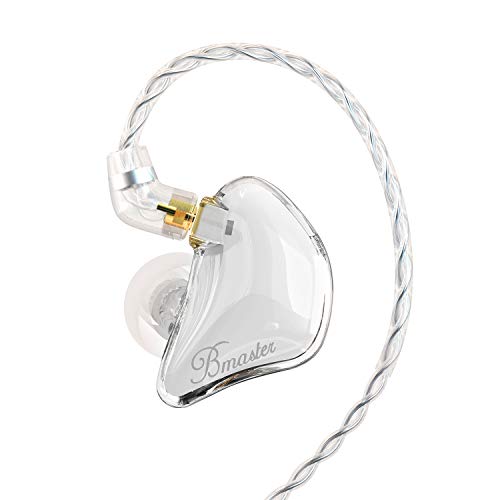
- Triple-driver wired IEM with balanced sound
- Good isolation with ergonomic earhook fit
- Detachable MMCX cables and included accessories
Best For: Engineers and musicians needing isolated wired monitoring
Wireless low-latency monitor pick
AOKEO AK-680 5.8G Stereo IEM System
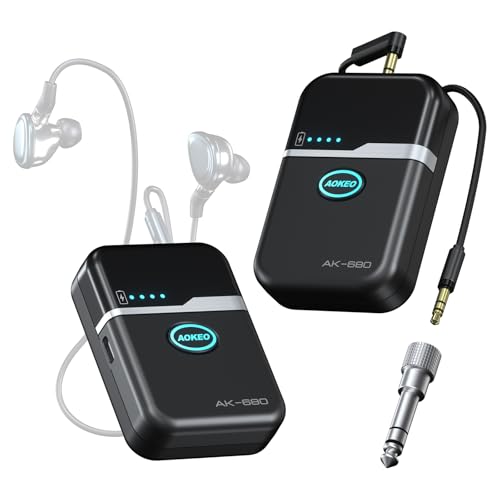
- 5.8G transmission targets cleaner wireless monitoring.
- Up to 12 hours of battery life for long sessions.
- Clip-on receiver adds quick volume adjustment.
Best For: Wireless monitoring for rehearsals, stage use, and home recording
Pro UHF starter set
Sennheiser XSW-IEM Wireless In-Ear Monitor
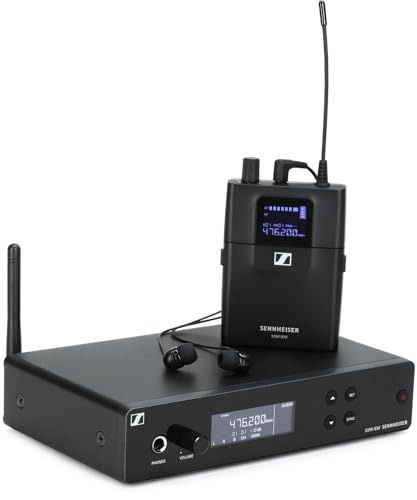
- UHF wireless link is built for dependable monitoring.
- Focus mode, EQ, and limiter add mix control.
- Infrared sync helps pair multiple receivers.
Best For: Performers who want a trusted UHF system with adjustable monitor controls
Compact budget-friendly rig
Phenyx Pro PDP-M Wireless IEM System
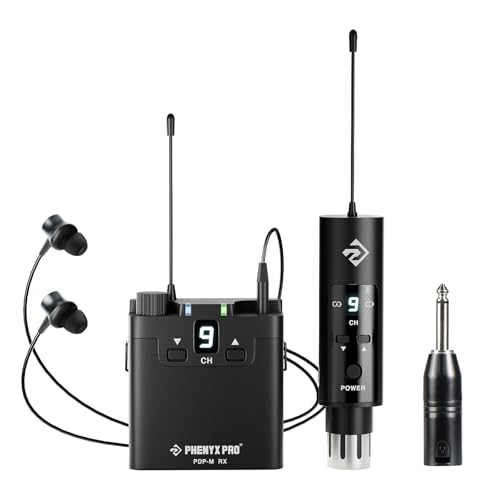
- Mono/stereo modes add flexibility for different mixes.
- 24-bit/48kHz digital path targets cleaner audio.
- Includes adapters, earphones, and a storage pouch.
Best For: Rehearsals and small-stage monitoring with portable setup
Studio-Ready Isolation – Shure SE215 PRO Sound Isolating Wired Earbuds
If you want professional in ear monitors for recording that prioritize isolation and a secure fit, the Shure SE215 PRO is a dependable entry point. Its single dynamic MicroDriver is tuned for detailed, full-range sound with clear highs and deep bass, while the sound-isolating design helps cut distraction in busy sessions.
Best For: Musicians and recording users who need strong isolation, a secure over-ear fit, and durable wired monitoring.
Pros:
- Blocks up to 37 dB of ambient noise for focused monitoring
- Secure over-ear wireform design keeps the earbuds in place
- Detachable MMCX cable is replaceable and easier to service
- Includes multiple foam and flex sleeve sizes for fit tuning
Cons:
- Single dynamic driver may not match multi-driver detail in higher-end models
- Wired-only design may not suit users wanting wireless flexibility
- Not water resistant, so it is better kept to indoor or light-duty use
For recording, the SE215 PRO stands out for practicality: reliable isolation, a stable fit, and a rugged cable setup. It is a straightforward choice if you want monitors that stay put and help you hear more of the mix and less of the room.
Balanced BA Monitoring – Xvive T9 Dual Knowles BA IEM
The Xvive T9 is aimed at users shopping for professional in ear monitors for recording who want a balanced, detailed presentation rather than a heavily colored sound. With dual Knowles balanced armature drivers and a custom crossover, it is built to handle studio, rehearsal, and live monitoring work.
Best For: Players and engineers who want a balanced dual-BA monitor for studio, rehearsal, and live monitoring.
Pros:
- Dual Knowles BA drivers with a custom unified crossover
- Balanced, detailed sound that is not overly hyped or colored
- Noise-isolating design blocks up to -25 dB
- Includes ear tips, 1/4-inch adapter, carrying case, and cleaning tool
Cons:
- Noise isolation is lower than some higher-isolation stage monitors
- Passive isolation only, with no active noise cancellation
- Wired monitoring may not suit users wanting a wireless setup
The T9 makes sense if you want a monitor that stays relatively neutral and leaves room for EQ shaping. It is a practical pick for musicians who need usable detail and a comfortable fit across long sessions.
Warm Stage Monitoring – Sennheiser IE 40 Pro Black
The Sennheiser IE 40 Pro is a solid option for professional in ear monitors for recording when you want warm, high-resolution monitoring with a comfortable stage-ready fit. Its 10mm broadband transducer is designed for precise playback, and the ergonomic low-profile housing helps with long wearing sessions.
Best For: Live performers and music production users who prefer warm sound, comfort, and a stage-friendly cable setup.
Pros:
- Dynamic 10mm transducer delivers warm, high-resolution sound
- Ergonomic, flat-profile design improves comfort and fit
- Replaceable cable with reinforced ear hook for stage use
- Reduces acoustic stress through precise, dissonance-free reproduction
Cons:
- No listed noise isolation rating, so blocking power is less explicit than some rivals
- Single dynamic design may not appeal to users who want multi-driver detail
- Sound signature is tuned for monitoring rather than a highly analytical presentation
If comfort and dependable stage performance matter most, the IE 40 Pro is easy to recommend. It balances a warm monitoring character with practical durability features that fit real-world recording and live use.
Accuracy First Monitoring – Audio-Technica ATH-E40 Professional IEM
For buyers comparing professional in ear monitors for recording, the Audio-Technica ATH-E40 is built around accuracy and isolation. Its proprietary dual phase push-pull drivers are designed to deliver clear monitoring detail, while the housing and memory cable help keep the fit stable during long sessions.
Best For: Studio, DJ, and professional users who want accurate sound, strong isolation, and a lightweight fit.
Pros:
- Dual phase push-pull drivers emphasize monitoring accuracy and clarity
- Specially designed housing provides maximum isolation
- Flexible memory cable loops over the ears for comfort and stability
- Includes silicone tips, carrying case, and 1/4-inch adapter
Cons:
- Wired design only, with no wireless option
- Plastic enclosure may feel less rugged than metal-heavy alternatives
- Sound is focused on monitoring accuracy rather than boosted bass
The ATH-E40 is a strong fit if your priority is hearing the monitor mix clearly and consistently. It keeps the formula simple: accurate sound, decent isolation, and a comfortable over-ear cable design for work in the studio or on stage.
UHF Stereo Rack-Mount Pick – Phenyx Pro PTM-10
If you need professional in ear monitors for recording or other live monitoring jobs, the Phenyx Pro PTM-10 is built around wireless flexibility and practical control. Its true stereo/mono switching, 900MHz band, and tunable frequencies make it a strong fit when you want a stage- or studio-friendly IEM setup with less clutter.
Best For: Performers, speakers, drummers, vocalists, and bands that want a rack-mountable wireless IEM system for consistent monitoring.
Pros:
- True stereo monitoring with mono mode available for different monitoring needs
- 900MHz band with tunable frequencies and support for up to 5 systems simultaneously
- Up to 160 ft / 50 m coverage for studio, stage, exhibit, lecture, and speech use
- EQ, balance, limiter, lock, and PAD functions add useful mix control
Cons:
- Wireless system requires transmitter, receiver, and battery management
- Best suited to users who need a full IEM setup rather than simple wired earbuds
The PTM-10 stands out if you want a more complete wireless monitoring package with enough control to fine-tune your mix. The included rack kit, case, and hybrid inputs also make it easier to integrate into a more professional setup.
Dynamic Studio Fit – Sennheiser IE 100 PRO Clear
SENNHEISER Professional IE 100 PRO Dynamic In-Ear Monitoring Headphones, Clear
Check Price On AmazonThe Sennheiser IE 100 PRO is a practical choice if you want professional in ear monitors for recording with a simple wired setup and a secure fit. Its 10-mm dynamic transducer is designed for precise monitoring, while the slim single-driver build and tip options help keep long sessions comfortable.
Best For: Musicians, engineers, and performers who want compact wired IEMs for monitoring, rehearsal, and stage use.
Pros:
- 10-mm broadband dynamic transducer for powerful, precise monitoring
- Excellent shielding and a secure ergonomic fit for stage and recording use
- Includes foam and silicone ear adapters, cleaning tool, and protective case
- Stage-proof cable with internal cable duct
Cons:
- Single wired 3.5 mm setup may be less flexible than wireless monitor systems
- Fit depends on choosing the right ear tip size for your ears
This model makes sense when isolation, comfort, and reliable wired monitoring matter more than extra features. It keeps the design straightforward while focusing on the kind of clear, controlled sound useful in rehearsal and performance environments.
Triple-Driver Isolation Pick – BASN Bmaster White
For buyers comparing professional in ear monitors for recording, the BASN Bmaster focuses on isolation, fit, and detailed wired sound. Its triple-driver design, detachable MMCX cables, and included accessories make it a practical option for musicians and audio engineers who want a customizable in-ear setup.
Best For: Audio engineers, musicians, and live performers who want wired IEMs with strong isolation and a secure fit.
Pros:
- Good sound isolation helps block outside noise during monitoring
- Triple-driver design delivers balanced sound with clear mids and treble
- Ergonomic shape and earhook cable help keep the earphones in place
- Detachable MMCX cables and included 6.3 mm adapter add flexibility
Cons:
- Wired design is less convenient than wireless monitoring systems
- Not water resistant, so it is less ideal for wet or sweaty conditions
The Bmaster is a good fit when you want a monitor that emphasizes isolation and practical customization. The included case, tip selection, and replacement-friendly cable design make it easy to adapt the earphones to different sessions and setups.
Wireless low-latency monitor pick – AOKEO AK-680 5.8G Stereo IEM System
If you want professional in ear monitors for recording without being tied to a cable, the AOKEO AK-680 focuses on clean wireless monitoring and fast setup. Its 5.8G transmission is designed to avoid crowded 2.4GHz interference, while the balanced armature driver and stereo feed aim to keep your monitor mix clear in rehearsal or studio use.
Best For: Musicians and home-recording users who want a simple wireless IEM system with low-latency monitoring and broad gear compatibility.
Pros:
- 5.8G wireless transmission is built for cleaner signal performance in busy WiFi environments.
- Up to 12 hours of battery life supports long rehearsals and recording sessions.
- Lightweight clip-on receiver includes volume control for quick on-body adjustments.
- Includes USB-C charging cables plus 3.5mm and 6.35mm connectivity options.
Cons:
- Battery life and wireless convenience matter more here than traditional wired monitoring simplicity.
- Like most wireless systems, setup still depends on pairing and compatible audio outputs.
Overall, the AK-680 is a practical choice if you want a private monitor mix for recording or stage use and value easy portability. It is built more around convenience and wireless freedom than ultra-premium studio hardware.
Pro UHF starter set – Sennheiser XSW-IEM Wireless In-Ear Monitor
The Sennheiser XSW-IEM is a solid option if you want professional in ear monitors for recording with a more traditional UHF wireless setup. It is positioned as a complete starter set, and the flexible audio modes, Focus mode, EQ, limiter, and infrared syncing tools make it practical for performers who want control over their monitor mix.
Best For: Players and vocalists who want an established UHF in-ear monitoring system with flexible mix control.
Pros:
- Professional UHF wireless connection is designed for reliable in-ear monitoring.
- Focus mode, EQ, and limiter give you more control over the personal mix.
- Infrared syncing makes it easier to match multiple receivers to one transmitter.
- Complete starter set format is convenient for getting up and running quickly.
Cons:
- Battery life is listed at about 6 hours, which is shorter than some competing systems.
- It is a more traditional wireless setup, so it is not the simplest bare-bones option.
For musicians who want a dependable branded system with useful monitoring controls, this Sennheiser set stands out. It is a strong fit when the priority is clear on-stage or studio monitoring rather than ultra-compact portability.
Compact budget-friendly rig – Phenyx Pro PDP-M Wireless IEM System
The Phenyx Pro PDP-M is aimed at musicians who want professional in ear monitors for recording in a compact, portable package. It supports mono or stereo monitoring, uses a 24-bit/48kHz digital signal path, and includes the adapters you need to connect to common mixer outputs.
Best For: Rehearsals, small stages, and performers who want a portable wireless monitor system with stereo support.
Pros:
- Mono and stereo monitoring options help adapt the mix to different setups.
- 24-bit/48kHz digital audio is designed for a cleaner, more consistent monitor feed.
- UHF 900MHz frequency hopping and 30mW power aim to improve stability and reduce dropouts.
- Includes adapters, earphones, and a storage pouch for a ready-to-use kit.
Cons:
- Rated runtime is up to 4 hours, which is shorter than many larger systems.
- Best suited to compact or smaller performance setups rather than all-day use.
If portability and quick setup matter most, the PDP-M offers a useful feature set without overcomplicating the workflow. It is especially appealing for players who need a flexible monitor solution for rehearsals and smaller live gigs.
How We Picked the Best Professional in Ear Monitors for Recording
We focused on monitoring accuracy, fit stability, cable or wireless reliability, and practical value for studio and session use. For Professional in Ear Monitors for Recording, comfort matters almost as much as sound quality, since poor fit can ruin both isolation and tonal balance.
We also considered driver design, isolation, build quality, and how easily each model fits into a real workflow. That includes wired IEMs for direct, low-maintenance use and wireless systems for players who need freedom of movement.
Quick Comparison: Wired Vs. Wireless IEMs
Wired in-ear monitors are usually the simplest choice for recording. They offer a direct connection, no battery concerns, and fewer variables between the source and your ears. Wireless systems are better when you need mobility, but they add setup complexity and require attention to range, latency, and battery life.
If you work mostly in a studio or control-room environment, wired models often make the most sense. If you move between tracking spaces, live rooms, or rehearsal setups, a wireless system may be worth the tradeoff.
Key Buying Factors for Professional In-Ear Monitors for Recording
Sound Signature and Detail
Look for monitors that stay clear through the mids and highs without exaggerated bass. For recording, you want enough detail to catch timing, pitch, and noise issues without a hyped presentation that masks problems.
Isolation and Fit
A secure seal improves both bass response and outside-noise rejection. Multiple ear tip sizes, ergonomic shells, and lightweight designs can make a big difference during longer sessions.
Driver Type
Single dynamic drivers can sound natural and simple, while balanced armature and hybrid designs may offer more separation and perceived detail. The best choice depends on whether you prioritize coherence, precision, or a more reference-style monitor feel.
Connection and Reliability
For studio tracking, a durable cable and stable connector are important. For wireless setups, check frequency options, latency, runtime, and receiver comfort before buying.
Who Should Buy Which Professional in Ear Monitors for Recording?
Wired models are best for singers, instrumentalists, and engineers who want dependable monitoring with minimal setup. They’re also a smart choice for home studios and overdub sessions where simplicity matters.
Wireless IEM systems are a better fit for performers, rehearsal spaces, and mobile recording setups that require movement and flexibility. If you need the most practical all-around choice, start with a wired option unless your workflow specifically demands wireless freedom.
In short, the best choice depends on how you record, how much isolation you need, and whether convenience or mobility is more important in your setup.