A good dual channel equalizer for recording studio work gives you precise control over stereo tone, room correction, and feedback management without complicating the signal chain.
Below, we focus on rack-friendly models that suit tracking rooms, control rooms, and live-to-studio setups where fast, reliable EQ matters.
Best 10 Dual Channel Equalizer for Recording Studio Picks for 2026
Studio-Grade Control

- Dual 31-band, 1/3-octave constant Q design
- Selectable 6 dB or 12 dB boost/cut ranges
- Front-panel bypass and LED level monitoring
Best For: Studios needing a balanced dual-channel graphic EQ with detailed band control
Feedback-Taming Option

- 31-band stereo EQ with FBQ feedback detection
- Sweepable low-cut and high-cut filters per channel
- Mono subwoofer output with adjustable crossover
Best For: Engineers who want EQ plus feedback detection and cleanup filters
Compact Dual EQ
dbx 215s Dual 15-Band Equalizer

- Dual 15-band, 1/3-octave constant Q design
- Selectable 6 dB or 12 dB boost/cut ranges
- Balanced XLR/TRS inputs and outputs
Best For: Smaller studios that want a simpler dual-channel graphic EQ
Value Rack EQ
Rockville REQ231 Dual 31-Band EQ
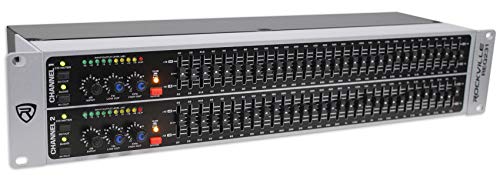
- Dual 31-band EQ with constant Q filters
- Variable low and high cut filters plus sub out
- Balanced XLR I/O with output LEDs and bypass
Best For: Budget-conscious users wanting full-featured dual-channel EQ control
Studio-Grade Flexibility
ART EQ355 Dual Channel 31-Band Equalizer
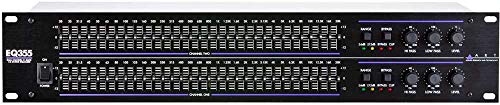
- 31 bands per channel with Constant Q circuitry
- Selectable 6dB or 12dB boost/cut range
- Adjustable high-pass and low-pass filters
Best For: Engineers wanting detailed analog tone control in a rack unit
Rack-Mount Workhorse
dbx 1231 Dual-Channel 31-Band Graphic Equalizer

- 31 1/3-octave bands on dual channels
- Switchable ±6 dB or ±15 dB ranges
- LED meters plus hardwire bypass relay
Best For: Studios needing a full-featured rack EQ with strong metering
Compact 1U Option
EQ-215 Dual Channel 15-Band Stereo Equalizer

- 15 bands per channel in a 1U rack design
- ±12 dB adjustment range with bypass switch
- Balanced XLR and unbalanced TRS I/O
Best For: Studios that want a compact, straightforward stereo EQ
Studio-Grade Detail Control

- 31 bands per channel with ±12 dB control
- LOW-CUT and BYPASS switches for faster cleanup and comparison
- XLR balanced and 1/4" TRS I/O for flexible routing
Best For: Detailed dual-channel EQ work in studio or live setups
Rack-Friendly Low-End Control

- 15 bands per channel with ±12 dB adjustment
- Adjustable low-cut plus bypass for easy cleanup
- 1U rack mount with bass output and flexible I/O
Best For: Users who want a simpler rack EQ with extra bass control
Most Studio-Focused Control
31-Band Dual-Channel Graphic EQ

- 31 bands per channel with selectable ±6 dB / ±12 dB range
- LO MID and HI MID controls add midrange tuning flexibility
- LED meters, LOW-CUT, and BYPASS support safer operation
Best For: Recording setups that need detailed shaping and level monitoring
Studio-Grade Control – dbx 231s Dual 31-Band EQ
For a dual channel equalizer for recording studio use, the dbx 231s gives you detailed 31-band control with constant Q filters and selectable 6 dB or 12 dB boost/cut ranges. It also includes a front panel bypass switch and LED output metering, which makes it straightforward to dial in adjustments and compare processed versus bypassed signal.
Best For: Studios that want a straightforward dual-channel 31-band graphic EQ with balanced XLR/TRS connectivity.
Pros:
- Dual 31-band, 1/3-octave constant Q design for precise shaping
- Selectable 6 dB or 12 dB boost/cut ranges for flexible adjustment
- Front panel bypass switch for fast A/B comparison
- LED ladders help monitor output levels during setup
Cons:
- No subwoofer output or low/high-cut filter features listed
- Large 31-band layout may be more than needed for simple setups
Overall, this is a practical rack EQ for users who want standard dual-channel control and clear monitoring without extra processing features. Its balanced inputs and outputs make it a clean fit for studio signal chains.
Feedback-Taming Option – Behringer FBQ3102HD Stereo EQ
If you need a dual channel equalizer for recording studio or live-style control duties, the Behringer ULTRAGRAPH PRO FBQ3102HD adds 31-band stereo EQ plus FBQ feedback detection. Its sweepable low-cut and high-cut filters help remove unwanted rumble and hiss, and the dedicated mono subwoofer output adds routing flexibility.
Best For: Users who want feedback detection and filtering tools alongside stereo graphic EQ control.
Pros:
- 31-band stereo graphic equalizer with FBQ feedback detection
- Sweepable low-cut and high-cut filters on each channel
- Dedicated mono subwoofer output with adjustable crossover frequency
- Compact rack-friendly design with analog signal path
Cons:
- Only 9V direct-current power is listed in the supplied notes
- No balanced XLR connector details are provided in the notes
This model stands out when you want more than basic EQ, especially if feedback spotting and unwanted-frequency cleanup matter in your workflow. It offers a feature-rich control set in a compact form.
Compact Dual EQ – dbx 215s Dual 15-Band Equalizer
The dbx 215s is a dual channel equalizer for recording studio setups that need a simpler 15-band layout instead of a full 31-band design. It still keeps the practical features you expect, including constant Q bands, selectable 6 dB or 12 dB boost/cut ranges, bypass switching, and balanced XLR/TRS connectivity.
Best For: Smaller systems or users who prefer less granular EQ control than a 31-band model.
Pros:
- Dual 15-band, 1/3-octave constant Q frequency bands
- Selectable 6 dB or 12 dB boost/cut ranges
- Front panel bypass switch for quick comparison
- Balanced XLR and TRS inputs/outputs for flexible routing
Cons:
- Fewer bands than a 31-band equalizer
- No subwoofer output or filter features listed
This is a sensible option if you want dbx build style and dual-channel operation without the extra complexity of a 31-band unit. It fits well when space, simplicity, or faster adjustments matter more than ultra-fine tuning.
Value Rack EQ – Rockville REQ231 Dual 31-Band EQ
Rockville REQ231 Dual 31 Band 1/3 Octave Graphic Equalizer with Sub-Output, Grey
Check Price On AmazonThe Rockville REQ231 is a dual channel equalizer for recording studio users who want a full 31-band, 1/3-octave layout with practical extras. It offers selectable 6 dB or 12 dB cut/boost ranges, variable low and high cut filters, balanced XLR connections, and a dedicated subwoofer output for flexible routing.
Best For: Budget-minded setups that still want dual 31-band control and sub output support.
Pros:
- Dual 31-band equalization with constant Q filters
- Variable stage low and high cut filters
- Balanced XLR input/output plus a subwoofer out
- Output LEDs and bypass switch with status LED
Cons:
- Larger rack footprint than the 15-band model in this roundup
- More controls may be unnecessary for simple signal shaping
For buyers who want a feature-rich rack EQ without giving up the standard dual-channel format, the REQ231 is a compelling pick. Its combination of filtering, metering, and sub routing makes it versatile for studio and system tuning work.
Studio-Grade Flexibility – ART EQ355 Dual Channel 31-Band Equalizer
If you want a dual channel equalizer for recording studio use with lots of control, the ART EQ355 gives you a 31-band layout per channel plus selectable 6dB or 12dB boost/cut. It also adds adjustable high-pass and low-pass filters, variable input level controls, and signal clip indicators, so it fits well into a practical studio rack where quick problem-solving matters.
Best For: Engineers who want broad tonal control, filter options, and straightforward analog rack integration.
Pros:
- Dual-channel 31-band design with Constant Q circuitry
- Selectable 6dB or 12dB boost/cut range for each band
- Adjustable high-pass and low-pass filters for extra shaping
- Balanced XLR plus 1/4″ and RCA connections for flexible hookup
Cons:
- Requires 2U of rack space
- No digital features or preset memory listed
- Best suited to analog signal chains
Overall, this is a feature-rich analog EQ for studios that need detailed control and a flexible connection set. The steel chassis, internal power supply, and clip indicators make it feel built for regular rack use.
Rack-Mount Workhorse – dbx 1231 Dual-Channel 31-Band Graphic Equalizer
For buyers comparing a dual channel equalizer for recording studio racks, the dbx 1231 stands out with 31 1/3-octave bands per channel, switchable ±6 or ±15 dB ranges, and a 40Hz low-cut filter. It also includes clear front-panel LEDs, balanced and unbalanced connectivity, and a hardwire bypass relay, which makes it a strong fit for setup and troubleshooting in a studio environment.
Best For: Studio users who want a full-featured rack EQ with clear metering and flexible connection options.
Pros:
- Dual channels with 31 1/3-octave bands
- Switchable ±6 dB or ±15 dB boost/cut ranges
- LED bar graphs for gain reduction and output level
- XLR, barrier strip, and 1/4″ TRS connectors
Cons:
- Takes 2U of rack space
- Heavier than some competing units
- Feature set may be more than needed for simple EQ jobs
This model is built for studios that value monitoring, routing flexibility, and dependable rack hardware. The internal power supply, ground lift, and bypass relay add practical value during real-world use.
Compact 1U Option – EQ-215 Dual Channel 15-Band Stereo Equalizer
If you need a dual channel equalizer for recording studio use but want a simpler 1U rack footprint, the EQ-215 offers 15 bands per channel with a ±12 dB adjustment range. It also includes a low-cut switch, bypass switch, and XLR balanced plus 1/4″ TRS unbalanced I/O, making it a practical choice for straightforward stereo EQ duties.
Best For: Studio owners who want a compact rack equalizer with basic control and easy installation.
Pros:
- Dual-channel 15-band graphic EQ in a 1U rack design
- ±12 dB adjustment range per band
- Low-cut switch helps reduce low-frequency noise
- XLR balanced and 1/4″ TRS unbalanced inputs and outputs
Cons:
- Fewer bands than 31-band rack equalizers
- No detailed metering or clip indicators listed
- Less granular than higher-band alternatives
This is the most space-efficient option in the group, and its feature set stays focused on the essentials. It makes sense for studios that need simple stereo equalization without a larger, more complex rack unit.
Studio-Grade Detail Control – 31-Band Stereo EQ
If you need a dual channel equalizer for recording studio work with lots of fine-tuning range, this 31-band stereo graphic EQ gives you detailed control over each channel. The ±12 dB band adjustment, LOW-CUT filter, and bypass switch make it practical for shaping tones, reducing rumble, and comparing processed versus clean signal.
Best For: Engineers and producers who want detailed dual-channel EQ control with balanced and unbalanced I/O.
Pros:
- 31 bands per channel with ±12 dB adjustment for detailed tone shaping
- LOW-CUT switch helps reduce wind noise, rumble, and electrical hum
- BYPASS switch and 4-segment LED ladders support quick checks and level monitoring
- XLR balanced and 1/4″ TRS input/output options for flexible studio routing
Cons:
- Built for broad control, so it may be more than you need for simple tone tweaks
- Rack-style unit may be less convenient than compact desktop gear
This model is a strong fit when you want a more fully featured graphic EQ for studio or live workflows and need straightforward connectivity. Its emphasis on visual feedback and low-end cleanup makes it especially useful for practical signal shaping.
Rack-Friendly Low-End Control – EQX-215S 15-Band EQ
For buyers looking for a dual channel equalizer for recording studio tasks with a simpler control layout, this 15-band stereo EQ keeps the workflow focused. It adds a dedicated low-cut control, bypass switching, and a bass output with adjustable frequency, making it useful for shaping the low end and integrating into a rack setup.
Best For: Studio users who want dual-channel EQ control, bass output flexibility, and an easy rack-mount fit.
Pros:
- 15 bands per channel with ±12 dB adjustment for precise tonal shaping
- Dedicated low-cut control helps remove unwanted low-end noise
- 1U rack-mount design supports clean installation in a studio rack
- Bass output with adjustable frequency adds low-end routing flexibility
Cons:
- Fewer bands than 31-band models, so it offers less granular EQ control
- Documentation in the notes emphasizes multiple use cases, so it is not studio-only gear
This is a practical pick if you want an accessible stereo EQ with useful low-frequency tools and simple bypass operation. The included balanced and unbalanced connections help it slot into different audio chains without much hassle.
Most Studio-Focused Control – 31-Band Dual-Channel Graphic EQ
This dual channel equalizer for recording studio use is built for precise stereo shaping, with 31 bands per channel and selectable ±6 dB or ±12 dB ranges. It also adds dual-channel gain control, LO MID and HI MID frequency selection, plus LED monitoring, so you can make adjustments with more confidence in both live and studio environments.
Best For: Recording and studio setups that need detailed EQ control, midrange tuning, and clear level feedback.
Pros:
- True 31-band EQ on each channel with selectable ±6 dB / ±12 dB range
- Dual-channel design includes gain control and LO MID / HI MID frequency selection
- LOW-CUT and BYPASS functions help clean up signal and compare settings
- LED level indicators provide real-time monitoring to help avoid clipping
Cons:
- Higher-control layout may be more involved than a basic EQ unit
- Full-size rack hardware may not suit very compact desktop setups
Among these options, this model offers the most studio-oriented mix of detailed band control, midrange tuning, and visibility. If your priority is disciplined shaping and monitoring across two channels, it stands out as the most rounded choice.
How We Picked the Best Dual Channel Equalizer for Recording Studio
For this roundup, we prioritized true dual-channel designs, rack-mount compatibility, and EQ ranges that make sense in studio environments. We also looked for practical features such as 31-band precision, 15-band simplicity, sub output options, feedback detection, and clear front-panel controls.
Because a Dual Channel Equalizer for Recording Studio applications is often used on monitors, outboard inserts, or room correction duties, we favored units with dependable stereo matching and straightforward gain staging over flashy extras.
Quick Comparison
In general, 31-band models offer finer control and are better when you need detailed correction or surgical tonal shaping. 15-band units are simpler, faster to dial in, and often easier for broad EQ moves on playback or monitoring chains. If your setup includes problematic room resonances or live microphones feeding the studio space, feedback detection can be a useful bonus.
Key Buying Factors for a Dual Channel Equalizer for Recording Studio
Band Count
Choose 31-band EQ if you want narrow, precise adjustments across the spectrum. Choose 15-band EQ if you want quick correction and less complexity.
Stereo Tracking
Make sure both channels behave consistently, especially if you plan to process stereo monitors or a stereo bus. Good channel matching helps preserve imaging.
Noise and Headroom
Studio gear should add as little noise as possible while leaving enough headroom for active signal chains. This matters more when EQ is inserted across full-range playback or monitoring paths.
Layout and Integration
Look for standard rack width, clear sliders or controls, and input/output options that fit your interface, mixer, or monitor controller. Features like sub outputs can be useful in hybrid studio and DJ-style rooms.
Who Should Buy Which Dual Channel Equalizer for Recording Studio?
If you want the most detailed control, a 31-band unit is the best fit for critical room shaping and precision stereo work. If you prefer a faster, simpler workflow, a 15-band model is often enough for broad tonal cleanup.
For studios that double as rehearsal, content-creation, or event spaces, prioritize units with feedback detection, sub output support, and easy rack integration. For dedicated recording rooms, the best choice is usually the model with the cleanest operation, strongest channel matching, and the EQ resolution that matches your monitoring needs.