Choosing a compressor limiter for a live recording rack can make the difference between controlled, professional audio and unpredictable peaks. The right unit helps smooth dynamics, protect your signal chain, and keep vocals, instruments, and program audio consistent.
Below, we focus on rack-friendly options that fit real-world live and recording workflows, with an eye toward ease of use, channel count, and value.
Best 10 Compressor Limiter for Live Recording Rack Picks for 2026
Live Vocal Control Pick
dbx 266xs Compressor/Gate for Live Rigs

- Overeasy compression with AutoDynamic control
- Built-in gate helps clean up live inputs
- XLR and 1/4" TRS I/O for easy rack integration
Best For: Live vocal and instrument control in a compact rack format.
Stereo Safety Limiter Choice

- Stereo program limiter in a compact format
- Simple dedicated limiting for live audio chains
- Best when you want straightforward protection
Best For: Stereo program limiting in compact live audio setups.
Classic FET Punch Pick
Klark Teknik 76-KT 1176-Style Compressor

- 1176LN-inspired FET compressor design
- Discrete signal path with Class-A output amp
- MIDAS transformers and all-button mode
Best For: Punchy vocal and instrument compression with a vintage-inspired rack feel.
Dual-Channel Rack Workhorse

- Dual-channel dynamics processing in one rack unit
- Comp/gate/limiter format for live control
- Good fit when you need simple, flexible routing
Best For: Dual-channel dynamics control for live racks and recording setups.
Dual-Mono Rack Compressor
Behringer 369 2-Channel Rackmounted Stereo Compressor

- 2-channel stereo compression in 2U format
- Dual-mono operation with variable attack
- 5 compression ratios and Midas transformers
Best For: Live recording racks needing flexible two-channel compression
All-in-One Channel Strip
dbx 286SV Mic Preamp and Processor

- 1U rack unit with preamp and compressor
- Adds de-esser, enhancer, and expander/gate
- XLR, 1/4-inch inputs, and status LEDs
Best For: Live vocal or instrument racks needing one compact processing channel
Stereo Dynamics Processor
ART SCL2 Dual/Stereo Compressor/Limiter
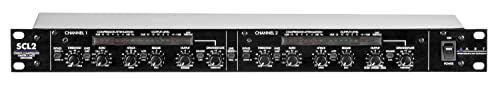
- Dual-channel or linked stereo operation
- Balanced TRS and XLR inputs
- Auto/manual attack-release with LED metering
Best For: Stereo rack setups needing linked compression and easy level monitoring
Multi-Channel Rack Control
Behringer COMPOSER PRO-XL MDX4600 V2

- 4-channel expander/gate/compressor/peak limiter
- Dynamic Enhancer keeps audio lively under compression
- Low contour filter helps prevent pumping
Best For: Live and recording racks needing multi-channel dynamics control
Straightforward Dual-Channel Control
Professional Black Dynamic Processor

- Dual-channel compressor with Overeasy and auto timing
- Built-in noise gate plus LED threshold/gain reduction indicators
- XLR/TRS inputs and outputs with sidechain insert
Best For: Vocals, instruments, and streaming setups needing simple rack control
Clean Dual-Channel Dynamics
Professional Dual-Channel Vocal Compressor-Limiter

- Dual-channel rackmount compressor-limiter with gate
- VCA-based circuit emphasizes vocal clarity and presence
- Sidechain insert supports frequency-based ducking
Best For: Rack vocal and instrument chains needing clean, practical dynamics control
Live Vocal Control Pick – dbx 266xs Compressor/Gate for Live Rigs
If you need a compressor limiter for live recording rack use, the dbx 266xs is a practical 1U option that brings compression and gating into one easy-to-rack unit. Its XLR and 1/4″ TRS connections make it simple to drop into a portable live sound setup, studio rack, or touring rig.
Best For: Live vocal and instrument control in a compact rack format.
Pros:
- Overeasy compression and AutoDynamic attack/release for smooth, musical control.
- Built-in gate adds extra cleanup for live vocals, guitars, and drums.
- XLR and 1/4″ TRS I/O support flexible integration in recording or live racks.
- LED metering for gain reduction, compression threshold, and gate threshold helps setup.
Cons:
- Single 1U unit, so you only get two channels of processing in one rack space.
- Sidechain insert is useful, but the feature set is still focused on straightforward dynamics work.
The 266xs is a solid choice if you want reliable rack compression with gating and clear visual feedback. It fits well for users who want easy live control without moving into more advanced or specialized processors.
Stereo Safety Limiter Choice – Rolls SL33B Program Limiter
For a compressor limiter for live recording rack setups where stereo protection matters, the Rolls SL33B is a straightforward program limiter. It is aimed at keeping stereo program material under control in a simple, rack-friendly format.
Best For: Stereo program limiting in compact live audio setups.
Pros:
- Designed specifically as a stereo program limiter.
- Compact footprint makes it easy to place in a rack or small audio chain.
- Simple, focused tool for limiting rather than full dynamics shaping.
Cons:
- Supplied details do not list advanced controls or extra processing features.
- Less versatile than a full compressor/gate unit for multi-purpose live recording needs.
The SL33B makes sense if you want a no-frills limiter dedicated to stereo program control. It is best when simplicity and basic protection are more important than deep tweaking.
Classic FET Punch Pick – Klark Teknik 76-KT 1176-Style Compressor
If your compressor limiter for live recording rack use needs a more character-driven sound, the Klark Teknik 76-KT delivers a classic FET-style approach. Modeled after the 1176LN D and E revisions, it is built for users who want a rack compressor with vintage-style behavior and discrete signal path design.
Best For: Punchy vocal and instrument compression with a vintage-inspired rack feel.
Pros:
- 1176-style FET compression modeled after classic D and E revisions.
- Completely discrete signal path with Class-A line-level output amplifier.
- MIDAS input and output transformers for a more premium analog signal path.
- Push-button ratio selection plus all-button mode for flexible compression character.
Cons:
- More specialized in character compression than a simple utility limiter.
- No gate section, so it is not an all-in-one dynamics processor.
The 76-KT is a strong pick when tone and compression character matter as much as control. It fits best in racks where you want classic FET-style response for vocals, instruments, or other live sources.
Dual-Channel Rack Workhorse – dbx 266XS Comp/Gate/Limiter
When you want a compressor limiter for live recording rack use with more channel flexibility, the dbx 266XS is a dual-channel comp/gate/limiter option. It is a practical rack unit for users who need compression control plus gating in a simple, live-ready format.
Best For: Dual-channel dynamics control for live racks and recording setups.
Pros:
- Dual-channel design gives you more routing flexibility than single stereo units.
- Comp/gate/limiter format covers core live dynamics needs in one box.
- dbx branding and 6.59-pound build suggest a rack-oriented hardware tool.
Cons:
- Supplied details are sparse, so feature specifics are not fully documented here.
- Less detailed published specs than the better-described alternatives in this roundup.
The 266XS is a sensible pick if you need a basic dual-channel dynamics processor without extra complexity. It is best for straightforward live rack duties where channel count and all-in-one control matter more than specialty features.
Dual-Mono Rack Compressor – Behringer 369 2-Channel Rackmounted Stereo Compressor
If you need a compressor limiter for live recording rack use, the Behringer 369 is built for straightforward dual-channel dynamics control in a 2U format. It offers 2-channel stereo compression, dual-mono operation, variable attack, and a choice of 5 compression ratios, making it a flexible rack option for practical live setups.
Best For: Live recording racks that need two channels of rackmounted compression with flexible routing.
Pros:
- 2-channel stereo compressor in a 2U rackmount design.
- Dual-mono operation adds routing flexibility for different live recording needs.
- Variable attack and 5 compression ratios give useful control over dynamics.
- Custom Midas transformers are included in the signal path.
Cons:
- No detailed front-panel metering is listed in the supplied notes.
- Primarily a compressor/limiter, so it is less feature-rich than a full channel strip.
- 2U size takes more rack space than 1U alternatives.
The Behringer 369 fits buyers who want a dedicated rack compressor with simple, workable controls and dual-channel flexibility. If your live recording rack values clean compression over extra processing, this is a practical place to start.
All-in-One Channel Strip – dbx 286SV Mic Preamp and Processor
The dbx 286SV is a strong choice if you want a compressor limiter for live recording rack setups with more than just compression. This 1U channel strip combines mic preamp, classic dbx compression, de-esser, enhancer, expander/gate, and loop-out support, so it can handle a full vocal or instrument chain in one rack space.
Best For: Live vocal and instrument recording setups that need an all-in-one 1U rack channel strip.
Pros:
- Combines microphone preamp and multiple processing tools in one 1U unit.
- Classic dbx compression is included for controlling dynamic range.
- Also adds de-essing, enhancement, and expander/gate functions.
- XLR and 1/4″ inputs plus status LEDs make it easy to integrate and monitor.
Cons:
- Single-channel design only.
- More of a channel strip than a dedicated compressor/limiter.
- May be more processing than needed if you only want basic compression.
For live recording racks where one input needs preamp, compression, and cleanup tools in a compact space, the dbx 286SV is highly practical. It is especially useful when you want one unit to shape and control a vocal or instrument before it hits the recorder.
Stereo Dynamics Processor – ART SCL2 Dual/Stereo Compressor/Limiter
If your compressor limiter for live recording rack needs should center on stereo or linked-channel dynamics, the ART SCL2 is a purpose-built option. It supports dual-channel or linked stereo operation, balanced TRS and XLR inputs, selectable auto/manual attack-release, and precise LED level meters for easier adjustment in a rack system.
Best For: Stereo live recording racks that need flexible linked compression and clear metering.
Pros:
- Dual-channel or linked stereo operation for flexible setup.
- Balanced TRS and XLR inputs work well in rack environments.
- Selectable auto/manual attack-release helps tailor compression response.
- Precise LED level meters aid setup and gain control.
Cons:
- Does not include the extra preamp and channel-strip tools found on some competitors.
- No digital features or advanced routing are listed in the supplied notes.
- At 240V, power compatibility may need checking for some users.
The ART SCL2 is a sensible pick when the priority is clean stereo compression in a rackmount format. It keeps the focus on dynamics control and monitoring rather than adding extra processing layers.
Multi-Channel Rack Control – Behringer COMPOSER PRO-XL MDX4600 V2
If you want a compressor limiter for live recording rack use with lots of routing flexibility, the Behringer COMPOSER PRO-XL MDX4600 V2 is built for that kind of job. Its 4-channel layout, switchable dynamic enhancer, low contour filter, and IRC expander/gate make it a practical fit for taming dynamics while keeping the signal clean and controlled.
Best For: Multi-channel live and recording racks that need compression, limiting, and noise control in one 1U unit.
Pros:
- 4-channel design handles multiple sources in a single rack unit.
- Dynamic Enhancer helps keep audio lively even with heavy compression.
- Low contour filter helps reduce pumping from bass-heavy material.
- IRC expander/gate supports virtually inaudible noise suppression.
Cons:
- More feature-rich than a simple two-channel compressor.
- May be more unit than you need for a small setup.
For rack users who want broad control over dynamics, this unit stands out for combining compression, peak limiting, expansion, and enhancement in one processor. It looks especially useful when you need consistent live recording control across several channels without filling up the rack.
Straightforward Dual-Channel Control – Professional Black Dynamic Processor
This compressor limiter for live recording rack setups focuses on straightforward two-channel control with practical features for studio and stage use. It offers Overeasy compression, auto attack/release, a noise gate, sidechain insert, and XLR/TRS connectivity, making it a flexible option when you want smooth dynamics management in a 1U rackmount format.
Best For: Vocal, instrument, and streaming chains that need easy dual-channel control with gate and sidechain tools.
Pros:
- Dual-channel layout suits vocals, guitars, drums, and other sources.
- Overeasy compression and auto attack/release aim for natural control.
- Noise gate and LED indicators help with setup and background-noise reduction.
- Sidechain insert supports targeted ducking for bass or kick.
Cons:
- Feature set is geared more toward control than character processing.
- Compact format may limit how much front-panel space you get per channel.
If you want a rack compressor that covers the basics cleanly, this model is easy to place in a live or recording chain. The combination of VCA-style behavior, gate function, and sidechain control makes it practical for users who need precision without a complicated workflow.
Clean Dual-Channel Dynamics – Professional Dual-Channel Vocal Compressor-Limiter
For a compressor limiter for live recording rack use, this rackmount dual-channel unit keeps the feature set focused on practical dynamic control. It includes Overeasy compression, adjustable attack and release, a noise gate, sidechain insert, and XLR/TRS connectivity, so it can slot into studio, live, streaming, or stage setups without much fuss.
Best For: Rack-based vocal and instrument chains that need clean compression, gating, and sidechain ducking.
Pros:
- Dual-channel design works for vocals, guitars, drums, and similar sources.
- VCA-based circuit aims for clarity, warmth, and presence on vocals.
- Noise gate and LED metering make setup and monitoring easier.
- Sidechain insert is useful for bass and kick drum ducking.
Cons:
- Compared with more elaborate processors, it keeps the control set fairly focused.
- Not as channel-dense as a 4-channel rack unit.
This is a solid pick if your priority is dependable rack compression with the usual tools for live and recording work. It should appeal to users who want a clean, practical processor for vocal presence, noise control, and targeted low-end management.
How We Picked the Best Compressor Limiter for Live Recording Rack
We looked for rackmount models that suit live and recording use, prioritizing dependable limiting, transparent compression, practical I/O, and flexible routing. We also considered whether each Compressor Limiter for Live Recording Rack is easy to integrate into a front-end channel strip, mix bus, or broadcast-style setup.
Channel count mattered: single-channel units are useful for vocals or critical sources, while dual- and four-channel designs are better for bands, houses of worship, and multi-mic rigs. We also weighed rack size, sidechain or insert options, and whether the controls are simple enough for fast stage adjustments.
Quick Comparison
For a straightforward stereo or dual-mono setup, two-channel rack units are usually the sweet spot. If you need to manage multiple sources at once, a 4-channel processor can be more efficient. For voice-focused recording or streaming, channel-strip style models may make more sense than a traditional compressor alone.
In general, look for a unit that matches your signal path: vocal mic preamp chains, line-level program material, or stereo mix protection. That will matter more than chasing extra features you may never use.
Key Buying Factors for a Compressor Limiter for Live Recording Rack
Channel Count and Routing
Choose mono, stereo, dual-mono, or multi-channel based on the number of sources you need to control. A Compressor Limiter for Live Recording Rack should fit your workflow without forcing awkward patching or unnecessary complexity.
Compression Character and Limiting Behavior
Some units are designed for transparent control, while others add more color or punch. For live recording, you usually want predictable response, clean limiting, and enough headroom to avoid audible pumping unless that effect is intentional.
Connectivity and Insert Options
Sidechain inserts, XLR/TRS connectivity, and balanced I/O can make setup easier and help the processor integrate with mixers, interfaces, and patch bays. If you run a hybrid rig, flexibility here is especially valuable.
Workflow and Control Layout
Fast, clearly labeled controls are a major advantage in live environments. Metering, threshold access, and basic attack/release or ratio controls should be easy to read and adjust under pressure.
Who Should Buy Which Compressor Limiter for Live Recording Rack?
If you mainly record vocals or one critical source, a simpler one-channel or channel-strip unit is often the best fit. If you need stereo control for playback, drums, keys, or a mix bus, a dual-channel rack processor is usually the better choice.
For venues, rehearsal rooms, and larger live rigs, multi-channel models can save rack space and money per channel. The best choice is the one that matches your source count, rack space, and how hands-on you want the processing to be during a show or session.