Choosing the right display can make a recording setup feel faster, cleaner, and easier to live with during long sessions. A good curved monitor for recording studio use should help you manage DAWs, plugins, timelines, and meters without constant window juggling.
Below, we focus on screens that balance immersion, workspace, and practical connections so you can keep your attention on the mix instead of the monitor.
Best 10 Curved Monitor for Recording Studio Picks for 2026
Wide Workspace Pick
Sceptre 34-Inch Curved Ultrawide WQHD Monitor

- 3440 x 1440 ultrawide resolution
- Curved 34-inch VA panel
- 99% sRGB with DisplayPort and HDMI
Best For: Home studios needing more room for DAWs and plugins
Premium Productivity Pick
Dell UltraSharp U4025QW 40" Curved 5K2K Monitor

- 40-inch curved 5K2K WUHD display
- USB-C, Thunderbolt, Ethernet, and USB hub
- Anti-glare screen with 600-nit brightness
Best For: Professional studios needing a huge, organized workspace
All-in-One Desk Hub Pick
Samsung 49" Curved Ultrawide Business Monitor

- 49-inch 32:9 Dual QHD curved screen
- USB-C with 90W charging
- Built-in speakers and height-adjustable stand
Best For: Large desks that need a monitor and dock in one
Fast Value Pick
SANSUI 34-Inch Curved UWQHD Gaming Monitor

- 34-inch 3440 x 1440 ultrawide panel
- Up to 200Hz refresh and 1ms OD
- HDMI 2.1, DisplayPort, and included cable
Best For: Budget buyers who want a large curved screen for production
Studio-Ready Clarity
Dell 34" Curved USB-C Ultrawide

- 21:9 ultrawide layout suits DAWs and mixers
- 95% DCI-P3 and 99% sRGB for rich color
- USB-C 65W helps reduce cable clutter
Best For: Producers and editors wanting a clean ultrawide studio setup
Budget-Friendly Curve
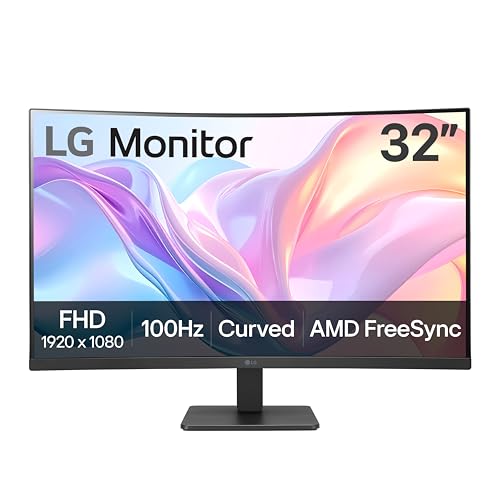
- 32-inch curved VA panel for comfortable viewing
- 100Hz refresh rate for smooth everyday motion
- Reader Mode helps reduce blue light
Best For: Affordable curved display for basic studio and desktop use
Mixing Wall of Space
Deco Gear 49" 5K2K Curved Ultrawide

- 49-inch 32:9 display feels like two monitors in one
- 5120 x 1440 resolution for huge workflow space
- USB-C 65W, KVM, PBP/PIP for multi-device setups
Best For: Power users building a large one-screen studio workstation
Balanced Ultrawide Studio Pick
Alienware 34 Curved Gaming Monitor

- 34-inch 21:9 panel with 3440 x 1440 detail
- 1500R curve, matte finish, and low blue light help comfort
- 95% DCI-P3 and DisplayHDR 400 support better visuals
Best For: Creators who want a premium ultrawide with sharp detail and comfort
Large Workspace Value Pick
INNOCN 49 Curved Ultrawide Monitor

- 49-inch 32:9 super ultrawide layout with 3840 x 1080 resolution
- USB-C 65W, HDMI, DisplayPort, USB, and Ethernet built in
- PIP/PBP split-screen helps manage two sources at once
Best For: Buyers who want a huge ultrawide workspace with flexible connectivity
Premium Super Ultrawide
Samsung Odyssey G9 49-inch Curved Monitor

- 49-inch 32:9 screen with 5120 x 1440 resolution
- 1000R curve and HDR 600 for an immersive picture
- 144Hz refresh, 1ms response, and FreeSync Premium Pro
Best For: Users who want a premium super ultrawide with high resolution and strong contrast
Wide Workspace Pick – Sceptre 34-Inch Curved Ultrawide WQHD Monitor
If you want a curved monitor for recording studio work that gives you more room for timelines, plugins, and mixer windows, this 34-inch ultrawide is a practical budget-friendly option. Its 3440 x 1440 resolution and 21:9 aspect ratio provide a wide canvas for arranging tracks and editing sessions, while the curved VA panel helps keep the view comfortable across the screen.
Best For: Home studios and creators who want extra screen space for multitrack editing without moving up to a premium display.
Pros:
- 3440 x 1440 WQHD resolution with a 21:9 ultrawide layout
- Curved 34-inch VA panel helps fill the field of view
- 99% sRGB coverage is useful for general photo and video work too
- DisplayPort and HDMI inputs plus built-in speakers
Cons:
- 280 nits brightness is modest compared with higher-end monitors
- Built-in speakers are convenient, but not a substitute for studio monitors
- 1ms MPRT and high refresh features are more gaming-focused than studio-focused
Overall, this Sceptre model makes sense if your priority is maximizing screen real estate for recording and editing on a reasonable budget. It is not a color-critical reference display, but it does cover the essentials for day-to-day studio workflow.
Premium Productivity Pick – Dell UltraSharp U4025QW 40" Curved 5K2K Monitor
For a curved monitor for recording studio setups where screen organization matters more than speed, this Dell UltraSharp is built for productivity. The 40-inch 5K2K curved panel gives you a huge workspace for arranging tracks, editing audio, and keeping multiple windows visible at once, while the high brightness and anti-glare finish help it stay usable in brighter rooms.
Best For: Professional studios and multitask-heavy workstations that want a very large, clean desktop display.
Pros:
- Huge 40-inch curved display with 5120 x 2160 resolution
- USB-C, Thunderbolt, Ethernet, and USB hub support reduce desk clutter
- 600-nit brightness and anti-glare screen suit brighter work areas
- Height, swivel, and tilt adjustments make setup easier
Cons:
- 5 ms response time is fine for work, but not a standout for motion-heavy use
- Large size and 41.9-pound weight make it less compact than smaller options
- Price is likely aimed more at premium productivity than budget studio builds
This Dell stands out when you want one screen to handle a lot of studio tasks without feeling cramped. It is a strong choice for serious editing stations where connectivity, clarity, and workspace matter most.
All-in-One Desk Hub Pick – Samsung 49" Curved Ultrawide Business Monitor
If you need a curved monitor for recording studio workflow that can also act as a desk hub, this Samsung 49-inch ultrawide is built for large, clutter-free setups. The 32:9 Dual QHD screen creates a panoramic view that is useful for sprawling DAWs, plugin chains, and reference material, while USB-C with 90W charging helps simplify cable management.
Best For: Large studio desks where one display needs to replace a monitor plus docking station.
Pros:
- 49-inch 32:9 curved display with 5120 x 1440 Dual QHD resolution
- USB-C, DisplayPort, and dual HDMI inputs support flexible connectivity
- 90W USB-C charging and built-in USB hub help reduce desk clutter
- Height-adjustable stand and built-in speakers add convenience
Cons:
- Very wide 49-inch format needs a deep, spacious desk
- Built-in speakers are useful, but external audio is still better for studio work
- 120Hz and HDR are nice extras, but the main appeal is workspace, not reference-grade color
For studios that want maximum horizontal space and fewer cables, this Samsung is a standout. It is especially appealing when the monitor must double as the central connection point for a busy production desk.
Fast Value Pick – SANSUI 34-Inch Curved UWQHD Gaming Monitor
This curved monitor for recording studio use is a good value if you want a wide editing canvas without spending at the premium end. The 34-inch 3440 x 1440 ultrawide panel gives you plenty of room for DAW tracks and floating windows, and the curved 1500R shape helps keep the screen comfortable to scan during longer sessions.
Best For: Budget-conscious creators who want a wide ultrawide display for music production and editing.
Pros:
- 3440 x 1440 UWQHD resolution on a 34-inch curved panel
- Up to 200Hz refresh and 1ms OD response time
- High color gamut claims, including sRGB 130% and DCI-P3 97%
- HDMI 2.1 and DisplayPort inputs with included cable
Cons:
- Gaming features like AI Crosshair and Sniper Scope are not studio essentials
- No built-in speakers, so you will need separate audio hardware
- Brightness is listed at 300 nits, which is adequate but not exceptional
As a studio monitor, this SANSUI is appealing for its size, resolution, and connection options. It focuses on delivering a lot of screen for the money, even if several of its headline features are aimed more at gamers than producers.
Studio-Ready Clarity – Dell 34" Curved USB-C Ultrawide
If you want a curved monitor for recording studio work, this Dell 34 gives you a wide 21:9 canvas that helps with timelines, mixer views, and session windows without feeling cramped. Its 3440 x 1440 resolution, 95% DCI-P3 coverage, and ComfortView Plus make it a strong fit for long editing or production sessions.
Best For: Music producers and editors who want an ultrawide workspace with strong color and easy USB-C connectivity.
Pros:
- 34-inch 21:9 ultrawide panel is useful for arranging multiple studio apps side by side.
- 95% DCI-P3 and 99% sRGB coverage support vibrant, accurate-looking visuals.
- USB-C with up to 65W power delivery helps keep a recording desk cleaner.
- Built-in 2x10W speakers and anti-glare finish add everyday convenience.
Cons:
- VA panel and 300 cd/m2 brightness may not satisfy users wanting an especially bright reference display.
- At 34 inches, it is large but not as expansive as 49-inch dual-monitor replacements.
This is a practical studio monitor choice if you value workspace efficiency, strong contrast, and single-cable simplicity more than extreme screen size.
Budget-Friendly Curve – LG 32" Curved FHD 100Hz
This curved monitor for recording studio use is a straightforward pick when you want a comfortable viewing angle without spending on a premium ultrawide. The 32-inch curved VA panel, 100Hz refresh rate, and Reader Mode make it a sensible everyday screen for tracking, browsing, and basic editing tasks.
Best For: Budget-conscious buyers who want a simple curved screen for general studio and desktop work.
Pros:
- 32-inch curved display is comfortable for long viewing sessions.
- 100Hz refresh rate keeps motion smooth for everyday use.
- Reader Mode reduces blue light for easier extended reading.
- Black Stabilizer and AMD FreeSync add extra value for mixed work and play.
Cons:
- FHD 1920 x 1080 resolution is modest for detailed production timelines.
- 250 cd/m2 brightness is lower than many higher-end studio-oriented displays.
Overall, this LG is best when affordability and comfort matter more than workspace density or ultra-sharp detail.
Mixing Wall of Space – Deco Gear 49" 5K2K Curved Ultrawide
For a curved monitor for recording studio setups, this Deco Gear 49-inch ultrawide is built for serious screen real estate. The 5120 x 1440 resolution, 32:9 aspect ratio, and PBP/PIP tools make it easy to manage a DAW, plugin windows, reference tracks, and communication apps all at once.
Best For: Power users who want a massive one-screen workstation for music production, editing, and multitasking.
Pros:
- 49-inch 32:9 panel creates a dual-monitor-like workspace in one seamless display.
- 5K2K 5120 x 1440 resolution gives plenty of room for studio apps and timelines.
- USB-C 65W, KVM, and PBP/PIP support cleaner multi-device workflows.
- 120Hz refresh rate and 1ms response time keep motion smooth and responsive.
Cons:
- Large physical footprint may overwhelm smaller desks or compact studio spaces.
- Brightness is 250 cd/m2, so it is not the brightest option in this group.
If your studio can handle the size, this model offers the most workspace and flexibility for complex production sessions.
Balanced Ultrawide Studio Pick – Alienware 34 Curved Gaming Monitor
If you want a curved monitor for recording studio work that also doubles as a strong everyday display, the Alienware 34 gives you a roomy 34-inch 21:9 panel with a 1500R curve and WQHD detail. Its ultrawide shape is useful when you need more room for timelines, meters, and multiple windows, while the matte finish and blue light filter help make longer sessions easier on the eyes.
Best For: Creators who want a premium ultrawide with sharp detail, a gentle curve, and comfortable long-session viewing.
Pros:
- 34-inch 21:9 ultrawide screen with 3440 x 1440 resolution
- 1500R curve plus matte screen finish for a more focused view
- 95% DCI-P3 color coverage and DisplayHDR 400 support
- Height and tilt adjustment, plus low blue light hardware
Cons:
- Gaming-focused features may be more than some studio users need
- Not as wide as 49-inch super ultrawide alternatives
Overall, this is the most balanced choice if you want a curved monitor for recording studio use without giving up sharp image quality or ergonomic comfort. It looks well-suited to editing, viewing reference material, and keeping a clean, organized workspace.
Large Workspace Value Pick – INNOCN 49 Curved Ultrawide Monitor
For a curved monitor for recording studio workflows that need serious screen space, the INNOCN 49-inch model stands out with its 32:9 aspect ratio and dual-FHD 3840 x 1080 layout. The 1800R curve, PIP/PBP support, and adjustable stand make it practical when you want to spread out tracks, chat, reference material, and other windows on one display.
Best For: Buyers who want a huge ultrawide workspace with flexible connectivity and split-screen features.
Pros:
- 49-inch 32:9 super ultrawide panel with 3840 x 1080 resolution
- 1800R curve and height/tilt/swivel adjustment for flexible viewing
- USB-C with 65W power delivery, plus HDMI, DisplayPort, USB, and Ethernet
- PIP/PBP split-screen support for two sources at once
Cons:
- Lower pixel density than higher-resolution ultrawide options
- Glossy screen finish may not suit every studio lighting setup
This is a practical pick if your priority is workspace over pixel density. It gives you a large, efficient layout for multitasking and a long list of ports, which can simplify a crowded desk.
Premium Super Ultrawide – Samsung Odyssey G9 49-inch Curved Monitor
If you need a curved monitor for recording studio use and want the biggest, most immersive workspace here, the Samsung Odyssey G9 delivers a 49-inch 32:9 screen with a 1000R curve and 5120 x 1440 resolution. It is built for users who want expansive screen real estate, strong contrast, and a clean multitasking layout for complex projects.
Best For: Users who want a premium super ultrawide with high resolution, strong contrast, and a deeply curved screen.
Pros:
- 49-inch 32:9 display with 5120 x 1440 resolution
- 1000R curve creates a highly immersive viewing experience
- DisplayHDR 600 and 99% color gamut support richer image quality
- 144Hz refresh rate, 1ms response time, and FreeSync Premium Pro
Cons:
- Large footprint may be excessive for smaller desks
- Gaming-first positioning may be more than some studio buyers need
For users who want maximum screen space and a more premium visual experience, this model is the strongest fit. Its high resolution and deep curve make it especially appealing if you value both detail and a wraparound feel at the desk.
How We Picked the Best Curved Monitor for Recording Studio
For this roundup, we prioritized monitors that make studio work easier in real-world use: wide workspace, strong resolution, comfortable curvature, reliable panel quality, and versatile inputs. For a Curved Monitor for Recording Studio workflows, we also looked at text clarity for session labels and plugin use, plus features like USB-C, DisplayPort, and flexible aspect ratios.
Quick Comparison
The best options generally fall into three groups: 34-inch ultrawides for compact desk setups, 40-inch 5K2K displays for detailed editing and lots of tracks, and 49-inch super-ultrawides for users who want a true dual-monitor replacement. Smaller curved monitors can work well for budget-conscious home studios, while larger models suit producers, engineers, and content creators who keep many tools open at once.
Key Buying Factors for a Curved Monitor for Recording Studio Use
Screen Size and Aspect Ratio
Wider screens are especially useful in DAWs because they give you more horizontal room for timelines, mixer channels, and plugin chains. A 34-inch 21:9 display is a strong starting point, while 49-inch 32:9 models are better if you want to spread out a full production workspace.
Resolution and Text Clarity
Higher resolution matters more than refresh rate in audio production. Clear text helps when reading track names, automation lanes, and detailed plugin interfaces. If you use lots of software instruments or mastering tools, look for ultrawide models with sharper pixel density.
Curvature and Viewing Comfort
Moderate curves can reduce eye movement across wide screens and keep the edges of your workspace easier to see. For studio use, a gentle curve is often more practical than an aggressive one, especially if you also do video editing or general computer work.
Connectivity and Workflow
USB-C is helpful for laptops, while DisplayPort and HDMI remain important for desktop audio rigs and interface setups. Built-in KVM, picture-by-picture, and picture-in-picture can be useful if you switch between a production computer and a secondary source.
Who Should Buy Which Curved Monitor for Recording Studio?
If you want the best balance of price and space, choose a 34-inch ultrawide. If your work involves dense sessions, mastering, or lots of side-by-side windows, a 40-inch 5K2K monitor is a smarter premium pick. If you want to replace two monitors with one seamless panel, a 49-inch super-ultrawide is ideal. Budget buyers can still get a practical Curved Monitor for Recording Studio tasks by choosing a lower-cost 34-inch or 32-inch model with decent resolution and eye-comfort features.