Touring demands more from a guitar effects processor than a strong effects list. Your rig must be dependable under repeated setup, easy to control onstage, and flexible enough for different venues, backlines, and monitoring systems.
These 10 guitar effects processors for touring span streamlined floorboards, advanced professional units, amp-modeling platforms, and compact options. Use the guide below to match features, connectivity, and workflow to the way you actually perform.
Best 10 Guitar Effects Processors for Touring Picks for 2026
Touring Workhorse
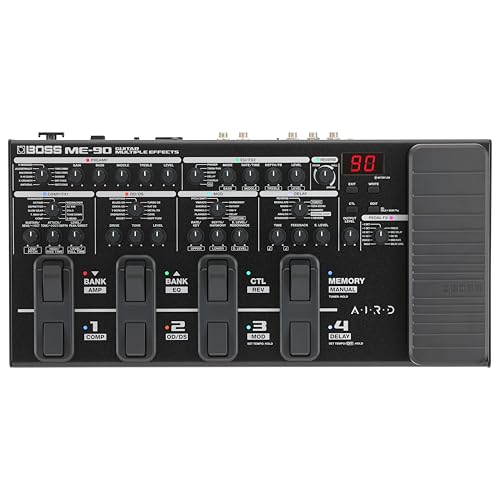
- Hands-on controls with eight multifunction footswitches
- AIRD amps, 60 effects, IR loading, and effects loop
- Compact, battery-powered design with extensive patch memory
Best For: Performers wanting quick stompbox-style control onstage
Portable HX Platform

- Compact floor unit with large color display
- 270-plus HX and legacy models
- IR loading, stereo loop, and integrated expression pedal
Best For: Touring players seeking a lightweight modeling rig
Touchscreen Command Center

- 15 assignable blocks and flexible signal routing
- 32 amp types and more than 170 BOSS effects
- Color touchscreen with expandable control options
Best For: Complex touring rigs requiring detailed routing
Complete Gigging Bundle

- 240-plus effects and 140-plus amp/cabinet models
- Looper, drum machine, IR loader, and 256 patch slots
- USB-C audio interface and included gig bag
Best For: Touring players wanting maximum features and included transport gear
Pedalboard Command Center

- 100+ effects and up to nine simultaneous blocks
- Legacy Line 6 effects library included
- Live-friendly switches, LED rings, and scribble strips
Best For: Touring guitarists coordinating an amp-and-pedal rig
Flexible Stage and Studio Rig
Valeton GP-200 Multi-Effects Processor

- 240+ effects and 11 movable modules per patch
- Balanced XLR, FX loop, MIDI, and USB-C audio I/O
- Built-in expression pedal, looper, drums, and IR loader
Best For: Multi-instrument players needing touring and recording flexibility
Professional Performance Hub
BOSS GT-1000 Effects Processor

- 32-bit processing and 96 kHz sampling
- Fast patch switching with delay carryover
- Extensive foot, MIDI, USB, and Bluetooth control
Best For: Professional guitarists and bassists with complex live rigs
Best Battery-Powered Stage Rig

- Up to nine hours of integrated battery life
- Eight footswitches with assignable CTRL mode
- Stereo balanced XLR outputs for stage routing
Best For: Touring guitarists needing flexible, cable-friendly live control
Best Compact Pro Option

- 32 amp types and 170 BOSS effects
- Up to 15 assignable routing blocks
- Rugged chassis with touch display and expression pedal
Best For: Traveling players wanting extensive sound design in a compact unit
Best Budget Practice-and-Travel Choice

- 71 effects and 13 amp models
- Battery-powered with expression pedal
- Looper, rhythm patterns, and headphone monitoring
Best For: Portable practice, rehearsal, and straightforward live setups
Touring Workhorse – BOSS ME-90
BOSS ME-90 Guitar Multi-Effects Guitar Processor | All-In-One Guitar Processor
Check Price On AmazonFor guitarists comparing guitar effects processors for touring, the BOSS ME-90 offers a practical balance of hands-on control, portability, and broad sound coverage. Its knob-based interface, eight multifunction footswitches, AIRD amp models, IR loading, effects loop, and battery operation support quick setup changes onstage.
Best For: Performing guitarists who want intuitive stompbox-style control and an all-in-one touring rig.
Pros:
- Eight multifunction footswitches and a redesigned expression pedal provide extensive live control.
- Includes 60 effects, 11 AIRD amp models, IR loading, and an effects loop.
- Compact, battery-powered design with 36 presets and 36 user patch locations.
Cons:
- The optional Bluetooth Audio MIDI adaptor is required for wireless mobile editing and streaming.
- Its feature set may be more than needed for players seeking a simple effects pedal.
The ME-90 is a strong touring choice when fast physical adjustments matter more than a touch-driven interface. BOSS Tone Studio adds computer-based editing for more detailed setup work.
Portable HX Platform – Line 6 POD Go
The Line 6 POD Go is a compelling option among guitar effects processors for touring when a lightweight, compact setup is a priority. Its large color display, straightforward controls, 270-plus HX and legacy models, stereo effects loop, and expression pedal make it suited to streamlined live rigs.
Best For: Touring players who prioritize portability, a clear display, and a broad amp-and-effects selection.
Pros:
- Compact, lightweight design with a large color display and five push encoders.
- Provides more than 270 HX and legacy amp and effects models.
- Includes third-party IR loading, a stereo effects loop, and an integrated expression pedal.
Cons:
- The POD Go shoulder bag is sold separately.
- The supplied notes identify the unit as non-wireless.
For touring musicians who want extensive modeling without a bulky floor unit, POD Go keeps the interface focused and transport-friendly. Its stereo loop and IR support also allow integration with a wider live setup.
Touchscreen Command Center – BOSS GX-100
For players evaluating guitar effects processors for touring, the BOSS GX-100 emphasizes deep routing and flexible control in a rugged metal chassis. It combines a color touchscreen, 32 amp types, more than 170 BOSS effects, assignable blocks, speaker IR support, and expandable foot control.
Best For: Guitarists and bassists who need extensive routing, detailed sound design, and adaptable stage control.
Pros:
- Offers 15 assignable blocks and flexible amp/effect routing for complex rigs.
- Includes 32 amp types, over 170 BOSS effects, and WAV speaker IR support.
- Color touchscreen, freely assignable footswitches, expression pedal, and expansion connections support live control.
Cons:
- The larger chassis may be less convenient than more compact touring processors.
- Optional Bluetooth connectivity requires the Audio MIDI Dual Adaptor.
The GX-100 is best suited to touring setups where routing flexibility and hands-on control are central requirements. Its computer editing and optional mobile integration add useful preparation tools away from the stage.
Complete Gigging Bundle – Valeton GP-200
The Valeton GP-200 is a feature-packed choice among guitar effects processors for touring, combining amp modeling, effects, performance tools, and a protective gig bag. Its cast-metal chassis, customizable footswitch layout, 4.3-inch display, IR loader, USB-C interface, looper, and drum machine support a wide range of live and rehearsal needs.
Best For: Touring guitarists and bassists who want extensive sounds, onboard practice tools, and included transport protection.
Pros:
- Provides more than 240 effects, 140-plus amp and cabinet models, and up to 11 simultaneous modules.
- Includes 256 patch slots, 20 user cabinet IR slots, a 180-second looper, and 100 drum patterns.
- Offers a 6-in/4-out USB-C audio interface with loopback and re-amping, plus a gig bag.
Cons:
- At 2.37 kg, it may be less convenient to carry than lighter compact processors.
- The extensive feature set can require more preparation than a simpler live pedal.
The GP-200 stands out for touring musicians who value an all-in-one performance and practice platform. Its included gig bag and broad connectivity make it especially practical for players moving between rehearsals, stages, and recording setups.
Pedalboard Command Center – HX Effects Guitar Processor
For guitarists building touring-ready guitar effects processors for touring, the Line 6 HX Effects focuses on deep effects control in a pedalboard-friendly format. It offers more than 100 HX effects, supports up to nine simultaneous effects, and is designed to coordinate an amp-and-pedal rig.
Best For: Players who want a dedicated effects processor to organize and control an existing amp and pedal setup.
Pros:
- 100+ HX effects with up to nine usable simultaneously
- Includes legacy effects from several Line 6 M-Series and DL4-era units
- Capacitive footswitches, LED rings, and scribble strips support live control
- Works as a command center for an amp and pedal rig
Cons:
- Does not offer the amp-and-cab modeling emphasis described for some full multi-effects units
- Requires a 9V, 300mA DC power supply
- At 7.1 pounds, it may add noticeable weight to a compact touring board
The HX Effects is a strong fit when your touring setup already includes an amplifier and pedals but needs centralized switching and expanded effects access. Its live-oriented display and footswitch design are particularly useful for repeatable stage changes.
Flexible Stage and Studio Rig – Valeton GP-200 Multi-Effects Processor
Valeton GP-200 Multi-Effects Processor for Guitar & Bass, Expression Pedal, MIDI, USB Interface
Check Price On AmazonThe Valeton GP-200 is a versatile choice among guitar effects processors for touring, combining amp and cab modeling, effects, routing, and recording connectivity. Its balanced XLR outputs, FX loop, MIDI, expression pedal, and USB-C interface give it practical flexibility for both stages and studios.
Best For: Guitarists, bassists, and acoustic players who need broad routing options, built-in expression control, and direct recording features.
Pros:
- 240+ effects, including 140+ amp and cab models, with up to 11 modules per patch
- Built-in optical expression pedal plus an external EXP/FS connection
- Balanced XLR outputs, FX loop, MIDI, aux, headphones, and USB-C audio interface
- Includes IR loading, a 180-second looper, drum patterns, and 256 patches
Cons:
- Does not operate on batteries and requires its 9V power adapter
- Its many routing and modeling options may require more setup time
- Warranty information supplied lists a 90-day free-return period
With direct outputs, MIDI, USB re-amping, and onboard performance tools, the GP-200 is well suited to players moving between venues and recording environments. It is especially compelling when one compact unit needs to cover multiple instruments and workflows.
Professional Performance Hub – BOSS GT-1000 Effects Processor
BOSS GT-1000 Guitar Effects Processor | Industry-Leading Guitar Effects Processor
Check Price On AmazonThe BOSS GT-1000 is aimed at professional players comparing guitar effects processors for touring and demanding live work. It combines advanced 32-bit processing and 96 kHz sampling with extensive foot control, patch switching, bass support, and wireless editing through Bluetooth.
Best For: Touring guitarists and bassists who prioritize high-end processing, expressive control, and seamless patch changes.
Pros:
- Uses 32-bit AD/DA conversion, 32-bit floating-point processing, and 96 kHz sampling
- Offers a large BOSS effects library with MDP effects and bass mode
- Provides fast patch switching with delay carryover
- Includes 10 footswitches, six knobs, an expression pedal, MIDI, USB, and Bluetooth editing
Cons:
- Its professional feature set may be more than casual players need
- At 8 pounds, it is a substantial unit for a touring pedalboard
- Supplied specifications list a relatively large 24-by-13.1-inch footprint
The GT-1000 makes sense for performers who need a complete control surface and reliable transitions between sounds. Delay carryover, configurable controls, and external MIDI or pedal support help it accommodate complex live rigs.
Best Battery-Powered Stage Rig – MOOER GE150 Max Li
For guitarists comparing guitar effects processors for touring, the MOOER GE150 Max Li stands out as a compact, battery-powered floor unit built around live control. Its eight footswitches, stereo balanced XLR outputs, integrated expression pedal, and up to nine hours of battery life make it practical for mobile stage setups.
Best For: Touring players who need flexible hands-free control and battery-powered operation.
Pros:
- Integrated lithium battery provides up to nine hours of use.
- Eight footswitches and CTRL mode support detailed live control.
- Stereo balanced XLR outputs suit long-distance stage routing.
- Includes 200 preset slots, spill-over effects tails, looping, and a drum machine.
Cons:
- Its many features may require time to configure for a personal live workflow.
- The unit is limited to the supplied 3.5-inch display for visual editing.
With 55 amp models, cabinet simulation, third-party IR support, and extensive routing options, the GE150 Max Li is a feature-rich choice for players who prioritize touring flexibility and onboard control.
Best Compact Pro Option – BOSS GX-10
The BOSS GX-10 is a compact option for guitarists seeking guitar effects processors for touring without giving up extensive sound-design tools. It uses the GX-100 sound engine and color touch display, combines 32 amplifier types with 170 BOSS effects, and provides a rugged metal chassis for travel.
Best For: Touring guitarists and bassists who want broad processing and customizable routing in a compact format.
Pros:
- Offers 32 amplifier types and 170 BOSS effects.
- Supports up to 15 assignable signal-chain blocks.
- Includes speaker choices and WAV speaker IR loading.
- Three flexible footswitches and an integrated expression pedal support performance control.
Cons:
- Its compact three-switch layout may provide less immediate control than larger floor processors.
- The supplied details do not indicate battery-powered operation.
With 32-bit floating-point processing, 24-bit AD and 32-bit DA conversion, effects-loop connectivity, and a touch display, the GX-10 is suited to players who value polished sound and deep routing in a travel-ready enclosure.
Best Budget Practice-and-Travel Choice – Zoom G1X Four
For players shopping for guitar effects processors for touring on a smaller budget, the Zoom G1X Four offers a straightforward, portable setup. It combines 71 effects, 13 amp models, an expression pedal, a looper, rhythm patterns, and battery-powered operation for practice, rehearsals, and basic live experimentation.
Best For: Traveling guitarists, beginners, and players who want portable effects with practice features.
Pros:
- Includes 71 effects and 13 amp models.
- Battery-powered design supports portable use.
- Built-in 30-second looper and 68 rhythm patterns aid practice and rehearsal.
- Aux input and headphone monitoring support silent playing.
Cons:
- Its 30-second looper is shorter than the looping time offered by some larger processors.
- The supplied details do not list balanced outputs or advanced live-routing features.
- The smaller feature set may be less suitable for complex touring signal chains.
The G1X Four is best viewed as a compact, accessible effects platform rather than a full professional routing hub. Its battery operation, expression pedal, looper, and rhythm section make it especially useful when portability and practice value matter most.
How We Picked the Best Guitar Effects Processors for Touring
We focused on features that matter beyond the practice room: dependable foot control, fast preset access, usable amp and cabinet modeling, flexible routing, and connections for amplifiers, direct systems, recording, and MIDI. We also considered portability and workflow, since touring rigs may need to move quickly between soundcheck, stage, and fly dates.
The lineup includes both advanced processors for complex professional setups and simpler units for players who want reliable effects without a steep learning curve. Product specifications and intended use should be checked before buying, particularly for expression-pedal layouts, battery operation, output formats, and included accessories.
Quick Comparison
| Best For | What to Prioritize |
|---|---|
| Direct-to-PA touring | Amp modeling, impulse-response support, balanced or flexible outputs, and dependable preset switching |
| Traditional amp rigs | Effects-loop routing, four-cable-method support, and clear control over signal order |
| Complex professional setups | MIDI, parallel routing, snapshot or scene-style control, and extensive assignable switches |
| Fast setup and portability | Simple menus, onboard expression control, compact dimensions, and durable construction |
| Budget-conscious touring | Core effects, practical outputs, firmware support, and a control layout you can operate confidently |
Key Buying Factors for Guitar Effects Processors for Touring
Stage Control and Preset Management
Count the switches you need for tap tempo, preset changes, tuner access, looping, and effect toggles. A smaller unit can work well if presets are organized logically, while larger boards reduce menu diving during a set. Assignable controls and an expression pedal are especially useful for volume, wah, delay feedback, or modulation depth.
Signal Routing and Connectivity
Check whether the processor supports stereo outputs, an effects loop, MIDI, USB audio, and connections for external switches. Direct players should look for convincing amp and cabinet modeling with output options suitable for a mixing console or stage monitor. Players using an amplifier should confirm that the routing matches their amp and preferred four-cable setup.
Reliability, Power, and Portability
A touring processor should tolerate frequent transport and offer stable, predictable operation. Review the power requirements, included adapter, switch construction, screen visibility, and available backups or presets. Weight matters for flights, but a slightly larger board may be worthwhile if it improves control and reduces setup mistakes.
Who Should Buy Which Guitar Effects Processors for Touring?
Choose a streamlined multi-effects board if you want quick access to common sounds and minimal setup. A compact processor suits fly dates, rehearsals, and players who rely on a small number of carefully prepared presets. Advanced units are better for musicians who need detailed routing, MIDI control, multiple scenes, or separate signal paths for front-of-house and monitoring.
If you are unsure, prioritize the connections and stage workflow you already use rather than the largest effects count. The best Guitar Effects Processors for Touring are the ones you can program confidently, control without hesitation, and integrate with every part of your live rig.