Finding the right violin for small hands is mainly about scale, neck comfort, and easy access to the fingerboard. A properly fitted fractional-size instrument can make early lessons more comfortable and help beginners develop better technique.
This roundup includes compact violins, practical beginner sets, and accessories that may help new players practice with better positioning. Use the guide below to compare fit, included equipment, and long-term value before buying.
Best 10 Violins for Small Hands Picks for 2026
Top Beginner Pick

- Compact 1/4 size for smaller players
- Spruce-and-maple body with balanced sound
- Includes case, bow, rosin, rest, and extras
Best For: Beginners needing a complete small-size violin kit
Technique Support Pick
Adjustable Violin Wrist Practice Aid

- Encourages a straighter left wrist
- Lightweight design with adjustable straps
- Supports violin, viola, and cello practice
Best For: Learners refining left-hand posture
Display-Only Choice
EASTROCK Miniature Violin Model
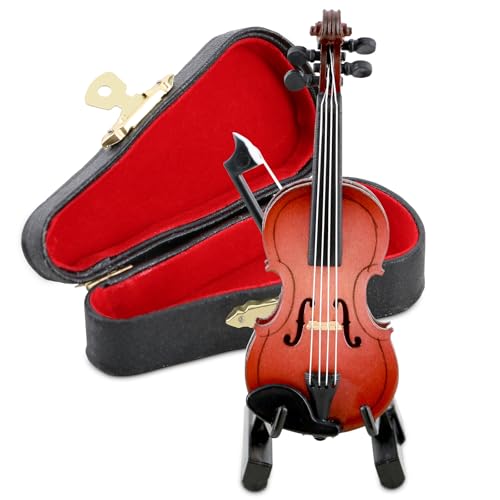
- 3.15-inch decorative wooden model
- Includes stand, bow, and leather case
- Not playable or suitable for lessons
Best For: Music-themed décor and gifting
Full-Size Starter Package

- Complete beginner outfit with case and accessories
- Spruce, maple, and ebony construction
- Full-size model with four fine tuners
Best For: Beginners ready for a full-size violin and complete starter kit
Resonant Full-Size Outfit
Cecilio 4/4 Hand-Carved Violin
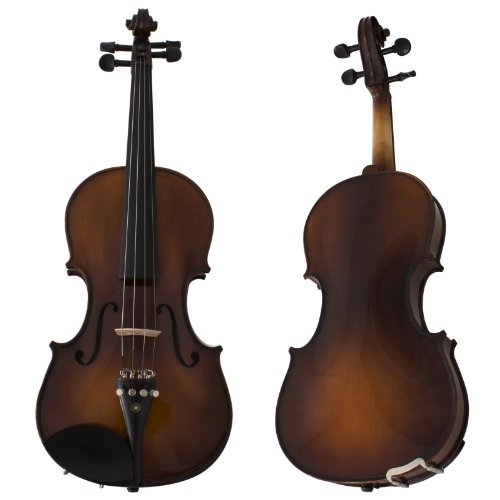
- Solid spruce top and aged maple back and sides
- Ebony fittings and flamed maple detailing
- Includes case, two bows, rosin, and extra strings
Best For: Full-size players wanting a traditional, resonance-focused outfit
Compact Beginner Choice
- 3/4 size is more manageable for smaller players
- Solid spruce and maple body materials
- Includes case, bow, shoulder rest, and extras
Best For: Young beginners and smaller players needing a compact starter violin
Black Beginner Package
Mendini MV200 Black Full-Size Violin

- Solid wood acoustic body with a polished black finish
- Complete kit includes bow, bridges, strings, rosin, rest, and case
- 4/4 size may be too large for players with small hands
Best For: Full-size beginners seeking a complete black violin kit
Top Beginner Pick – Mendini 1/4 Violin Set
For shoppers comparing violins for small hands, this 1/4-size Mendini set offers a practical starting package. Its spruce-and-maple construction, compact 10.98-inch violin length, and included accessories make it suited to beginners who want the essentials together.
Best For: Young or beginner players who need a complete 1/4-size violin kit.
Pros:
- Solid spruce top and maple back are designed for a balanced, crisp tone.
- Includes bow, extra strings, rosin, shoulder rest, and hard case.
- Hand-carved body and padded adjustable shoulder rest support comfortable practice.
Cons:
- The bridge is not set up for shipping and must be fitted before playing.
- Tuning pegs require careful handling and should be pushed in while adjusting.
This is one of the more useful all-in-one options for a beginner needing a smaller instrument, provided the buyer is prepared for basic setup before the first session.
Technique Support Pick – Adjustable Violin Wrist Practice Aid
This wrist practice aid is an accessory rather than an instrument, but it can complement violins for small hands by helping beginners work on left-hand posture. Its adjustable straps and lightweight design provide guided support during practice.
Best For: Beginners working on a straight left wrist and consistent hand positioning.
Pros:
- Guides the left hand toward a straight-wrist position.
- Adjustable straps measure approximately 13.4 to 13.8 inches.
- Lightweight at about 24.6 grams and compatible with violin, viola, and cello sizes from 4/4 to 1/2.
Cons:
- It is a posture aid, not a playable violin or replacement for instruction.
- Its stated size compatibility does not specifically identify a 1/4 violin size.
Consider this tool when posture is the main challenge. Buyers should verify fit carefully, especially when pairing it with the smallest violins for small hands.
Guided Learning Option – Eastar EVA-3 Full-Size Violin Set
Although this is a full-size violin, its imprinted finger guide may interest learners comparing violins for small hands who want visual help finding positions. The set also includes a tuner, shoulder rest, bow, spare string, bridges, and case.
Best For: Adult beginners or players who specifically want finger-position markings on the fingerboard.
Pros:
- Imprinted fingerboard guide helps students locate hand positions.
- Handmade spruce-and-maple construction with four integrated fine tuners.
- Includes bow, shoulder rest, tuner, extra string, two bridges, and a 12-month warranty.
Cons:
- The full-size design is not intended for young players who need a smaller instrument.
- It weighs about 2.1 kg, which may feel substantial for some beginners.
This can be a practical learning set for adults, but it should not be chosen solely for the small-hands category unless the player is comfortable with a full-size violin.
Display-Only Choice – EASTROCK Miniature Violin Model
This 3.15-inch wooden model may appear alongside violins for small hands because of its tiny proportions, but it is decorative rather than playable. It includes a miniature bow, stand, and black leather case for display or gifting.
Best For: Music-themed décor, collectors, and gifts—not violin practice.
Pros:
- Compact wooden design with polished detailing and a realistic appearance.
- Includes a stand, bow, and black leather case.
- Suitable for desks, bookshelves, offices, and other display areas.
Cons:
- The product cannot be played.
- Its 3.15-inch miniature format is not suitable for learning violin technique.
Choose this only as a decorative music gift. Despite its small size, it should not be confused with playable violins for small hands.
Full-Size Starter Package – Mendini MV400 4/4 Violin Set
Although full-size instruments are not typically the first choice for violins for small hands, this Mendini 4/4 set may suit players who are ready for a full-size instrument or whose reach has already been assessed by a teacher. It includes the core accessories needed to begin playing, though the bridge requires setup after shipping.
Best For: Beginners who need a complete full-size acoustic violin outfit with case, bows, tuner, shoulder rest, rosin, extra strings, and a lesson book.
Pros:
- Spruce, maple, and ebony construction is designed for durability and warm, bright sound.
- Includes two bows, a hard case, tuner, shoulder rest, rosin, extra strings, and a lesson book.
- Four fine tuners and an alloy tailpiece can simplify tuning for new players.
Cons:
- Full-size design may be too large for many players specifically seeking an instrument for small hands.
- The bridge arrives unset and the pegs require careful adjustment and tuning.
This is a well-equipped entry package, but shoppers focused on violins for small hands should confirm the correct size before choosing this 4/4 model.
Resonant Full-Size Outfit – Cecilio 4/4 Hand-Carved Violin
This Cecilio 4/4 violin emphasizes traditional materials and a complete accessory package. For shoppers comparing violins for small hands, its full-size body should be chosen only when the player can comfortably manage the larger scale.
Best For: Players seeking a full-size violin with solid maple and spruce construction for practice, performances, or studio sessions.
Pros:
- Hand-carved solid maple back and sides plus a solid spruce top are designed for rich resonance.
- Ebony fittings, inlaid purfling, flamed maple, and an oil finish provide a polished traditional appearance.
- Includes a case, two Brazilwood bows, rosin, extra strings, and a bridge.
Cons:
- The 4/4 size may not be comfortable for younger players or those with small hands.
- At 5 pounds, it is heavier than the other listed violin set.
This is the most traditionally styled full-size option in the group, with useful accessories and a one-year manufacturer-defect warranty, but size fit remains the key consideration.
Compact Beginner Choice – Mendini MV300 3/4 Violin Set
For shoppers specifically comparing violins for small hands, this 3/4 Mendini is the most size-appropriate option in the lineup. Its smaller format is paired with a beginner-focused accessory kit, but a teacher or experienced player should still confirm the fit.
Best For: Young beginners or smaller players who need a 3/4 acoustic violin with a case, bow, shoulder rest, rosin, bridge, and extra strings.
Pros:
- 3/4 sizing can be more manageable than a full-size violin for smaller players.
- Solid spruce top and maple back are designed for a rich, crisp, and stable tone.
- Includes a bow, padded adjustable shoulder rest, hard case, rosin, bridge, and extra strings.
Cons:
- It may still be too large for very young players with especially small hands.
- The bridge is shipped unset, and tuning pegs need careful handling during setup.
This is the clearest match for the target use case: a smaller beginner violin with practical accessories and comfortable-playability features, provided the 3/4 scale fits the player.
Versatile Electric Option – Cecilio Pearl White Acoustic-Electric Violin
For shoppers comparing violins for small hands, this full-size model may be less suitable than a fractional instrument because its listed instrument size is 23 inches. However, its acoustic-electric design, included shoulder rest, and complete starter accessories make it a flexible choice for players who specifically need a full-size violin.
Best For: Full-size players who want acoustic practice plus AUX-connected electric versatility.
Pros:
- Works in both acoustic and electric modes, with volume and tone controls.
- Includes a shoulder rest, hard case, bow, rosin, bridge, and AUX cable.
- Features a solid spruce top, maple back and sides, and ebony fittings.
- The padded hard-shell case supports safer transport.
Cons:
- The 4/4, 23-inch size is not specifically designed for small hands.
- Its electric features may be unnecessary for players seeking a straightforward acoustic beginner violin.
This is a feature-rich full-size set rather than a small-hand-specific violin. Confirm that a 4/4 instrument fits the player before choosing it, especially if reach and comfort are the main concerns.
Traditional Starter Set – Mendini MV300 Full-Size Violin
When evaluating violins for small hands, note that this Mendini is a 4/4 full-size model rather than a fractional violin. It is aimed at beginners and includes the core accessories needed to start learning, along with a solid spruce top and maple back for a traditional acoustic setup.
Best For: Beginner players who are ready for a full-size acoustic violin and want a broad accessory package.
Pros:
- Solid spruce top and maple back are designed for a rich, crisp sound.
- Includes a bow, two bridges, extra strings, rosin, shoulder rest, and hard case.
- Hand-carved body and adjustable padded shoulder rest support playing comfort.
- Comes with a one-year warranty against manufacturer defects.
Cons:
- The 4/4 size may be too large for players with small hands.
- The bridge is not installed for shipping and requires setup.
- Tuning pegs must be handled carefully and pushed in while adjusting.
The MV300 offers strong beginner value if the player can comfortably manage a full-size violin. For a child or player specifically needing a smaller reach, compare its dimensions with fractional-size alternatives before buying.
Black Beginner Package – Mendini MV200 Black Full-Size Violin
This black Mendini provides a complete acoustic starter package, but its 4/4 size should be considered carefully when shopping for violins for small hands. It is better suited to a player who has already been assessed as ready for a full-size instrument and wants the included accessories in one kit.
Best For: Full-size beginners who prefer a black finish and an all-in-one acoustic kit.
Pros:
- Solid wood spruce and maple construction is paired with a polished black finish.
- Includes a bow, two bridges, extra strings, rosin, shoulder rest, and hard case.
- The padded, non-slip shoulder rest is designed to improve playing comfort.
- Includes a one-year warranty against manufacturer defects.
Cons:
- The 4/4 format may be uncomfortable for players with small hands.
- The bridge arrives unset and needs to be installed before playing.
- Careful peg handling is required during tuning.
The MV200 is a practical full-size beginner kit with a distinctive black appearance. Its accessory coverage is useful, but hand size and arm reach should be confirmed first because the supplied details do not indicate a reduced-size configuration.
How We Picked These Violins for Small Hands
We focused on the features that matter most to beginners with shorter fingers or smaller reaches: fractional sizing, manageable weight, comfortable neck dimensions, basic setup, and useful included accessories. The list includes 1/4 and 3/4 violins, full-size alternatives for older players who may only need hand-position support, and compact practice-oriented items.
Because product listings can vary by seller and production batch, check the current specifications carefully. A violin’s labeled size is a starting point, not a substitute for measuring the player or getting advice from a teacher.
Quick Comparison
| Option type | Best suited to | What to check |
|---|---|---|
| 1/4-size violin | Young beginners with a shorter arm reach | Measured fit, bridge setup, and bow length |
| 3/4-size violin | Older children or smaller players between sizes | Whether the player can comfortably reach first position |
| 4/4-size violin | Teens and adults who can manage full scale | Neck comfort, shoulder-rest fit, and left-hand tension |
| Practice aid | Players working on wrist alignment | Adjustability and whether it restricts natural movement |
| Miniature violin | Display or novelty use | Whether it is playable rather than decorative |
Key Buying Factors for Violins for Small Hands
Choose Size by Reach, Not Age Alone
Fractional violins are designed to reduce the distance between notes and make the instrument easier to hold. A 1/4 model may suit a very young player, while a 3/4 model can be a better transition for an older child or petite beginner. Measure arm length and confirm the recommendation with an instructor whenever possible.
Prioritize Setup Quality
Even an affordable violin should have a correctly fitted bridge, usable strings, smooth pegs, and a fingerboard that does not make pressing notes unnecessarily difficult. Poor setup can feel like a hand-size problem when the real issue is excessive string height or difficult tuning.
Look at the Complete Kit
Beginner packages commonly include a case, bow, rosin, shoulder rest, tuner, or spare strings. These extras can improve value, but included accessories are not equally useful. A stable case and functional bow matter more than a large accessory count.
Consider Comfort and Technique
A shoulder rest can improve stability, while an adjustable wrist aid may help with basic posture under teacher supervision. Avoid any accessory that forces the wrist or fingers into a rigid position. Comfort should support relaxed technique rather than replace instruction.
Who Should Buy Which Violins for Small Hands?
Choose a 1/4 violin for a genuinely small beginner whose measurements match that size. Consider a 3/4 instrument for a growing child or smaller player who has outgrown 1/4 but is not ready for full scale. A 4/4 set makes more sense for most adults and older teens who can reach comfortably, even if their hands are relatively small. For posture concerns, pair the correctly sized violin with lessons and a carefully adjusted shoulder rest rather than relying solely on a wrist device.
Finally, confirm the return policy and ask a teacher or local violin shop to evaluate the fit. The best violin for small hands is the one the player can hold, finger, and bow without pain or excessive tension.