The best compact patch bays make it easier to organize connections, change signal paths, and keep equipment accessible without adding unnecessary rack space or cable clutter.
This roundup covers balanced audio, XLR, TRS, and compact Ethernet patching options, so you can match the panel to your studio, stage, or network setup.
Best 10 Compact Patch Bays Picks for 2026
Best Flexible TRS Routing

- 48 balanced 1/4-inch connection points
- Normalled, half-normalled, and thru modes
- 1U rack-mountable metal construction
Best For: Studios needing high-capacity TRS routing
Best Compact XLR Routing

- 16-point XLR patchbay
- 32 gold-plated XLR connectors
- Suited to studio and live signal routing
Best For: XLR-based recording and live sound systems
Best Network Cable Organization
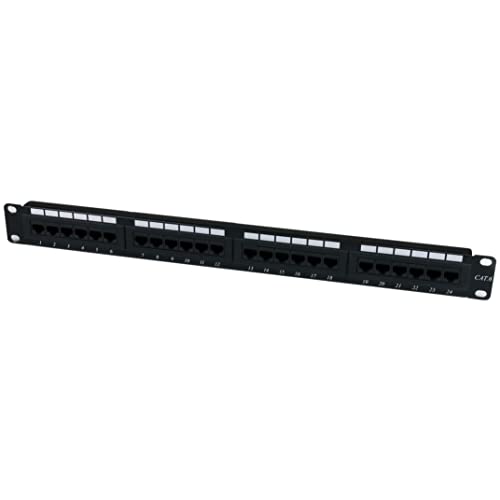
- 24-port 1U Cat6 patch panel
- Supports Cat5e and Cat6 cables
- Writable labels and T568A/B color coding
Best For: Organized rack-mounted Ethernet installations
Best Rugged XLR Rack Panel

- 16-channel XLR patchbay
- Shielded all-steel 1U enclosure
- Reversible rack ears and PCB wiring
Best For: Durable rack-mounted XLR audio patching
Best Compact Network Pick
Cable Matters Mini 10Gbps 12-Port Patch Panel

- 12-port vertical design fits tight spaces
- Supports 10Gb Ethernet and PoE through PoE++
- Includes mounting hardware and cable-management features
Best For: Home and small-office structured cabling
Best Flexible Audio Pick
Black Lion Audio PBR TRS3 Patchbay

- 48-point patchbay with 96 TRS connectors
- Includes a three-way mode switch
- Supports audio systems up to 192 kHz
Best For: Flexible TRS routing in recording setups
Best Studio Rack Pick
ART Pro Audio P48 Balanced Patch Bay

- 48-point balanced audio patch bay
- Fits a 19-inch rack and uses shielded construction
- Helps organize cables and reduce connector wear
Best For: Rack-based studios, PA, AV, and live sound
Rack-Front XLR Access

- 12-point XLR patchbay
- Single-unit rack chassis
- Steel construction with limited lifetime warranty
Best For: Front-access XLR routing in rack systems
Flexible Balanced Routing
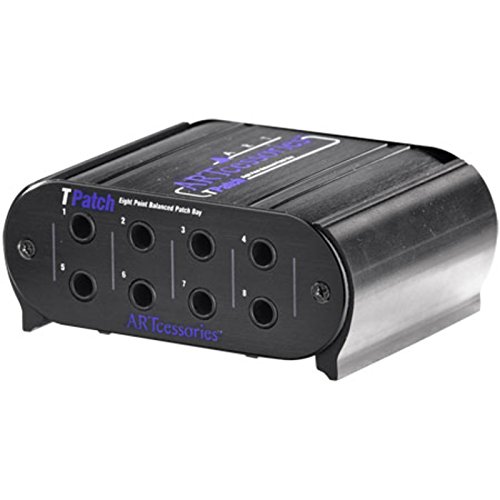
- Eight balanced patch points
- Switchable routing modes
- Rugged extruded aluminum case
Best For: Configurable TRS routing in compact studios
High-Capacity TRS Control

- 48-point patchbay with 96 TRS connectors
- Gold-plated construction
- Customizable LEDs and three-way switches
Best For: Dense, configurable TRS studio routing
Best Flexible TRS Routing – Samson S-Patch Plus
Samson S-Patch Plus Balanced 48-Point 1/4" Patch Bay | 1/4 Inch Phone Connections
Check Price On AmazonFor studios that need compact patch bays with flexible signal-routing options, the Samson S-Patch Plus provides 48 balanced 1/4-inch connection points in a 1U rack-mountable design. Front-panel switches let you select normalled, half-normalled, or thru operation without reaching behind the rack.
Best For: Home and project studios needing high-capacity, balanced TRS routing.
Pros:
- Offers 48 front and 48 rear 1/4-inch connections.
- Supports normalled, half-normalled, and thru configurations.
- Solid metal construction with a readable blue anodized panel.
- Front-panel switching makes rerouting equipment more convenient.
Cons:
- Uses 1/4-inch TRS connections rather than XLR.
- The 48-point layout may be more capacity than a small setup requires.
The S-Patch Plus is a strong choice when routing flexibility and balanced connectivity matter more than having the smallest possible connection count.
Best Compact XLR Routing – Black Lion Audio PBR XLR
The Black Lion Audio PBR XLR is one of the more focused compact patch bays for setups built around XLR connections. Its 16-point design uses 32 gold-plated XLR connectors for straightforward audio signal routing in recording or live sound environments.
Best For: Recording and live sound systems that primarily use XLR connections.
Pros:
- Provides 16 patch points with 32 XLR connectors.
- Gold-plated connectors support a high-quality connection interface.
- Designed for audio signal routing in studio or live applications.
- Aluminum outer construction keeps the unit purpose-focused.
Cons:
- Offers fewer patch points than larger 1U patch bays.
- XLR connectivity is less suitable for systems centered on 1/4-inch TRS cabling.
Choose the PBR XLR when your rack needs a dedicated XLR patching solution without adding unnecessary connection formats.
Best Network Cable Organization – StarTech 24-Port Cat6 Panel
Although designed for network infrastructure rather than audio, the StarTech C6PANEL24 is a practical compact patch bays option for organizing Ethernet runs. This 1U rack-mount panel supports 24 Cat6 connections, uses 110-type punch-down termination, and includes writable port markings.
Best For: Rack-mounted network installations requiring organized Cat5e or Cat6 cable termination.
Pros:
- Organizes up to 24 Cat6 patch cables.
- Supports both Cat5e and Cat6 cabling.
- Clearly numbered ports include writable and erasable labels.
- Supports T568A and T568B wiring schemes.
Cons:
- It is a network patch panel, not an audio patch bay.
- Termination requires a 110-type punch-down tool.
The C6PANEL24 makes sense for structured cabling racks where clear labeling and standards-compatible Ethernet termination are the priority.
Best Rugged XLR Rack Panel – ART P16
The ART P16 is a compact patch bays solution for audio systems that require XLR connections in a sturdy rack format. Its 16-channel layout places 16 female XLR connectors on the front and 16 male XLR connectors on the rear inside a fully shielded, all-steel 1U enclosure.
Best For: Rack-mounted audio systems needing straightforward, durable XLR access.
Pros:
- Provides 16 XLR channels with front female and rear male connectors.
- Uses reliable PCB wiring for internal connections.
- Features a rugged, fully shielded all-steel enclosure.
- Reversible rack ears add installation flexibility.
Cons:
- Has fewer channels than the Samson 48-point unit.
- Its XLR-only design does not accommodate 1/4-inch patch cables.
The P16 is a sensible pick for users who value durable construction and uncomplicated XLR patching in a standard 19-inch rack space.
Best Compact Network Pick – Cable Matters Mini 10Gbps 12-Port Patch Panel
For compact patch bays in a home or small-office network, the Cable Matters Mini 12-Port panel offers a space-saving alternative to a full 19-inch rack unit. Its 10-by-2.25-inch steel body supports Cat 5 through Cat 6a cabling, 10Gb Ethernet, and PoE applications.
Best For: Tight network closets, under-stair installations, home offices, IP cameras, and small structured-cabling projects.
Pros:
- Compact vertical design with included snap-on 89D brackets and screws
- Supports 10Gb Ethernet, PoE, PoE+, and PoE++
- UL listed, RoHS and CE compliant, and verified by 3P and ETL
- Front and rear port labels plus integrated cable-tie slots simplify organization
Cons:
- Limited to 12 ports
- Designed for indoor use
This is the most practical choice when saving wall or cabinet space matters without giving up modern Ethernet performance. Its compact format and mounting hardware make it especially well suited to neat, smaller network installations.
Best Flexible Audio Pick – Black Lion Audio PBR TRS3 Patchbay
The Black Lion Audio PBR TRS3 is a strong option for compact patch bays in recording and audio setups that need many balanced TRS connections. It provides 48 patch points, 96 gold-plated TRS connectors, and a three-way mode switch for flexible routing.
Best For: Home and professional recording environments using guitars, microphones, mixers, speakers, computers, or other TRS-compatible equipment.
Pros:
- Offers 48 patch points and 96 TRS connectors
- Gold-plated connectors support durable, reliable connections
- Three-way mode switch adds routing flexibility
- Supports audio systems with sample rates up to 192 kHz
Cons:
- Uses TRS connectivity rather than Ethernet or XLR
- The supplied notes do not specify rack-mount dimensions or included mounting hardware
Choose this model when your compact patch-bay needs are audio-focused and you want a high connection count in a TRS format. The three-way switching makes it more adaptable than a basic fixed-routing panel.
Best Studio Rack Pick – ART Pro Audio P48 Balanced Patch Bay
The ART Pro Audio P48 is a compact patch-bay solution for balanced audio systems, with a 48-point layout and fully shielded construction. Its one-rack-space design helps organize connections while reducing wear on the equipment’s connectors.
Best For: Professional or home recording studios, live sound, PA, AV, home theater, and other rack-based audio systems.
Pros:
- 48-point balanced patch-bay layout
- Fits a 19-inch rack
- Fully shielded steel construction
- Useful for organizing cables and protecting connected equipment jacks
Cons:
- Uses XLR connectivity rather than TRS or Ethernet
- The supplied notes do not specify the individual routing modes or jack configuration
This model is a sensible pick for rack-based audio installations where shielding, balanced connections, and cable organization are priorities. It is particularly well matched to studios and live-sound systems that already use XLR equipment.
Rack-Front XLR Access – Hosa PDR-369
The Hosa PDR-369 is a practical choice for compact patch bays when you need to bring hard-to-reach XLR mixer inputs to the front of a rack. Its single-unit chassis provides 12 XLR points for compatible audio mixers, interfaces, and microphone preamps.
Best For: Rack-mounted systems that need convenient front-panel access to XLR connections.
Pros:
- Provides 12 XLR patch points in one rack chassis.
- Uses XLR3F-to-XLR3M connections with male-to-female compatibility.
- Steel outer material and a limited lifetime warranty support long-term use.
Cons:
- Uses XLR connections rather than 1/4-inch TRS phone jacks.
- The supplied notes do not specify additional routing modes or switching.
Choose this model if your setup is primarily XLR-based and front access matters more than extensive routing flexibility. Its focused design keeps the connection task straightforward in a rack environment.
Flexible Balanced Routing – ART Pro Audio TPatch
The ART Pro Audio TPatch is a compact patch bay for balanced 1/4-inch TRS connections. It offers eight points, linked input/output pairs, and switchable half-normal, normal, and through-type operation for flexible signal routing.
Best For: Home and project studios that need configurable balanced TRS signal connections.
Pros:
- Provides eight points of balanced direct signals.
- Includes four channels of linked input/output pairs.
- Offers switchable half-normal and normal modes, plus through-type connections.
- Uses 1/4-inch TRS phone jacks in a rugged extruded aluminum case.
Cons:
- Has fewer points than larger patch bays.
- Its supplied compatibility details focus on personal computers and Windows-based DAWs.
The TPatch stands out when routing flexibility is more important than maximum connection count. Its eight balanced points and selectable operating modes make it a useful compact option for signal paths that change frequently.
High-Capacity TRS Control – Black Lion Audio PBR TRS3 LIT
The Black Lion Audio PBR TRS3 LIT is a high-capacity option among compact patch bays, with 48 points, 96 TRS connectors, and gold-plated construction. Its customizable LED displays and 48 three-way variable-operation switches add visual and routing control for more involved setups.
Best For: Larger studio rigs that need dense TRS connectivity and configurable operation.
Pros:
- Provides 48 patch points and 96 TRS connectors.
- Uses gold-plated construction.
- Includes customizable LED displays.
- Offers 48 three-way variable-operation switches.
Cons:
- At 4.51 pounds, it is heavier than simpler compact patch bays.
- Its listed dimensions are 22.6 x 9 x 7.4 inches, so buyers should confirm available space.
- The supplied notes do not specify detailed compatibility or routing-mode descriptions beyond the three-way switches.
This model is best suited to users who need substantially more connections and front-panel control than an eight- or 12-point unit provides. Verify rack and workspace dimensions before choosing it for a compact installation.
How We Picked These Compact Patch Bays
We selected models based on connection type, signal compatibility, mounting format, routing flexibility, construction, and practical installation needs. The list includes traditional 1/4-inch audio patch bays, XLR panels, and compact Ethernet patch panels because “compact” can mean different things depending on the system being organized.
We also considered whether each unit suits rack installation, desktop use, permanent wiring, or frequent repatching. Features such as balanced connections, front-panel accessibility, punch-down termination, gold-plated contacts, and selectable normalled routing can make a meaningful difference in daily use.
Quick Comparison
| Best For | Recommended Type | What to Prioritize |
|---|---|---|
| Recording studios | Balanced TRS patch bay | Normalled routing and clear labeling |
| Outboard XLR equipment | XLR patch bay | Connector compatibility and balanced wiring |
| Small network cabinets | Cat6 or 10Gbps patch panel | Termination method and cable category |
| Portable or desktop rigs | Small multi-point patch bay | Low footprint and easy access |
Key Buying Factors for Compact Patch Bays
Connection Format
Start with the connectors already used by your equipment. TRS models are common for balanced line-level studio gear, while XLR units are better suited to microphones, preamps, and other XLR-based connections. Ethernet patch panels require compatible Cat5e, Cat6, or Cat6A cabling and should not be treated as substitutes for audio patch bays.
Routing and Normalization
A normalled or half-normalled design can route a default signal path until you insert a patch cable. This reduces cable changes during normal operation. If you need maximum flexibility or use the panel mainly as a breakout point, a straight-through configuration may be simpler.
Capacity and Installation
Count the connections you need today, then leave some room for expansion. Check whether the unit is rack-mountable, requires a specific rack height, or is better suited to a desktop or wall-mounted setup. Compact panels save space, but tightly packed connectors can be harder to label and service.
Build and Termination Quality
Look for secure connectors, durable jacks, reliable contacts, and a termination method you can install confidently. Punch-down Ethernet panels are convenient for fixed wiring, while prewired audio bays generally offer faster setup. Clear labeling is equally important because it prevents routing mistakes.
Who Should Buy Which Compact Patch Bays?
Choose a balanced TRS model for a conventional recording studio with rack gear and line-level connections. Pick an XLR patch bay if your workflow centers on microphones, XLR preamps, or stage boxes. For structured cabling, select an Ethernet patch panel that matches your network speed and cable category. A smaller multi-point unit is the best fit for a compact desktop rig, mobile setup, or limited number of sources.
Before buying, map every source, destination, and default signal path. That simple step will help you avoid connector mismatches and choose among the Compact Patch Bays here with greater confidence.