The best voice recorders with external microphone input give you more control than basic dictation devices. You can connect lavalier, XLR, or other compatible microphones to capture clearer speech, music, interviews, and production audio.
This roundup compares 10 portable recorders across simple voice capture, multitrack recording, podcasting, filmmaking, and professional field work. Pay close attention to connector type, track count, power options, and how much hands-on control you need.
Best 10 Voice Recorders with External Microphone Input Picks for 2026
Best Compact XLR Pick

- Attaches directly to handheld XLR microphones
- Dual Recording adds a lower-level safety copy
- Supports WAV and MP3 formats
Best For: Portable interviews and news gathering
Best Professional Field Recorder

- 32-bit float recording handles unpredictable peaks
- Two locking XLR/TRS inputs
- Low-noise preamps for field work
Best For: Filmmaking, music, and demanding location recording
Best Four-Track Workhorse

- Portable four-track recording
- USB 2.0 audio interface functionality
- WAV recording with 128GB memory support listed
Best For: Multitrack recording and computer-based workflows
Best Modern Two-Channel Option

- Two locking XLR/TRS combo inputs
- 32-bit/96kHz WAV recording
- 3.5mm stereo input and headphone output
Best For: Mobile podcasting, filmmaking, and music recording
Reliable Field Pick
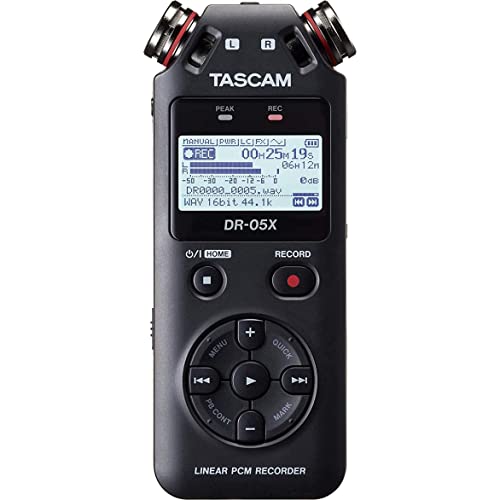
- Stereo condenser microphones handle quiet and loud sources
- Up to 17.5 hours on two AA batteries
- USB audio interface mode for recording and streaming
Best For: Field recording, voiceover, streaming, and songwriting
Easy Interview Bundle

- 32-bit float recording avoids manual level adjustments
- Includes lavalier microphone, windscreen, card, and batteries
- Onboard microphones support levels up to 120 dB SPL
Best For: Interviews, storytelling, and portable lavalier recording
Compact Video Companion

- TRESMIC three-microphone system for high-resolution audio
- Slate and test tones support video recording workflows
- FLAC recording/playback plus Bluetooth compatibility
Best For: Video production and high-resolution stereo recording
Best for Multi-Person Podcasts

- Four XLR inputs with phantom power
- Four individually controlled headphone outputs
- Mix-minus for phone and remote interviews
Best For: Panel podcasts and multi-speaker recordings
Best for Expandable Field Recording
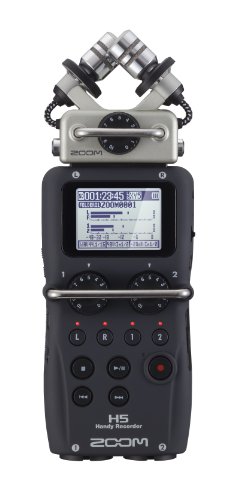
- Interchangeable microphone capsule system
- Two XLR/TRS inputs with phantom power
- Four-track recording with safety-track support
Best For: Portable filmmaking and music recording
Best for Clip-Free Dialogue
H4 Essential Handheld Recorder

- Two XLR/TRS inputs for external gear
- 32-bit float clip-free audio
- USB-C recording with SD-card backup
Best For: Podcasts, video audio, and field recording
Best Compact XLR Pick – TASCAM DR-10X
For a truly compact option among voice recorders with external microphone input, the TASCAM DR-10X attaches directly to a handheld microphone through its captive XLR connector. Its automatic or manual gain controls, safety features, and headphone monitoring make it practical for interviews and news gathering.
Best For: Reporters, interviewers, and anyone recording directly from a handheld XLR microphone.
Pros:
- Captive XLR connector creates a compact microphone-mounted setup.
- Dual Recording mode provides a lower-level backup copy if distortion occurs.
- Automatic and manual gain, low-cut filter, and limiter help manage recording levels.
- Supports WAV and MP3 recording, with up to 32GB microSD storage noted.
Cons:
- Designed for mono operation and a single XLR microphone connection.
- Its 0.75-inch screen is relatively small for navigating settings.
- Requires a separate compatible handheld XLR microphone.
The DR-10X is especially appealing when portability and a clean microphone-mounted workflow matter more than multichannel recording. Its backup recording mode and automatic file closing when the battery dies add useful protection in the field.
Best Professional Field Recorder – Zoom F3
The Zoom F3 is a professional-focused choice among voice recorders with external microphone input, offering two locking XLR/TRS inputs and 32-bit float recording. That combination is suited to filmmakers, musicians, and field recordists who need clean audio across unpredictable volume levels.
Best For: Filmmakers, musicians, and field recordists using one or two professional microphones.
Pros:
- 32-bit float recording helps capture quiet dialogue and sudden peaks without constant level adjustment.
- Dual locking XLR inputs help keep connections secure in larger or remote-mounted setups.
- Ultra-low-noise preamps support clean recordings in uncontrolled environments.
- Supports battery-powered, standalone, and USB workflows.
Cons:
- It records WAV rather than listing MP3 support.
- At 8.48 ounces, it is less lightweight than the most compact options.
- Requires external microphones for recording.
The F3 is a strong fit when recording reliability and level flexibility take priority. Its dual inputs and locking connectors make it better suited to serious production rigs than simple single-microphone setups.
Best Four-Track Workhorse – TASCAM DR-40X
The TASCAM DR-40X is a portable four-track recorder and USB interface for buyers who want a broader recording setup than a basic voice recorder. Its supplied details list built-in stereo microphones, WAV recording, USB 2.0, and 128GB memory support, though the notes do not specify the external microphone connector type.
Best For: Users seeking a portable four-track recorder with USB connectivity and stereo recording.
Pros:
- Four-track design supports more involved recording workflows.
- Functions as a USB 2.0 audio interface with a personal computer.
- Records WAV audio and provides a 3.5mm headphone jack.
- Supplied specifications list up to 128GB of memory support.
Cons:
- The supplied notes do not identify the external microphone input type.
- Only WAV format is listed in the provided specifications.
- Requires three AA batteries.
The DR-40X makes the most sense for buyers prioritizing multitrack capability and computer connectivity. Confirm the intended external-microphone connection before purchase if a specific input standard is essential.
Best Modern Two-Channel Option – Zoom H1 XLR
The Zoom H1 XLR combines two locking XLR/TRS inputs with 32-bit/96kHz recording, making it a flexible choice among voice recorders with external microphone input. Its waveform display, 3.5mm stereo input, and headphone output also help podcasters, filmmakers, and musicians monitor connected sources.
Best For: Podcasters, filmmakers, musicians, and creators connecting microphones or instruments.
Pros:
- Two locking XLR/TRS combo inputs accommodate microphones, instruments, and other sources.
- 32-bit/96kHz recording is specified for detailed, clip-free audio capture.
- OLED waveform display makes level monitoring easier at a glance.
- Includes 3.5mm stereo input and headphone output, plus SDXC support up to 1TB.
Cons:
- Battery life is listed at 10 hours with two AA batteries.
- Only WAV format is listed in the supplied specifications.
- Its 0.96-inch screen is compact.
The H1 XLR is a versatile middle ground for creators who need professional-style inputs without moving to a larger recorder. Its locking connections and multiple input options are particularly useful for flexible mobile setups.
Reliable Field Pick – Tascam DR-05X
The Tascam DR-05X is a practical choice among voice recorders with external microphone input for users who also want capable built-in stereo microphones. Its simple controls, long battery life, and USB audio interface mode make it suitable for recording, streaming, voiceover work, and songwriting.
Best For: Field recording, voiceover work, live streaming, podcasting, and songwriting.
Pros:
- Built-in stereo condenser microphones capture quiet and loud sources.
- Quick controls support recording, level adjustment, take deletion, and markers.
- Records for up to 17.5 hours on two AA batteries and can use USB battery power.
- USB audio interface mode supports computer-based voiceover, streaming, and podcasting.
Cons:
- The supplied details identify built-in microphones but do not specify an external microphone input.
- Its 2.5 mm headphone jack may be less convenient than a 3.5 mm connection.
The DR-05X stands out for straightforward operation and flexible USB use. However, shoppers specifically requiring a confirmed external microphone input should verify the connection requirements before buying.
Easy Interview Bundle – Zoom H1essential Bundle
The Zoom H1essential bundle is a convenient option for shoppers comparing voice recorders with external microphone input, especially when a ready-to-use lavalier setup is helpful. It combines the recorder with a lavalier condenser microphone, windscreen, memory card, batteries, and other accessories.
Best For: Interviews, storytelling, podcasting, and portable recording with a lavalier microphone.
Pros:
- 32-bit float recording reduces the need to adjust recording levels.
- Bundle includes a lavalier condenser microphone and furry windscreen.
- Onboard X/Y microphones handle sound up to 120 dB SPL.
- Includes overdubbing, pre-record, auto record, and playback speed adjustment.
Cons:
- The supplied details do not clearly identify the recorder’s external microphone input specification.
- The bundle uses four AAA batteries, which means more cells than some two-battery recorders.
This package offers strong convenience for interviews because the lavalier microphone and accessories are included. Confirm the input compatibility if connecting a separate external microphone is a primary requirement.
Compact Video Companion – Olympus LS-P4
The Olympus LS-P4 is a compact recorder to consider among voice recorders with external microphone input, particularly for video-oriented work. Its TRESMIC three-microphone system, slate and test tones, FLAC support, Bluetooth compatibility, and onboard editing features give it a broad feature set.
Best For: Video production, high-resolution stereo recording, and users who value FLAC playback and Bluetooth compatibility.
Pros:
- TRESMIC three-microphone system is designed for high-resolution audio recording.
- Slate and test tones support more seamless video sound recording.
- Supports recording and playback of FLAC lossless compression files.
- Bluetooth compatibility expands connectivity and use options.
Cons:
- The supplied details identify built-in microphones but do not confirm an external microphone input.
- The headphone jack is listed as 2.5 mm, which may require an adapter for some headphones.
The LS-P4 is appealing when video synchronization features and lossless audio support matter. Because the supplied specifications do not confirm an external microphone input, verify that detail before choosing it for an external-mic setup.
Best for Multi-Person Podcasts – 4-Input Podcast Recorder
The Zoom PodTrak P4 is a strong choice among voice recorders with external microphone input when you need to manage several speakers. It provides four XLR microphone inputs, individual headphone monitoring, and tools for phone or remote interviews.
Best For: Multi-person podcasts, panel discussions, and remote interviews requiring independent headphone control.
Pros:
- Four XLR microphone inputs with phantom power
- Four headphone outputs with individual volume controls
- Automatic mix-minus supports phone and remote interviews
- Can record multiple inputs and Sound Pads as separate tracks
Cons:
- Battery life is listed at up to 3.5 hours on two AA batteries
- Its four-input design may be more equipment than a solo creator needs
Choose the PodTrak P4 if flexible podcast production matters more than pocket-sized simplicity. Its input count and monitoring features make it particularly practical for collaborative recording setups.
Best for Expandable Field Recording – H5 4-Track Recorder
The Zoom H5 is a versatile option among voice recorders with external microphone input. Its interchangeable capsule system, built-in X/Y microphones, and two XLR/TRS combo inputs let you adapt the recorder for filmmaking, music, interviews, and other portable work.
Best For: Filmmakers and musicians who want interchangeable microphone options, four-track recording, and portable operation.
Pros:
- Interchangeable input capsules expand microphone flexibility
- Two XLR/TRS combo inputs include phantom power and -20 dB pads
- Four-track simultaneous recording supports more involved sessions
- Safety-track recording helps protect against overly loud takes
Cons:
- Recording directly to SD/SDHC is limited to cards up to 32GB
- Two external combo inputs provide less capacity than four-input recorders
The H5 stands out when adaptability is a priority. It combines a compact handheld format with useful expansion options and USB audio-interface functionality for computer or iPad workflows.
Best for Clip-Free Dialogue – H4 Essential Handheld Recorder
The Zoom H4 Essential is a practical pick among voice recorders with external microphone input for creators who want built-in stereo microphones plus external connectivity. It offers two XLR/TRS inputs, 32-bit float clip-free audio, and USB-C recording or streaming while saving a backup to an SD card.
Best For: Podcasters, filmmakers, musicians, and field recordists who want flexible inputs and a backup recording workflow.
Pros:
- Two XLR/TRS inputs connect external microphones, instruments, mixers, or soundboards
- 32-bit float recording helps prevent distorted takes
- Can record to a connected device and save a backup to SD card
- Spoken menu guidance supports easier navigation
Cons:
- It has only two external XLR/TRS inputs
- Two AA batteries are required for battery operation
- The listed digital recording time is 10 hours
The H4 Essential is well suited to unpredictable recording conditions where avoiding clipped audio is important. Its combination of built-in microphones, external inputs, USB-C connectivity, and SD backup makes it a flexible all-purpose recorder.
How We Picked the Best Voice Recorders with External Microphone Input
We selected recorders that support an external microphone directly or through a dedicated microphone input, while covering a range of budgets and recording styles. The list includes compact models for interviews and dictation, multitrack field recorders for music and film, and podcast-focused equipment with multiple microphone and headphone connections.
Our comparison emphasizes recording quality, input flexibility, portability, monitoring, storage, battery operation, and ease of use. A recorder with more features is not automatically the best choice; the right model depends on your microphone, workflow, and need for live monitoring or multitrack control.
Quick Comparison
| Best For | What to Look For | Models to Consider |
|---|---|---|
| Simple external-mic recording | Compact size, straightforward controls, low setup time | TASCAM DR-10X, TASCAM DR-05X |
| Film and field production | Low-noise preamps, XLR inputs, reliable monitoring | Zoom F3, Zoom H4 Essential, Zoom H5 |
| Two-channel recording | Stereo operation and flexible microphone connections | Zoom H1 XLR, Zoom H1essential |
| Music and multitrack work | Multiple inputs, overdubbing, track control | TASCAM DR-40X, Zoom H5 |
| Podcasting and remote interviews | Several mic inputs, headphone outputs, phone or USB connectivity | Zoom PodTrak P4 |
Key Buying Factors for Voice Recorders with External Microphone Input
Input Type and Microphone Compatibility
Check whether the recorder accepts XLR, 3.5mm, or another connection before buying. XLR inputs are a strong choice for professional microphones and often support phantom power, while a 3.5mm input suits many lavalier and compact microphones. Adapters may work, but they can add compatibility issues and extra cable clutter.
Channels, Tracks, and Recording Modes
Two-channel recorders are useful for a single stereo microphone or two input sources. Four-track models provide more flexibility for music, interviews, and production, but they usually require more setup. For podcasts, prioritize the number of independent microphone inputs and headphone outputs rather than headline track counts alone.
Monitoring, Gain, and Power
Headphone monitoring helps you catch clothing noise, distortion, cable problems, and background sounds while recording. Look for easy gain adjustment and enough input range for your microphone. Battery life, USB power, replaceable batteries, and phantom-power consumption also matter when recording away from an outlet.
Portability and Workflow
A small recorder is easier to place on a camera rig, hide with a lavalier, or carry during interviews. Larger units may offer better controls, more inputs, and stronger mounting options. Consider storage media, file transfer, USB interface support, limiter or safety-track features, and whether the menu system fits your experience level.
Who Should Buy Which Voice Recorders with External Microphone Input?
Choose the TASCAM DR-10X or DR-05X if you want a compact, uncomplicated solution for speech, interviews, or general portable recording. The Zoom H1 XLR or H1essential is a better fit when you want a small two-channel recorder with a simple setup, especially for creators and musicians.
For filmmakers, field recordists, and musicians who need XLR connectivity and more production control, consider the Zoom F3, H4 Essential, or H5. The TASCAM DR-40X is appealing for users who want four-track capability and USB interface functionality. Podcasters and remote interview hosts should look first at the Zoom PodTrak P4 because its multiple microphone inputs and headphone outputs are designed around group recording.