The best voice recorders under $100 make it easier to capture lectures, meetings, interviews, and personal notes without relying on a phone. This roundup focuses on practical features such as recording capacity, voice activation, playback, noise reduction, and charging convenience.
Our selected models range from compact entry-level devices to high-capacity recorders with AI transcription features. Use the guide below to match storage, controls, audio quality, and portability to the way you plan to record.
Best 10 Voice Recorders Under 100 Picks for 2026
Best Overall
EVISTR L357 64GB Digital Voice Recorder

- PCM noise reduction with adjustable recording gain
- Voice activation, scheduled recording, and flexible playback
- 64GB storage with USB-C file transfer
Best For: Students, meetings, interviews, and everyday recording
Best Smart Features
EVISTR L359 128GB AI Voice Recorder

- Transcribes in 113 languages and creates smart summaries
- 128GB storage with up to 33 hours of recording
- Wired OTG transfer, privacy lock, and one-button control
Best For: Students and professionals who need organized notes
Best Simple Setup
NinTaBro 64GB Type-C Voice Recorder

- Built-in Type-C connector for direct transfer and charging
- One-touch recording with voice activation
- Includes headphones, adapters, and replacement refills
Best For: Classes, meetings, interviews, and daily notes
Best Battery Life
Tonfarb A20 136GB Digital Voice Recorder

- Up to 68 hours of continuous recording
- 8GB built-in storage plus included 128GB TF card
- Noise reduction, voice activation, and one-click recording
Best For: Extended meetings, interviews, and classroom sessions
Best High-Capacity Pick
Lymorvex 72GB Magnetic Voice Recorder

- 72GB storage and up to 9,800 recording hours
- AI noise reduction with voice and timer activation
- Slim magnetic body with up to 72 hours of battery life
Best For: Long lectures, meetings, interviews, and hands-free recording
Best Simple Operation
Sunlan 16GB Digital Voice Recorder

- Dedicated controls simplify recording and playback
- DSP noise reduction and voice activation included
- Over 30 hours of continuous recording with USB transfer
Best For: Everyday lectures, interviews, meetings, and simple note capture
Best for Mobile Transfers
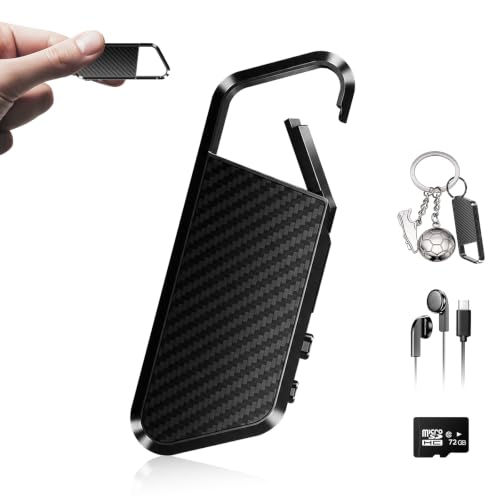
- 72GB storage with up to 10,860 hours of capacity
- DSP 6.0 noise reduction for clearer speech
- OTG transfers directly to compatible phones and tablets
Best For: High-volume recording with convenient mobile file transfers
Best with Extra Features
Tonfarb 64GB Digital Voice Recorder

- 64GB storage for up to 4,600 hours
- Up to 48 hours of continuous recording
- PCM recording, voice activation, and password protection
Best For: Lectures, interviews, meetings, and frequent recording
Best Simple Budget Option
HoTiyan 8GB Digital Voice Recorder

- Straightforward three-button operation
- Voice activation and A-B repeat for easier review
- Up to 560 hours at the listed 32kbps setting
Best For: Students, classes, meetings, and everyday recording
Best Maximum-Storage Pick

- 128GB storage rated for up to 9,296 hours
- 1536kbps PCM recording with noise cancellation
- Six voice-activation levels and four-folder organization
Best For: Large audio archives, lectures, interviews, and business use
Best Overall – EVISTR L357 64GB Digital Voice Recorder
If you want a versatile option among voice recorders under 100, the EVISTR L357 combines high-capacity storage, adjustable recording controls, and straightforward playback features. Its PCM noise reduction, 7-level recording gain, and voice activation make it suitable for capturing lectures, meetings, and interviews.
Best For: Students, teachers, professionals, and anyone who wants flexible recording and playback controls.
Pros:
- 64GB storage can hold up to 4,660 hours at 32Kbps.
- PCM noise reduction, 1536Kbps stereo recording, and adjustable gain support clearer recordings.
- Voice activation, variable-speed playback, A-B repeat, and scheduled recording add flexibility.
- USB-C connectivity, a metal body, and up to 32 hours of continuous recording are practical for regular use.
Cons:
- The extensive settings may take some time to learn.
- Its advertised storage capacity varies substantially with recording quality and format.
The L357 is a well-rounded pick for buyers who value recording controls and playback features more than a minimalist design. Its large storage capacity and time-stamped file naming also make longer-term file management easier.
Best Smart Features – EVISTR L359 128GB AI Voice Recorder
For shoppers comparing voice recorders under 100 that offer more than basic audio capture, the EVISTR L359 adds app-based transcription and summaries. It records up to 3072Kbps, supports voice activation, and connects to compatible phones through a wired OTG connection for processing.
Best For: Students and professionals who want recordings converted into searchable notes and summaries.
Pros:
- AI DVR Link supports transcription in 113 languages, summaries, mind maps, speaker identification, and Ask AI insights.
- 128GB storage provides substantial room for recordings.
- One-button recording, a HOLD switch, and password encryption support convenient and private use.
- Lightweight 65g design and wired OTG transfer make it portable and practical.
Cons:
- The AI features depend on the AI DVR Link app and compatible phone connection.
- Continuous recording is listed at up to 33 hours, shorter than some high-capacity alternatives.
The L359 stands out when the goal is turning spoken material into organized information. Choose it over a conventional recorder if its app-based transcription workflow is more useful to you than simpler standalone operation.
Best Simple Setup – NinTaBro 64GB Type-C Voice Recorder
The NinTaBro TT46001 is a practical choice among voice recorders under 100 for buyers who prefer direct connections and uncomplicated controls. Its built-in Type-C connector supports file transfer and charging, while one-touch recording and voice activation simplify use during classes, meetings, and interviews.
Best For: Users who want a straightforward recorder with Type-C connectivity and useful accessories.
Pros:
- One-touch recording and automatic file saving make quick capture easy.
- Voice activation, 360-degree microphone pickup, and DSP 5.0 noise reduction support more efficient recording.
- Built-in Type-C connection works for charging, file transfer, and portable storage.
- Includes headphones, adapters, replacement refills, a screwdriver, and a manual.
Cons:
- The supplied details list WAV as the recording format, which may be less flexible for some users.
- Continuous recording is listed at up to 35 hours.
- The product notes contain inconsistent storage references, listing both 64GB and a 128GB package description.
This recorder favors convenience over advanced customization. Its direct Type-C design and included accessories make it a sensible fit for everyday notes, provided you confirm the storage specification before buying.
Best Battery Life – Tonfarb A20 136GB Digital Voice Recorder
If long sessions are your priority when comparing voice recorders under 100, the Tonfarb A20 offers up to 68 hours of continuous recording. It combines PCM recording, dual noise-reduction microphones, voice activation, and a large storage setup for extended meetings, interviews, or classroom use.
Best For: Buyers who need extended battery life and substantial recording capacity.
Pros:
- Up to 68 hours of continuous recording from its 1100mAh rechargeable battery.
- 8GB built-in storage plus an included 128GB TF card provides up to 136GB total capacity.
- PCM recording, dual microphones, automatic noise reduction, and voice activation support clearer, more efficient capture.
- One-click recording, a large LCD screen, A-B repeat, and password protection improve usability.
Cons:
- The unit weighs about 97–100 grams, making it heavier than some compact alternatives.
- The supplied details list MP3 as the recording format even though the product description also mentions WAV recording.
The A20 is especially appealing for back-to-back sessions where frequent charging is inconvenient. Its expandable storage and simple controls reinforce its role as a long-duration recorder rather than an app-focused note-taking device.
Best High-Capacity Pick – Lymorvex 72GB Magnetic Voice Recorder
If you want one of the most versatile voice recorders under 100, the Lymorvex combines very large storage with AI noise reduction, voice activation, and a slim magnetic design. It is suited to frequent recording where portability and long battery life matter.
Best For: Students, professionals, journalists, lectures, interviews, and meetings requiring extended recording capacity.
Pros:
- 72GB of storage supports up to 9,800 hours of recordings at 192kbps.
- AI noise reduction and DSP 4.0 processing are designed to improve voice clarity.
- Up to 72 hours of continuous recording, automatic low-battery saving, and fast Type-C charging.
- Magnetic, 0.4-inch-thick, 1-ounce design with one-touch, voice-activated, and timer recording.
Cons:
- The extensive feature set may require consulting the included manual.
- Recordings use WAV format, which can require more storage than compressed formats.
The Lymorvex stands out for buyers prioritizing storage, endurance, and flexible placement. Its included transfer accessories and compatibility with major operating systems add convenience for moving files and reviewing recordings.
Best Simple Operation – Sunlan 16GB Digital Voice Recorder
For shoppers comparing voice recorders under 100, the Sunlan offers a straightforward layout with dedicated recording, stopping, playback, and repeat controls. Its compact body and rechargeable battery make it a practical choice for everyday lectures, interviews, and meetings.
Best For: Buyers who want simple controls, built-in playback, and a compact recorder for routine use.
Pros:
- One-button recording and dedicated playback controls are easy to operate.
- DSP noise reduction and a sensitive microphone are designed to capture clearer speech.
- Voice activation can begin recording when sound is detected and help conserve power.
- 16GB storage, USB data-transfer capability, music playback, and over 30 hours of continuous recording.
Cons:
- Its 16GB capacity is substantially smaller than the 72GB models in this roundup.
- Battery playback is listed at about 7 hours, shorter than its recording runtime.
- The built-in microphone operates in mono.
The Sunlan is a sensible fit when ease of use matters more than maximum storage. It also doubles as a removable data-storage device and music player, giving it useful everyday flexibility beyond voice recording.
Best for Mobile Transfers – NekSide 72GB Voice Recorder
The NekSide is a strong option among voice recorders under 100 if you want high storage and a convenient way to move files directly to a phone or tablet. DSP 6.0 noise reduction and playback support make it suitable for capturing and reviewing spoken audio.
Best For: Users who need large storage, portable recording, and OTG transfers to compatible smartphones or tablets.
Pros:
- 72GB of built-in memory provides up to 10,860 hours of listed recording capacity.
- DSP 6.0 noise reduction is designed to filter background noise and preserve speech detail.
- OTG functionality supports direct transfers to smartphones or tablets without a computer.
- Designed for lectures, meetings, interviews, personal memos, and indoor or outdoor use.
Cons:
- The default recording format is WAV.
- MP3 files require connecting to a computer and converting the recordings.
- The listed dimensions indicate a relatively long, narrow body compared with more compact designs.
The NekSide’s main advantage is its combination of high capacity and direct mobile transfer. Choose it if you expect to keep many recordings and want to access them on a compatible mobile device, while remembering that MP3 conversion is not performed directly on the recorder.
Best with Extra Features – Tonfarb 64GB Digital Voice Recorder
For shoppers comparing voice recorders under 100, the Tonfarb stands out with generous storage, long battery life, and fast one-click controls. It records in WAV or MP3, includes noise reduction, and adds practical features such as voice activation, password protection, and A-B playback.
Best For: Lectures, interviews, meetings, field work, and users who want substantial storage.
Pros:
- 64GB memory stores up to 4,600 hours of recordings.
- Up to 48 hours of continuous recording and a 600mAh battery.
- 1536kbps PCM WAV recording with automatic noise reduction.
- One-click recording, voice activation, password protection, and MP3 playback.
Cons:
- The supplied details list a built-in microphone rather than an included external microphone.
- Its 1.44-inch screen may feel modest for navigating many files.
This is a strong all-purpose option when capacity and recording endurance matter most. Its broad feature set makes it especially practical for frequent recording, though buyers seeking the simplest possible interface may prefer a more basic model.
Best Simple Budget Option – HoTiyan 8GB Digital Voice Recorder
Among voice recorders under 100, this HoTiyan model focuses on straightforward operation and useful study features. Its three-button controls, voice activation, A-B repeat, variable playback speed, and MP3-player function make it a practical choice for lectures, meetings, and reviewing important sections.
Best For: Students and everyday users who want an uncomplicated recorder for classes, meetings, and interviews.
Pros:
- Simple three-button recording, saving, and playback controls.
- Voice activation can reduce silent sections and conserve storage.
- 8GB capacity supports up to 560 hours at the listed 32kbps setting.
- Includes A-B repeat, variable playback speed, password protection, and time-stamped file names.
Cons:
- Its 8GB capacity is much smaller than the storage offered by the other listed models.
- Continuous recording is rated at 20 hours, with up to 8 hours of headphone playback.
- The 1.1-inch screen is relatively small.
This model is a sensible pick when ease of use and playback tools matter more than maximum capacity or longest battery runtime. It offers a compact, lightweight design and enough storage for routine recording tasks.
Best Maximum-Storage Pick – EVIDA 128GB Voice Recorder
If your priority among voice recorders under 100 is storage, the EVIDA 128GB model offers the largest stated capacity in this lineup. It supports 1536kbps PCM recording, adjustable voice activation, password protection, bookmarks, and four-folder file organization for managing extensive recordings.
Best For: Teachers, students, business users, writers, and anyone archiving large amounts of audio.
Pros:
- 128GB capacity is rated for up to 9,296 hours of recording.
- 1536kbps PCM recording with a noise-cancelling microphone and recording chip.
- Six voice-activation sensitivity levels help target spoken audio.
- Offers password protection, A-B repeat, bookmarks, scheduled recording, and four-folder organization.
Cons:
- The supplied specifications list no headphone jack.
- The listed battery average and continuous recording time are both 54 hours, but actual runtime can vary by recording settings.
- The dimensions information appears unusually formatted, so shoppers may want to verify the physical size.
The EVIDA is the most storage-focused choice here and is well suited to maintaining a large audio library. Its organized file system and adjustable voice activation add value for regular users, while the lack of a listed headphone jack may matter for private playback.
How We Picked the Best Voice Recorders Under 100
We selected these 10 recorders by comparing the features that matter most for everyday use: storage capacity, advertised recording time, microphone performance, voice-activated recording, playback controls, file transfer, battery convenience, and portability. We also included a mix of traditional dictaphones and newer models that offer AI transcription or summarization.
Advertised storage and recording hours can vary with file format, bitrate, and usage conditions, so treat those figures as capacity estimates rather than guaranteed continuous runtime. Real-world results also depend on microphone distance and background noise.
Quick Comparison
| Feature | What to look for | Best suited to |
|---|---|---|
| Storage | 16GB to 128GB or more | Short notes through extensive lecture and interview archives |
| Voice activation | Starts recording when sound is detected | Meetings, lectures, and hands-free recording |
| Playback | Built-in speaker, screen, and controls | Reviewing recordings without another device |
| USB-C or USB transfer | Simple charging and file management | Frequent users moving files to a computer |
| AI tools | Transcription or summary support | Users who want searchable notes and faster review |
Key Buying Factors for Voice Recorders Under 100
Recording Quality and Noise Control
For lectures and meetings, voice activation and noise reduction can reduce silence and background distraction. A recorder with a suitable microphone and accessible gain or recording settings is more useful than one that only advertises a large storage number.
Capacity and Battery Life
Choose at least 16GB for occasional notes, while 64GB or more is better for regular lectures, interviews, or long-term storage. Check whether the advertised hours refer to low-bitrate recording. Battery life matters just as much as memory if you record for several hours at a time.
Ease of Use and File Transfer
Clear buttons, a readable display, playback controls, and straightforward USB transfer make a major difference. USB-C is especially convenient if your other devices use the same cable. Password protection can also be valuable when recordings contain private information.
AI Transcription and Privacy
AI transcription and summarization can save time, but verify whether processing happens on the recorder, through an app, or via an online service. Consider compatibility, subscription requirements, language support, and how sensitive recordings are handled before relying on these features.
Who Should Buy Which Voice Recorders Under 100?
Students and lecture-takers: prioritize voice activation, long battery life, playback, and at least 32GB of storage. A compact model is easier to carry between classes.
Meeting and interview users: look for noise reduction, dependable microphones, large storage, and simple file transfer. Password protection is helpful for confidential conversations.
Researchers and frequent recordists: choose a high-capacity model with organized file storage, reliable charging, and comfortable controls for repeated use.
Users who dislike manual transcription: consider an AI-enabled recorder, but confirm the transcription workflow and any ongoing costs before buying.