Sharing one video source with multiple displays can introduce signal loss, interference, or inconsistent picture quality. The right distribution amplifier preserves signal strength while giving you the outputs your setup requires.
We selected 10 video distribution amplifiers under $200 for different jobs, including composite AV, CCTV, OTA antenna, cable TV, and higher-port installations. Use the guide below to match amplifier type, port count, and signal compatibility to your system.
Best 10 Video Distribution Amplifiers Under 200 Picks for 2026
Best RCA Signal Splitter
DTECH Powered 4-Way RCA Splitter

- One 3-RCA input feeds four outputs
- Built-in amplification supports longer connections
- Compact metal case with color-coded jacks
Best For: Analog A/V duplication across four displays or audio devices
Best Compact VGA Pick
QVS 1x2 Distribution Amplifier
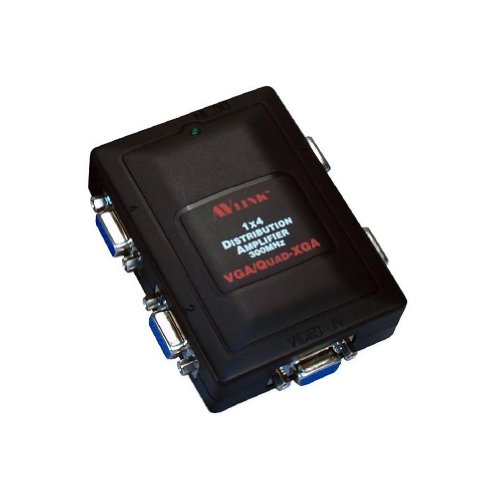
- 1x2 distribution for compatible VGA/QXGA systems
- Listed 300 MHz bandwidth
- Lightweight tabletop design
Best For: Simple two-display VGA or QXGA distribution
Best Plug-and-Play RCA Option
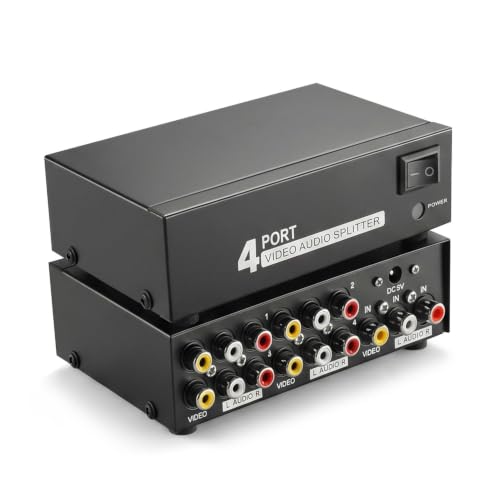
- One yellow-white-red input to four outputs
- Amplified design helps reduce signal loss
- Works with many legacy gaming and video devices
Best For: Four-way composite A/V distribution for older equipment
Best Antenna Distribution Amplifier
ClearStream JUICE4 4-Output Amplifier

- Feeds an antenna signal to up to four TVs
- Supports ATSC 3.0, 4K, and 8K applications
- Compact weather-conscious housing with surge protection
Best For: Four-way over-the-air TV antenna distribution
Long-Run CCTV Booster

- Supports AHD, CVI, TVI, and analog CCTV
- Transmission support up to 2,600 feet
- Helps reduce snow and ghosting
Best For: Long-distance CCTV coax installations
VGA Distribution Choice
ConnectPRO 5-Port Video Splitter

- Splits one VGA input to five outputs
- Supports VGA, SVGA, and Multi-Sync
- Can be cascaded for more outputs
Best For: Multi-monitor VGA installations
Whole-Home TV Booster
Antronix Four-Port Coax Amplifier

- Four ports with +7.5 dB gain each
- Supports cable TV and OTA antenna signals
- Includes power supply and coax accessories
Best For: Multi-TV cable or antenna distribution
Best for Cable TV Multi-Room Distribution
9-Port Bi-Directional Amplifier
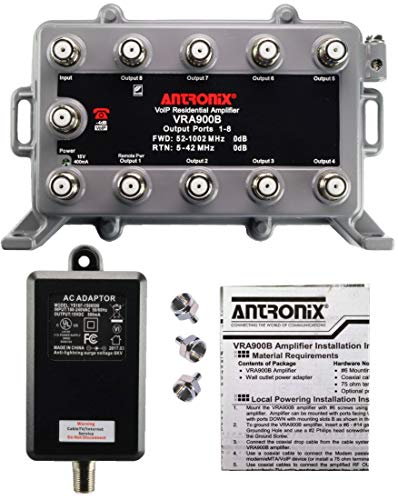
- Eight amplified, lossless output ports
- Active return and modem connection
- Surge protection with metal housing
Best For: Cable TV installations with multiple rooms and VoIP service
Best for Eight-Device OTA Splitting
8-Port Antenna Distribution Amplifier

- Eight outputs with +4 dB per port
- Works with OTA antennas or standard cable
- Compact design for tight spaces
Best For: Distributing one non-amplified antenna or cable line to eight devices
Best for Mixed Cable and Antenna Runs
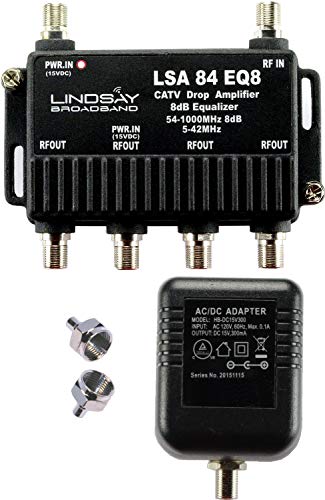
- Four amplified outputs for cable or OTA
- Up to +7.5 dB gain at 1000 MHz
- Equalizer helps address high-frequency loss
Best For: Four-device installations with longer coaxial cable runs
Best RCA Signal Splitter – DTECH Powered 4-Way RCA Splitter
For buyers seeking video distribution amplifiers under 200 for analog A/V setups, this powered DTECH unit sends one composite video and stereo audio source to four destinations. Its built-in amplification is designed to help preserve image and audio quality across longer RCA connections.
Best For: Distributing a console, player, or other RCA source to multiple TVs, monitors, speakers, or capture devices.
Pros:
- Splits one 3-RCA input into four outputs for composite video and left/right audio.
- Powered signal amplification helps support clearer results over longer connections.
- Metal housing, anti-skid feet, LED indicator, and color-coded jacks aid installation.
Cons:
- Designed for analog RCA connections rather than modern digital video formats.
- No switches are included for selecting individual outputs.
This is a compact, straightforward choice when the goal is simultaneous analog A/V duplication. The included power adapter and small enclosure make it practical for a rack, cabinet, or space behind a display.
Best Compact VGA Pick – QVS 1×2 Distribution Amplifier
This QVS distribution amplifier is a compact option among video distribution amplifiers under 200 for splitting a VGA or QXGA signal. Its listed 300 MHz specification suits compatible tabletop installations where a single video source needs distribution to two destinations.
Best For: Tabletop VGA/QXGA signal distribution in compatible display setups.
Pros:
- Provides a 1×2 distribution configuration for one source and two outputs.
- Listed 300 MHz bandwidth supports VGA/QXGA applications.
- Compact tabletop form factor and approximately 170 g weight simplify placement.
Cons:
- Its VGA/QXGA focus limits compatibility with composite, HDMI, and other formats.
- The supplied notes do not specify included cables or mounting hardware.
Choose this model when your equipment uses VGA-family connections and you need a simple two-way distribution amplifier. Confirm connector and resolution compatibility before ordering.
Best Plug-and-Play RCA Option – TNP Powered RCA AV Splitter
For analog systems needing video distribution amplifiers under 200, the powered TNP RCA AV splitter duplicates one yellow-white-red source across four outputs. It is built to support TVs, projectors, monitors, and capture cards while helping reduce the signal loss associated with passive Y cables.
Best For: Retro gaming, DVD, DVR, VCR, and other composite A/V setups requiring up to four simultaneous outputs.
Pros:
- Duplicates one composite video and stereo audio input to four outputs.
- Supports common legacy devices including Wii, PS2, Xbox, VCR, and DVD players.
- Metal enclosure, power switch, LED indicator, and color-coded ports support easy setup.
Cons:
- Limited to standard RCA composite connections.
- Requires power for signal amplification and operation.
This is a practical pick for multi-display analog duplication, especially in retro gaming or legacy home-theater installations. Its switch and metal case add convenience without complicating the basic plug-and-play setup.
Best Antenna Distribution Amplifier – ClearStream JUICE4 4-Output Amplifier
Among video distribution amplifiers under 200, the ClearStream JUICE4 is tailored to broadcast antenna and compatible CATV distribution rather than RCA or VGA. It amplifies an antenna signal for up to four TVs or digital converter boxes and supports ATSC 3.0, 4K, and 8K applications.
Best For: Splitting an over-the-air antenna signal across four televisions or converter boxes.
Pros:
- Four outputs distribute amplified antenna signals without impacting intended reception quality.
- Supports ATSC 3.0 NEXTGEN TV, 4K, and 8K UHD applications.
- Compact zinc diecast housing offers shielding, surge protection, and indoor or suitable outdoor installation flexibility.
Cons:
- It does not provide cable TV channels or replace an antenna.
- Reception still depends on tower distance, obstructions, and building materials.
- Warranty coverage is listed as 90 days.
This model is the right category match for households distributing broadcast antenna signals, with useful frequency coverage through 1.2 GHz and included RG6 cable and power adapter. It is not intended for composite or VGA source duplication.
Long-Run CCTV Booster – AHD/TVI/CVI Coax Amplifier
For shoppers comparing video distribution amplifiers under 200, this BNC booster is designed for surveillance systems that lose clarity across long coaxial runs. It supports AHD, CVI, TVI, and analog CCTV cameras, with stated transmission support up to 2,600 feet.
Best For: CCTV installations needing longer coax transmission and clearer 1080P footage.
Pros:
- Supports AHD, CVI, TVI, and analog CCTV formats.
- Designed to address signal loss over distances up to 2,600 feet.
- SNR technology helps reduce video snow and ghosting.
- Plug-and-play coaxial installation with a compact, durable build.
Cons:
- Focused on CCTV coax systems rather than VGA or household TV distribution.
- The supplied notes do not specify included power accessories.
This is a practical choice when the main issue is degraded surveillance video over long cable runs. Confirm that your cameras and connectors match its BNC-based CCTV application before buying.
VGA Distribution Choice – ConnectPRO 5-Port Video Splitter
Among video distribution amplifiers under 200, the ConnectPRO VSE-105 is a straightforward option for duplicating one VGA source across multiple displays. It provides five outputs, supports VGA, SVGA, and Multi-Sync monitors, and can be cascaded for additional VGA distribution.
Best For: Offices, classrooms, or control areas distributing one VGA signal to several monitors.
Pros:
- Duplicates one VGA input to five outputs.
- Supports VGA, SVGA, and Multi-Sync monitors.
- Rated for an effective transmission distance of 210 feet.
- Supports cascading and includes an optimized port for DDC-compatible output.
Cons:
- Uses VGA connections, so it is not intended for HDMI or modern digital video inputs.
- The supplied specifications identify DC power but do not detail the included adapter.
The VSE-105 fits buyers who still use VGA equipment and need a simple multi-display signal distribution point. Its five-port layout is useful for modest installations, while cascading adds flexibility when more outputs are required.
Whole-Home TV Booster – Antronix Four-Port Coax Amplifier
For video distribution amplifiers under 200 aimed at television and antenna systems, the Antronix MRA4-8 combines four-way distribution with signal boosting. It provides a passive return path, +7.5 dB per port, and compatibility with standard and digital cable services as well as OTA antenna reception.
Best For: Distributing cable or over-the-air antenna signals to multiple TVs.
Pros:
- Four amplified outputs with a stated +7.5 dB gain per port.
- Passive return path may support cable modem performance.
- Includes surge protection, power supply, coax cable, and terminators.
- 3 dB noise figure is designed for clean amplification of weak signals.
Cons:
- Not compatible with systems that already use an amplifier or pre-amplifier.
- Designed for 75-ohm TV and antenna coax systems, not VGA or CCTV cabling.
This model is a well-equipped option for a home cable or OTA setup where one incoming signal must feed several televisions. Check the existing line for another amplifier first, since the supplied notes specifically caution against combining them.
Best for Cable TV Multi-Room Distribution – 9-Port Bi-Directional Amplifier
For cable-TV installations serving several rooms, this option is one of the more capable video distribution amplifiers under 200. It provides eight amplified, lossless output ports plus a modem connection for VoIP equipment, with active return support for compatible cable systems.
Best For: Cable TV and Triple Play installations needing distribution to multiple TVs and a modem.
Pros:
- Eight amplified outputs are described as lossless in both forward and reverse directions.
- Supports standard and digital cable services, including cable phone service.
- Includes surge protection, short-circuit protection, and a corrosion-resistant powder-coated aluminum housing.
- Down-facing ports help keep wiring organized in different mounting orientations.
Cons:
- Not recommended for OTA antennas and not compatible with satellite systems.
- Not MoCA capable and may not work with cable systems that require MoCA.
- Connection cables are not included.
This is a strong fit when the source is a cable-TV line and you need many outputs with active return. Confirm MoCA requirements and cable compatibility before buying.
Best for Eight-Device OTA Splitting – 8-Port Antenna Distribution Amplifier
If you need to distribute one antenna or cable line to many televisions, this compact model is a practical choice among video distribution amplifiers under 200. Each of its eight ports provides a stated +4 dB boost to help offset splitting loss.
Best For: OTA antenna or standard cable installations connecting up to eight devices.
Pros:
- Connects up to eight devices from one antenna or cable line.
- Provides a +4 dB boost on each output to support multi-room distribution.
- Compact form factor is useful in confined installation spaces.
- Designed to reduce analog snow and digital image pixelation.
Cons:
- Not compatible with amplified antennas or systems using a preamp.
- Not intended for satellite TV.
- Power supply is for indoor use only, and cables are sold separately.
Choose this amplifier when you want straightforward eight-way distribution for an OTA antenna or cable source. Avoid it if your antenna already has amplification or if the installation requires satellite compatibility.
Best for Mixed Cable and Antenna Runs – 4-Port Equalized Amplifier
This four-output model is a useful middle-ground option for shoppers comparing video distribution amplifiers under 200 for cable or antenna systems. Its integrated equalizer provides more gain at higher frequencies, which can help compensate for signal loss over longer coaxial runs.
Best For: Cable TV or OTA antenna installations serving up to four TVs or cable boxes, especially with longer runs.
Pros:
- Supports both standard and digital cable services and OTA antenna reception.
- Equalized gain ranges from 0 dB at 54 MHz to up to 7.5 dB at 1000 MHz.
- Includes surge protection and self-resetting short-circuit protection.
- Weather-tight construction and a broad -40°F to 140°F operating range support flexible placement.
Cons:
- Not compatible with systems that already use an amplifier or preamplifier.
- Not compatible with satellite systems.
- Provides four outputs rather than the eight outputs offered by some alternatives.
The equalizer makes this a sensible choice when higher-frequency loss over coax is a concern and four outputs are sufficient. Check the system for an existing preamp before installing it.
How We Picked the Best Video Distribution Amplifiers Under 200
We focused on compatibility, output capacity, signal direction, and practical installation needs rather than choosing products by port count alone. The lineup covers composite RCA video, BNC-based security camera systems, OTA antennas, and cable or broadband coax networks. We also considered whether each unit is powered, supports active or passive return paths, and includes accessories that simplify setup.
Because distribution amplifiers can work very differently across signal types, a unit designed for cable television is not automatically suitable for composite video or an OTA antenna. Confirm the signal format and connector type before buying.
Quick Comparison
- Composite AV: RCA-based models are intended for older game consoles, DVD players, receivers, and displays using analog composite video and stereo audio.
- Security video: BNC amplifiers are designed for CCTV or compatible AHD, TVI, and CVI camera signals and may specify transmission-distance support.
- OTA antenna: Antenna amplifiers distribute over-the-air signals to several televisions while helping compensate for splitter loss.
- Cable and broadband coax: These models are built for cable TV or antenna coax systems, with some offering passive return or active return functionality.
- Port count: Four outputs suit small installations; eight or nine outputs are better for whole-home distribution but require careful signal and power planning.
Key Buying Factors for Video Distribution Amplifiers Under 200
Signal and Connector Compatibility
Start with the source, not the number of outputs. Composite systems need RCA connections, CCTV systems commonly use BNC, and antenna or cable systems generally use coaxial F connectors. Check supported resolutions, frequency ranges, and video standards where listed.
Output Count and Expansion
Choose enough outputs for current displays plus a small amount of room for expansion. Avoid using unnecessary splitters after the amplifier, since each additional division can reduce available signal quality.
Gain, Noise, and Return-Path Support
More amplification is not always better. Excess gain can overload equipment or amplify noise. For cable installations, verify whether the model supports a passive or active return path and whether that matches your modem, set-top box, or provider requirements.
Power and Installation
Powered units are generally preferable when distributing one source to several endpoints, especially over longer cable runs. Check the included adapter, ventilation needs, mounting options, and connector style before installation.
Who Should Buy Which Video Distribution Amplifiers Under 200?
Choose a powered RCA model for legacy consoles, DVD players, or receivers feeding several composite displays. Choose a BNC video booster for compatible surveillance cameras where coaxial cable distance is causing loss. Choose an OTA antenna amplifier when one antenna must feed multiple televisions, particularly when cable runs or splitters weaken the signal.
Choose a cable distribution amplifier for cable TV or broadband coax networks, but confirm compatibility with your provider and return-path requirements first. A four-port unit is usually the sensible choice for a small home setup, while an eight- or nine-port model makes more sense for multiple rooms. For the best result, map the signal path, measure cable lengths, and select the least powerful amplifier that provides reliable coverage.