Choosing the right compressor can make a vocal sound polished, controlled, and more expensive without losing its character. For many studios, a tube compressor adds the kind of warmth and gentle smoothing that works especially well on voice.
This roundup focuses on the best options for recording vocals in 2026, with picks for home studios, project rooms, and professional setups.
Best 10 Tube Compressor for Vocal Recording Picks for 2026
Vintage FET Compression
Klark Teknik 76-KT Classic FET-Style Compressor

- 1176LN-inspired FET compression
- Discrete signal path with Class-A output
- MIDAS transformers and ratio buttons
Best For: Vocalists wanting classic fast compression with vintage character
Channel Strip Control
dbx 286SV Mic Preamp and Processor

- Mic preamp with compression and de-essing
- Enhancer plus expander/gate for cleanup
- Rack-mount 1U with flexible I/O
Best For: Home studios needing an all-in-one vocal channel strip
Tube Optical Smoothness
Warm Audio WA-2A Optical Compressor

- Tube optical 1-channel compressor
- All-discrete path with photocell control
- Cinemag transformers for added color
Best For: Singers who want smooth, musical vocal leveling
Tube Channel Strip Flexibility
ART VoiceChannel Tube Channel Strip
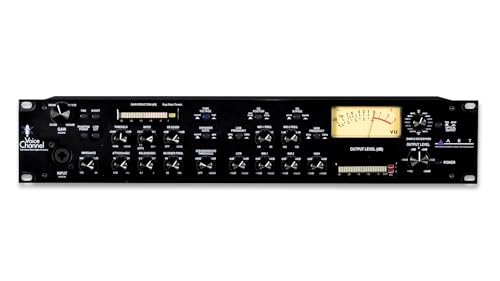
- Tube preamp with vocal dynamics tools
- Digital outs plus USB direct-connect
- Useful for recording into computer workflows
Best For: Users wanting a tube channel strip with digital connectivity
Rack-Ready Vocal Control

- Overeasy compression for smooth dynamics control
- AutoDynamic attack and release simplify setup
- Sidechain insert and XLR/TRS I/O add flexibility
Best For: Engineers who want a simple rack compressor/gate for vocals
Tube Channel Strip
PreSonus StudioChannel Tube Strip

- Class A 12AX7 tube preamp for added character
- Built-in VCA compressor with auto attack/release
- Three-band EQ expands vocal shaping options
Best For: Vocalists and project studios wanting an all-in-one tube strip
Flexible Optical Control

- Selectable tube/solid-state control path
- Optical isolators for smooth compression
- Variable blend supports parallel-style control
Best For: Recordists wanting flexible compressor voicing and mix control
Studio-Grade Tube Color
Tubesessor Optical Tube Compressor

- 1-channel optical tube compressor
- Transformer-balanced I/O
- Tube saturation with sidechain filters
Best For: Vocals needing balanced routing and analog-style coloration
Dual-Channel Vocal Control
Dual-Channel Black Dynamic Processor

- Dual-channel compression with Overeasy control
- Noise gate and LED monitoring
- XLR/TRS connectivity with sidechain insert
Best For: Vocal recording and streaming setups needing flexible dynamics control
500-Series Vari-Mu Smoothness
RHEA 500 Series Vari-Mu Tube Compressor

- 500 Series stereo tube compressor
- Mix control for dry/wet blending
- Sidechain filters for controlled compression
Best For: NG500-based vocal chains and stereo tube compression
Vintage FET Compression – Klark Teknik 76-KT Classic FET-Style Compressor
If you want a tube compressor for vocal recording alternative with a fast, characterful response, the Klark Teknik 76-KT is built around classic FET-style compression inspired by the 1176LN. Its fully discrete signal path, Class-A line-level output amplifier, and MIDAS transformers make it a strong choice when you want vocals to stay energetic and present.
Best For: Vocalists and engineers who want aggressive, classic-style compression with a vintage feel.
Pros:
- Classic FET-style design modeled after iconic 1176LN revisions
- Completely discrete signal path with Class-A line-level output amplifier
- MIDAS input and output transformers
- Push-button ratio selection plus all-button mode for flexible control
Cons:
- Not a tube compressor, so it suits a different color than tube-based vocal chains
- Best fit is more for compression character than all-in-one vocal processing
For vocal tracking, this unit is about attitude and control rather than convenience. If your roundup is aimed at users who want a proven, hardware compressor with vintage-inspired punch, the 76-KT belongs near the top.
Channel Strip Control – dbx 286SV Mic Preamp and Processor
For a tube compressor for vocal recording style setup that needs multiple tools in one box, the dbx 286s is a practical channel strip with mic preamp, compression, de-essing, enhancement, and gating. It is designed to bring vocals forward clearly, and the loop-out plus line input make it flexible for both microphones and other sources.
Best For: Solo recordists and home studios that want one rack unit to shape vocals quickly.
Pros:
- Mic preamp plus four processing sections in one unit
- Classic dbx compression aimed at clearer vocals in the mix
- De-esser, enhancer, and expander/gate included
- Front-panel status LEDs and rack-mountable 1U design
Cons:
- Compression is only one part of the signal chain, so it is not a dedicated compressor
- Rack format is less portable than a simple desktop unit
This is a strong pick when vocal recording needs utility more than boutique color. If you want one processor to handle gain staging and cleanup before tracking, the 286s is especially efficient.
Tube Optical Smoothness – Warm Audio WA-2A Optical Compressor
If your tube compressor for vocal recording search is really about smooth, musical leveling, the Warm Audio WA-2A fits the brief well. It is a 1-channel tube optical compressor with an all-discrete signal path, custom optical photocell, and Cinemag transformers, making it a classic-style option for controlled vocal dynamics.
Best For: Singers and engineers who want smooth optical compression with tube character.
Pros:
- 1-channel tube optical compressor
- All-discrete signal path
- Custom optical photocell for program-dependent compression
- Cinemag transformers for added hardware character
Cons:
- Single-channel design limits you to one source at a time
- Optical compression is smoother, not the fastest or most aggressive style
For vocalists who want compression that feels natural and musical, the WA-2A is the most directly on-target option in this group. It is a straightforward choice when the goal is leveling without sounding overly processed.
Tube Channel Strip Flexibility – ART VoiceChannel Tube Channel Strip
For a tube compressor for vocal recording workflow that needs more than compression alone, the ART VoiceChannel combines a tube preamp with dynamics control and digital output options. Its compressor, expander, de-esser, and gate make it a flexible front end for recording vocals into a computer or digital setup.
Best For: Recordists who want a tube channel strip with strong connectivity and built-in vocal processing.
Pros:
- Tube preamp design with warmth and definition
- Compression, expander, de-esser, and gate in one unit
- Digital outputs including ADAT, AES/EBU, S/PDIF, and TOSLink
- USB direct-connect support for computer or laptop use
Cons:
- More of a channel strip than a dedicated compressor
- Best value depends on whether you need the digital output features
This model makes sense for users building a compact vocal chain around a single device. If you want tube-based input shaping plus practical digital connectivity, the VoiceChannel offers a lot of utility in one rack unit.
Rack-Ready Vocal Control – dbx 266xs Compressor/Gate
If you need a tube compressor for vocal recording alternative that focuses on clean control rather than tube coloration, the dbx 266xs is a practical rack unit to consider. It gives you straightforward compression with Overeasy behavior, AutoDynamic attack and release, and a gate section for tightening up vocal tracks in both studio and live setups.
Best For: Engineers who want a simple rack compressor/gate for cleaner vocal control and general tracking.
Pros:
- Overeasy compression is designed for smooth, musical results.
- AutoDynamic attack and release help simplify setup.
- Sidechain insert can help tighten problem frequencies in busy mixes.
- XLR and 1/4″ TRS I/O make it easy to fit into many rigs.
Cons:
- It is a compressor/gate, not a tube channel strip.
- No built-in EQ for shaping vocals on the unit.
- Single-rack format may be more than you need for one vocal chain.
Overall, the 266xs is best viewed as a reliable dynamics tool for vocal recording when you want predictable compression and gating in a compact rack format. It is less about tube warmth and more about clean, controlled performance.
Tube Channel Strip – PreSonus StudioChannel Tube Strip
The PreSonus StudioChannel is a strong fit if you’re shopping for a tube compressor for vocal recording and want the preamp, EQ, and compression all in one rack unit. Its Class A 12AX7 tube mic preamp, variable VCA compressor, and three-band EQ make it a flexible front end for tracking vocals with more tonal shaping available up front.
Best For: Vocalists and project studios that want an all-in-one tube channel strip for recording.
Pros:
- Class A 12AX7 tube preamp adds tube-driven front-end character.
- Variable VCA compressor includes auto attack/release and soft/hard knee.
- Three-band EQ gives extra tone-shaping control while tracking.
- Mic, line, and instrument inputs make it versatile in the studio.
Cons:
- At 1U rack size, it is not a minimalist desktop solution.
- Tube character and compression style are geared toward a channel-strip workflow, not a dedicated color box.
- May offer more controls than a basic vocal chain needs.
For vocal recording, the StudioChannel stands out because it combines tube preamp coloration with compression and EQ in one unit. That makes it especially useful when you want to shape the sound before it hits the recorder.
Flexible Optical Control – ART Solo VLA Compressor
If you want a tube compressor for vocal recording with flexible voicing options, the ART Solo VLA is worth a look. It uses a selectable MultiVoice tube/solid-state control path, optical isolators, and variable blend so you can dial in compression and keep some of the original vocal signal intact.
Best For: Recordists who want selectable tube/solid-state compression behavior and parallel-style control.
Pros:
- Selectable MultiVoice tube/solid-state control adds flexibility.
- Optical isolators are built for smooth compression behavior.
- Variable blend lets you mix compressed and uncompressed signals.
- Switchable +4dBu/-10dBV level modes improve setup compatibility.
Cons:
- No preamp or EQ, so it is not a full channel strip.
- Tube control is one selectable mode rather than the only operating style.
- Best suited to users comfortable integrating a dedicated compressor into a chain.
As a vocal compressor, the Solo VLA is appealing when you want more control over how much compression is heard and how much of the dry vocal stays intact. That makes it a useful choice for engineers who already have a preamp and want a dedicated dynamics stage.
Studio-Grade Tube Color – Tubesessor Optical Tube Compressor
If you’re shopping for a tube compressor for vocal recording, the Tubesessor Optical Tube Compressor is built for a polished, hardware-style signal path. Its optical compression, transformer-balanced I/O, sidechain filter options, and tube saturation section point to a unit aimed at controlled vocal leveling with added harmonic character.
Best For: Vocal recording setups that want transformer-balanced routing, sidechain control, and tube saturation.
Pros:
- 1-channel optical tube compressor for focused vocal processing
- Transformer-balanced input/output design
- Multiple sidechain filter settings for more targeted control
- Tube saturation section for added coloration
Cons:
- Single-channel design limits multi-source use
- Larger hardware footprint at 21.8 x 12.7 x 9.95 inches
- Heavier unit at 10.48 pounds
Overall, this is the most character-driven option in the group, especially if you want a compressor that can shape vocals and add saturation in one box. It looks well suited to engineers who value analog control and practical sidechain flexibility.
Dual-Channel Vocal Control – Dual-Channel Black Dynamic Processor
For a tube compressor for vocal recording alternative with flexible studio routing, this dual-channel dynamic processor is designed for smooth control across vocals and other sources. Its Overeasy compression, auto attack/release, classic VCA circuitry, noise gate, and sidechain insert make it a practical fit for clean, controlled vocal tracks.
Best For: Vocal recording, streaming, and studio setups that need dual-channel compression with gate and sidechain features.
Pros:
- Dual-channel design for two signal paths at once
- Overeasy compression with auto attack/release for smoother control
- Classic VCA circuitry aimed at vocal clarity and warmth
- Built-in noise gate and LED gain reduction monitoring
Cons:
- Not a tube compressor design
- Primarily a rackmount unit, so it is less portable
- Sidechain insert is more useful for broader mixing tasks than vocal-only work
This is a strong choice if you want dependable compressor features for vocal recording and also need a gate and dual-channel operation. It prioritizes control, visibility, and routing flexibility over tube coloration.
500-Series Vari-Mu Smoothness – RHEA 500 Series Vari-Mu Tube Compressor
If you want a tube compressor for vocal recording in a modular studio format, the _RHEA 500 Series Vari-Mu Tube Compressor is built for NG500-compatible chassis and stereo use. Its vari-mu tube design, mix control, and sidechain filters make it a compelling option when you want smooth compression and flexible high-pass filtering in a 500 Series rig.
Best For: 500 Series vocal chains that need stereo tube compression, mix control, and sidechain filtering.
Pros:
- 500 Series stereo tube compressor format
- Mix control for blending compressed and dry signal
- Sidechain filters included for more controlled response
- Compatible with NG500 chassis
Cons:
- Requires a compatible 500 Series chassis
- Stereo module may be more than some vocal-only setups need
- Less suitable for users who want a standalone rack unit
For engineers already working in 500 Series, this is the most modular route to tube compression in the lineup. The mix control and sidechain filters add useful flexibility for dialing in vocals without losing the simplicity of a dedicated module.
How We Picked the Best Tube Compressor for Vocal Recording
We focused on compressors and channel strips that are relevant for vocal tracking, with an emphasis on musical gain control, usable noise performance, and practical studio workflow. Since not every option is a pure Tube Compressor for Vocal Recording, we favored units that still deliver the tonal shaping, compression behavior, or all-in-one vocal features many buyers want.
We also looked at ease of use, rack or 500-series compatibility, insert options, metering, and whether the unit is better suited for tracking, live use, or mixing.
Quick Comparison
In general, opto and vari-mu designs are often chosen for smoother, more natural vocal leveling, while FET-style and VCA units tend to offer faster control and more obvious dynamics shaping. Channel strips can be a smart choice if you need preamp, compression, de-essing, and gating in one box. If you already have a mic preamp, a dedicated compressor may be the better value.
Key Buying Factors for a Tube Compressor for Vocal Recording
Compression Character
Look for the style that matches your voice and workflow. Optical and vari-mu units are usually favored for transparent leveling and a thicker feel. Faster designs can work well when you need to catch peaks or add presence, but they may be less forgiving on sibilant or aggressive vocals.
Tube Stage and Tone
Not every product labeled “tube” behaves the same way. Some add subtle harmonics and density, while others use tube circuitry as part of a broader channel strip. Consider whether you want obvious color or just a touch of analog warmth.
Tracking Versus Mixing Use
If you plan to record through compression, choose a unit with smooth controls and predictable gain reduction so you can commit safely on the way in. If you mostly mix after recording, flexibility and recall may matter more than live tracking convenience.
Connectivity and Format
Check whether the unit is rackmount, desktop, or 500-series, and confirm it fits your interface and studio layout. Sidechain inserts, de-essers, gates, and digital outputs can be valuable, but only if they solve a real need in your setup.
Who Should Buy Which Tube Compressor for Vocal Recording?
Home recordists who want an all-in-one vocal front end should look at channel strips and compressor/preamp combos. Studio owners chasing smoother, more “finished” vocals may prefer an optical or vari-mu model. If you need a tighter budget or more general-purpose dynamics control, a VCA or FET-style unit can still be useful even if it is not the most traditional Tube Compressor for Vocal Recording.
For the best results, match the compressor style to the singer, the microphone, and how much processing you want printed while tracking.