A good studio subwoofer can reveal low-frequency problems that nearfield monitors alone may miss, but the wrong model can overwhelm a small room with inaccurate bass.
We compared 10 powered options across size, connectivity, output, crossover flexibility, and room-friendly design to help you choose a subwoofer that fits your monitoring setup and workflow.
Best 10 Subwoofers for Home Studios Picks for 2026
Deep-Bass Studio Pick
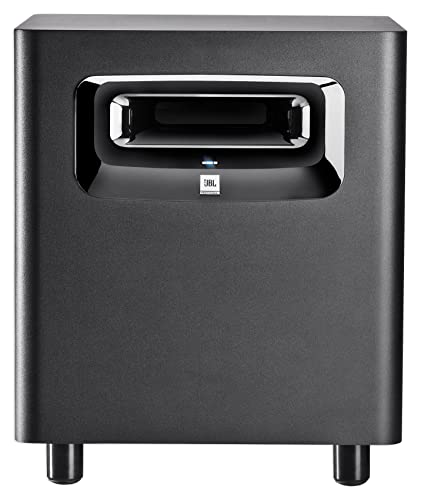
- 10-inch driver reaches into the 20 Hz region
- Balanced XLR and 1/4-inch studio connections
- XLF mode adds club-style bass tuning
Best For: High-output music production and dance-focused studios
Compact Wireless-Ready Option
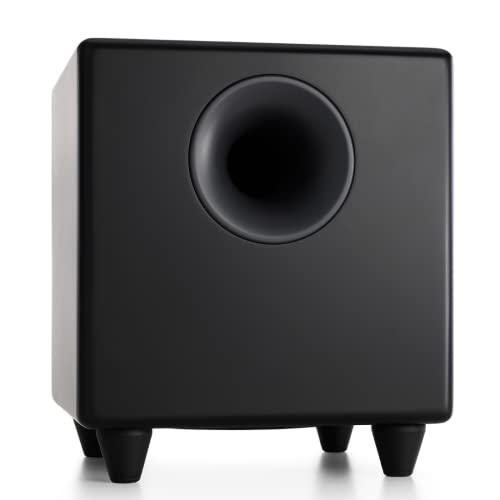
- 250-watt powered 8-inch design
- Down-firing driver allows flexible placement
- Compatible with optional W3 wireless adapter
Best For: Compact studios and mixed-use desktop systems
Monitor-Matched Control

- 8-inch bass-reflex design with 150W amplifier
- 22–150 Hz frequency response
- Adjustable low/high cut and phase controls
Best For: Recording systems requiring precise monitor integration
Flexible Compact DSP Pick

- 80W Class-D amplifier with 120W peak output
- 35 Hz bass response with DSP control
- LFE, RCA, and high-level input options
Best For: Compact studios needing flexible connections and tuning
Desktop Studio Upgrade

- 8-inch subwoofer for CR Series monitors
- TRS, RCA, and Bluetooth connectivity
- Desktop remote and adjustable crossover
Best For: CR monitor users seeking convenient desktop bass control
Compact Deep-Bass Pick
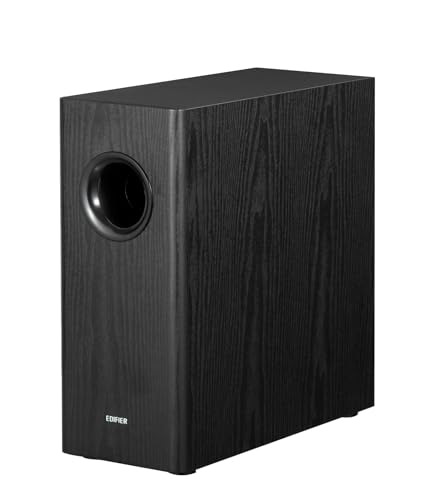
- 35Hz bass from an 8-inch woofer
- 70W RMS Class-D amplification
- Adjustable filter and phase selector
Best For: Compact wired setups needing flexible bass integration
High-Output Room-Filling Option

- 12-inch high-excursion woofer
- 29Hz–120Hz stated response
- 200W continuous, 400W peak power
Best For: Larger rooms needing powerful wired bass output
Compact Value Pick
OHAYO V8 60W Powered Subwoofer

- Compact 5.25-inch down-firing design
- 60W Class D amplification
- Bluetooth and two-year warranty
Best For: Small desktop or shelf-based audio setups
Studio Control Pick

- 8-inch driver reaches down to 30 Hz
- Adjustable highpass and lowpass filters
- TRS, RCA, aux, and Bluetooth 5.0
Best For: Home-studio monitoring and music production
High-Output Home Theater Pick

- 10-inch woofer with 300W RMS
- Adjustable volume, crossover, and phase
- RCA and high-level wired connections
Best For: Large-room music, gaming, and home-theater setups
Deep-Bass Studio Pick – JBL LSR310S
The JBL LSR310S is a strong choice for subwoofers for home studios when you want extended low end, high output, and straightforward integration with professional monitors. Its 10-inch driver reaches into the 20 Hz region, while balanced connections support a range of studio setups.
Best For: Producers and engineers who need powerful, extended bass for music production, including dance and electronic tracks.
Pros:
- 10-inch driver delivers deep low-frequency response into the 20 Hz region.
- Balanced XLR and 1/4-inch inputs plus XLR outputs integrate with studio monitor systems.
- XLF setting provides a club-style bass tuning for dance production.
- 113 dB peak output supports high playback levels.
Cons:
- Its high-output design may be more subwoofer than a small room requires.
- It is a wired, floor-standing unit rather than a compact or wireless model.
The LSR310S stands out for professional connectivity and substantial low-end capability. The sensitivity switch also helps accommodate both professional and consumer-level signal sources.
Compact Wireless-Ready Option – Audioengine S8
The Audioengine S8 is a practical option among subwoofers for home studios where compact placement and flexible home-audio use matter. Its 8-inch down-firing design and 250-watt output add substantial bass, while compatibility with the W3 wireless adapter kit can simplify positioning.
Best For: Small home studios, desktop systems, and mixed music, gaming, or home-theater setups.
Pros:
- 250-watt output provides robust bass from an 8-inch subwoofer.
- Down-firing design supports flexible placement and resonant low end.
- Compatible with the Audioengine W3 wireless subwoofer adapter kit.
- Sleep mode automatically powers down when not in use.
Cons:
- Wired RCA connectivity is included; wireless operation requires the separate W3 adapter kit.
- Its 8-inch driver is less oriented toward the very deepest bass than larger studio models.
The S8 balances strong output with a relatively compact form factor. It is especially appealing if your studio also serves as a general-purpose listening or entertainment space.
Monitor-Matched Control – Yamaha HS8S
The Yamaha HS8S is a focused choice among subwoofers for home studios, offering controls designed to blend low frequencies with a monitor system. Its 8-inch bass-reflex driver, 150-watt amplifier, and adjustable filtering support detailed setup in recording and live-music environments.
Best For: Recording setups and monitor systems that need adjustable crossover and phase controls.
Pros:
- 8-inch bass-reflex powered design with a 150-watt amplifier.
- Low-frequency response is specified from 22 Hz to 150 Hz.
- Adjustable LOW CUT control covers 80–120 Hz.
- HIGH CUT control and phase switch help tailor system integration.
Cons:
- It is a relatively large, heavy floor-standing unit at 33.6 pounds.
- The supplied details list a one-year manufacturer warranty.
The HS8S prioritizes integration over extra features, making its filter and phase controls the main attraction. It is a sensible fit when accurate system matching is more important than wireless convenience.
Flexible Compact DSP Pick – BESTISAN Magicube 80
The BESTISAN Magicube 80 is a compact option for subwoofers for home studios, combining DSP control, multiple input types, and a modest footprint. Its 8-inch active design reaches 35 Hz and includes adjustable crossover and phase controls for blending with speakers or soundbars.
Best For: Compact home studios and versatile stereo systems needing simple, adjustable bass extension.
Pros:
- Class-D amplifier provides 80 watts, with 120 watts peak output.
- DSP-assisted 35 Hz bass response is designed for tight, low-distortion performance.
- LFE, AUX/RCA, and high-level inputs support varied system connections.
- Adjustable 30–160 Hz low-pass filter and 0°/180° phase switch aid setup.
Cons:
- Its 35 Hz low-end specification is less extended than larger professional studio subs.
- The supplied details specify a 12-month after-sales support period.
The Magicube 80 is best viewed as a flexible, space-conscious bass supplement rather than a maximum-output studio subwoofer. Its connection options and broad crossover range make it easy to adapt to different home systems.
Desktop Studio Upgrade – Mackie CR8SBT
The Mackie CR8SBT is a practical choice among subwoofers for home studios, especially if you already use CR Series monitors. Its 8-inch driver adds low end to desktop setups, while TRS, RCA, and Bluetooth connectivity make it flexible for music and general listening.
Best For: CR Series monitor users who want convenient desktop bass control.
Pros:
- Designed to pair with Mackie CR Series monitors.
- Supports TRS, RCA, and Bluetooth connections.
- Includes a desktop remote for volume and subwoofer bypass.
- Adjustable crossover helps blend bass with the monitors.
Cons:
- Its 40Hz stated frequency response may not reach as deep as larger subwoofers.
- At 32.4 pounds, it is not especially lightweight for a desktop setup.
- Bluetooth and remote operation require additional power and setup considerations.
For a CR-based home studio, the CR8SBT emphasizes easy integration and hands-on control. It is a sensible fit when desktop convenience matters as much as added bass.
Compact Deep-Bass Pick – Edifier T5s
The Edifier T5s offers a compact route to deeper bass for subwoofers for home studios. Its 8-inch long-throw woofer, 70W RMS Class-D amplifier, adjustable low-pass filter, and phase selector support straightforward integration with compatible speakers and audio systems.
Best For: Small studio or desktop setups that need flexible RCA integration and 35Hz bass extension.
Pros:
- Reaches a stated 35Hz frequency response with an 8-inch woofer.
- Low-pass filter adjusts from 30Hz to 160Hz.
- Phase selector offers 0° and 180° settings for system matching.
- Compact cabinet includes auto-standby and setup cables.
Cons:
- Connectivity is wired RCA only, with no wireless communication.
- Series connection without a sub out requires speakers with LINE IN.
- Its 70W RMS output is less powerful than larger home-theater-oriented models.
The T5s is well suited to listeners who want meaningful low-end extension without a large cabinet. Its controls and connection options make it easier to tune than a basic plug-in subwoofer.
High-Output Room-Filling Option – Klipsch R-120SW
The Klipsch R-120SW is the largest and most powerful option here for buyers considering subwoofers for home studios or larger listening rooms. Its 12-inch spun-copper woofer, rear-firing bass reflex port, and 200W/400W amplifier rating are geared toward forceful low-frequency output.
Best For: Larger rooms and studio monitoring setups where high output matters more than compact size.
Pros:
- 12-inch high-excursion woofer supports substantial bass output.
- Rated frequency range is 29Hz–120Hz at ±3dB.
- Offers 200W continuous and 400W peak amplifier power.
- Rear-firing ported design supports bass-reflex operation.
Cons:
- Its 19.2-inch depth and 31-pound weight require more floor space.
- Connectivity is wired RCA rather than Bluetooth or balanced TRS.
- It is primarily specified for home entertainment systems, so studio integration may require suitable equipment.
The R-120SW makes the most sense when you need abundant low-end headroom and have room for a full-size enclosure. For nearfield desktop work, its size and RCA-only connectivity may be less convenient.
Compact Value Pick – OHAYO V8 60W Powered Subwoofer
The OHAYO V8 is a compact option for shoppers seeking subwoofers for home studios, desktop audio, or general music listening. Its 5.25-inch driver, down-firing design, Bluetooth connectivity, and built-in Class D amplifier fit smaller setups where efficient, easy-to-place bass matters.
Best For: Compact desktop or shelf-based listening setups that need wireless connectivity.
Pros:
- Built-in 60W Class D digital amplifier is designed for efficient operation.
- Bluetooth connectivity supports compatible smartphones and other devices.
- Compact shelf-mount form factor with an 8.4-by-10.9-by-8.4-inch footprint.
- Includes a two-year warranty.
Cons:
- The 5.25-inch speaker is smaller than the drivers in the other options here.
- Product details list push-button controls and do not identify studio-specific crossover controls.
The V8 makes the most sense when space and simplicity are priorities. It is less feature-focused than a dedicated studio-monitor subwoofer, but its small enclosure, Bluetooth support, and efficient amplification can suit a modest home setup.
Studio Control Pick – PreSonus Eris Sub 8BT
The PreSonus Eris Sub 8BT is purpose-built for listeners comparing subwoofers for home studios. Its 8-inch driver reaches down to 30 Hz, while adjustable highpass and lowpass filters help integrate the subwoofer with compact studio monitors. Balanced TRS, RCA, aux, and Bluetooth 5.0 connections add setup flexibility.
Best For: Home-studio producers and listeners who want adjustable crossover controls and broad connectivity.
Pros:
- 8-inch low-frequency driver is specified to reach down to 30 Hz.
- Highpass and lowpass controls help match the subwoofer to main monitors.
- Offers balanced TRS, RCA, front-panel aux, and Bluetooth 5.0 connectivity.
- Includes tuning controls, a front headphone output, and automatic power-saving mode.
Cons:
- Its floor-standing design requires more space than a compact desktop subwoofer.
- The extensive controls and connections may be more than a casual listener needs.
Among these choices, the Eris Sub 8BT is the most directly aligned with studio monitoring. Its crossover and room-tuning controls make it easier to incorporate into a production setup, while Bluetooth and the headphone output support everyday listening.
High-Output Home Theater Pick – Rockville Rock Shaker 10
The Rockville Rock Shaker 10 is a larger wired subwoofer for buyers who want substantial low-end output alongside home-studio, home-theater, or gaming equipment. Its 10-inch woofer, 300W RMS rating, adjustable crossover and phase controls, and multiple wired inputs support flexible integration.
Best For: Larger rooms and setups that prioritize powerful bass for music, movies, and gaming.
Pros:
- 10-inch woofer with 300W RMS and 600W peak output ratings.
- Volume, crossover frequency, and phase controls allow system adjustment.
- RCA line inputs and outputs plus high-level speaker connections support varied setups.
- MDF enclosure includes a detachable foam grille.
Cons:
- At about 20 pounds and roughly 18.9 by 18.3 by 14.6 inches, it needs considerable floor space.
- It has no wireless communication technology.
- The supplied frequency-response detail lists 200 Hz, which may be less informative for precise studio-monitor matching.
The Rock Shaker 10 is best viewed as a high-output, wired option rather than a compact nearfield studio accessory. Its adjustment controls and connection choices are useful, but its size and home-theater-oriented design may be excessive for a small production desk.
How We Picked the Best Subwoofers for Home Studios
We focused on powered subwoofers suited to music production, recording, editing, and critical listening. Our comparison considers woofer size, amplifier power, frequency response, crossover and phase controls, input options, wireless or Bluetooth features, cabinet design, and overall placement flexibility. We also included models for different budgets and room sizes, since a compact desktop setup has different needs from a larger treated studio.
Specifications are useful, but they do not tell the whole story. A subwoofer should integrate cleanly with your main monitors, add controlled low-end extension, and remain practical in the room where you will actually use it.
Quick Comparison
- Best overall studio choice: JBL Professional LSR310S for its balanced combination of output, connectivity, and studio-focused controls.
- Best for Yamaha monitor systems: Yamaha HS8 Studio Subwoofer, especially when matching the HS monitor family.
- Best compact option: PreSonus Eris Sub 8 Bluetooth for desktop systems and smaller rooms.
- Best wireless-ready option: Audioengine S8 for flexible home listening and compact production setups.
- Best budget-friendly picks: BESTISAN, Edifier, and OHAYO models for adding bass extension at a lower cost.
- Best for high-output listening: Klipsch R-120SW or Rockville Rock Shaker 10-inch models, provided the room can accommodate their greater energy.
Key Buying Factors for Subwoofers for Home Studios
Size, Output, and Room Dimensions
An 8-inch subwoofer is often easier to integrate in a bedroom, office, or compact project studio. A 10-inch model can deliver more headroom and deeper, stronger bass, but it may excite room modes more aggressively. More power is not automatically better if your room is untreated or your monitors are close to a wall.
Frequency Response and Accuracy
Look beyond the lowest advertised frequency. For mixing, controlled and even response matters more than exaggerated bass. A useful sub should extend your monitors without making every kick drum or bass note sound oversized.
Connections and Integration
Check whether the subwoofer offers balanced inputs and outputs, adjustable crossover, volume, and phase controls. These features make it easier to place the sub between your audio interface and monitors. Bluetooth can be convenient for casual playback, but wired connections are generally preferable for critical monitoring.
Placement and Calibration
Place the subwoofer on the floor, centered between the main monitors when possible, and keep it away from corners unless you specifically need more output. Use familiar reference tracks, start with a conservative level, and test the system from your normal listening position. Basic acoustic treatment and room correction can improve results substantially.
Who Should Buy Which Subwoofers for Home Studios?
Choose a compact 8-inch model if you work in a small room, use desktop monitors, or want modest low-end extension. Choose a studio-focused model with balanced connectivity and adjustment controls if mixing accuracy is the priority. A larger 10-inch subwoofer makes more sense for bigger rooms, higher monitoring levels, or full-range playback, but only after considering room acoustics.
For casual music, gaming, or home-theater use, consumer-oriented models may provide satisfying impact. For production, prioritize integration controls and predictable response over maximum boom. Whichever model you choose, calibrate it conservatively so the subwoofer supports your monitors rather than masking the low-end decisions you need to hear.