Choosing a streaming encoder for video studio work comes down to stability, codec support, and the platforms you need to reach. The right unit can simplify live production while keeping latency, quality, and compatibility under control.
Below, we focus on encoder features that matter for modern studio workflows, from HDMI and SDI inputs to H.264/H.265 support, stream protocols, and network reliability.
Best 10 Streaming Encoder for Video Studio Picks for 2026
4K Studio Multistream Pick
4K HDMI Encoder for Studio Multistreaming

- 4K UHD input up to 30fps
- Up to 4 simultaneous output streams
- Wide protocol support and OSD branding tools
Best For: Studio teams needing multi-platform 4K HDMI streaming
Scalable AV Over IP Choice
HDMI IP Streaming Encoder for Video Walls

- Scales to up to 50 decoders
- Builds video walls up to 8×8
- Visual app control for routing and layouts
Best For: Expandable multi-screen and video wall installations
Compact 1080P60 Workhorse
1080P60 Hardware Encoder for Studio Streaming

- Hardware H.265/H.264 at 1080P60
- Broad protocol support including SRT and WebRTC
- Browser setup with compact, low-power design
Best For: Small studios needing simple, reliable live encoding
Multi-Output OLED Encoder
1080P60 HDMI Encoder with OLED and 4 Outputs

- Up to 4 simultaneous 1080P streams
- OLED screen for real-time status
- H.265/H.264/MJPEG with OSD overlays
Best For: Studios wanting multi-output 1080P encoding with status visibility
SDI Multistream for Broadcast Workflows

- Converts SDI sources to IP streams
- Outputs up to 4 streams at once
- Supports broad protocol and overlay options
Best For: SDI-based studios needing flexible multistream delivery
4K HDMI Encoder for Multi-Platform Live Streaming
HDMI to Ethernet IP Video Encoder
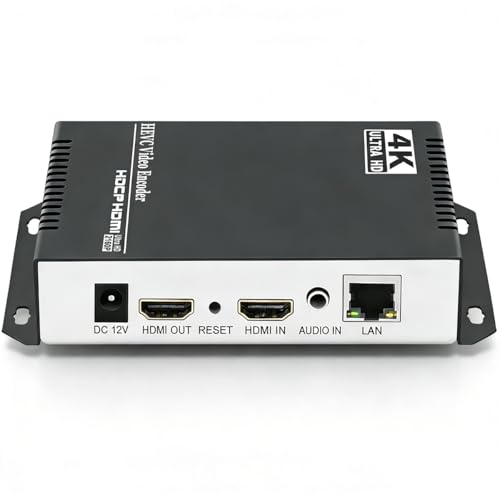
- Accepts 4K HDMI input up to 30fps
- Pushes out 4 streams simultaneously
- Supports many protocols including WebRTC and SRT
Best For: HDMI-based studios needing multi-platform live streaming
Compact 4K HDMI Encoder for Studio and Event Use

- Supports H.264, H.265, and MJPEG
- Takes 4K 60Hz input with 1080p output
- Adds analog audio and custom branding tools
Best For: Small studios and events using HDMI video with external audio
Studio Multi-Stream Encoder
URayCoder 1080P HDMI to IP Encoder

- 1080P H.265/H.264 encoding with stable HDMI-to-IP output
- Supports RTSP, RTMP(S), SRT, HLS, UDP, ONVIF, and more
- Adds text, logos, timestamps, cropping, and audio input
Best For: Studio streams that need branded, multi-platform network output
Compact Encoder with Recording

- Ultra-mini 1080P encoder with HDMI loopout and audio I/O
- Records locally to USB or TF card and supports cropping
- Works with RTSP, RTMP(S), SRT, HLS, ONVIF, OBS, and VLC
Best For: Small studios that need a tiny encoder with recording support
4K Studio Streaming Encoder
URayCoder 4K HDMI to IP Encoder

- 4K UHD HDMI encoding with H.265/H.264 support
- Streams via RTSP, RTMP(S), SRT, HLS, WebRTC, and more
- Offers 4-stream output plus logos, captions, cropping, and audio
Best For: Studios needing 4K input with broad multi-protocol streaming
4K Studio Multistream Pick – 4K HDMI Encoder for Studio Multistreaming
If you need a streaming encoder for video studio use that can handle high-resolution HDMI sources and push to multiple destinations, this URayCoder unit is built for that job. It supports 4K input, H.265/H.264 encoding, and a wide mix of streaming protocols, so it fits studio workflows where flexibility and multi-platform output matter.
Best For: Studio teams that want 4K HDMI capture with multi-platform live streaming and customizable on-screen branding.
Pros:
- Supports 4K UHD input up to 30fps and 2K/lower resolutions up to 120fps.
- Can output up to 4 streams with different protocols at the same time.
- Works with HTTP, RTSP, RTMP(S), SRT, HLS, WebRTC, and more.
- Includes text, scrolling captions, logos, timestamps, and image adjustment tools.
Cons:
- 4K streaming is capped at 30fps.
- Advanced customization may be more than a simple plug-and-play user needs.
For studios that want one encoder to feed several platforms without extra hardware, this model is the most feature-rich option in the group. Its mix of 4K support, protocol coverage, and branding tools makes it a strong fit for professional live production.
Scalable AV Over IP Choice – HDMI IP Streaming Encoder for Video Walls
This streaming encoder for video studio and AV distribution setups is aimed less at public livestreaming and more at building flexible IP-based display systems. The HDIP100E sends HDMI over IP for scalable routing, video walls, and multi-screen control, making it a practical choice when your studio needs content distributed across many displays.
Best For: AV teams and studios building expandable multi-screen or video wall systems over standard Ethernet.
Pros:
- Scales from one display to dozens of screens, up to 50 decoders.
- Supports video walls up to 8×8 and independent screen layouts.
- Uses standard Ethernet switches for cleaner, more flexible installation.
- VDirector app offers visual routing, preview, and real-time control.
Cons:
- This listing includes the encoder only; a decoder must be purchased separately.
- Designed for AV over IP distribution rather than typical social livestreaming workflows.
If your studio needs signal routing across multiple rooms or displays, this encoder stands out for scalability and control. It is a specialized solution, but it is very strong for matrix switching and video wall setups.
Compact 1080P60 Workhorse – 1080P60 Hardware Encoder for Studio Streaming
For a compact streaming encoder for video studio use, this UNISHEEN model focuses on hardware-based 1080P60 encoding with broad protocol support. It is a good fit when you want a small, reliable box that can feed live broadcasts, CDNs, or monitoring systems without requiring extra software.
Best For: Small studios and live production setups that want a compact 1080P60 encoder with browser-based setup.
Pros:
- Hardware H.265/H.264 encoding at 1080P60.
- Supports SRT, RTMP, RTSP, RTMPS, UDP, HTTP, HLS, WebRTC, and more.
- Browser-based configuration with no software or driver installation needed.
- Compact size and low power draw suit 24/7 deployment.
Cons:
- Maximum stated resolution is 1080P60, so it is not a 4K encoder.
- Single-port design may be limiting for more complex studio routing.
This is a practical pick when reliability and ease of setup matter more than advanced multi-output features. Its compact design and broad protocol support make it useful for straightforward studio streaming and IP distribution.
Multi-Output OLED Encoder – 1080P60 HDMI Encoder with OLED and 4 Outputs
If you want a streaming encoder for video studio workflows that balances output flexibility and clear on-device status monitoring, this ORIVISION model is a solid middle-ground option. It supports up to four simultaneous streams at 1080P and includes OLED status display plus OSD tools for branding or stream labeling.
Best For: Studios that need multiple 1080P stream outputs and an easy-to-read OLED status screen.
Pros:
- Supports up to 4 simultaneous IP outputs at 1080P.
- Offers H.265, H.264, and MJPEG encoding options.
- Includes OLED real-time display for live status monitoring.
- Supports OSD text such as scrolling text, logos, and timestamps.
Cons:
- 4K input is optional and limited to one output feed.
- Newer EH1401 hardware cannot be upgraded from older EH931 units by firmware.
This encoder is appealing for studios that prioritize multiple 1080P outputs and front-panel visibility. It gives you more flexibility than a basic single-stream unit, while still staying focused on dependable live broadcast use.
SDI Multistream for Broadcast Workflows – 3G SDI to IP Encoder
If you need a streaming encoder for video studio setups that starts from SDI gear, this URayCoder model is built for flexible broadcast output. It converts SDI video and audio into network streams and supports multiple protocols, making it a practical fit for studio, event, and live production workflows that need to feed different destinations at once.
Best For: Studio teams and broadcasters using SDI cameras or switchers who want multi-protocol IP streaming.
Pros:
- Supports up to 4 simultaneous video streams with different protocols.
- Works with HTTP, RTSP, RTMP(S), SRT, HLS, UDP, RTP, MP4, multicast, and more.
- Offers stream customization like text, scrolling text, logo, time, crop, rotate, flip, and mirror.
- Includes free lifetime technical support and warranty.
Cons:
- Built for SDI output devices, so it is not the right fit for HDMI-only sources.
- Advanced feature set may be more than simple one-platform streaming setups need.
This is a strong choice when a studio needs an encoder that can handle multiple stream outputs and extensive configuration options from one SDI source.
4K HDMI Encoder for Multi-Platform Live Streaming – HDMI to Ethernet IP Video Encoder
This streaming encoder for video studio use is aimed at creators who need a single HDMI source turned into network video with strong format support. It accepts 4K HDMI input, supports multiple live-streaming protocols, and can send out several streams at once, which makes it useful for studio productions that need broad platform compatibility.
Best For: Creators and studio teams streaming from HDMI cameras or switchers to multiple platforms.
Pros:
- Supports 4K UHD input up to 30fps and up to 120fps at lower resolutions.
- Compatible with HTTP, RTSP, RTMP(S), SRT, HLS, MP4, multicast, ONVIF, FLV, WebRTC, TRTC, and ICECAST.
- Can output 4 video streams simultaneously for multi-platform distribution.
- Offers text, scrolling captions, logos, timestamps, cropping, rotation, flipping, and mirroring.
Cons:
- Designed for HDMI sources, so it is not suited to SDI-only studio gear.
- 4K input is limited to 30fps according to the supplied notes.
For studios that want one HDMI encoder to feed several services and preserve room for branding, this model has a very full feature set.
Compact 4K HDMI Encoder for Studio and Event Use – HDMI IPTV Encoder with Audio
If you want a streaming encoder for video studio jobs that balances features with a more compact form factor, this J-Tech Digital unit is worth a look. It takes 4K 60Hz HDMI input, supports multiple compression formats and streaming protocols, and adds analog audio input for synchronized live productions from cameras, mixers, or presentation systems.
Best For: Small studios, churches, conferences, and live event setups using HDMI video with external audio.
Pros:
- Supports H.264, H.265, and MJPEG encoding.
- Accepts 4K 60Hz input and outputs 1080p 60Hz.
- Includes analog audio input for embedding external sound sources.
- Can stream to up to 4 platforms and includes custom OSD, logo, and no-signal image options.
Cons:
- Output resolution is 1080p 60Hz rather than 4K.
- Built around HDMI workflows, so SDI users will need different hardware.
This encoder fits production spaces that want dependable HDMI ingest, external audio support, and basic branding tools in a straightforward streaming box.
Studio Multi-Stream Encoder – URayCoder 1080P HDMI to IP Encoder
If you need a streaming encoder for video studio work that can push one HDMI source to several destinations, this URayCoder model is built for that kind of workflow. It handles 1080P input, supports H.265/H.264 encoding, and offers broad protocol support for live streaming, IPTV, and network video delivery.
Best For: Studio setups that need reliable multi-protocol streaming, on-screen branding, and simple HDMI-to-network encoding.
Pros:
- Supports H.265/H.264 encoding with up to 1080P HD input/output and 60fps presentation.
- Works with RTSP, RTMP(S), SRT, HLS, UDP, ONVIF, FLV, and more for flexible platform output.
- Allows text, scrolling captions, logos, timestamps, cropping, rotation, flipping, and mirroring.
- Includes HDMI embedded audio plus line-in audio support and real-time stream status viewing.
Cons:
- Limited to 1080P resolution, so it is not the choice for 4K workflows.
- Designed as a network encoder, so it is less suited to users who want a simple plug-and-play webcam alternative.
This is a strong fit when your studio needs stable HDMI-to-IP streaming with customization and multi-platform output. The combination of protocol support and OSD features makes it practical for branded live production.
Compact Encoder with Recording – ORIVISION Mini HDMI Encoder
This compact streaming encoder for video studio environments is a smart pick when space is tight but you still need flexible output options. It combines 1080P HDMI encoding with HDMI loopout, local recording to USB or TF card, and multiple streaming protocols for live broadcasting and signage-style use.
Best For: Small studios, classrooms, and conference rooms that want a tiny encoder with recording and cropping features.
Pros:
- Ultra-mini form factor at 125 x 72 x 25 mm and 200 g, making it easy to place in small setups.
- Supports local recording to USB drive or TF card, including RTSP stream recording and direct HDMI input recording.
- Offers HDMI loopout, audio in/out, USB, TF card support, and video cropping for more control.
- Compatible with HTTP/HTTPS, RTSP, RTMP/RTMPS, SRT, UDP, RTP, FLV, ONVIF, OBS, VLC, and major streaming platforms.
Cons:
- Maximum output is 1080P@30, so it is not aimed at higher-resolution productions.
- It can output two channels, but only one channel reaches full 1080P30.
For compact live production, this ORIVISION encoder stands out because it adds recording and cropping features without taking much desk space. It is especially appealing if you need a low-cost encoder that still covers common studio streaming needs.
4K Studio Streaming Encoder – URayCoder 4K HDMI to IP Encoder
If your studio workflow needs a streaming encoder for video studio production with 4K input support, this URayCoder unit is the most capable option in the group. It accepts 4K UHD HDMI and supports a wide set of streaming protocols, making it suitable for higher-resolution live delivery and network distribution.
Best For: 4K-capable studios that want broad protocol support and flexible multi-stream output.
Pros:
- Supports 4K UHD input and output, with up to 30fps at 4K and up to 120fps at 2K and lower resolutions.
- Includes broad protocol support such as HTTP, RTSP, RTMP(S), SRT, HLS, ONVIF, FLV, WebRTC, TRTC, and ICECAST.
- Can output up to 4 streams with different protocols at the same time.
- Supports text, scrolling captions, logos, timestamps, cropping, rotation, flipping, mirroring, and dual audio input.
Cons:
- 4K output tops out at 30fps, so it is not designed for high-frame-rate 4K production.
- As a network encoder box, it is more specialized than all-in-one capture hardware.
This model is the strongest fit when image resolution matters and you still need flexible streaming formats for multiple destinations. Its combination of 4K support and extensive protocol coverage makes it well suited to demanding studio and event workflows.
How We Picked the Best Streaming Encoder for Video Studio
For a studio environment, we prioritized hardware encoding, dependable output options, and broad protocol support. We also looked for models that can fit common workflows such as direct-to-platform live streaming, IPTV distribution, and internal monitoring.
In practice, the best choices offer clean signal handling, straightforward setup, and enough flexibility to work with cameras, switchers, and production networks without constant troubleshooting.
Quick Comparison
The main differences come down to input type, output protocol, and stream capacity. HDMI-only encoders are usually the simplest pick for compact studios, while SDI models make more sense when your gear runs on broadcast-style cabling. If you need internal distribution or multi-screen routing, AV-over-IP options stand apart from traditional streaming encoders.
Typical Tradeoffs
More protocol support can mean easier platform integration, but it may also add setup complexity. 4K-capable units are useful for future-proofing, while 1080p models often deliver better value for current live streaming needs.
Key Buying Factors for a Streaming Encoder for Video Studio
Input type: Match the encoder to your source gear. HDMI works well for cameras and switchers, while SDI is better for longer cable runs and more professional studio chains.
Codec support: H.264 remains widely compatible, while H.265 can reduce bandwidth demands. If you plan to stream to multiple destinations, confirm the codec is supported across your workflow.
Protocols: Look for the streaming protocols you actually use, such as RTMP, RTMPS, SRT, RTSP, HLS, or WebRTC. The best unit is the one that fits your delivery method with minimal conversion.
Latency and reliability: Low-latency protocols matter for live events, interviews, and real-time production. Hardware encoders are generally preferred over software-only alternatives for consistency.
Audio handling and monitoring: Make sure the encoder supports clean embedded audio or external audio input if your studio uses separate mics or mixers. Loop-out and local monitoring can also help with troubleshooting.
Who Should Buy Which Streaming Encoder for Video Studio?
Small studios and solo creators: An HDMI encoder with H.264/H.265 support is usually the best balance of cost, simplicity, and performance.
Broadcast and pro AV teams: SDI or higher-end multi-protocol encoders are better if you need more robust cabling, lower-latency workflows, or integration with professional production gear.
IP distribution and venue installs: AV-over-IP encoders are ideal when your priority is routing video to displays, walls, or multiple endpoints rather than streaming to one platform.
Future-focused buyers: If you want room to grow, choose a 4K-capable Streaming Encoder for Video Studio use with strong protocol support and reliable hardware encoding.