Great monitoring can make or break a live performance. The right stage monitor helps singers, players, and speakers hear themselves clearly, stay in time, and perform with more confidence.
In this roundup, we focus on practical options for different venues, power needs, and budgets so you can narrow down the best fit fast.
Best 10 Stage Monitors Picks for 2026
Powered Coaxial Stage Monitor
Electro-Voice Pxm 12MP 700W Powered Coaxial Monitor

- 700W powered coaxial monitor with DSP
- 90° x 90° coverage for even stage sound
- Built-in 3-channel mixer with combo and RCA inputs
Best For: Musicians, DJs, and engineers needing a powerful powered wedge
Classic Floor Wedge
Yamaha BR12M 12-inch 2-Way Floor Monitor

- 12-inch passive 2-way floor monitor
- 90 x 40 horn and 97 dB sensitivity
- Pole socket adds placement flexibility
Best For: Bands needing a durable passive monitor for stage reinforcement
Budget Powered Monitor
Behringer EUROLIVE F1220D 250W Monitor Speaker

- 250W powered bi-amped monitor
- Feedback filter and limiter for protection
- XLR, 1/4", RCA, and Speakon inputs
Best For: Budget-conscious performers and small venues
Road-Ready Floor Monitor
Peavey PV 12M 2-Way Floor Monitor
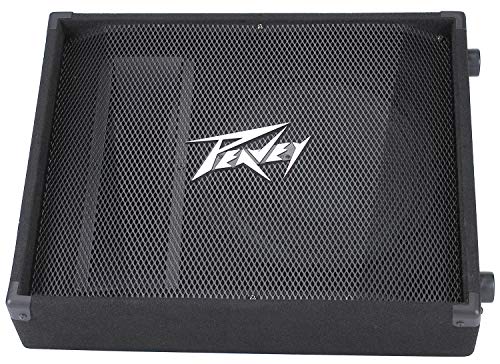
- 500W program / 1,000W peak passive wedge
- Angled at 30° or 45° for flexible setup
- Heavy-duty grille, handle, and carpet covering
Best For: Live performers wanting a rugged wedge with strong vocal presence
Compact Powered Wedge
Sound Town METIS-10MPW 10" Powered Monitor

- 300W built-in amplifier
- 10" woofer with titanium compression driver
- XLR, 1/4", and 1/8" inputs
Best For: Small-stage performers who want a simple powered wedge
High-Output Active Monitor
Samson RSXM10A 800W 2-Way Stage Monitor

- 800W active output
- 10" driver with 1" tweeter
- XLR-1/4 combo input and link output
Best For: Live performers and DJ booths needing stronger monitor output
Passive Tour-Ready Monitor
Sound Town METIS-10M 10" Passive Stage Monitor

- Passive 8-ohm wedge design
- 10" woofer with 1" compression tweeter
- Parallel 1/4" jacks for daisy chaining
Best For: Bands and venues with existing amplification
Compact Titanium Wedge
Seismic Audio SA-10MTSingle 10" Stage Monitor

- 10-inch 2-way wedge with titanium compression horn
- 150 watts RMS and 300 watts peak
- Wired XLR/Speakon connectivity
Best For: Solo performers and compact rehearsal stages
Powered Feedback-Control Monitor
Behringer EUROLIVE F1320D 12" Active Monitor

- Active 300-watt 2-way monitor system
- 12-inch woofer with 1-inch compression driver
- Feedback filter, limiter, and sound processor
Best For: Live performers and small venues needing powered monitoring
High-Output Wedge Monitor
Rockville RSM15P 15" Passive Stage Speaker

- 15-inch passive wedge with titanium compression driver
- 1400 watts peak output for louder stages
- 70 degree x 50 degree horn coverage
Best For: DJs and bands needing a high-output passive monitor
Powered Coaxial Stage Monitor – Electro-Voice Pxm 12MP 700W Powered Coaxial Monitor
If you want stage monitors that stay clear at high volume, the Electro-Voice Pxm 12MP is built for that job. Its coaxial 12-inch design and 90° x 90° coverage aim to keep the mix even across the listening area, while the 55° monitoring angle helps performers stay close without losing intelligibility.
Best For: Musicians, DJs, and audio engineers who need a powerful powered wedge with flexible inputs and onboard DSP.
Pros:
- 700W Class-D amplifier delivers strong output for demanding monitoring setups
- Coaxial 12″ / 1.75″ driver and 90° x 90° coverage help keep sound consistent on stage
- Integrated mixer with 3 input channels, including XLR / 1/4″ combo inputs and stereo RCA
- DSP features EQ presets, shelving EQ, low-cut filters, and a feedback notch filter
Cons:
- Heavier than compact passive wedges at 29.8 pounds
- Designed for corded power, so it is not a grab-and-go battery option
Overall, this is a strong pick if you need stage monitors that can serve both monitoring and playback duties with serious built-in control. The Pxm 12MP is especially appealing when you want one powered cabinet to cover a lot of live sound tasks.
Classic Floor Wedge – Yamaha BR12M 12-inch 2-Way Floor Monitor
The Yamaha BR12M is a straightforward option for stage monitors when you want a traditional passive wedge with proven hardware. Its 12-inch woofer, 1-inch compression driver, and 90 x 40 horn are aimed at delivering punchy low end and clear highs for live performance use.
Best For: Bands and sound crews looking for a durable passive floor monitor for stage reinforcement.
Pros:
- 12″ woofer and 1″ compression driver provide a familiar two-way monitor layout
- 90 x 40 horn is designed for focused coverage on stage
- Built-in pole socket adds flexibility beyond floor monitoring
- 97 dB sensitivity and 600W peak handling support efficient, loud playback
Cons:
- Passive design requires an external amplifier
- More of a traditional monitor than a feature-rich powered model
If you want a dependable wedge with simple operation and flexible placement, the BR12M fits that role well. It is a practical stage-monitor choice for users who already have the rest of the amplification chain in place.
Budget Powered Monitor – Behringer EUROLIVE F1220D 250W Monitor Speaker
For stage monitors on a tighter budget, the Behringer EUROLIVE F1220D keeps the setup simple with a powered 12-inch design and built-in feedback control. It is a practical choice when you want a compact monitor speaker with enough connectivity for common live sound and playback sources.
Best For: Budget-conscious performers and small venues that want a powered monitor with basic protection features.
Pros:
- Powered 250W bi-amped design keeps the setup compact
- Adjustable feedback filter and integrated limiter help protect the speaker
- Multiple input options include XLR, 1/4″ TRS/TS, RCA, and Speakon
- 12″ woofer and wide-bandwidth design suit general monitoring and playback
Cons:
- Lower output than larger 500W and 700W competitors
- Mono design may be limiting for some playback applications
This is a sensible monitor if you need useful features without paying for a higher-output cabinet. The F1220D works best as a straightforward stage monitor for smaller rooms, rehearsals, or backup duties.
Road-Ready Floor Monitor – Peavey PV 12M 2-Way Floor Monitor
The Peavey PV 12M is aimed at players who want rugged stage monitors that can handle regular live use. Its trapezoidal cabinet, 12-inch Sheffield woofer, and titanium-diaphragm compression driver are built to help vocals cut through while still giving you flexible placement options.
Best For: Live performers and studios wanting a rugged passive wedge with strong vocal presence.
Pros:
- 500W program / 1,000W peak handling supports demanding stage use
- 12″ Sheffield Pro woofer and 1.4″ titanium compression driver aim for clear vocal projection
- Can be angled at 30° or 45° from the floor for placement flexibility
- Heavy-duty grille, steel handle, and carpet covering suit road use
Cons:
- Passive design requires external amplification
- At 41 pounds, it is heavier than some compact monitor options
For users who prioritize durability and vocal clarity, this Peavey monitor is a solid fit. It is a practical wedge for bands, rehearsal spaces, and sound crews that want dependable stage monitors with a tougher build.
Compact Powered Wedge – Sound Town METIS-10MPW 10" Powered Monitor
If you want a straightforward powered stage monitor for rehearsals, small venues, or live performance setups, the Sound Town METIS-10MPW keeps things simple. Its 10-inch woofer and titanium compression driver are built to deliver focused monitoring, while the onboard 300W amp and 3-band EQ help you shape the sound to the room.
Best For: Players, vocalists, and small-stage setups that need an easy-to-use powered wedge with flexible inputs.
Pros:
- Built-in 300W amplification for powered monitor use
- XLR, 1/4-inch auxiliary, and 1/8-inch MP3 inputs for flexible connection options
- 3-band EQ makes quick tonal adjustments easy
- Compact wedge design with recessed handle, grille, and metal corners
Cons:
- Single monitor format may not suit larger stage coverage needs
- Carpet-covered cabinet is built for practicality, not a premium finish
This is a practical powered stage monitor for users who value plug-in convenience and easy control over advanced features. It fits well in compact live sound setups where dependable monitoring matters more than extras.
High-Output Active Monitor – Samson RSXM10A 800W 2-Way Stage Monitor
The Samson RSXM10A is aimed at users who want a more powerful stage monitor with a compact coaxial design. With 800 watts of output, a 10-inch low-frequency driver, and a 1-inch tweeter, it is designed for live performances, DJ booths, and sound engineering setups where stronger monitor output is useful.
Best For: Performers and audio users who want a high-output active stage monitor with straightforward connectivity.
Pros:
- 800W active design for strong monitor output
- XLR-1/4 combo input plus XLR link output for flexible routing
- FOH/Monitor selector switch helps optimize sound use
- Compact all-wood coaxial cabinet with pole mount receptacle
Cons:
- Monophonic output may not be ideal if you want stereo monitoring
- Heavier than some compact monitors at 30 pounds
For users who need more headroom from their stage monitors, this model stands out for output and routing flexibility. It makes the most sense in setups where an active, road-ready monitor is preferred over a lightweight entry-level option.
Passive Tour-Ready Monitor – Sound Town METIS-10M 10" Passive Stage Monitor
The Sound Town METIS-10M is a passive stage monitor for users who already have external amplification and want a durable wedge for live sound. Its 10-inch woofer and 1-inch compression tweeter are paired with 8-ohm handling, while the parallel 1/4-inch jacks make daisy chaining simple in a working stage setup.
Best For: Bands and venues that need a durable passive monitor with easy daisy chaining.
Pros:
- Passive 8-ohm design works with external amps
- 10″ woofer and 1″ compression tweeter for full-range monitoring
- Parallel 1/4″ jacks support quick daisy chaining
- Touring-friendly cabinet with carpet finish, grille, corners, and side handle
Cons:
- Requires external amplification to operate
- Less convenient than powered models for fast plug-and-play setups
This monitor is a solid choice when you want a rugged passive wedge rather than an all-in-one powered speaker. It is best suited to existing PA systems where durability and simple linking matter.
Compact Titanium Wedge – Seismic Audio SA-10MTSingle 10" Stage Monitor
Seismic Audio - SA-10MTSingle - 10" Floor / Stage Monitor Wedge Style with Titanium Horn
Check Price On AmazonIf you need a straightforward stage monitors option for smaller live setups, the Seismic Audio SA-10MTSingle keeps the focus on simplicity and wedge-style placement. Its 10-inch 2-way design, titanium compression horn, and 150 watts RMS output make it a practical fit for performers who want clear monitor sound without overcomplicating the rig.
Best For: Solo performers, rehearsals, and compact stage setups that need a basic wired wedge monitor.
Pros:
- 10-inch 2-way design with a titanium compression horn for focused monitor sound
- 150 watts RMS / 300 watts peak for modest stage volume needs
- Wedge-style floor mount and 22-pound build for easy positioning
- XLR and Speakon connectivity for wired pro-audio use
Cons:
- Single speaker unit only, so you’ll need additional monitors for larger stages
- Wired-only setup may limit placement flexibility
- No waterproofing or weather protection listed
For players who just need a dependable monitor wedge with a titanium horn and manageable power, this Seismic Audio model covers the essentials. It is best viewed as an affordable, no-frills stage monitor for smaller systems rather than a high-output solution.
Powered Feedback-Control Monitor – Behringer EUROLIVE F1320D 12" Active Monitor
For buyers comparing stage monitors that can double for live and playback use, the Behringer EUROLIVE F1320D stands out as a powered floor monitor with built-in control features. Its 12-inch woofer, 1-inch compression driver, Class-D amplification, and feedback filter make it a flexible option when you want an active monitor system with some extra protection and tuning tools.
Best For: Live performers, small venues, and users who want an active wedge with built-in processing.
Pros:
- Active 300-watt 2-way monitor design for simple powered operation
- 12-inch woofer and 1-inch compression driver for broad stage coverage
- Adjustable feedback filter, integrated limiter, and sound processor
- Class-D amplifier technology keeps the unit relatively light for its type
Cons:
- Still a single monitor, so larger stages may need multiple units
- Floor-standing format may not suit every placement need
- Feature set is geared toward basic control rather than advanced customization
The F1320D is a strong pick if you want powered stage monitors with integrated protection and easy setup. It makes the most sense for users who value convenience and feedback management more than a fully expandable pro-audio system.
High-Output Wedge Monitor – Rockville RSM15P 15" Passive Stage Speaker
If your stage monitors need more output and a larger driver, the Rockville RSM15P is built for bigger live sound jobs. This passive wedge uses a 15-inch woofer, 1.75-inch titanium compression driver, and a high peak power rating to deliver a fuller monitor mix for DJs, bands, and PA applications.
Best For: Loud live setups, DJs, and stage rigs that need a high-output passive wedge.
Pros:
- 15-inch woofer with 1.75-inch titanium compression driver for fuller sound
- 1400 watts peak power for higher-output stage monitoring
- 70 degree x 50 degree horn coverage for wider dispersion
- Dual 1/4-inch and Speakon connectors for flexible wired integration
Cons:
- Passive design requires an external amplifier
- At 54.9 pounds, it is heavier than smaller monitor wedges
- No warranty listed in the supplied notes
The RSM15P is the most stage-ready option in this group when output and coverage matter most. It is best suited to users who already have amplification and want a rugged, high-power monitor wedge for demanding gigs.
How We Picked These Stage Monitors
We prioritized models that offer usable onstage sound, sensible power handling, and the kind of build quality that holds up to repeated setup and teardown. We also looked for a mix of powered and passive designs, because the best choice often depends on whether you already own amplification and how simple you want your rig to be.
Quick Comparison
For a simple decision, think in terms of venue size and system flexibility. Smaller rooms and mobile setups often benefit from powered units that reduce setup time, while larger rigs may prefer passive Stage Monitors tied into an existing amp or mixer setup. Driver size also matters: 10-inch models tend to be easier to move and can be a good fit for tighter stages, while 12-inch and 15-inch options often deliver more low-end presence and headroom.
Key Buying Factors for Stage Monitors
Powered Vs. Passive
Powered Stage Monitors are usually easier to deploy because the amplifier is built in. Passive models can be more cost-effective if you already have amplification and want more routing flexibility.
Power, Headroom, and Clarity
Don’t shop by wattage alone. What matters is whether the monitor stays clear at performance volume. Look for enough headroom so vocals and instruments remain intelligible without sounding strained.
Driver Size and Coverage
Smaller drivers can work well for speech, compact stages, and portable applications. Larger drivers are often better when you need more overall output or fuller sound from the wedge position.
Feedback Control and EQ
Features like feedback filters, horn design, and onboard EQ can help reduce problem frequencies, especially in vocal-heavy setups where gain-before-feedback matters.
Who Should Buy Which Stage Monitors?
If you want the simplest all-in-one setup, powered Stage Monitors are usually the best starting point. If you run a permanent venue system or already own amps, passive models can be a smart value choice. Worship teams, bar bands, DJs, and rehearsal spaces should focus on coverage and clarity first, then choose the size and power level that match their stage and volume requirements.
For most buyers, the best monitor is the one that balances output, portability, and ease of use with the least compromise for your actual room and performers.