Great vocal monitoring can make or break a live performance. The right wedge helps singers hear pitch, phrasing, and timing clearly without fighting feedback or muddy stage sound.
This roundup of the best stage monitors for vocalists in 2026 focuses on clarity, usable volume, and real-world stage performance so you can choose with confidence.
Best 10 Stage Monitors for Vocalists Picks for 2026
Dual Powered Wedge Pair
Seismic Audio 10-inch Stage Monitors

- Pair of powered 10-inch wedge monitors
- XLR, 1/4-inch, and 3.5 mm inputs
- 3-band EQ, gain control, and selectable power
Best For: Vocalists and bands needing a powered dual-monitor setup
Feedback-Controlled Monitor
Behringer EUROLIVE F1220D Monitor

- 12-inch powered monitor with Class-D amplification
- Adjustable feedback filter and integrated limiter
- Multiple wired inputs including XLR, RCA, and Speakon
Best For: Singers needing feedback control in a wired powered monitor
Classic 12-Inch Wedge

- 12-inch woofer with 1-inch compression driver
- 300W program / 600W peak power handling
- Built-in pole socket for stand mounting
Best For: Durable wired floor monitoring for vocals and live sound
Compact Personal Monitor

- 3-inch personal monitor with 25 watts of power
- Includes wall/stand bracket kit and rubber feet
- Runs on phantom power or included power supply
Best For: Close-range vocal monitoring in compact setups
Road-Ready Vocal Projection
Peavey PV 12M 2-Way Floor Monitor, Sunburst
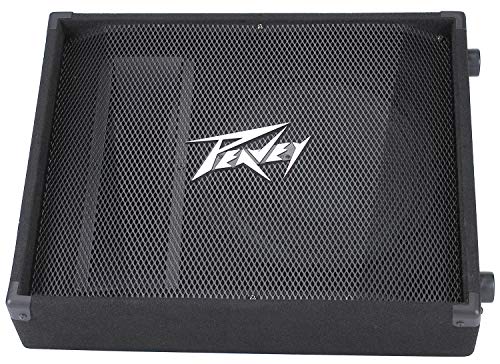
- 500 W program power handling
- 12" woofer with titanium compression driver
- 30/45-degree wedge angles plus pole mount
Best For: vocalists needing a rugged, high-output wedge
Lightweight Active Control
Behringer EUROLIVE F1320D Active Monitor

- 300-watt active Class-D design
- Adjustable feedback filter and integrated limiter
- 12" woofer with 1" compression driver
Best For: vocalists and small stages needing active feedback control
Simple Passive Stage Wedge
Grindhouse GH10M 10 Inch Passive Monitor
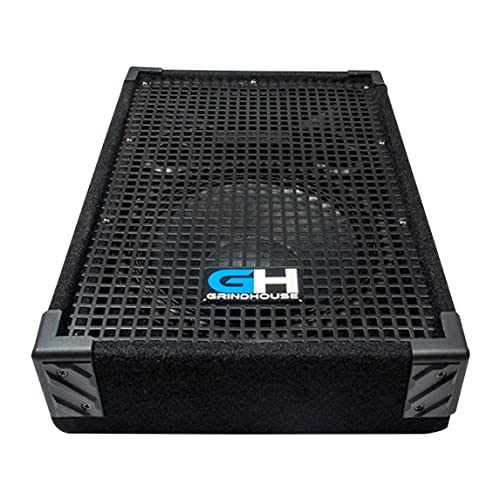
- 300 watts RMS / 600 watts peak
- 10" passive wedge with 8-ohm impedance
- 1/4" TS and speaker wire terminal inputs
Best For: vocalists and small rigs wanting a basic passive wedge
Large-Power Stage Wedge
Rockville RSM15A 15" Powered Monitor

- 1400W peak output with 15" woofer
- Combo XLR and 1/4" TRS inputs
- 3-band EQ plus feedback filter
Best For: Louder stages, bands, and vocalists needing a powerful powered wedge
Compact Powered Wedge
Gemini AS-2108P 8" Floor Monitor

- 300 watts in an 11-lb cabinet
- XLR, 1/4", RCA, and AUX inputs
- Onboard EQ and dual-channel gain
Best For: Small gigs, rehearsals, and vocalists who want a lightweight monitor
Passive Dual-Pack Monitor

- Includes two matched passive wedges
- 12" woofer with titanium horn
- Speakon and 1/4" daisy-chain support
Best For: Bands and worship setups needing a matched passive monitor pair
Dual Powered Wedge Pair – Seismic Audio 10-inch Stage Monitors
If you need stage monitors for vocalists that can cover more than one performer, this powered pair from Seismic Audio gives you two 10-inch wedge monitors with XLR combo inputs, 1/4-inch inputs, and 3.5 mm connectivity. The built-in 3-band EQ, gain control, and selectable 110V/220V power make them a practical choice for rehearsal spaces, small stages, and live sound setups.
Best For: Vocalists, bands, and venues that want a powered stereo pair with flexible wired inputs.
Pros:
- Pair of powered 2-way 10-inch wedge monitors for dual-vocal or band use
- XLR combo inputs plus 1/4-inch and 3.5 mm connectivity for flexible hookup options
- 3-band EQ and gain control help you shape monitor sound on the fly
- Full metal grill, recessed handles, and carpeted covering add stage-ready practicality
Cons:
- Heavier than a single compact monitor at 70 pounds for the pair
- Corded power only, so placement depends on outlet access
- Not a wireless system
Overall, this is a solid option if you want a powered stage monitor setup that can serve more than one vocalist and offers straightforward wired control. The feature set is geared toward live use rather than ultra-light portability.
Feedback-Controlled Monitor – Behringer EUROLIVE F1220D Monitor
For stage monitors for vocalists who want a simple wired setup with built-in control, the Behringer EUROLIVE F1220D offers a 12-inch powered design, feedback filter, and integrated limiter. Its Class-D amplification and multiple input options make it a useful pick for live performances and music playback where clarity and protection matter.
Best For: Singers and small live acts that want a powered monitor with feedback control and easy wired connectivity.
Pros:
- Adjustable feedback filter helps manage vocal monitor squeal
- Integrated limiter adds speaker protection during louder use
- 12-inch woofer and 3-inch tweeter support full-range monitoring
- XLR, 1/4-inch TRS/TS, RCA, and Speakon connectivity cover common setups
Cons:
- Single monitor format, so a stereo pair requires buying more than one
- At 23.6 pounds, it is not the lightest option
- Tabletop mount listing is less wedge-specific than some stage monitor designs
This model is a practical choice if feedback control is high on your list and you want a powered monitor that plugs into a range of wired systems. It balances usable stage features with a straightforward, no-frills design.
Classic 12-Inch Wedge – Yamaha BR12M Floor Monitor
If you want stage monitors for vocalists with a traditional floor-monitor feel, the Yamaha BR12M uses a 12-inch woofer, 1-inch compression driver, and bass reflex design to deliver punchy lows and crisp high frequencies. It is built for live performance, sound reinforcement, and public address use, with a pole socket if you need stand mounting instead of floor placement.
Best For: Vocalists, sound engineers, and bands wanting a durable wired floor monitor with strong output handling.
Pros:
- 12-inch woofer and titanium driver are aimed at clear stage monitoring
- 300W program / 600W peak power handling supports higher-output use
- Built-in pole socket adds flexibility for stand mounting
- Large steel handles and corner protectors help with transport and durability
Cons:
- Wired-only design requires speaker cables and external amplification
- Bulkier than compact personal monitors
- Heavier than smaller stage wedges at 15.6 kg
The BR12M is a straightforward workhorse for vocal monitoring when you value proven stage design and higher power handling over compact size. It is a sensible pick for users who want a no-nonsense, durable monitor that can also double for stand use.
Compact Personal Monitor – Galaxy Audio Nano Spot NSPA
For stage monitors for vocalists in tight setups, the Galaxy Audio NSPA Nano Spot is a small personal monitor with a 3-inch ceramic driver, 25 watts of power, and a compact wall/stand mounting package. Its 150Hz to 17kHz range and phantom-power option make it a practical fit for personal monitoring where size matters more than high output.
Best For: Solo performers or small setups that need a compact personal monitor with simple mounting options.
Pros:
- Very compact 3-inch monitor design for personal use
- Wall/stand bracket kit and rubber feet are included
- Can run from 24VDC phantom power or the included 18VDC power supply
- Lightweight at 16 ounces for easy placement
Cons:
- 25 watts is modest compared with larger stage wedges
- 150Hz low end is limited for fuller vocal or band monitoring
- Best suited to close-range monitoring rather than filling a stage
This is a niche monitor for situations where space is tight and you need a small, dedicated personal speaker. It makes the most sense for simple vocal monitoring close to the performer, not for high-volume stage coverage.
Road-Ready Vocal Projection – Peavey PV 12M 2-Way Floor Monitor, Sunburst
If you need stage monitors for vocalists that can help your voice cut through a live mix, the Peavey PV 12M is built for the job. Its 12-inch woofer, titanium-diaphragm compression driver, and 500 watts of program power give it the kind of output and ruggedness that suit regular gigging and rehearsal use.
Best For: Vocalists who want a rugged, high-output wedge for live performances and studio monitoring.
Pros:
- 500 W program / 1,000 W peak handling for confident stage volume
- 12″ Sheffield Pro woofer plus titanium-diaphragm compression driver for clear vocals
- Angle options at 30 or 45 degrees, plus pole-mount flexibility
- Heavy-duty grille, carpet covering, and steel handle for road use
Cons:
- At 41 pounds, it is not the lightest monitor to move around
- Passive design means it needs external amplification
For vocalists who value durable construction and strong projection, the PV 12M is a straightforward stage monitor with classic wedge flexibility. It is a solid pick when you want a monitor that can withstand frequent live use and still help vocals stand out.
Lightweight Active Control – Behringer EUROLIVE F1320D Active Monitor
For stage monitors for vocalists who want an active speaker with built-in control, the Behringer EUROLIVE F1320D offers a practical live-sound setup. Its 300-watt class-D design, 12-inch woofer, compression driver, and feedback filter make it a useful option when you need monitor volume and some help managing stage issues.
Best For: Vocalists and small live setups that want an active monitor with built-in feedback control.
Pros:
- 300-watt active design with lightweight Class-D amplification
- 12″ woofer and 1″ compression driver for full-range monitor sound
- Adjustable feedback filter and integrated limiter for protection and control
- Built-in sound processor adds extra system management
Cons:
- Maximum output power is listed at 90 watts in the supplied details
- Heavier than some compact monitor options at 33.1 pounds
The F1320D makes sense if you prefer an active monitor with onboard processing instead of a passive wedge and separate power amp. It is aimed at live and playback applications where feedback management and quick setup matter.
Simple Passive Stage Wedge – Grindhouse GH10M 10 Inch Passive Monitor
If you want stage monitors for vocalists in a simple passive wedge format, the Grindhouse GH10M keeps the setup straightforward. With a 10-inch woofer, 300 watts RMS handling, and 8-ohm impedance, it is designed for PA, DJ, live sound, and karaoke applications where you need a basic floor monitor.
Best For: Vocalists, DJs, and small live sound setups that want a simple passive wedge monitor.
Pros:
- 300 watts RMS / 600 watts peak handling for its size
- 10″ wedge format fits compact monitor placements
- 8-ohm passive design works with external amplification
- 1/4″ TS and speaker wire terminal connections for flexible wiring
Cons:
- Passive design requires an external amp
- 10″ cabinet will not move as much air as larger monitor wedges
- No built-in wireless or onboard processing features
The GH10M is a practical no-frills choice when you want a wired stage monitor without extra processing or active electronics. It is best suited to smaller rigs where straightforward operation matters more than advanced features.
Large-Power Stage Wedge – Rockville RSM15A 15" Powered Monitor
If you need stage monitors for vocalists that can also handle loud bands and full-range playback, the Rockville RSM15A is built for big, confident monitoring. Its 15-inch woofer, titanium diaphragm driver, and 1400W peak output give singers plenty of volume and low-end support, while the wedge design helps aim the mix right at the performer.
Best For: Vocalists working on louder stages, DJs, and live bands that want a powerful powered floor monitor with flexible input options.
Pros:
- 1400W peak power with a 15″ woofer for high-output monitoring
- Combo XLR and 1/4″ TRS inputs support mics, mixers, and instruments
- 3-band EQ and adjustable feedback filter help shape the monitor mix
- Durable MDF cabinet, steel grille, and carry handles suit regular gig use
Cons:
- At 61.2 pounds, it is not the easiest option to move
- Large 15″ design may be more monitor than small rooms need
This is a strong choice if you want a powerful powered wedge that can keep up with demanding live sound. For singers who need volume and onboard control, it offers a practical balance of flexibility and stage presence.
Compact Powered Wedge – Gemini AS-2108P 8" Floor Monitor
The Gemini AS-2108P is a compact option for stage monitors for vocalists who need something portable and easy to deploy. With 300 watts of power, an 8-inch woofer, and wired XLR, 1/4″, RCA, and AUX inputs, it works well for smaller live setups where you want clear monitor sound without extra bulk.
Best For: Solo performers, rehearsal spaces, church vocals, and small gigs that need a lightweight powered monitor.
Pros:
- Only 11 pounds, so it is easy to carry and set up
- Wired input options cover mics, mixers, phones, and instruments
- Onboard EQ and dual-channel gain simplify quick tone adjustments
- ABS cabinet and clip LED protection add practical durability
Cons:
- 300 watts is modest compared with larger stage monitors
- 8″ woofer is better suited to smaller rooms and lower-volume use
If portability matters more than raw output, this Gemini monitor makes a lot of sense. It is a straightforward, wired-only stage solution for vocalists who want dependable sound in a compact package.
Passive Dual-Pack Monitor – Rockville RSM12P 12" Pair
For vocalists building a traditional live rig, the Rockville RSM12P is a useful pair of passive stage monitors. Each wedge uses a 12-inch woofer and titanium compression horn to deliver clear vocals and instruments, and the included two-pack makes it easier to cover both sides of a stage or rehearsal room.
Best For: Bands, houses of worship, and DJs who want a matched pair of passive stage monitors for vocal monitoring.
Pros:
- Includes two matched 12″ passive wedge monitors
- 12″ woofer and 1″ titanium horn aim for clear vocal projection
- Speakon and 1/4″ connectors support daisy-chaining
- 8-ohm design works with common pro amps and powered mixers
Cons:
- Passive design requires an external amplifier
- Two-cabinet package may be more than some small setups need
This set is a practical pick if you already run a separate amp or powered mixer and want flexible monitor placement. The matched pair format is especially handy when you need consistent monitoring across more than one performer.
How We Picked These Stage Monitors for Vocalists
We focused on models that make vocal monitoring easier in live settings: clear midrange response, enough output for rehearsals and gigs, practical wedge designs, and features that help reduce feedback. We also considered powered and passive options, since different rigs and budgets call for different setups.
Quick Comparison
For most vocalists, the biggest differences come down to power, cabinet size, and portability. Smaller monitors are easier to place and carry, while larger 12-inch and 15-inch designs can deliver more output and fuller low end. Powered monitors simplify setup, while passive models can be a smart choice if you already have external amplification.
Key Buying Factors for Stage Monitors for Vocalists
Clarity Over Bass
Vocal monitors should emphasize the midrange where the human voice lives. Too much bass can cloud pitch cues and make lyrics harder to hear.
Power and Headroom
Look for enough output to stay clean at performance volume. Extra headroom helps the monitor sound composed instead of strained when the band gets loud.
Feedback Control
Features like feedback filters, careful horn design, and well-placed EQ can help reduce ringing and squeal. Placement still matters, but built-in control is a major advantage.
Size and Portability
10-inch monitors often strike a good balance for singers who want portability and focused vocal clarity. 12-inch and 15-inch options can be better for louder stages or performers who want more full-range monitoring.
Powered or Passive
Powered wedges are usually simpler for small bands, solo acts, and portable rigs. Passive wedges work well when you already own power amps or want to build a more flexible system.
Who Should Buy Which Stage Monitors for Vocalists?
If you sing in small clubs, churches, or rehearsal spaces, a compact powered monitor may be the easiest all-around choice. Touring vocalists and louder bands may prefer a higher-output 12-inch or 15-inch wedge for more headroom. If you need a budget-friendly setup or already have amplification, passive stage monitors can offer strong value. For personal monitoring on tighter stages, smaller solutions can work well when you need just enough vocal detail without taking up floor space.
In the end, the best choice depends on your stage volume, portability needs, and whether you want a simple powered solution or a more customizable passive setup.