Choosing the right meter can make studio lighting setup faster, more consistent, and easier to repeat. If you need accurate exposure readings for film, photography, or content production, the right tool matters.
This roundup of the best professional lux meter for studio lighting options focuses on real-world usability, measurement range, sensor design, and features that help you work with confidence.
Best 10 Professional Lux Meter for Studio Lighting Picks for 2026
Compact White-LED Lux Meter
Extech LT40 White LED Light Meter
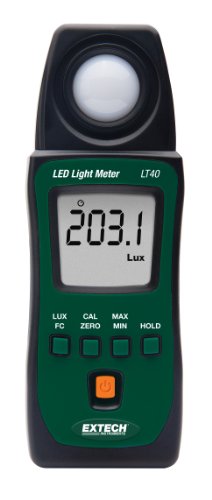
- Measures white LED and standard lighting up to 400,000 lux.
- Backlit 4000-count LCD with MIN/MAX/avg readings.
- Data hold and auto power off for quick studio use.
Best For: Studio teams needing a simple lux meter for white LED and general lighting checks.
Battery-Free Studio Meter
Sekonic L-398A Studio Deluxe III

- Battery-free amorphous photocell for dependable operation.
- Incident and reflected ambient metering with accessories.
- Analog dial gives quick aperture and shutter readouts.
Best For: Users who want a battery-free analog meter for studio and location exposure readings.
Spectral Lighting Analyzer
SK-8301A Professional Light Meter

- Measures lux, CCT, and color coordinates for deeper analysis.
- Stores 999 readings with USB export and report tools.
- Silicone protective case adds grip and drop protection.
Best For: Lighting testers who need lux, color temperature, and data logging in one meter.
Trusted Field Meter

- Dedicated illuminance meter from Fluke.
- Compact tool for studio or field lighting checks.
- Runs on a single 9V battery.
Best For: Users who want a simple brand-name illuminance meter for basic lighting measurements.
Studio-Grade Wide-Range Pick
Extech EA30 Wide Range Light Meter

- Up to 400,000 lux / 40,000 fc range
- Peak Hold captures brief pulses
- Backlit display with remote sensor
Best For: Pros needing wide-range, feature-rich light measurements
Reliable High-Range Runner-Up
Triplett LT65 Illuminance Meter

- Up to 400,000 lux / 40,000 fc
- Works with multiple common light sources
- Min/Max and Data Hold simplify checks
Best For: Users wanting a simple high-range meter for mixed lighting
Calibration-Included Value Pick
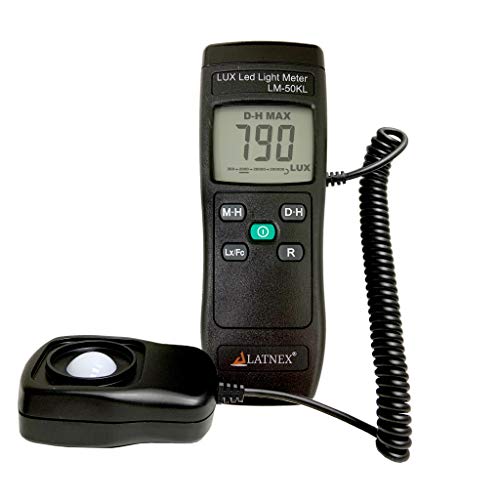
- 200 to 200,000 lux / fc range
- Includes calibration certificate
- 1.5 m sensor wiring for flexible placement
Best For: Photography and studio users who want calibrated, practical measurements
Studio-Ready Accuracy
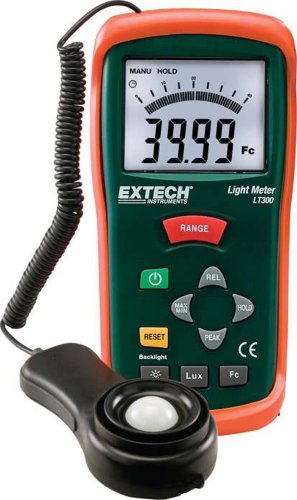
- Up to 40,000 lux and foot-candle readings
- Remote sensor with 12-inch coiled cable
- Backlit LCD with Min/Max and data hold
Best For: Studio users who want a straightforward, accurate meter with a remote sensor
App-Connected Value

- Measures up to 199,900 lux and 18,500 FC
- Bluetooth transfer to iENV app
- Compact meter with backlit LCD
Best For: Studio photographers and video users who want app-based logging and a wide measurement range
Wide-Range Flexibility
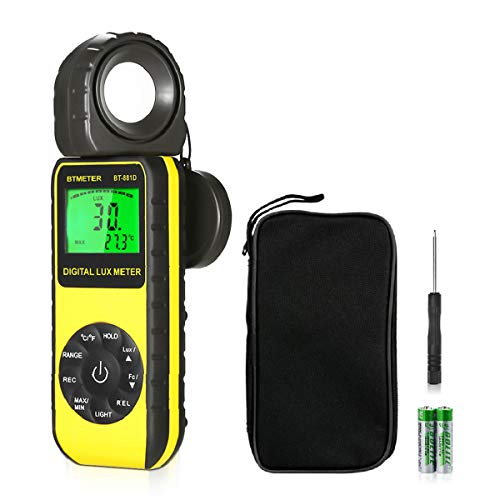
- Measures from 0.01 to 400,000 lux
- 270-degree rotating sensor for flexible positioning
- Fast response with 33-reading memory
Best For: Users who need a wide measurement range and an adjustable sensor for awkward lighting setups
Compact White-LED Lux Meter – Extech LT40 White LED Light Meter
If you need a straightforward professional lux meter for studio lighting, the Extech LT40 focuses on white LED and standard lighting checks with a wide measurement range and a simple backlit display. It is built for quick readings in production spaces where you want lux and foot-candle values without extra setup.
Best For: Studio crews and photographers who want a compact, easy-to-carry light meter for white LED and general lighting checks.
Pros:
- Measures white LED and standard lighting up to 400,000 lux / 40,000 Fc.
- 4000-count backlit LCD helps readings stay visible in dim studio environments.
- MIN/MAX/avg functions support basic lighting monitoring.
- Auto power off and data hold add convenience during fast-paced shoots.
Cons:
- Bullets do not describe advanced color or spectral analysis.
- Primary focus is basic illuminance measurement rather than a broader testing suite.
This is a practical pick when you mainly need reliable lux and foot-candle readings for lighting setup and verification. It keeps the feature set simple, which can be an advantage if your workflow is centered on speed and portability.
Battery-Free Studio Meter – Sekonic L-398A Studio Deluxe III
The Sekonic L-398A is a classic professional lux meter for studio lighting when you want an analog workflow and battery-free operation. Its incident and reflected ambient measurement options, plus a full dial readout, make it useful for photographers and cinematographers who prefer a hands-on exposure tool.
Best For: Photographers and cinematographers who prefer an analog, battery-free meter for studio and on-location exposure work.
Pros:
- Battery-free amorphous photocell supports dependable operation without charging or replacements.
- Incident and reflected ambient capability increases flexibility in studio setups.
- Full dial readout shows aperture and shutter combinations at a glance.
- Swivel head helps position the incident dome more precisely.
Cons:
- Analog dial readout may be less immediate than a digital LCD for some users.
- Bullets do not mention modern data storage or export features.
This meter suits users who value a traditional exposure tool with no battery dependency. The included accessories also make it adaptable for a range of lighting measurement tasks in the studio or on location.
Spectral Lighting Analyzer – SK-8301A Professional Light Meter
If you need a professional lux meter for studio lighting with more than basic illuminance readings, the SK-8301A adds CCT and color-coordinate measurement to its 200,000-lux range. It is designed for lighting testing work where storage, USB transfer, and report generation matter as much as the reading itself.
Best For: Lighting testers and studio users who need illuminance plus color temperature and color-coordinate data.
Pros:
- Measures illuminance up to 200,000 lux along with CCT from 2500K to 15000K.
- Captures color-coordinate data for more detailed lighting analysis.
- Stores 999 groups of data and supports USB communication.
- Upper-computer software can calculate max, min, and average values and output reports.
Cons:
- More complex than a basic light meter if you only need quick lux checks.
- Requires A batteries, so it is not battery-free.
This is the most analysis-focused option in the group, especially if your studio work includes color evaluation and data logging. The silicone case and included carrying case also make it better suited to frequent field or studio handling.
Trusted Field Meter – Fluke 941 Light Meter
The Fluke 941 is a straightforward illuminance meter for users who want a dependable professional lux meter for studio lighting and other test environments. With the Fluke name and a simple tester-focused design, it fits jobs where measuring illuminance is the main task.
Best For: Technicians and studio users who want a simple, brand-name illuminance meter for basic lighting checks.
Pros:
- Dedicated illuminance meter design keeps the tool focused on light measurement.
- Compact enough to carry for studio or field use.
- Uses a single 9V battery for operation.
Cons:
- Supplied notes do not list advanced functions like data logging or color testing.
- No detailed measurement range or display features are provided in the notes.
This model makes sense if you want a no-frills light meter from a recognized test-equipment brand. It is best viewed as a basic illuminance tool rather than an all-in-one lighting analysis device.
Studio-Grade Wide-Range Pick – Extech EA30 Wide Range Light Meter
If you need a professional lux meter for studio lighting that can handle everything from controlled interior setups to very bright sources, the Extech EA30 is built for that range. Its wide measurement span, fast peak capture, and color-corrected sensor make it a practical choice when consistency and repeatability matter.
Best For: Lighting pros who need wide-range readings, peak hold, and a rugged handheld meter for studio or field work.
Pros:
- Measures up to 400,000 lux and 40,000 foot-candles for high-intensity lighting
- Peak Hold can capture very brief light pulses, down to 100 µs
- Includes relative mode, Min/Max tracking, Data Hold, and zero function
- Backlit display, remote sensor, carrying case, and rubber holster improve usability
Cons:
- Requires 6 AAA batteries, which is more than many compact meters
- Its advanced feature set may be more than casual users need
The EA30 stands out when you need a dependable meter that covers both standard studio checks and much brighter lighting scenarios. For buyers who value range, portability, and measurement control, it offers a strong professional balance.
Reliable High-Range Runner-Up – Triplett LT65 Illuminance Meter
The Triplett LT65 is a solid professional lux meter for studio lighting when you want a straightforward tool with a very high measurement ceiling. It covers common studio and mixed-light sources while keeping the interface practical with Min/Max, Data Hold, and a built-in clock.
Best For: Studios and technicians who want a simple high-range meter for checking a variety of light sources.
Pros:
- Measures up to 400,000 lux / 40,000 foot-candles
- Supports fluorescent, metal halide, high-pressure sodium, and incandescent sources
- Min/Max and Data Hold help with quick comparisons and saved readings
- Built-in real time clock and low battery indicator add convenience
Cons:
- Fewer advanced measurement features than some higher-end meters
- No remote sensor cable details are listed in the supplied notes
If your priority is broad compatibility and a high lux ceiling rather than deep feature depth, the LT65 is easy to justify. It fits well as a dependable everyday meter for checking lighting levels across different fixtures.
Calibration-Included Value Pick – LATNEX LM-50KL Light Meter
The LATNEX LM-50KL is a practical professional lux meter for studio lighting if you want a calibrated reading tool without overcomplicating the workflow. Its stated calibration certificate, long sensor lead, and broad lux range make it a useful option for photography, film, and other controlled lighting checks.
Best For: Photographers, studios, and technical users who want a calibration certificate and flexible sensor positioning.
Pros:
- Measures from 200 to 200,000 lux or foot-candles
- Includes a calibration certificate and 1-year warranty
- 1.5-meter sensor wiring helps with flexible placement during measurements
- Data Hold, low battery indicator, and overload indication add everyday practicality
Cons:
- Lower maximum range than the top two meters here
- Designed more for practical use than for advanced measurement features
For buyers who want a certified, easy-to-use meter for studio and photography tasks, the LM-50KL is appealing. It focuses on reliable measurement support and convenience rather than packing in extra complexity.
Studio-Ready Accuracy – Extech LT300 Light Meter
If you need a professional lux meter for studio lighting, the Extech LT300 is built for practical, dependable checks. It measures Lux and foot-candles up to 40,000 lux, and its cosine, color-corrected sensor is designed to stay accurate across daylight, fluorescent, LED, and industrial-style fixtures.
Best For: Studio users who want a straightforward, accurate meter with a remote sensor and easy-to-read display.
Pros:
- Measures Lux and foot-candles up to 40,000 lux
- Remote sensor on a 12-inch coiled cable for easier positioning
- Backlit LCD and bargraph help in dim working areas
- Includes Min/Max, data hold, and zero adjustment functions
Cons:
- Lower maximum range than some higher-end alternatives
- Wired sensor setup may be less convenient for some workflows
For studio lighting checks where you want a reliable, no-fuss instrument, the LT300 offers the right mix of visibility, portability, and measurement features. It is a solid choice when repeatable readings matter more than app-based logging.
App-Connected Value – UNI-T UT383BT Lux Meter
The UNI-T UT383BT is a practical professional lux meter for studio lighting if you want high range plus simple digital tracking. It measures from 0 to 199,900 lux, includes Lux/FC readings, and adds Bluetooth transfer to the iENV app for recording, exporting, and analysis.
Best For: Studio photographers and video users who want app-based logging and a wide measurement range.
Pros:
- Wide range up to 199,900 lux / 18,500 FC
- Bluetooth data transfer to iENV app for recording and analysis
- Compact body with backlit 4-digit LCD
- Includes Max/Min, data hold, overload indication, and auto shutdown
Cons:
- Accuracy is listed as +/- (4%+8), so it is not the most precise option here
- App workflow may be unnecessary if you only need quick spot checks
This meter stands out when you want light readings you can store and review later, not just take once and forget. Its combination of range, portability, and app support makes it a strong pick for organized studio work.
Wide-Range Flexibility – BTMETER BT-881D Light Meter
If you want a professional lux meter for studio lighting with extra range and a flexible sensor, the BTMETER BT-881D is worth a look. It reads from 0.01 to 400,000 lux and features a 270-degree rotated sensor, making it easier to measure from different angles without repositioning the meter itself.
Best For: Users who need a wide measurement range and an adjustable sensor for awkward lighting setups.
Pros:
- Very wide range up to 400,000 lux / 40,000 FC
- 270-degree rotating sensor for easier angle changes
- Fast 0.4-second response with 2 to 3 samples per second
- Stores 33 readings and includes relative mode
Cons:
- More feature-rich than a basic meter, which may be more than some users need
- Built-in temp testing is included, but the core focus is still illuminance measurement
For studio setups where you need to sweep multiple positions or work around fixtures, the BT-881D’s rotating sensor is especially helpful. Its broad range and quick response make it a versatile tool for both lighting checks and general illuminance testing.
How We Picked the Best Professional Lux Meter for Studio Lighting
We prioritized accuracy, usable measurement range, sensor quality, display clarity, and features that support studio work. For a Professional Lux Meter for Studio Lighting, the best choice is not always the one with the widest range; it is the one that gives repeatable readings, is easy to position, and matches your workflow.
We also considered whether each meter is better suited to continuous LED lighting, general illumination, or mixed studio environments where quick comparisons matter.
Quick Comparison
If you want a simple rule: choose a compact digital meter for fast setup, a remote-sensor model for easier positioning, and an analog or specialty meter when you value tactile operation or additional measurement data. High-range meters are useful for bright key lights, while lower-range and more sensitive models can be helpful for controlled portrait or product setups.
Key Buying Factors for a Professional Lux Meter for Studio Lighting
Measurement Range and Resolution
Studio lighting can vary from subtle fill levels to very bright outputs, so look for a meter with enough upper range to avoid clipping and enough low-end resolution to detect small changes. A wide range is especially useful if you work with LED panels, strobes in modeling-light mode, or mixed ambient sources.
Sensor Design and Positioning
A swivel or remote sensor makes it easier to measure light at the subject’s position without blocking the setup. This matters when you need consistent readings at camera height, on set, or in tight spaces where the meter body would otherwise interfere.
Modes and Workflow Features
Peak hold, relative mode, data logging, and easy unit switching between lux and foot-candles can save time during lighting adjustments. If you frequently compare setups, these features make readings more practical and repeatable.
Color and Light Quality Needs
Some users only need illuminance, while others benefit from meters that also report color temperature or related data. If your studio relies heavily on LEDs, extra color information can help you match fixtures more efficiently.
Who Should Buy Which Professional Lux Meter for Studio Lighting?
Photographers and videographers who need straightforward exposure checks should look for a fast, easy-to-read digital meter. Studio teams that move between sets may prefer a remote-sensor model for convenience. Budget-minded buyers can choose a basic lux meter that still offers dependable readings. If you want more advanced analysis for LED-heavy environments, a meter with CCT or data storage may be the better fit.
For most buyers, the best option is the one that matches the brightness level, measurement precision, and setup style of their studio rather than the one with the longest spec sheet.