Choosing the right power amplifier can make a home studio sound cleaner, louder, and more controlled without adding unnecessary noise or complexity.
This roundup focuses on practical options for different studio setups, from compact desktop systems to rack-mount solutions for more demanding monitoring chains.
Best 10 Power Amplifiers for Home Studios Picks for 2026
Reference-Grade Studio Amp
Behringer A800 Professional Reference Amp

- 2 x 400W at 4 ohms; bridged mono support
- Ultra-low impedance design for passive speakers
- Convection cooling and clip/level indicators
Best For: Quiet home studio and control-room monitoring with passive speakers
Home Stereo Integrator
Yamaha A-S501BL Integrated Stereo Amplifier
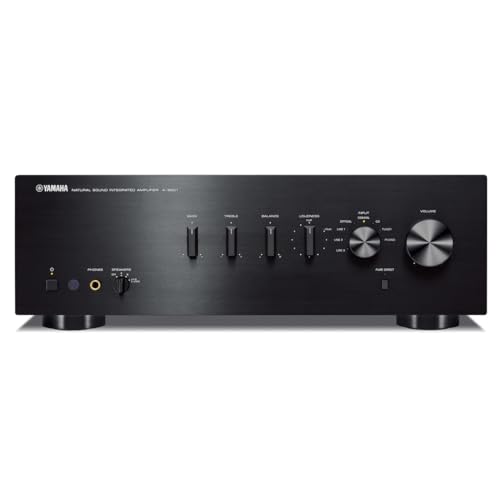
- 85 W + 85 W output
- Optical, coaxial, analog, and phono inputs
- Speakers A/B/A+B switching
Best For: A tidy home listening setup that also handles casual studio use
Rack-Mount Power Option
Rockville RPA5 2-Channel Rack Power Amp
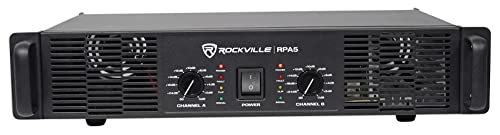
- 200W RMS per channel at 4 ohms
- Bridged mode, crossover, and stereo/mono switching
- XLR, RCA, Speakon, and banana connections
Best For: Rack-based home studios and mixed DJ/pro-audio setups
All-in-One Compact Amp
Romica AK55 Bluetooth Home Stereo Amplifier

- 500W+500W peak; 50W+50W rated power
- Bluetooth 5.0 plus optical, coaxial, USB, SD, and AUX
- Supports passive speakers and active subwoofer
Best For: Small rooms and multipurpose setups needing lots of inputs
Pro-Grade Rack Power
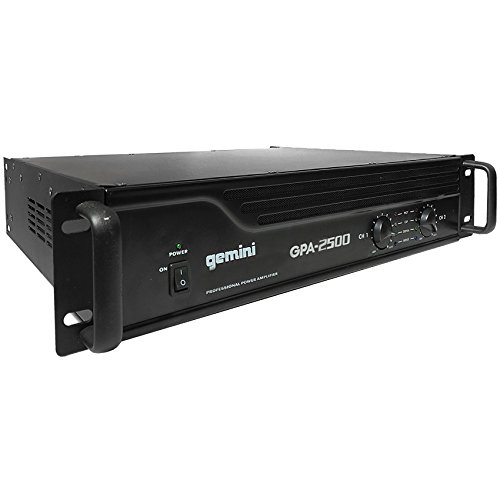
- 10Hz-50kHz response and under 0.1% THD
- XLR and 1/4-inch balanced inputs
- Thermal and short-circuit protection
Best For: Home studios needing rugged, clean amplification with pro-style connections
Desktop Tone Control

- Class D amp with claimed 300W per channel
- Bass and treble knobs for quick tuning
- Lightweight 2.4-pound desktop design
Best For: Compact studio desks and listeners who want easy tone control
Rackmount Event Power
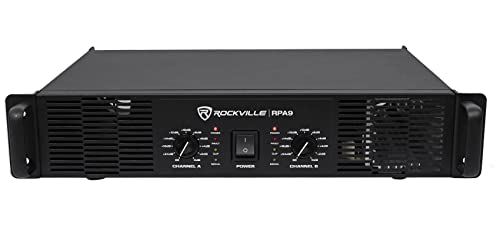
- 3000W peak and 800W RMS output
- Built-in crossover with stereo/bridged modes
- XLR, 1/4-inch, and RCA input options
Best For: Home studios that also handle DJ, rehearsal, or live audio tasks
Studio-Ready Power With DSP
Crown XLS1002 2-Channel Class D Power Amp

- Lightweight Class D DriveCore design
- DSP includes Peakx Limiters and PureBand crossover
- XLR, TRS, and RCA inputs for flexible hookup
Best For: home studio users who want DSP and rack-mounted flexibility
High-Power Bluetooth Rack Amp
Pyle PTA1000BT 2-Channel Bluetooth Power Amplifier

- Bluetooth streaming for easy wireless playback
- Bridgeable design with 2000W peak power
- TRS, XLR, Speakon, and binding-post connections
Best For: studio users who want wireless input and versatile rack connectivity
Simple Dual-Channel Workhorse
Crown XLi800 Two-Channel Power Amplifier

- 300W continuous per channel at 4 ohms
- 600W bridged output for extra flexibility
- Forced-air cooling and flexible I/O
Best For: home studio setups that need a straightforward, dependable amp
Reference-Grade Studio Amp – Behringer A800 Professional Reference Amp
If you’re comparing power amplifiers for home studios, the Behringer A800 is a strong fit when you need clean, flexible drive for passive speakers or studio monitors. Its ultra-linear design and convection cooling make it a practical choice for control rooms, post-production desks, and other quiet spaces where stable performance matters.
Best For: Studio owners and home producers who want a quiet, reference-style amp for passive monitors.
Pros:
- 2 x 400 watts into 4 ohms, with 800 watts in bridged mono operation
- Ultra-low impedance design can drive virtually any passive speaker
- Advanced convection cooling supports noise-free operation
- Precise level meters and clip indicators help monitor output
Cons:
- Designed for passive speakers, so it won’t replace an active monitor setup
- More amplifier than many small desktop studio rigs need
The A800 stands out if you want straightforward power and studio-friendly operation rather than extra playback features. It is aimed at users who care most about dependable amplification and accurate monitoring.
Home Stereo Integrator – Yamaha A-S501BL Integrated Stereo Amplifier
When you’re shopping power amplifiers for home studios, the Yamaha A-S501BL is better suited to a hybrid music room or listening space than a rack-style pro amp. It offers 85 watts per channel, digital and analog inputs, and a built-in phono input for a simple, tidy stereo setup.
Best For: Home users who want a straightforward integrated stereo amplifier with analog and digital connectivity.
Pros:
- 85 W + 85 W output for a compact stereo system
- Digital coaxial and optical inputs plus gold-plated analog inputs
- Built-in phono input for turntables
- Speakers A, B, and A+B support adds flexibility
Cons:
- Not a dedicated studio power amplifier
- Lower output than the more powerful pro-audio options here
This model makes the most sense if your home studio doubles as a hi-fi listening room. It is less about brute-force speaker driving and more about clean, easy integration.
Rack-Mount Power Option – Rockville RPA5 2-Channel Rack Power Amp
For buyers comparing power amplifiers for home studios with more demanding passive speaker setups, the Rockville RPA5 brings practical rack-mount power and flexible connectivity. Its stereo/mono switching, built-in crossover, and multiple input/output options make it a useful option for studio rooms that also handle DJ or playback duties.
Best For: Home studio users who need a rack-mount amp for passive speakers and flexible system routing.
Pros:
- 200W RMS per channel at 4 ohms, or 400W RMS bridged at 8 ohms
- Built-in crossover and stereo/mono switch support different speaker setups
- Quiet dual cooling fans and protection circuitry for reliability
- XLR, 1/4″, RCA, Speakon, banana, and XLR output options
Cons:
- 2U rack format is less compact than desktop-style amps
- More suited to pro audio or DJ use than a minimalist studio desk
The RPA5 is a good pick when you want adaptable connectivity and real rack hardware rather than a simple home stereo amp. It is especially relevant if your studio also supports live playback or subwoofer routing.
All-in-One Compact Amp – Romica AK55 Bluetooth Home Stereo Amplifier
If you want power amplifiers for home studios that also cover casual listening and multimedia, the Romica AK55 is built for that kind of all-in-one use. It combines Bluetooth 5.0, optical and coaxial inputs, microphone support, and tone controls in a compact unit that works well with passive speakers and an active subwoofer.
Best For: Small home studios, bedrooms, and multipurpose rooms needing a compact amp with many input options.
Pros:
- Compact 2-channel design with 500W+500W peak output
- Supports passive speakers plus an active subwoofer
- Bluetooth 5.0, optical, coaxial, AUX, USB, SD, and mic inputs
- Volume, bass, and treble controls with remote included
Cons:
- Rated power is 50W + 50W, so peak figures are not the full story
- Better for small rooms and casual setups than large monitoring spaces
The AK55 is the most feature-rich option here for everyday home use. It trades pro-audio simplicity for convenience and flexibility, which can be ideal if your studio space also handles TV, gaming, or streaming.
Pro-Grade Rack Power – Gemini GPA-2500
If you’re comparing power amplifiers for home studios, the Gemini GPA-2500 is a practical pick when you want clean output, broad frequency response, and rugged protection features. It leans more toward dependable pro-style amplification than desktop convenience, so it suits studio rooms that also need stage-ready durability.
Best For: Home studios that need a rugged, high-output amp with clean signal handling and balanced connections.
Pros:
- 10Hz-50kHz frequency response with less than 0.1% THD for clean playback.
- XLR and 1/4-inch balanced inputs, plus stereo and mono bridge modes.
- Thermal and short-circuit protection with front-to-rear airflow fans.
- Front-panel indicators for signal, clip, protect, and bridge status.
Cons:
- Larger and heavier than a typical desktop studio amp.
- Designed more like a pro rack unit than a compact home setup piece.
For home studios that prioritize reliability and straightforward pro connections, this amplifier brings the kind of build and monitoring features that make setup easier. Its size and power focus make it a better fit for rack-based rooms than minimalist desks.
Desktop Tone Control – Fosi Audio TB10D
Among power amplifiers for home studios, the Fosi Audio TB10D stands out for compact desktop use and simple tone shaping. Its Class D design, RCA connectivity, and bass and treble knobs make it easy to adapt to a small studio, media desk, or listening station.
Best For: Compact home studios, desktop audio setups, and users who want quick bass and treble adjustment.
Pros:
- TPA3255-based Class D amp with 300W per channel claimed output.
- Bass and treble controls for fast sound shaping.
- RCA input and passive speaker output for simple setup.
- Lightweight 2.4-pound design that fits easily on a desk.
Cons:
- Uses RCA rather than balanced studio inputs.
- More of a compact home audio amp than a full rack unit.
If your studio setup is small and you want an amp that is easy to place and easy to tune, this model is a sensible choice. It focuses on flexibility and convenience rather than heavy-duty rack features.
Rackmount Event Power – Rockville RPA9
The Rockville RPA9 is a strong option in power amplifiers for home studios if your space also handles rehearsals, DJ work, or live-style monitoring. With peak and RMS power ratings, a built-in crossover, and multiple input and output choices, it is built for flexible pro audio use.
Best For: Home studios that double as DJ, rehearsal, or pro audio control rooms.
Pros:
- 3000W peak and 800W RMS output for high-demand use.
- Built-in crossover plus stereo and bridged modes.
- XLR, 1/4-inch, and RCA inputs with speakON and banana outputs.
- Dual fans and heat sink design for extended operation.
Cons:
- Rackmount form factor may be more than a casual desktop studio needs.
- Performance focus is broader pro audio, not just nearfield monitoring.
For studios that need an amplifier capable of handling more than one role, the RPA9 offers a useful mix of power, connectivity, and cooling. It makes the most sense when your home studio setup leans toward live audio or multi-use rack integration.
Studio-Ready Power With DSP – Crown XLS1002 2-Channel Class D Power Amp
If you need one of the more flexible power amplifiers for home studios, the Crown XLS1002 is built around efficient Class D DriveCore performance, onboard DSP, and a compact rack-friendly design. It offers XLR, TRS, and RCA inputs, plus selectable input sensitivity and PureBand crossover tools for more controlled setup options.
Best For: Home studio owners who want a lightweight, rack-mountable amp with DSP and flexible connectivity.
Pros:
- Class D DriveCore design keeps weight under 11 lb. for easier rack handling.
- DSP features include band pass filters, Peakx Limiters, and PureBand crossover system.
- Flexible inputs: balanced XLR, 1/4-inch TRS, and RCA.
- Selectable input sensitivity and sleep mode add practical day-to-day convenience.
Cons:
- More feature-rich than a basic amp, so setup may take extra time.
- Best fit is a rack-mounted workflow rather than a simple tabletop setup.
This is a strong pick if you want studio-oriented control in a compact package. Its efficiency, protection features, and broad input support make it a solid option for users who want more than just raw output.
High-Power Bluetooth Rack Amp – Pyle PTA1000BT 2-Channel Bluetooth Power Amplifier
For buyers comparing power amplifiers for home studios, the Pyle PTA1000BT stands out for its built-in Bluetooth, multiple input options, and high peak output. It also includes XLR, TRS, Speakon, and binding-post connections, making it a versatile choice when you need one rack-mount amp to handle different sources and speaker setups.
Best For: Home studio setups that benefit from Bluetooth streaming and lots of connection options.
Pros:
- Bluetooth streaming support for wireless playback from phones, tablets, laptops, and computers.
- Multiple inputs and outputs, including TRS, XLR, Speakon, and binding posts.
- Bridgeable design with up to 2000W peak power in bridged mode.
- Front panel includes level meters and status indicators for quick monitoring.
Cons:
- Peak wattage is the headline number, so real-world output depends on setup.
- Cooling fan and rack hardware make it better suited to dedicated spaces.
This is a practical all-in-one rack amp if you want wireless convenience alongside wired flexibility. Its feature set is broad, but it makes the most sense when you need a straightforward powerhouse with modern connectivity.
Simple Dual-Channel Workhorse – Crown XLi800 Two-Channel Power Amplifier
Crown XLi800 Two-channel, 600-Watt Bridged 8Ω Power Amplifier. Professional DJ, PA, Stage Amp. Black
Check Price On AmazonThe Crown XLi800 is a straightforward option in power amplifiers for home studios if you want a simple two-channel amp with no extra complexity. It delivers 300W continuous per channel at 4 ohms, supports bridged operation up to 600W, and includes selectable input voltage plus forced-air cooling for practical reliability.
Best For: Home studio users who want a simple, dependable two-channel amplifier without extra DSP features.
Pros:
- 300W continuous per channel at 4 ohms for solid stereo operation.
- 600W bridged output gives added flexibility when needed.
- Forced-air cooling helps support reliable operation.
- Flexible I/O and selectable input voltage make setup easier.
Cons:
- No DSP or onboard processing features are listed.
- Heavier than the more compact Class D option in this group.
If you want a no-frills amplifier from a familiar pro-audio brand, the XLi800 is easy to understand and easy to place in a rack or studio setup. It focuses on core power and basic flexibility rather than added signal processing.
How We Picked These Power Amplifiers for Home Studios
We prioritized amplifier models that offer useful output headroom, stable operation with common passive speakers, and connection options that fit real home studio workflows. We also looked for a balance of value, build quality, and features that matter in everyday use, such as rack-mountability, protection circuits, and straightforward input choices.
Quick Comparison
For small personal studios, compact Class D designs are often the easiest fit because they save space and run efficiently. If you need more flexibility or are driving larger passive monitors, traditional rack amplifiers and higher-wattage units may be a better match. Integrated stereo amps can also work well when your setup doubles as a listening room or multimedia space.
Key Buying Factors for Power Amplifiers for Home Studios
Power and Speaker Matching
Start with your speakers’ impedance and power handling, then choose an amplifier that provides enough clean output without pushing the speakers too hard. More wattage is not automatically better; the goal is enough headroom for accurate monitoring and occasional peaks.
Noise, Distortion, and Control
Home studio listening is often done at lower volumes, so low hiss and good gain control matter more than raw maximum output. Look for amplifiers with reliable protection features and smooth level behavior, especially if you monitor vocals, acoustic instruments, or detail-heavy mixes.
Connectivity and Workflow
Check whether the amplifier accepts XLR, RCA, TRS, or speaker-level connections, depending on your interface or controller. If your studio setup is small, simpler analog inputs may be ideal. If you want more versatility, DSP, filtering, or Bluetooth may be useful, though not essential for critical monitoring.
Form Factor and Placement
Rack-mount amplifiers are practical for permanent studio installs, while compact desktop models suit tight spaces and mobile setups. Make sure ventilation is adequate, especially for units that may run warm during longer sessions.
Who Should Buy Which Power Amplifiers for Home Studios?
If you need a straightforward monitoring amp for passive studio speakers, choose a clean, efficient model with conservative power ratings and basic inputs. If you want a hybrid system for both studio playback and casual listening, an integrated amplifier may be the better fit. For larger rooms, sub-sat systems, or more demanding passive speakers, a higher-output rack amplifier with protection and DSP can provide more flexibility.
Ultimately, the best choice depends on your room size, speaker specs, and how much control you want over your monitoring chain. Matching those basics well matters more than chasing the highest watt number on the box.